5 markkaa 1886
Market Prices
1 saleAbout This Note
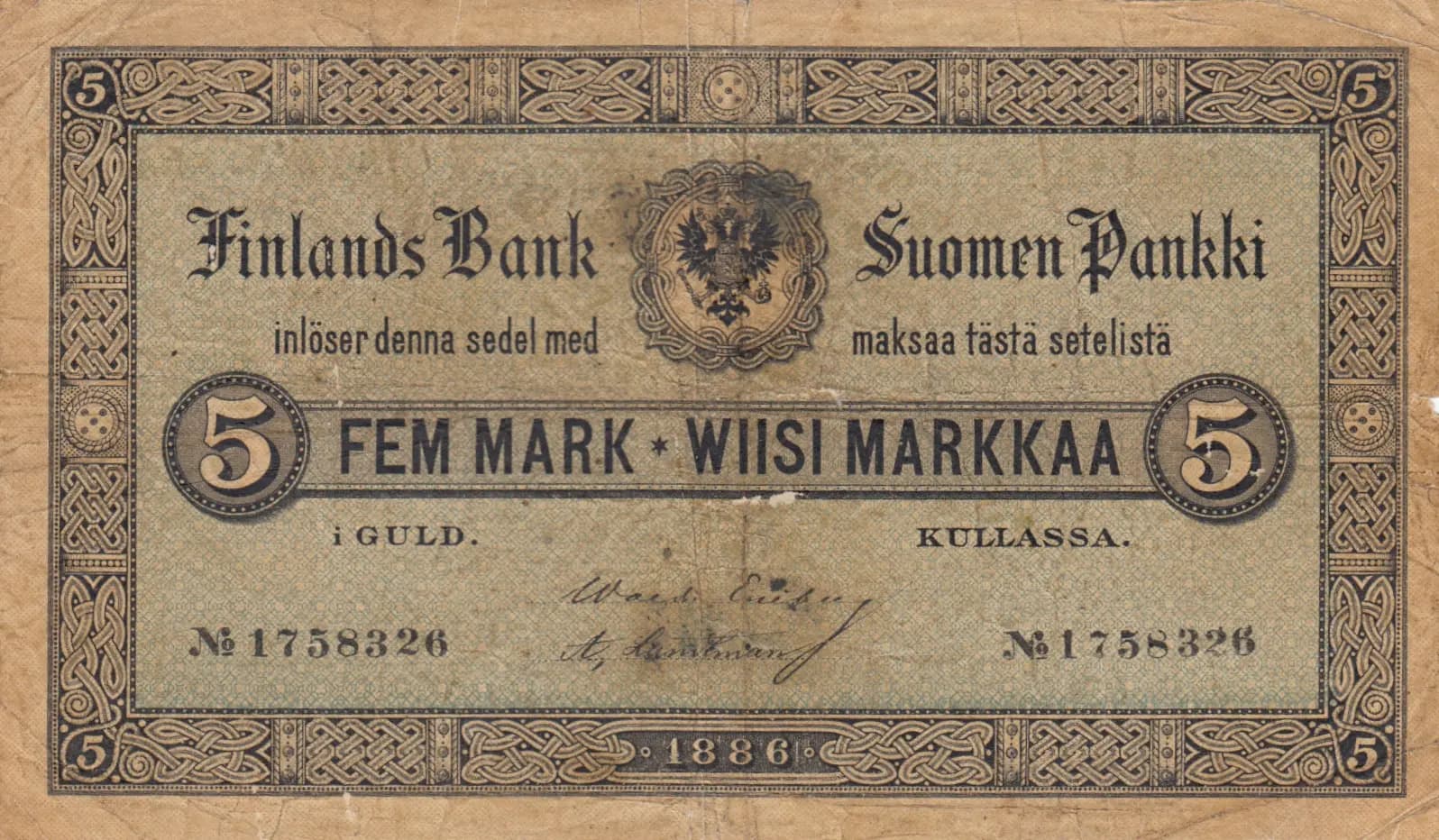
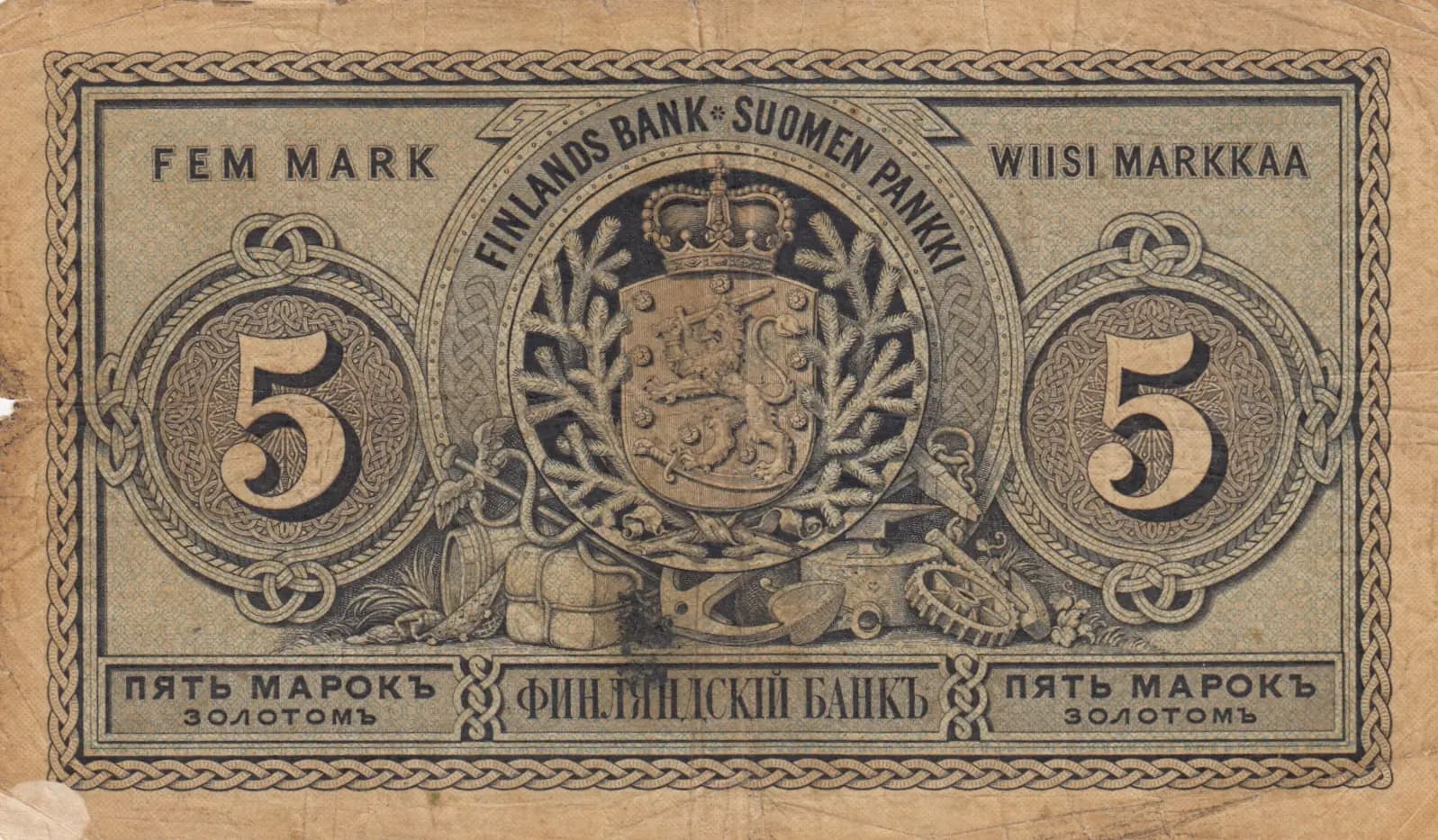
This is a VG-grade Finnish 5 markkaa note from 1886, one of the early issues from Suomen Pankki (Bank of Finland). The note displays characteristic period features including dual-language text in Finnish and Swedish, with Russian text on the reverse reflecting Finland's status within the Russian Empire at the time. The note exhibits expected wear for its age with creasing, foxing, and discoloration, along with visible handwritten annotations, yet retains clear printing and no major tears.
Common. The eBay market data shows F-condition examples selling for approximately $200 (2016 catalog value), with a 2015 sale at $168 for F grade, indicating steady but not exceptional demand. The 1886 5 markkaa was a regular issue from Finland's central bank with a reasonable print run for the period. While the note has historical interest and is over 135 years old, its availability in the collector market and moderate price point suggest it is not scarce or rare for the grade.
This note was issued during Finland's autonomous period within the Russian Empire (1809-1917), as evidenced by the trilingual inscriptions in Finnish, Swedish, and Russian found on both sides. The double-headed eagle on the obverse and the crowned lion shield on the reverse reflect Finland's heraldic traditions, while the explicit denomination text 'in gold' (KULLASSA/i GULD) indicates the note's backing by precious metal reserves, a standard practice for late 19th-century Nordic banking institutions.
The obverse features a double-headed eagle coat of arms in an ornamental frame at center, with the denomination displayed in decorative circular medallions. The entire note is framed by an intricate Celtic knot border pattern with ornamental flourishes and scrollwork typical of Nordic design of the period. The reverse presents the Finnish coat of arms—a crowned lion shield—as the central focal point, flanked by allegorical female figures in classical draped clothing representing virtue or prosperity. Laurel wreaths frame the shield, and the same Celtic knot border pattern encircles the reverse design. The color scheme throughout is predominantly tan, beige, and brown with black printed elements, characteristic of banknote production from this era.
OBVERSE: 'Finlands Bank' / 'Suomen Pankki' (Finland's Bank); 'inlöser denna sedel med' (redeems this note with); 'maksaa tasta setelistä' (pays from this note); 'FEM MARK * WIISI MARKKAA' (Five marks * Five markkaa); 'i GULD' / 'KULLASSA' (in gold); Serial number №1758326; Date 1886. REVERSE: 'FEM MARK' (Five marks); 'WIISI MARKKAA' (Five markkaa); 'FINLANDS BANK * SUOMEN PANKKI' (Finland's Bank); 'ПЯТЬ МАРОК' (Five marks - Russian); 'золотом' (in gold - Russian); 'ФИНЛЯНДСКИЙ БАНК' (Finnish Bank - Russian).
Intaglio engraving and letterpress printing, the standard security printing method for banknotes of the 1880s. The fine detail in the heraldic designs, allegorical figures, and Celtic knot borders indicates skilled engraving work typical of European security printers of the period. The multilingual text and complex border patterns served as security features against counterfeiting. The note was likely produced by one of the leading European security printers contracted by Suomen Pankki, possibly Topfer & Co. or similar Nordic/German printers specializing in banknote production.
The observed serial number is №1758326, dated 1886. No significant varieties are apparent from the visual analysis. Standard varieties for this Pick number would include differences in serial number ranges, printer marks, or signature variations from the banking officials authorizing the notes, though these cannot be definitively determined from the images provided. The note appears to be a standard circulation example from the first year of this denomination's issue.