1 markkaa 1918
About This Note
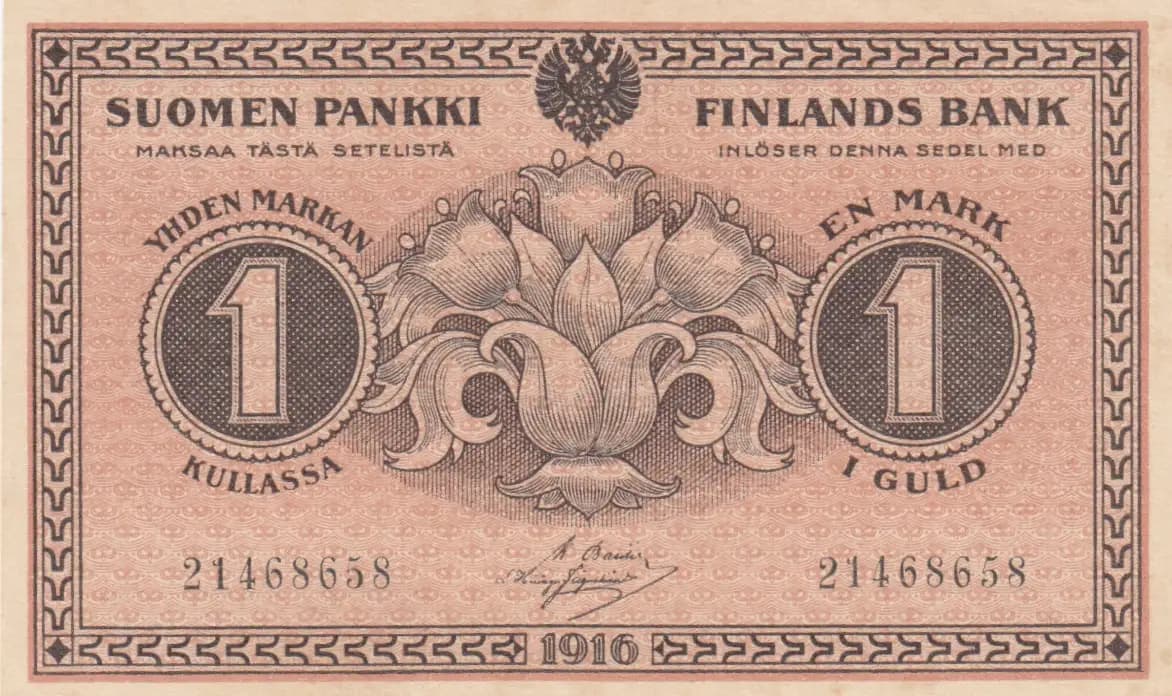
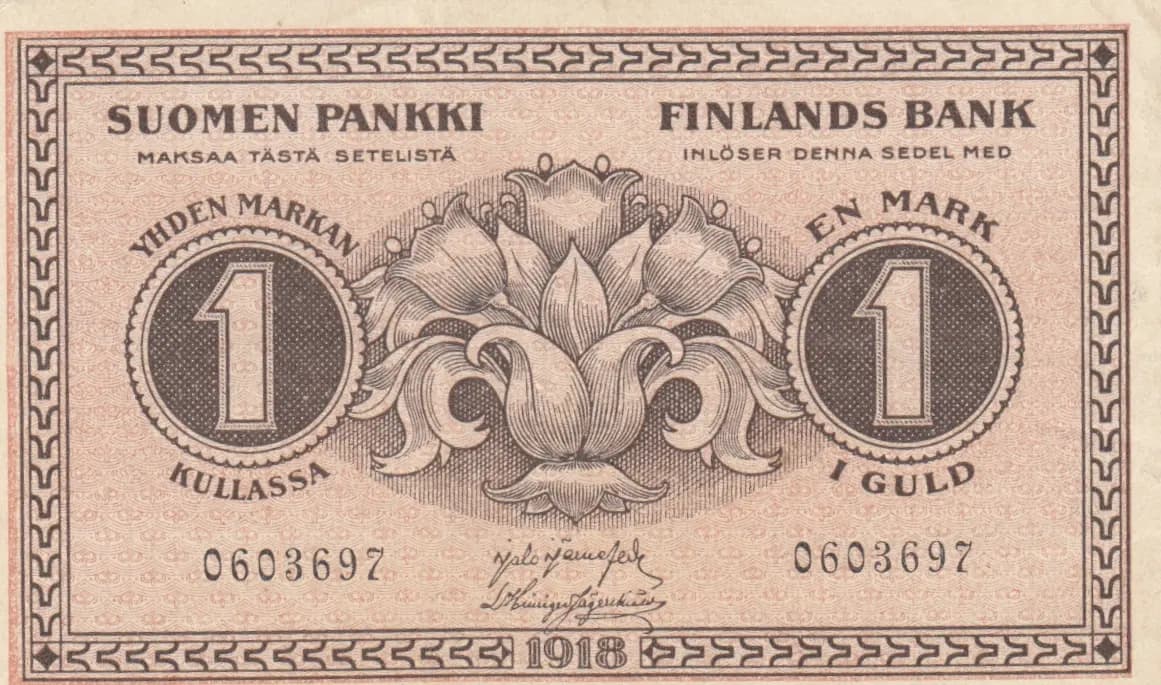
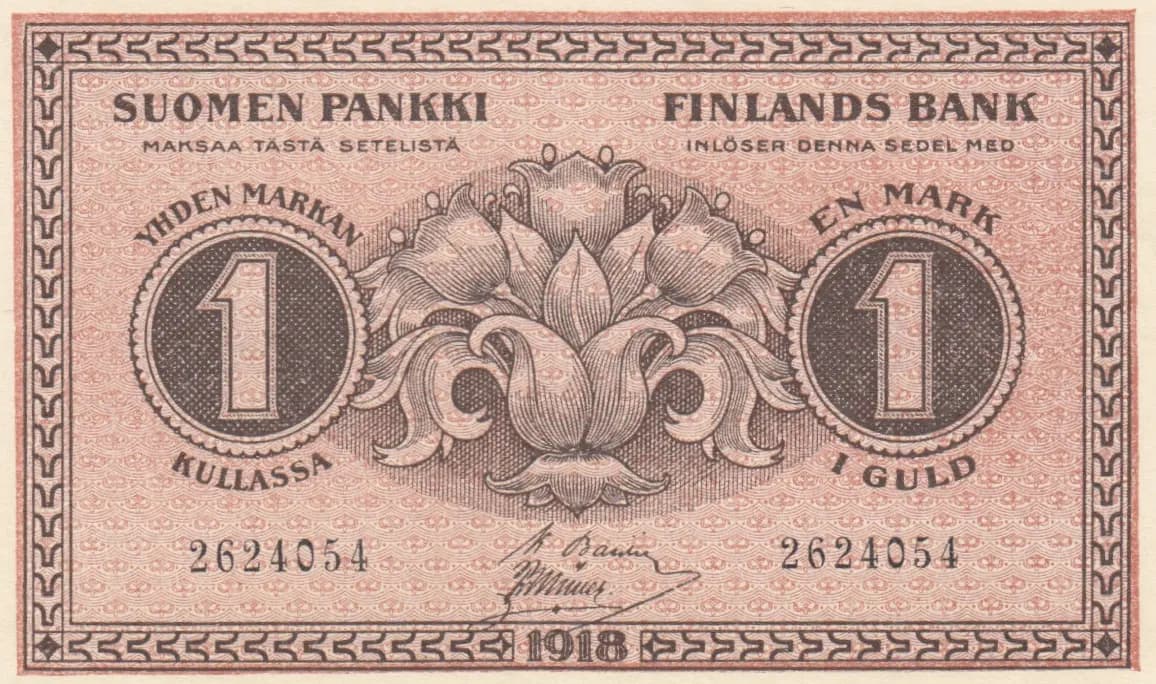
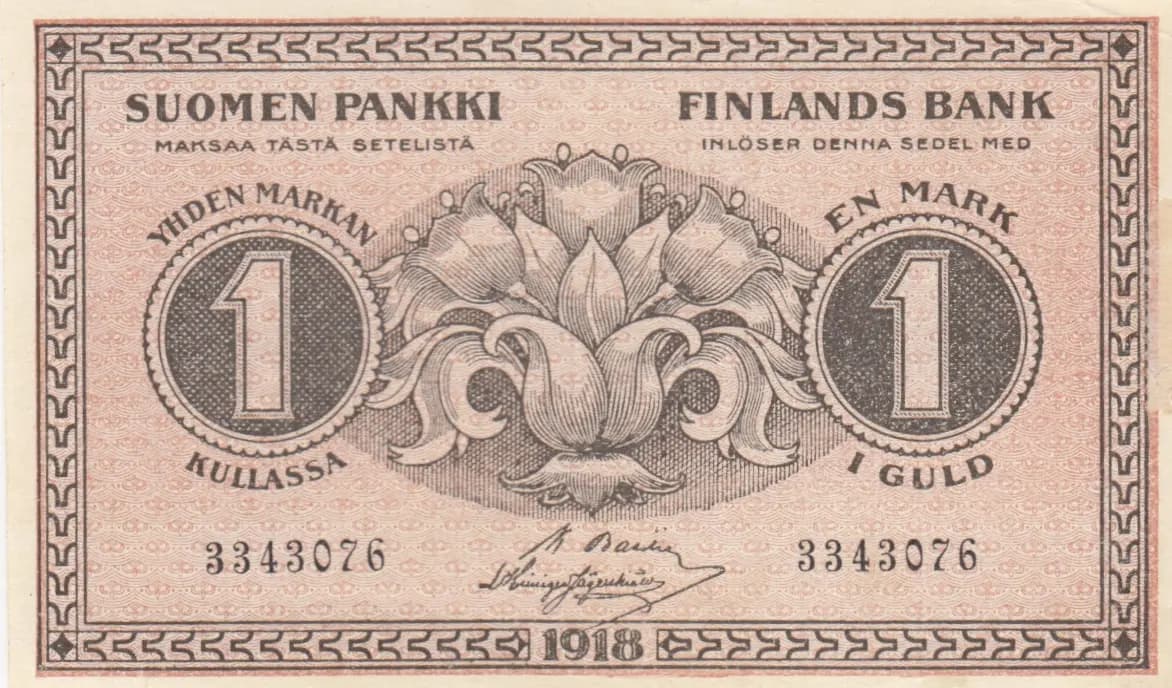
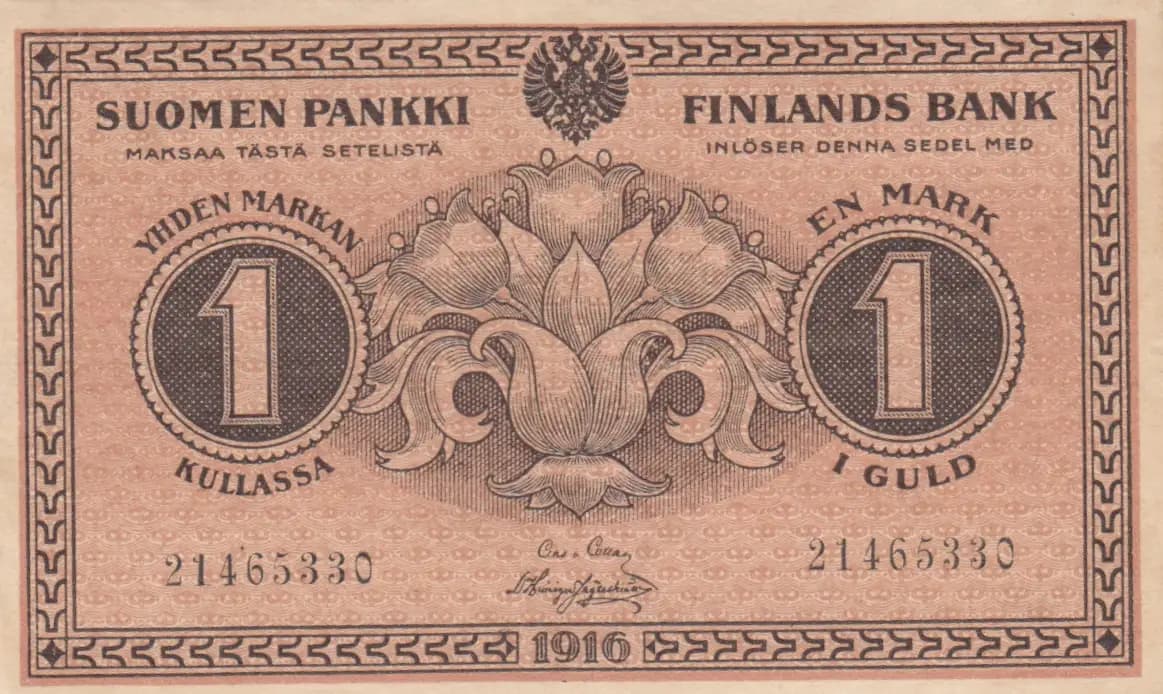
This 1 Markkaa from 1918 is a striking example of Finland's early independence-era currency, issued during the transition from Russian Grand Duchy rule. The note exhibits exceptional condition with crisp, even coloring and no visible wear, displaying the intricate sepia and rose tones characteristic of the period's engraving technique. The bilingual (Finnish/Swedish) and trilingual (with Russian) inscriptions reflect Finland's complex political status at the time, while the crowned Imperial eagle and ornate thistle design showcase the sophisticated security printing of the era.
Common. The 1 Markkaa 1918 (Pick P-19G(1)) was part of a large circulation issue by Suomen Pankki and survives in significant quantities in the collector market. While notes from this immediate post-independence period are historically important, they are not scarce in VF condition. The substantial print run and decades of circulation have ensured adequate supply for collectors, and such notes typically trade at modest prices in the secondary market, consistent with common early 20th-century European banknote issues.
Issued in 1916 during Finland's time as an autonomous Grand Duchy within the Russian Empire, this banknote carries tri-lingual text (Finnish, Swedish, and Russian) reflecting the nation's multinational governance structure. The prominent crowned eagle coat of arms on the obverse symbolizes the Imperial Russian authority under which Finland operated before declaring independence in 1917. The promise to pay 'in gold' (kullassa/i guld/zolotom') indicates this was a commodity-backed note during the gold standard era, typical of early 20th-century central bank practice.
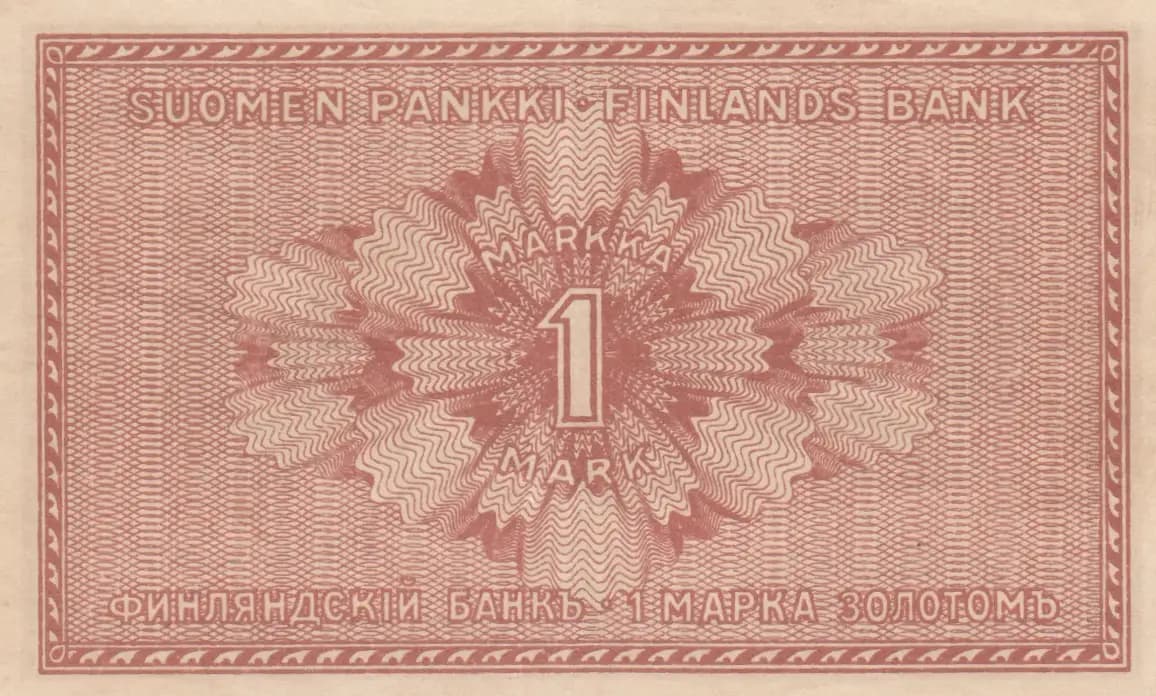
The obverse features a symmetrical, highly ornamental layout centered around an elaborate thistle or similar flowering plant in sepia tones, flanked by large circular numerals '1' in oval medallions. The dominant symbol is the Russian Imperial coat of arms—a crowned double-headed eagle—positioned prominently at top center, representing Finland's status as a Grand Duchy under Tsarist authority. The reverse displays a radiating star or sunburst pattern with repeated wavy lines forming the central numeral '1', a sophisticated anti-counterfeiting measure using geometric moire effects. The decorative Greek key pattern borders frame both sides, and the overall color palette shifts from warm sepia/tan on the front to rose pink and mauve tones on the back.
FRONT: 'SUOMEN PANKKI / FINLANDS BANK' (Bank of Finland in Finnish/Swedish); 'MAKSAA TÄSTÄ SETELISÄ YHDEN MARKAN KULLASSA / INLÖSER DENNA SEDEL MED EN MARK I GULD' (This note pays/redeems one mark in gold, Finnish/Swedish versions); Serial number 21465330; Date 1916. BACK: 'SUOMEN PANKKI FINLANDS BANK' (Bank of Finland); 'ФИНЛЯНДСКИЙ БАНК 1 МАРКА ЗОЛОТОМЬ' (Bank of Finland 1 Mark Gold in Russian); 'МАРКА' (Mark in Russian). The trilingual presentation emphasizes Finland's position within the Russian Empire while establishing the authority of Suomen Pankki (Bank of Finland).
This note was produced using fine line engraving and intaglio printing, evident from the detailed shading in the ornate floral motif, the precision of the numeral rendering, and the intricate wavy line security patterns visible on the reverse. The moire effect created by the radiating wavy lines on the back is characteristic of classical anti-counterfeiting security work typical of early 20th-century central bank currency. For Pick P-19G(1), this was printed by the Finnish state printing works (Suomen Painatuskeskus) under tight security protocols. The deliberate use of repetitive geometric patterns and fine engraving throughout served as primary anti-counterfeiting devices before modern security features.
The Pick catalog designation P-19G(1) indicates this is the first variety of the 1916-dated issue under the 'G' classification. Key identifiers for this specific variety include: the 1916 date on the obverse, the Grand Duchy configuration with Russian Imperial eagle, the trilingual text layout (Finnish/Swedish/Russian), and the serial number format (as seen: 21465330). The note was issued during the transitional period between Russian rule and Finnish independence (declared December 1917), making the 1916-dated notes technically issued before formal independence. Varieties within this series may differ by printer marks, serial number prefixes, or signature variations, though the visual analysis shows a standard configuration for P-19G(1).