1000 markkaa 1945
About This Note
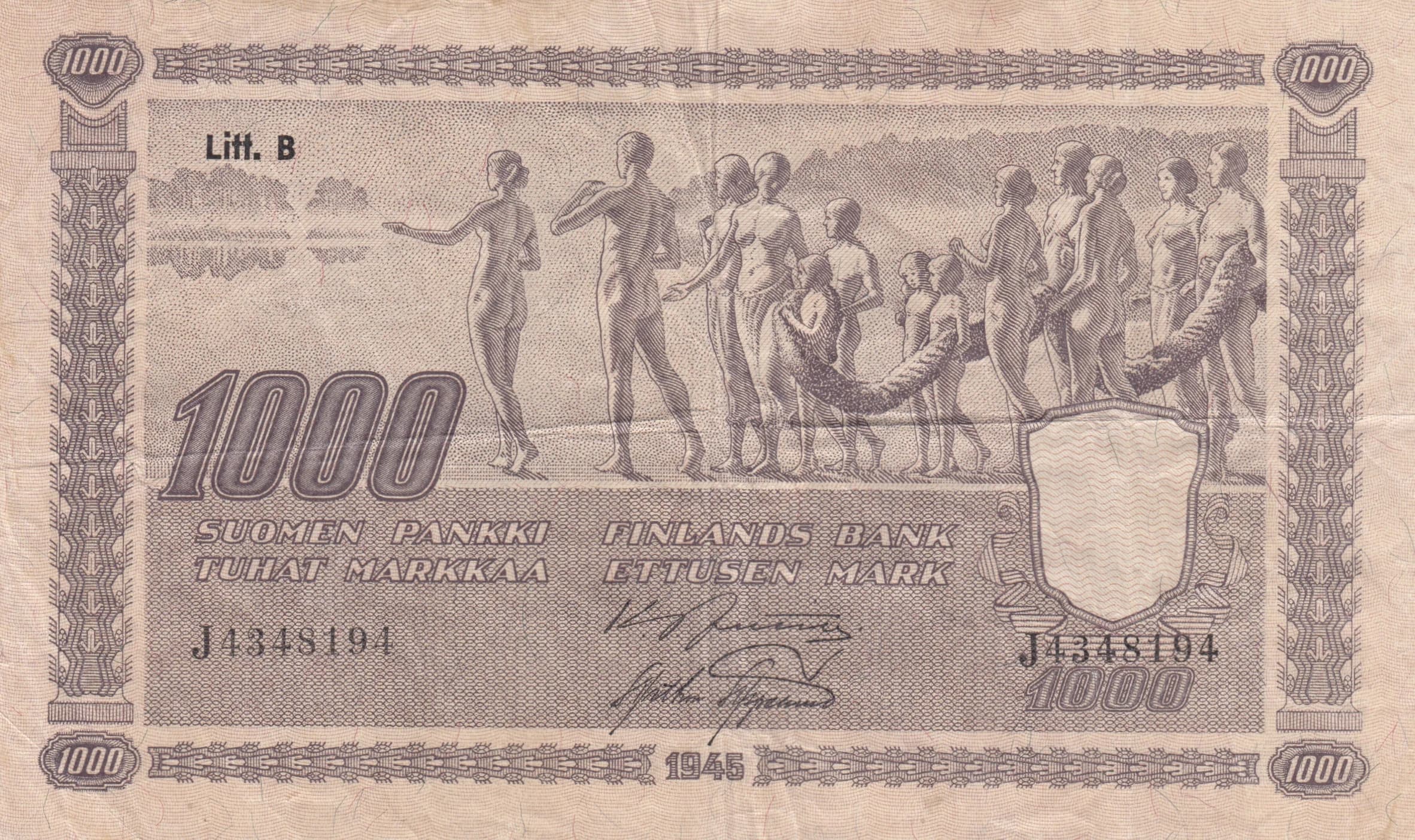
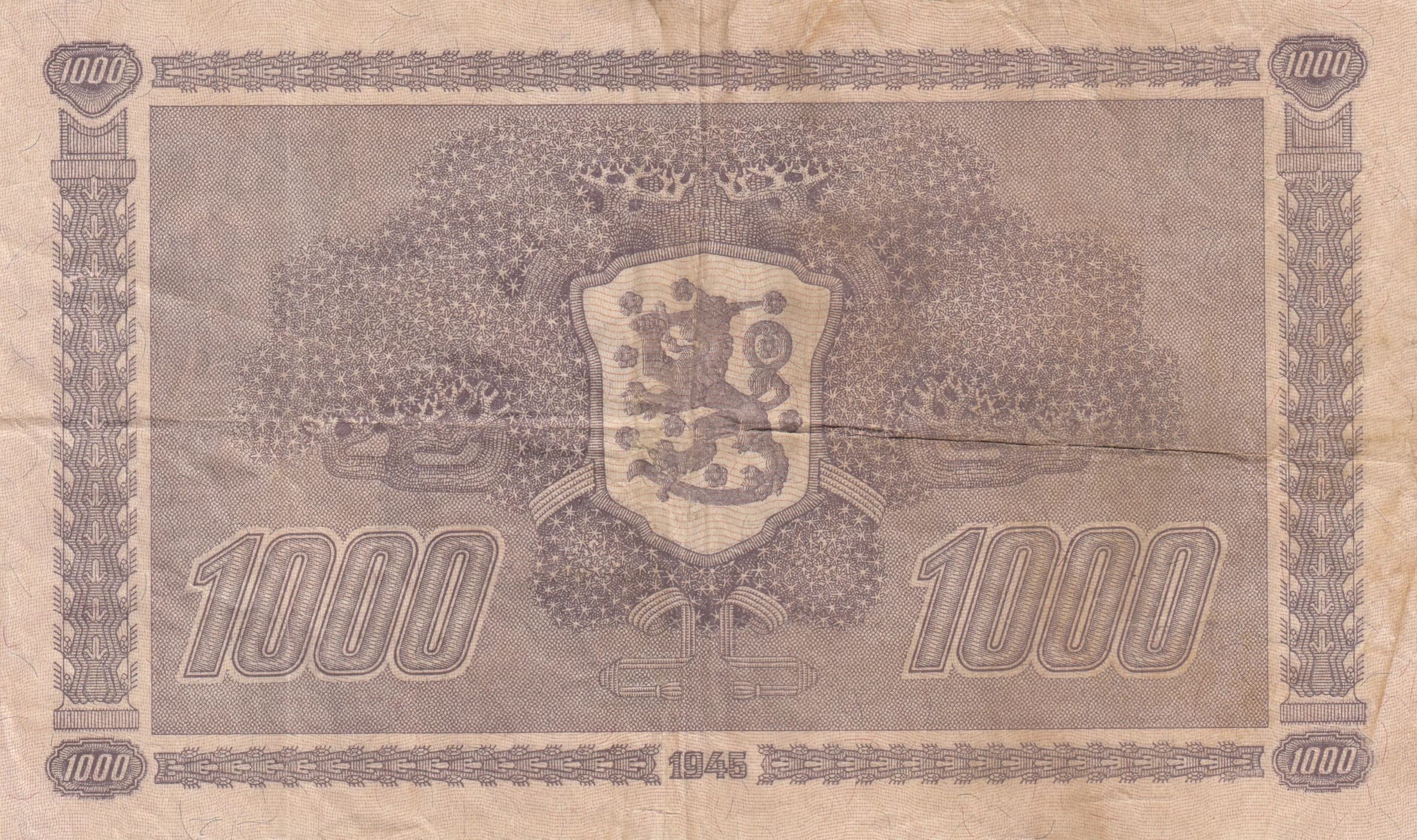
This 1000 markkaa banknote from 1945 presents a striking example of classical allegorical design typical of Finnish high-denomination currency from the interwar and wartime period. The note features an elaborate engraved composition of approximately 12-14 figures in a mythological scene on the obverse, with the Finnish coat of arms (lion rampant) prominently displayed on the reverse. In VF condition, the note exhibits the expected signs of circulation—visible creases, horizontal fold lines, and some foxing—yet retains excellent detail in the fine engraving and maintains good overall eye appeal for its age.
Common. The 1000 markkaa note from 1945 (Pick P-90(6)) was issued in substantial quantities by the Finnish central bank and remains readily available to collectors in the used marketplace. VF condition examples such as this one are frequently encountered in numismatic trade and do not command significant premiums above face value. The 1945 date and high denomination were part of a standard series issued during the immediate post-war stabilization period.
Finland's 1000 markkaa note from 1945 was issued during the final year of World War II and the transition to peacetime, a period of significant economic and political upheaval for the nation. The classical allegorical imagery—depicting figures engaged in various activities within a mythological landscape—reflects the humanistic and neoclassical aesthetic preferences of mid-20th century Finnish currency design. The prominent display of the Finnish lion on the reverse underscores national sovereignty and identity during a time when Finland was reasserting itself in the post-war European order.
The obverse features an elaborate allegorical composition in the classical tradition, depicting a horizontally-arranged group of nude and draped figures—both male and female—in various poses suggesting themes of labor, creativity, or prosperity. The scene includes classical landscape elements visible in the background and is framed by ornamental geometric borders. Cornucopia-like design elements and decorative cartouches appear on the right side, symbolizing abundance. The reverse displays the coat of arms of Finland—a rampant lion within an ornamental shield—surrounded by a dense radiant or foliage pattern, centered within matching geometric borders. This design iconography was standard for high-value Finnish banknotes of this era and conveyed themes of national strength and economic vitality.
Front side: SUOMEN PANKKI / FINLANDS BANK (Bank of Finland, in Finnish and Swedish); TUHAT MARKKAA / ETTUSEN MARK (One thousand marks, in Finnish and Swedish); 1000 (denomination); J1348104 (serial number, appears twice); 1945 (year); Lith. B (lithography notation). Back side: 1000 (denomination, left and right sides); 1945 (year). All text appears in both Finnish and Swedish, reflecting Finland's bilingual administrative tradition.
Fine line engraving throughout, executed in the classical intaglio printing tradition. The visual analysis confirms the use of sophisticated engraved plates with intricate detail work visible in both the allegorical figures and heraldic elements. The presence of 'Lith. B' notation suggests involvement of a specific lithographic or engraving workshop, though full-process details would require additional documentation. This note was produced by Suomen Pankki (Bank of Finland) using established security printing protocols of the period.
This example carries serial number J1348104 and is dated 1945. The Pick P-90(6) designation indicates this is the sixth known plate variety or printing variant of this denomination from the 1945 issue. Varieties for this series are typically distinguished by plate letters, serial number prefixes, and signature combinations. Two signatures are visible below the main illustration on the obverse, which is a standard identifying feature for notes of this period and issuer. Further variety specifics would require comparison with comprehensive Finnish banknote catalogs documenting all known plate variants and signature combinations for this denomination and year.