5 birr 1976 specimen
Market Prices
20 salesAbout This Note
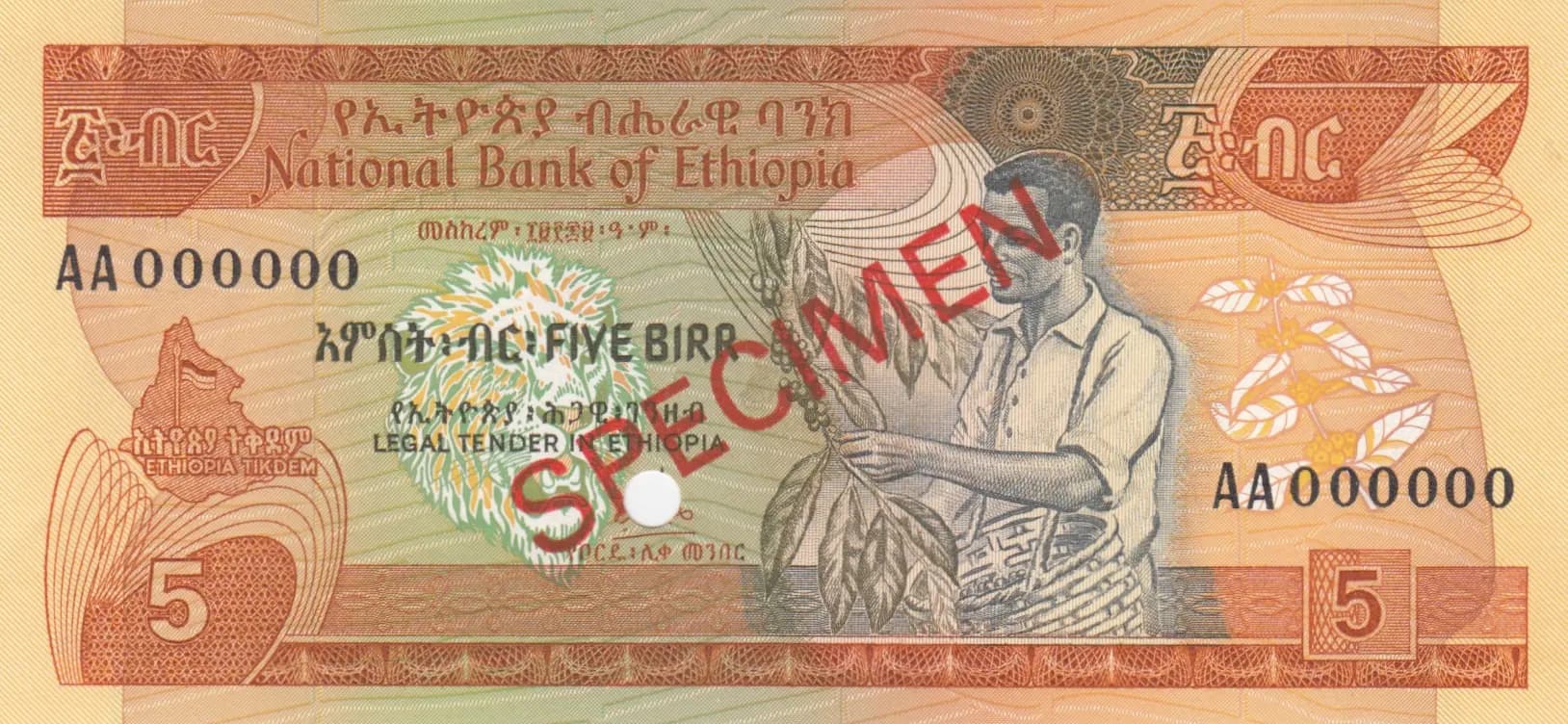
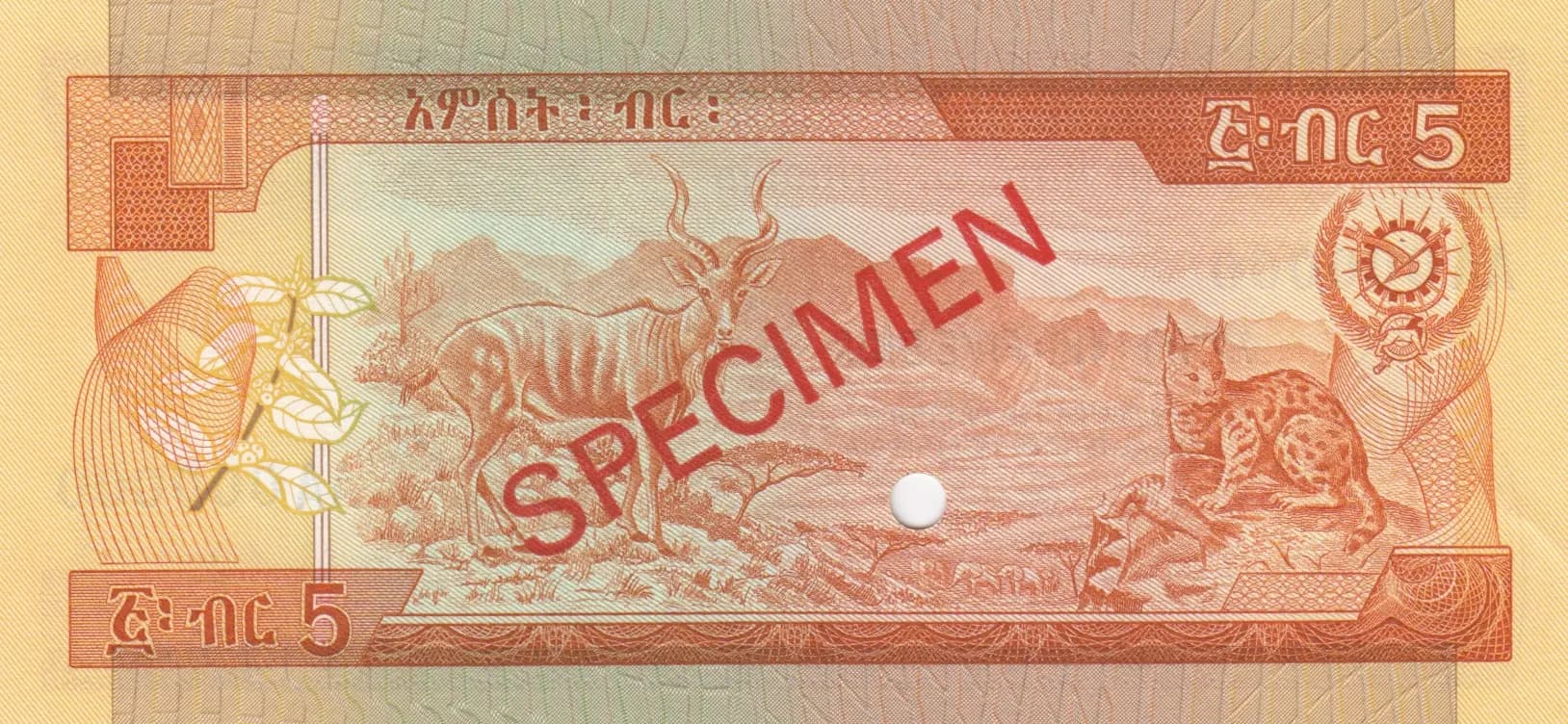
This is a 1976 Ethiopian 5 Birr specimen note (Pick P-31as) in uncirculated condition, notable for its red 'SPECIMEN' overprint and AA000000 specimen serial number indicating this is a non-circulating reference example from the National Bank of Ethiopia. The note displays vibrant multicolored printing with striking imagery of coffee harvesting on the obverse and Ethiopian wildlife on the reverse, featuring intricate security patterns and both Amharic and English inscriptions characteristic of the post-1974 Ethiopian socialist period.
Common. eBay market data shows consistent sales across multiple condition grades (VF to PMG 66) with UNC examples selling in the $5–$12 range historically, and catalog values listing UNC at $12.50 as of 2019. Regular issues from a major central bank with no documented short print runs or recall status indicate standard circulation quantities. The specimen designation makes it technically non-circulating, but specimen notes of this era are not exceptionally scarce.
Issued in 1976 (Ethiopian Year 1969) following the 1974 Ethiopian Revolution, this note reflects the Derg regime's emphasis on agrarian socialism and national identity, evident in its celebration of coffee—Ethiopia's most important export crop—and indigenous wildlife including the kudu and caracal. The deliberate inclusion of Amharic script alongside English and the prominent Lion of Judah emblem represent the transitional period between imperial and revolutionary governance, when the National Bank of Ethiopia reasserted national sovereignty through currency design.
The obverse features a man in traditional white Ethiopian cotton garment (likely representing a peasant or farmer) depicted in three-quarter profile holding coffee plant branches with distinctive leaves, positioned on the right side of the composition. The left side displays the Lion of Judah emblem in the upper corner with an oval watermark area below, surrounded by ornate geometric patterns and mandala-like designs in tan, orange-red, and gold tones. The reverse depicts Ethiopian wildlife in a naturalistic landscape setting: a kudu (antelope) and caracal (lynx) in profile, with what may be the Semien Mountains referenced in catalog sources, flanked by decorative yellow flower motifs and a shield bearing geometric patterns. Both sides employ intricate guilloche patterns and fine-line security work throughout, reflecting the note's sophisticated intaglio production.
FRONT: 'National Bank of Ethiopia' (English); 'ፋደራል ዲሞክራሲያዊ ሪፐብሊክ' (Amharic: Federal Democratic Republic); 'FIVE BIRR' (English); 'አምስት ብር' (Amharic: Five Birr); 'LEGAL TENDER IN ETHIOPIA' (English); Serial number 'AA000000'; 'ፋደራል ሪፐብሊክ ETHIOPIA' (Mixed Amharic/English: Federal Republic Ethiopia). BACK: 'ፋደራል ሪ' (Amharic: Federal Republic, partial); 'የ ብር 5' (Amharic: 5 Birr); '5' (English numeral). Specimen overprint appears diagonally on both sides in red.
Intaglio engraving on multicolored underprint, employing complex guilloche security patterns, fine-line background work, and careful color registration typical of high-security banknote production. The multiple color layers (orange-red, tan, brown, green, yellow-gold, and gray) suggest multipass printing with security inks. While the specific security printer for this Pick number is not definitively documented in standard references, Ethiopian banknotes of this era were often produced by European security printers such as De La Rue or similar institutions with advanced intaglio capabilities.
This is specifically Pick P-31as, the specimen variety (indicated by 'as' suffix and red 'SPECIMEN' overprint with AA000000 serial numbering). The catalog notes reference a later similar design with different signature as Pick P-37. The visual analysis confirms the specimen overprint and specimen serial format. No variations in design elements, signatures, or security features are apparent from the images provided, consistent with specimen production standards.