10 birr 1976 specimen
Market Prices
11 salesAbout This Note
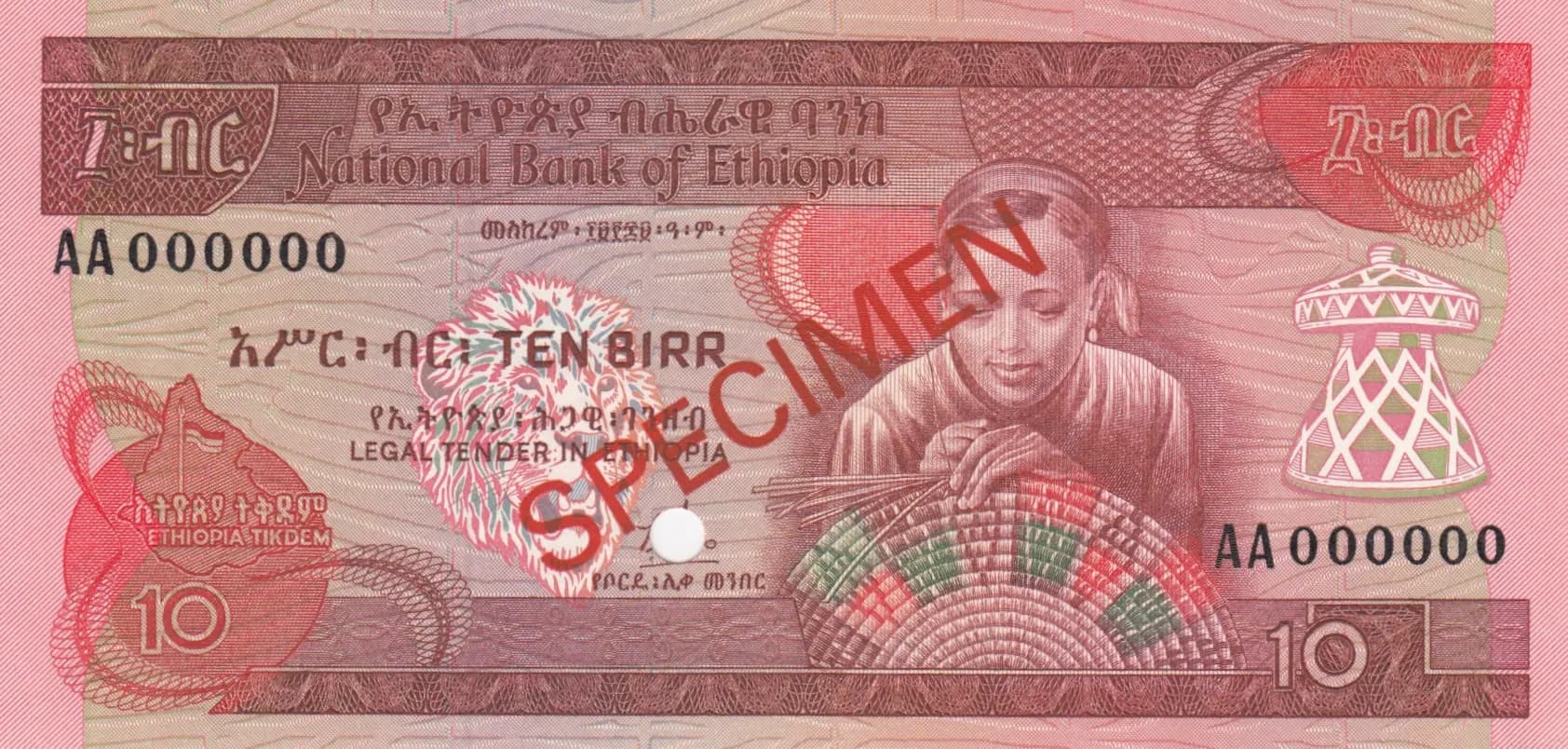
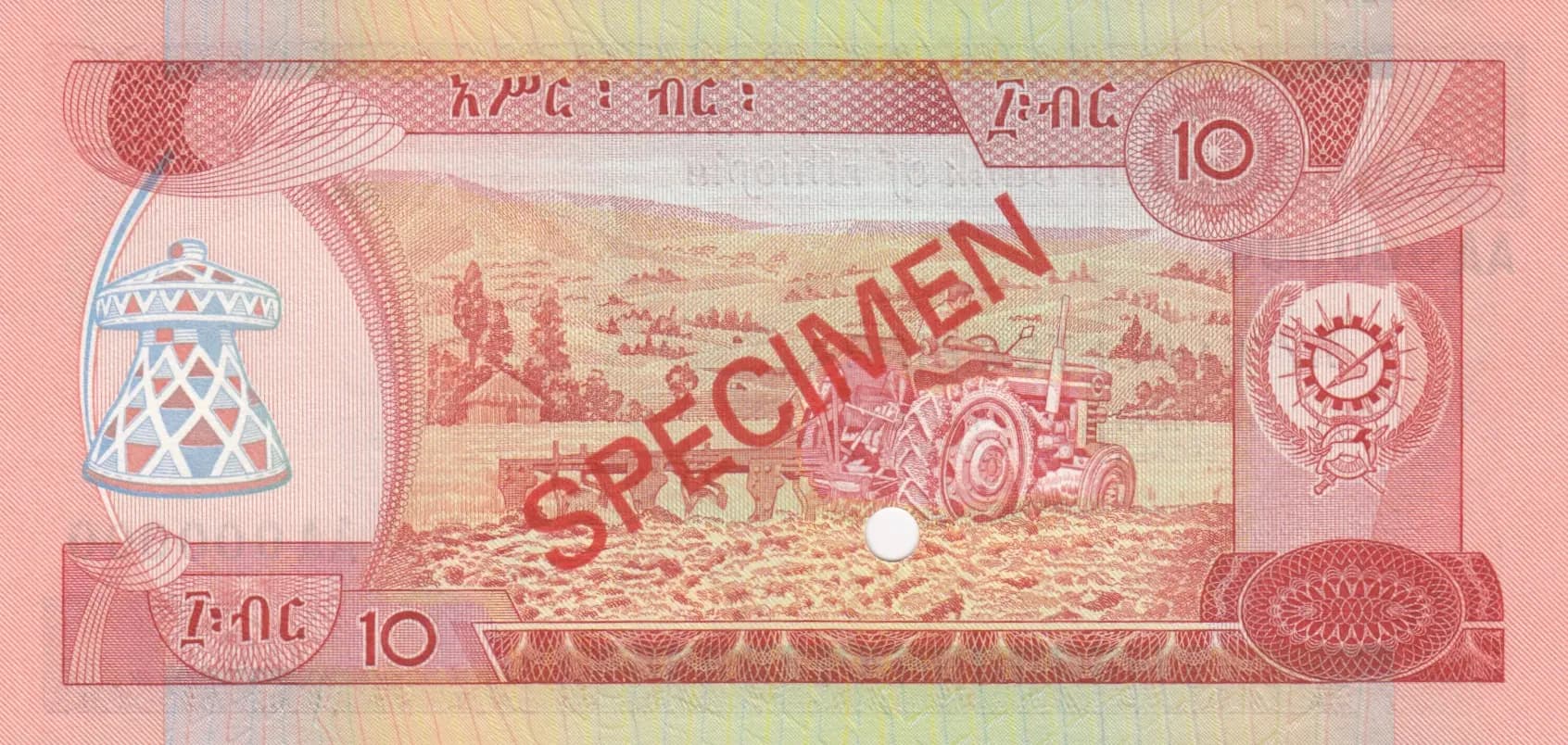
This is a 1976 Ethiopian 10 birr specimen note (P-32as) in pristine uncirculated condition, featuring a striking design centered on traditional Ethiopian cultural and agricultural imagery. The front depicts a bearded man in traditional dress alongside intricate basket weaving designs, while the reverse showcases a tractor plowing fields—symbolic of Ethiopia's modernization during this period. The large diagonal 'SPECIMEN' overprint and characteristic hole punch identify this as a bank specimen, making it a desirable item for collectors of African currency and Ethiopian numismatics.
Common. This is a specimen note from a standard regular issue, and while specimen notes are less common than circulated currency, the 10 birr P-32 series had a substantial print run. eBay transaction history shows UNC examples consistently selling in the $9.50–$15.50 range with multiple sales over several years, indicating adequate supply in the collector market. Current catalog values (2019) list UNC at approximately $20, which is modest for specimens. No evidence of a recall, limited print run, or scarcity exists for this Pick number. Specimen notes are inherently more collectible than circulated notes, accounting for their modest premium, but this particular note remains readily available to collectors.
Issued in 1976 (Ethiopian Year 1969) by the National Bank of Ethiopia, this note reflects the nation's development priorities during the post-revolutionary period, with its dual imagery of traditional craftsmanship (basket weaving) and agricultural modernization (mechanized farming with tractors). The prominent lion emblem represents Ethiopian sovereignty and national pride, while the deliberate inclusion of both artisanal and industrial scenes illustrates the balance between preserving cultural heritage and embracing contemporary progress. This specimen note served as a presentation piece for the banking system, documenting the official currency design before circulation.
The obverse (front) features a portrait of an Ethiopian man with traditional dress and beard positioned on the right side, representing Ethiopian cultural identity. To the left is the heraldic lion's head emblem of Ethiopia, a symbol of national sovereignty. Traditional wicker baskets and vessels are depicted on the upper right, illustrating the importance of traditional craftsmanship in Ethiopian society. The color scheme combines pink, red, and beige tones with ornamental geometric patterns framing the design. The reverse (back) depicts an agricultural landscape scene showing a tractor actively plowing a field with rolling hills and vegetation in the background, symbolizing national agricultural development and modernization. Decorative traditional baskets appear symmetrically on both sides of the landscape. The denomination '10' appears in a circular ornamental medallion on the right side. Throughout both sides, fine line engraving and microprint details enhance security and aesthetic value.
Front side — Amharic: 'ፋትር ባንክ ኢትዮጵያ' (National Bank of Ethiopia), 'ኢትዮጵያ ብር' (Ethiopia Birr), 'ፋትር' (Ten); English: 'National Bank of Ethiopia', 'TEN BIRR', 'LEGAL TENDER IN ETHIOPIA', 'SPECIMEN', serial number 'AA 000000'. Back side — Amharic: 'ኢትዮጵያ ብር' (Ethiopia Birr), 'ፋትር' (Ten); English/numerals: '10', 'SPECIMEN'. All inscriptions appear in both Amharic and English/numerals, reflecting the bilingual official communications standard of the National Bank of Ethiopia.
Intaglio (recess) engraving, evidenced by the fine line patterns, microprint details visible in the ornamental borders, and the characteristic depth of impression typical of high-security banknote production. The multicolored design with precise color separation suggests multi-pass intaglio printing combined with letterpress elements. For P-32as specimen notes from this era, the National Bank of Ethiopia typically utilized security printers from leading European or Swiss facilities, though specific printer attribution would require additional documentation. The specimen overprint and hole punch were applied post-production as security measures to prevent circulation.
This is specifically P-32as, the specimen variety of the 1976 10 birr note, indicated by the large diagonal 'SPECIMEN' overprint and characteristic hole punch perforation. The visual analysis shows serial number format 'AA 000000', typical of specimen notes which do not enter circulation. A later regular issue (P-38) exists with different signatures, as noted in external references. The obverse signature appears consistent with the primary signature variety for this note type. No serial number varieties affecting this specimen designation are evident from the provided images, though serial prefix 'AA' is standard for specimens of this series.