1 birr 1976 specimen
Market Prices
15 salesAbout This Note
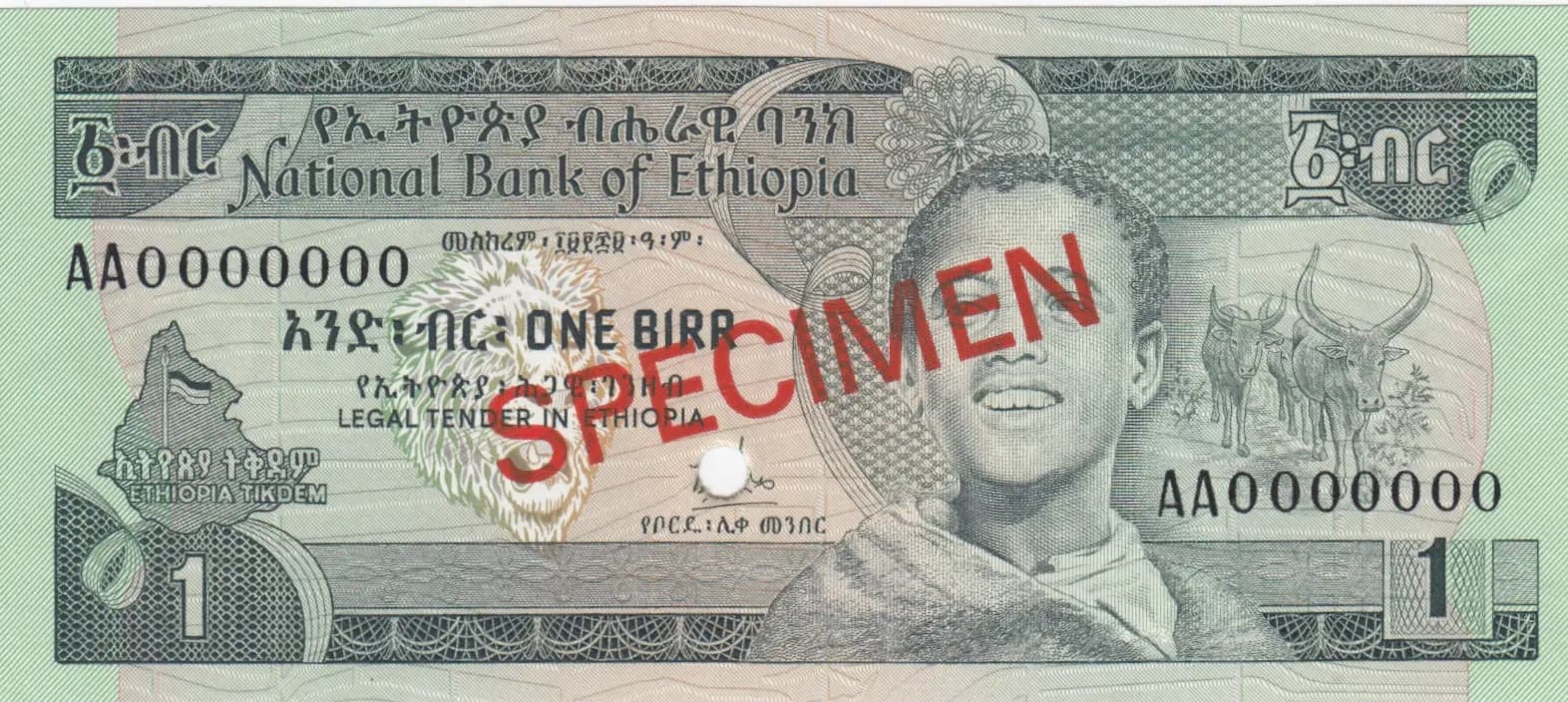
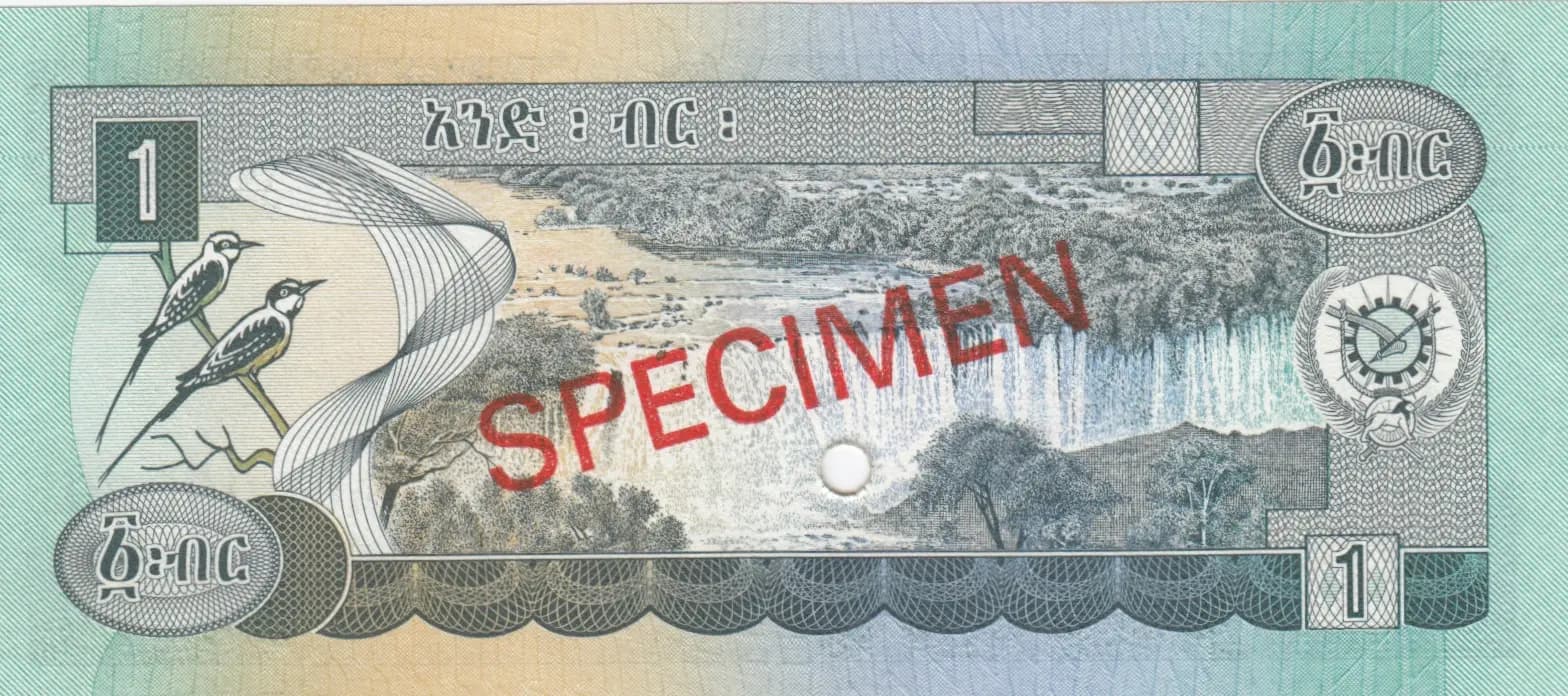
This is a specimen note of the 1 Birr issued by the National Bank of Ethiopia in 1976 (Ethiopian Year 1969), Pick P-30as. The note features a striking portrait of a young man in formal attire on the obverse, paired with a dramatic landscape scene of the Tisisat waterfalls on the reverse, complemented by wildlife illustrations including birds and longhorns. This uncirculated specimen is marked with a prominent red diagonal 'SPECIMEN' overprint, indicating it was never intended for circulation and represents a non-circulating issue from the National Bank of Ethiopia during this era.
Common. This 1 Birr note from 1976 is widely available in the collector market, as evidenced by consistent eBay sales data showing examples regularly selling for $1-7 in various grades. While specimen notes are non-circulating and technically more scarce than circulated examples, this particular specimen is still commonly encountered. The catalog value for UNC examples is listed at $7 (2019), and eBay auction results confirm active collector demand at modest prices. The large print run by the National Bank of Ethiopia and the note's standard design ensure continued availability.
This note was issued during the transitional period in Ethiopian history following the 1974 revolution and the establishment of the military regime (Derg). The National Bank of Ethiopia continued currency production under the new government, with this 1976 note reflecting Ethiopia's cultural heritage through its depiction of the Tisisat (meaning 'smoking water') waterfalls on the Blue Nile—one of Ethiopia's most iconic natural landmarks. The imagery of wildlife (birds and longhorns) underscores Ethiopia's natural riches, while the formal portrait reflects the dignity of the nation during this period of political restructuring.
The obverse features a formal portrait of a young man positioned on the right side of the note, depicted in profile facing right and wearing traditional or formal Ethiopian attire. A lion's head illustration appears on the left side, representing Ethiopian national symbolism and heraldry. The Ethiopian coat of arms or national emblem is displayed as a circular design on the right side near the portrait. The reverse showcases the Tisisat (Blue Nile) waterfalls as the central landscape element, rendered with naturalistic detail showing flowing water, vegetation, and terrain. Two white-throated bee-eaters (or similar bird species) are illustrated on the left side of the reverse. The note employs an ornate design with decorative floral and geometric patterns throughout, elaborate border designs, and multiple circular emblems in the corners containing denomination markers. The color scheme combines green, beige, tan, and gray tones, creating a sophisticated and traditionally-inspired aesthetic.
FRONT SIDE: 'National Bank of Ethiopia' (English); 'ፌደራላዊ ዲሞክራሲያዊ ሪፐብሊክ ኢትዮጵያ' (Amharic: Federal Democratic Republic of Ethiopia); 'ONE BIRR' (English); 'ሩብ:ONE BIRR' (Amharic/English: One Birr); 'LEGAL TENDER IN ETHIOPIA' (English); 'ኢትዮጵያ ዓይነት' (Amharic: Ethiopia Tikdem/Ethiopia First); 'SPECIMEN' (English overprint). BACK SIDE: 'ሩብ:ብር' (Amharic: Birr); '6:ብር' (Amharic: Birr denomination marker); '1' (English: denomination 1); 'SPECIMEN' (English overprint).
This note was produced using intaglio (engraved line) printing, evidenced by the fine, intricate line work and detailed geometric patterns visible throughout the design. The sharp, crisp details in the portrait, security features, and decorative elements are characteristic of high-quality intaglio engraving. Multiple color plates were used to achieve the layered color gradations visible in the waterfall landscape and the subtle shading in the portrait. The precision of the border designs and the fine detail work suggest production by a specialized security printer, though specific printer attribution for Pick P-30as is not definitively documented in standard references.
This is specifically identified as a specimen note (P-30as, with 's' denoting specimen status). The note bears a red diagonal 'SPECIMEN' overprint, which is the distinguishing feature of specimen issues. The serial number visible (AA0000000) is typical for specimen notes, which often feature standard or placeholder serial numbers rather than unique sequential numbers. A later related variety exists with different signature (referenced as Ethiopia P-36), indicating multiple signature variations within this denomination's production run. The visual analysis confirms Ethiopian Year 1969 dating (corresponding to Gregorian calendar 1976), which aligns with the catalog designation.