100 birr 1976 specimen
Market Prices
1 saleAbout This Note
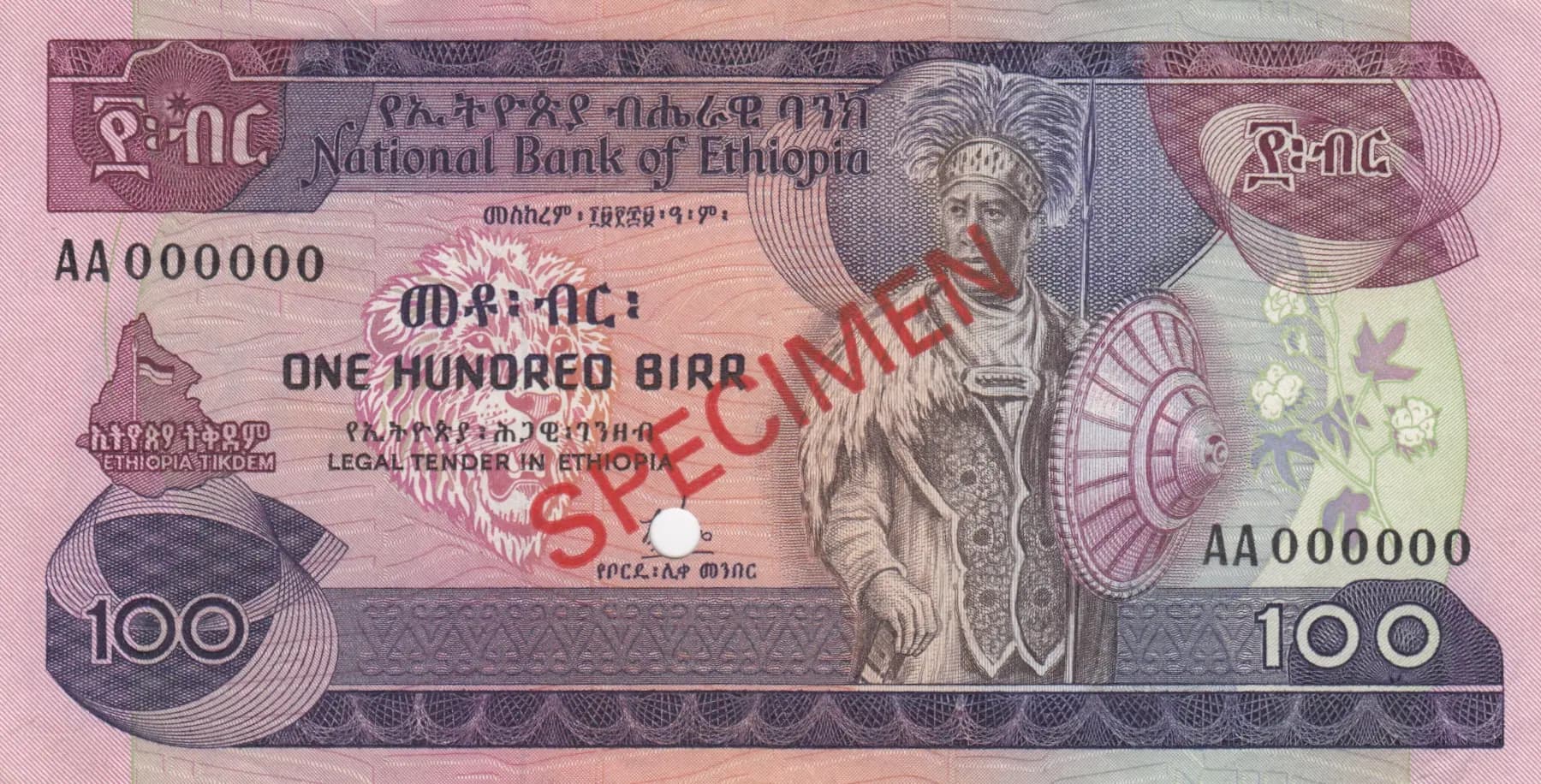
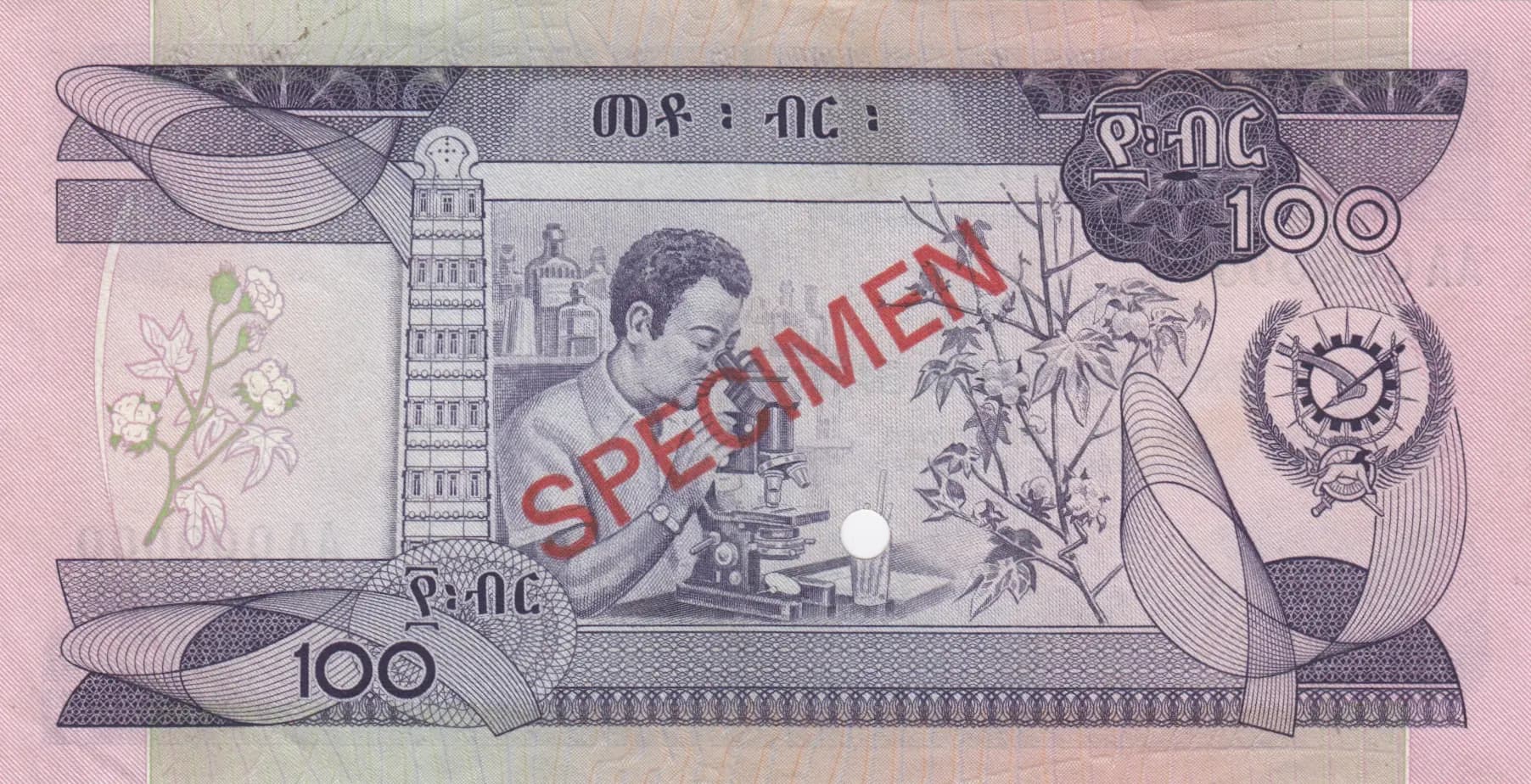
This is an exceptional Ethiopian 100 Birr specimen note from 1976 (Ethiopian Year 1969) in uncirculated condition, displaying the characteristic pink-mauve and purple color scheme of this iconic issue. The note features a striking portrait of a bearded warrior in traditional Ethiopian dress on the obverse and a young scientist at laboratory work on the reverse, reflecting Ethiopia's cultural heritage and modernization aspirations of the era. As a specimen note marked with a bold red diagonal 'SPECIMEN' stamp and displaying pristine condition with crisp printing and no wear, this represents a significant piece of Ethiopian numismatic history with strong collector demand.
Common. This is a regular issue 100 Birr note from the 1976 printing, with no documented evidence of limited print runs or early recall. The eBay market data provided indicates typical specimen prices in the $9-150 range depending on condition, with uncirculated examples catalogued at $150, reflecting strong but steady collector demand rather than scarcity. Specimen notes from this series appear regularly in the market. While specimen overprints are less common than circulated versions, they were produced in sufficient quantity for general distribution and institutional sales, making this variety common within the category of 1976 Ethiopian 100 Birr specimens.
Issued during the tumultuous period of the Ethiopian Revolution and the transition from the Imperial era to the Derg regime, this 1976 note reflects the National Bank of Ethiopia's efforts to establish monetary credibility during a time of significant political upheaval. The dual imagery—the traditional warrior honoring Ethiopia's ancient military and cultural legacy, coupled with the scientist with microscope symbolizing progress and modernization—encapsulates the nation's attempt to bridge its historical identity with contemporary development aspirations. The prominence of Amharic alongside English inscriptions underscores Ethiopia's assertion of national sovereignty and cultural identity during this transformative period.
The obverse features a dignified bearded warrior in traditional Ethiopian formal attire with an elaborate ceremonial headdress positioned at center-right, symbolizing Ethiopia's proud military and cultural heritage. The left side displays the lion's head emblem—the Lion of Judah, central to Ethiopian national identity and authority. Ornamental floral motifs frame the right side, while a map of Ethiopia appears at the left. The reverse depicts a young man in scientific work, positioned in profile, engaged at laboratory equipment with plants and scientific apparatus visible, representing Ethiopia's embrace of modern science and development. A tall tiered tower or church structure on the left-center suggests architectural heritage, while the right side bears the National Bank emblem and additional heraldic symbols. Both sides feature intricate guilloche patterns and circular decorative elements characteristic of high-security banknote design.
FRONT: National Bank of Ethiopia (English) / የኢትዮጵያ ብሔራዊ ባንክ (Amharic: National Bank of Ethiopia) / ONE HUNDRED BIRR (English) / መቶ ብር (Amharic: One Hundred Birr) / LEGAL TENDER IN ETHIOPIA (English) / ፌ·ዋ·ዎ (Amharic numerals: 100) / ETHIOPIA TIKOEM (English/Amharic) / AA000000 (Serial number) / SPECIMEN (overprint). BACK: ወር · ብር · (Amharic: One Hundred Birr) / 100 (Latin numerals) / ፌ·ዋ·ዎ (Amharic numerals: 100) / SPECIMEN (overprint).
Intaglio (recess) printing using multiple color plates, creating the fine detailed line-work, intricate guilloche patterns, and sharp portrait engraving visible throughout the note. The multicolored underprint with distinct zones of pink, purple, gray, and beige indicate sophisticated multi-plate color separation typical of currency produced by major international security printers. The crisp, precise registration and fine detail work suggest production by a leading security printer, likely Waterlow & Sons or similar British/European currency printer specializing in Commonwealth and African central bank issues during this period.
This is specifically a SPECIMEN variety (Pick 34as, denoted by 's' suffix) distinguished by the large red diagonal 'SPECIMEN' overprint, differentiating it from the regular circulated issue (Pick 34a). The specimen bears the standard serial number format AA000000 typical of non-circulating specimens produced for security printer samples, bank distributions, and numismatic sales. The signature variety for this 1976 issue corresponds to the first signature variant of Governor Aba Hoy (1976-1985); later issues with different signatures are catalogued as Pick 40, as noted in the reference materials.