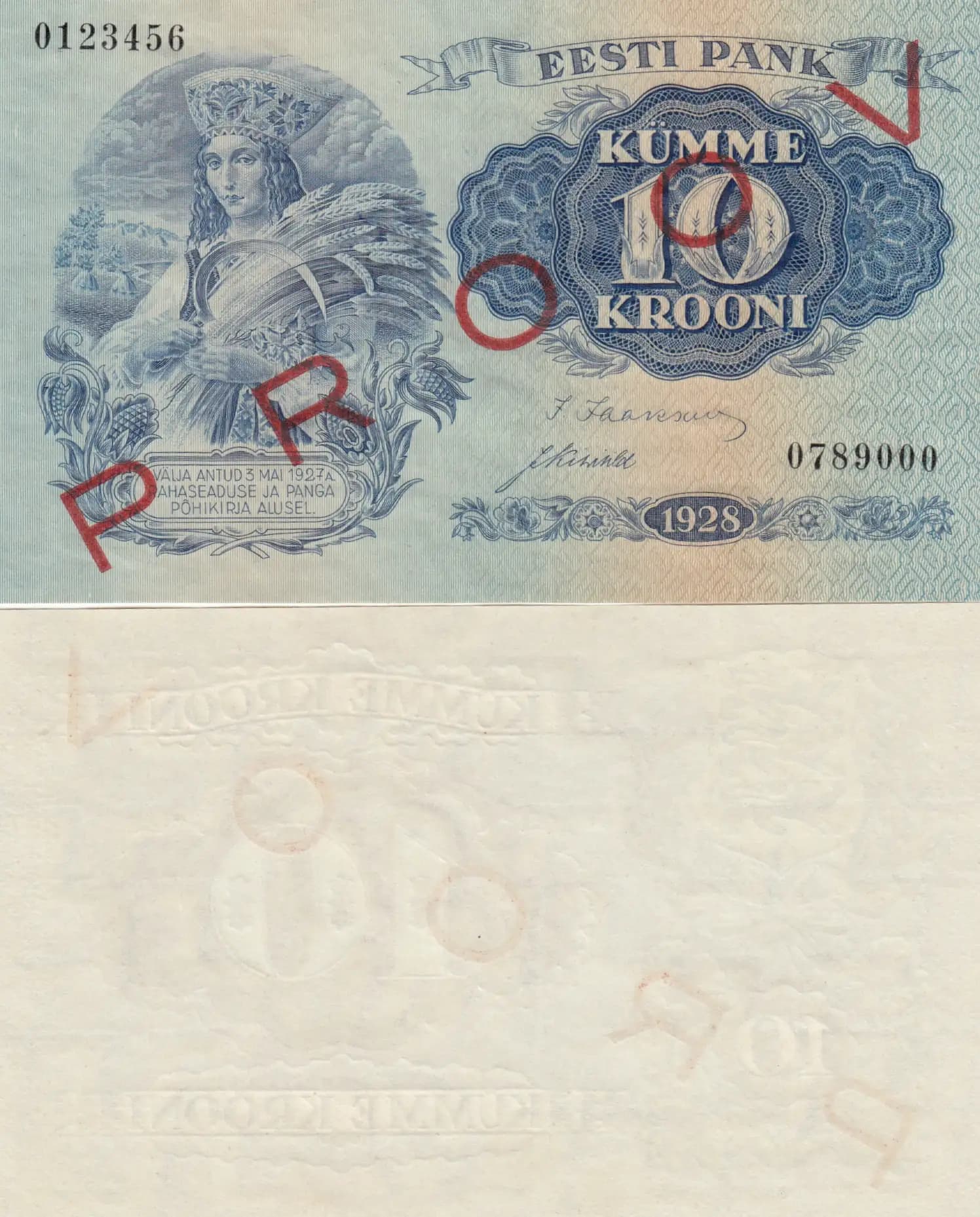
10 krooni 1928 specimen
Market Prices
About This Note
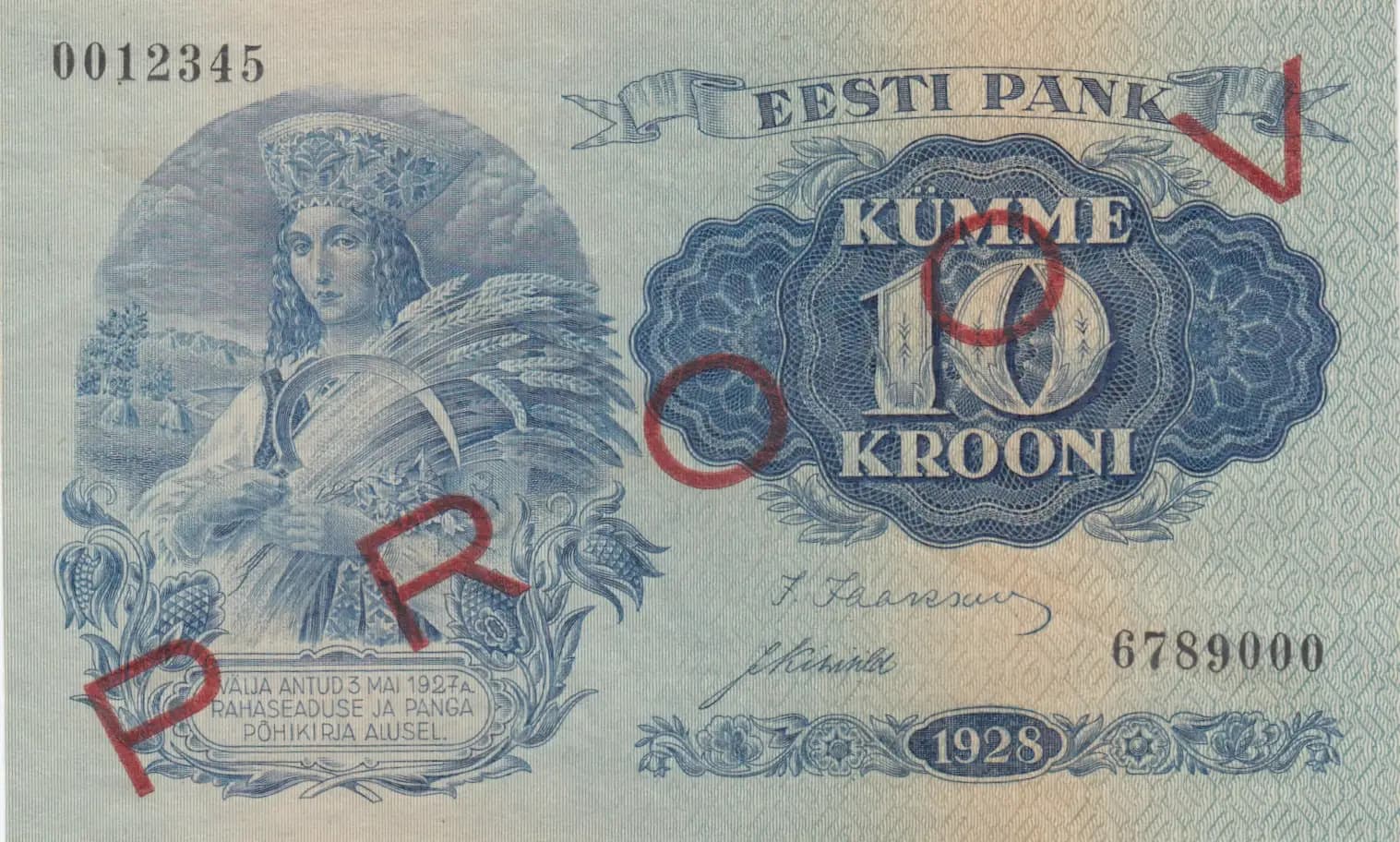
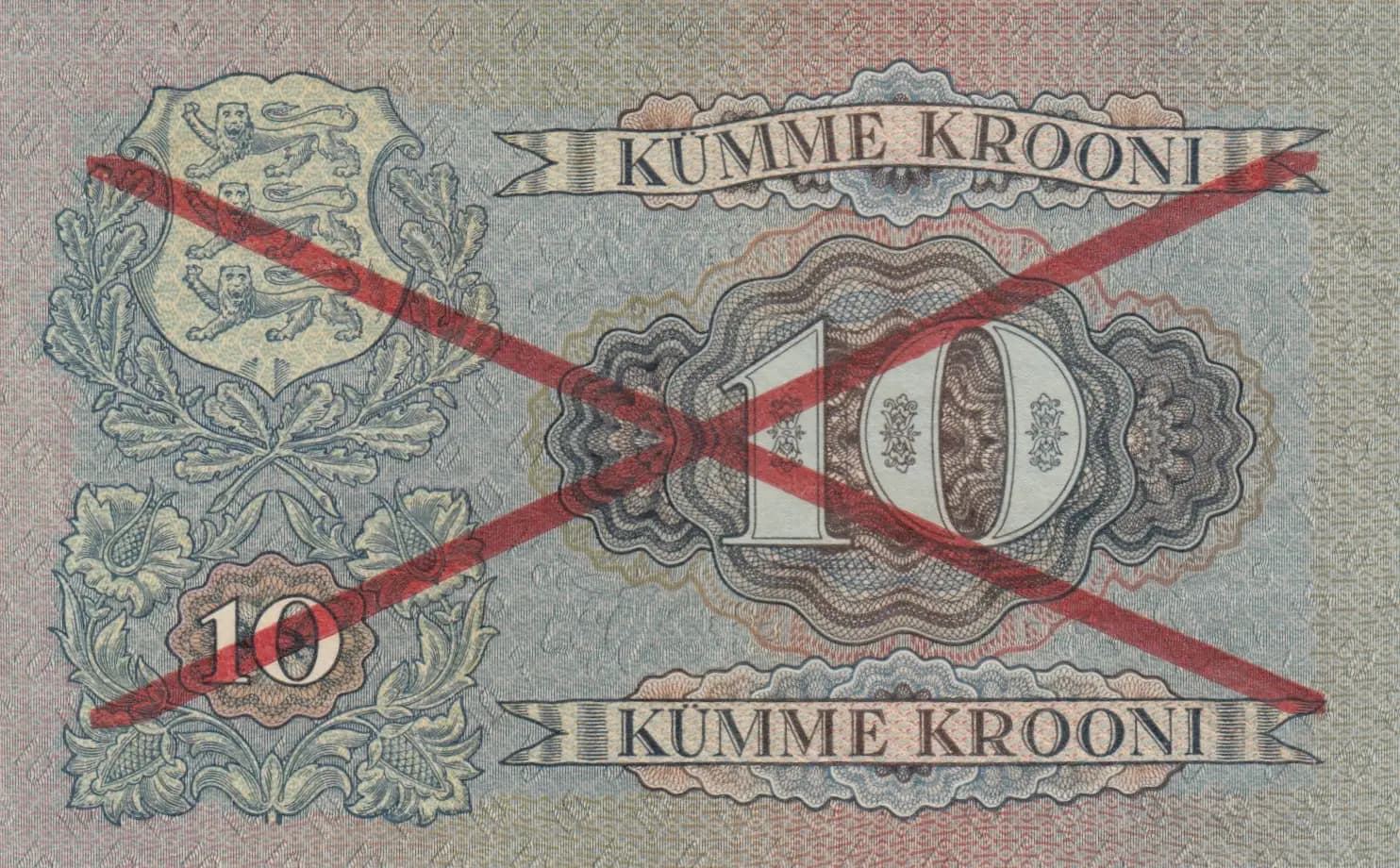
This is a 1928 Estonian 10 krooni specimen note (Pick P-63s2) in uncirculated condition, featuring a striking portrait of a woman in national costume with wheat sheaf and sickle on the obverse, and the Estonian coat of arms on the reverse. The note bears the characteristic red diagonal 'PROOV' (specimen) overprint on both sides and exhibits the fine line engraving typical of interwar Estonian currency. As a specimen note, this piece represents an important artifact of Estonia's early independence period and monetary system.
Common. Specimen notes from this issue circulate regularly in the numismatic market at modest valuations ($15-$80 depending on condition grade per available catalogs). eBay transaction data shows consistent availability with prices ranging from $1.99 to $33 USD, with most sales between $12-$18, indicating a readily available specimen type rather than a scarce issue. The 1928 10 krooni series had substantial production, and specimen examples were routinely preserved by banks and collectors.
Issued in 1928 by Eesti Pank (Bank of Estonia), this note reflects the newly independent Estonian state's effort to establish a national currency and economic sovereignty following independence from Russia in 1918. The imagery—featuring a woman in national costume with agricultural symbols (wheat and sickle) and the national coat of arms with three lions—celebrates Estonia's agrarian heritage and national identity during the interwar period. The specimen status indicates this note was produced for validation and archival purposes by the central bank, documenting the approved design before full production commenced.
The obverse features a classical portrait of a woman representing Estonia (likely a personification of the nation or national virtue) wearing a crown and draped classical clothing, positioned in three-quarter profile view with long wavy hair. She is depicted carrying a sheaf of wheat and sickle, symbolic of Estonia's agricultural economy and labor. The background includes a landscape with trees. The reverse displays Estonia's heraldic coat of arms—a shield featuring three lions—surrounded by ornamental floral wreaths and decorative circular frames that emphasize the denomination. Both sides employ intricate ornamental borders, geometric patterns, and cartouches characteristic of early 20th-century European central bank design.
Front side: 'EESTI PANK' (Bank of Estonia), 'KUMME KROONI' (Ten krooni), '10' (denomination numeral), '1928' (year), 'VALLA ANTUD 3 MAI 1927 A PAHASEADUSE JA PANGA POHJKIRJA AIUSEL' (Issued May 3, 1927 according to banking law and bank charter), with serial numbers visible. Back side: 'KUMME KROONI' (Ten krooni) displayed prominently in multiple locations within ornamental frames. Red overprint 'PROOV' (Specimen) appears diagonally across both sides.
Intaglio line engraving, the standard security printing method for banknotes of this era. The fine line engraving with complex cross-hatching patterns, decorative geometric borders, and intricate vignette work are all characteristic of intaglio production. The note was produced by the state printing authority; specific printer details for this Pick number would require archival research but likely involved Estonia's official government printer or a contracted European security printing firm specializing in central bank currency.
This is identified as variety P-63s2 (the 's2' designating it as a specimen note with PROOV overprint). Specimen notes are distinguished from circulation examples by: (1) red diagonal 'PROOV' overprint on both obverse and reverse, (2) absence of perforated specimen numbers (as noted in the catalog reference), and (3) serial numbers shown as specimen placeholders (0012345 and 6789000 observed in visual analysis, typical dummy numbering for specimen examples). The specific specimen variety and overprint placement may distinguish this from other specimen examples of the same denomination, though detailed variety catalogs would be required for definitive differentiation of multiple specimen printings.