10 krooni 1928 specimen
Market Prices
4 salesAbout This Note
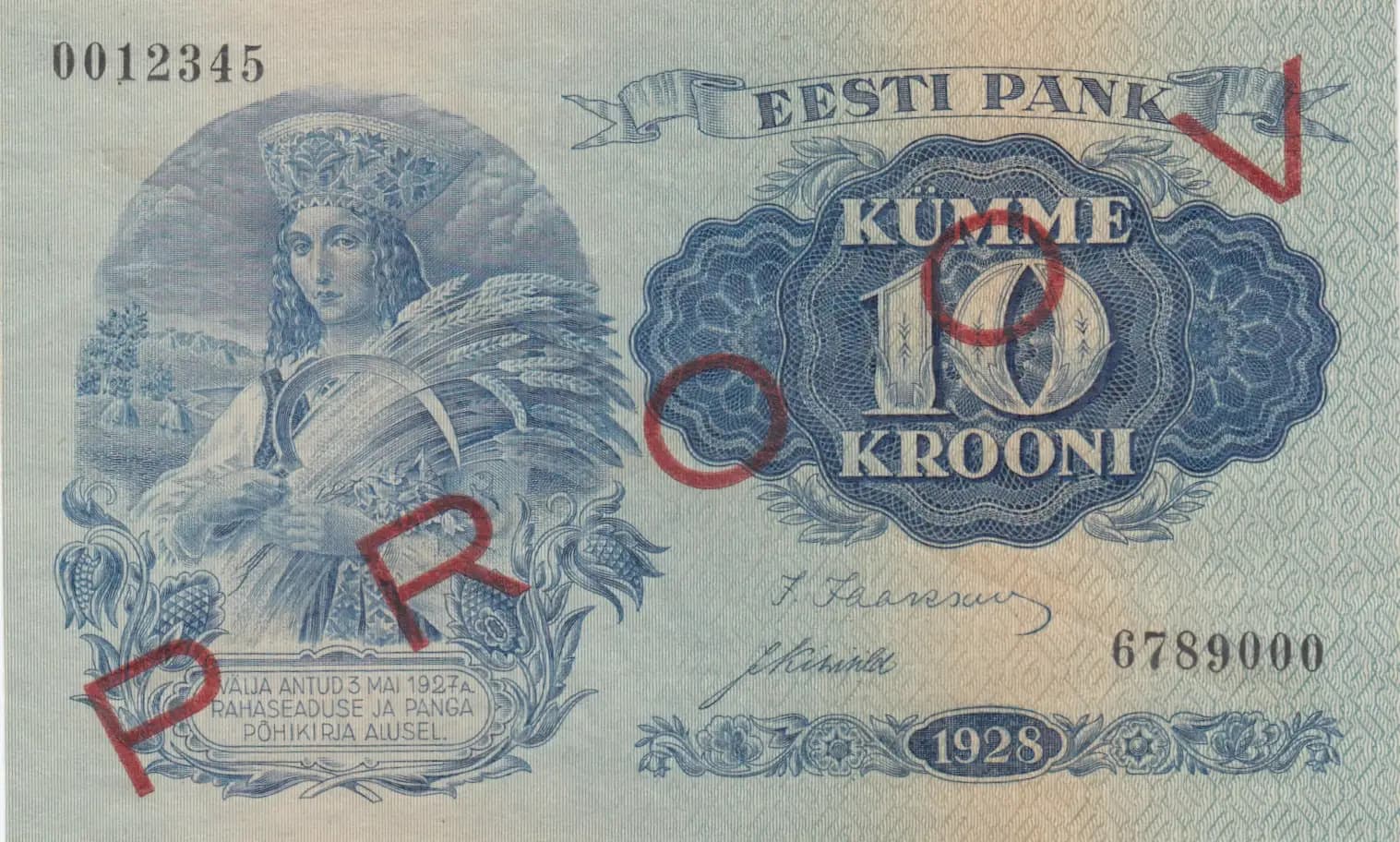
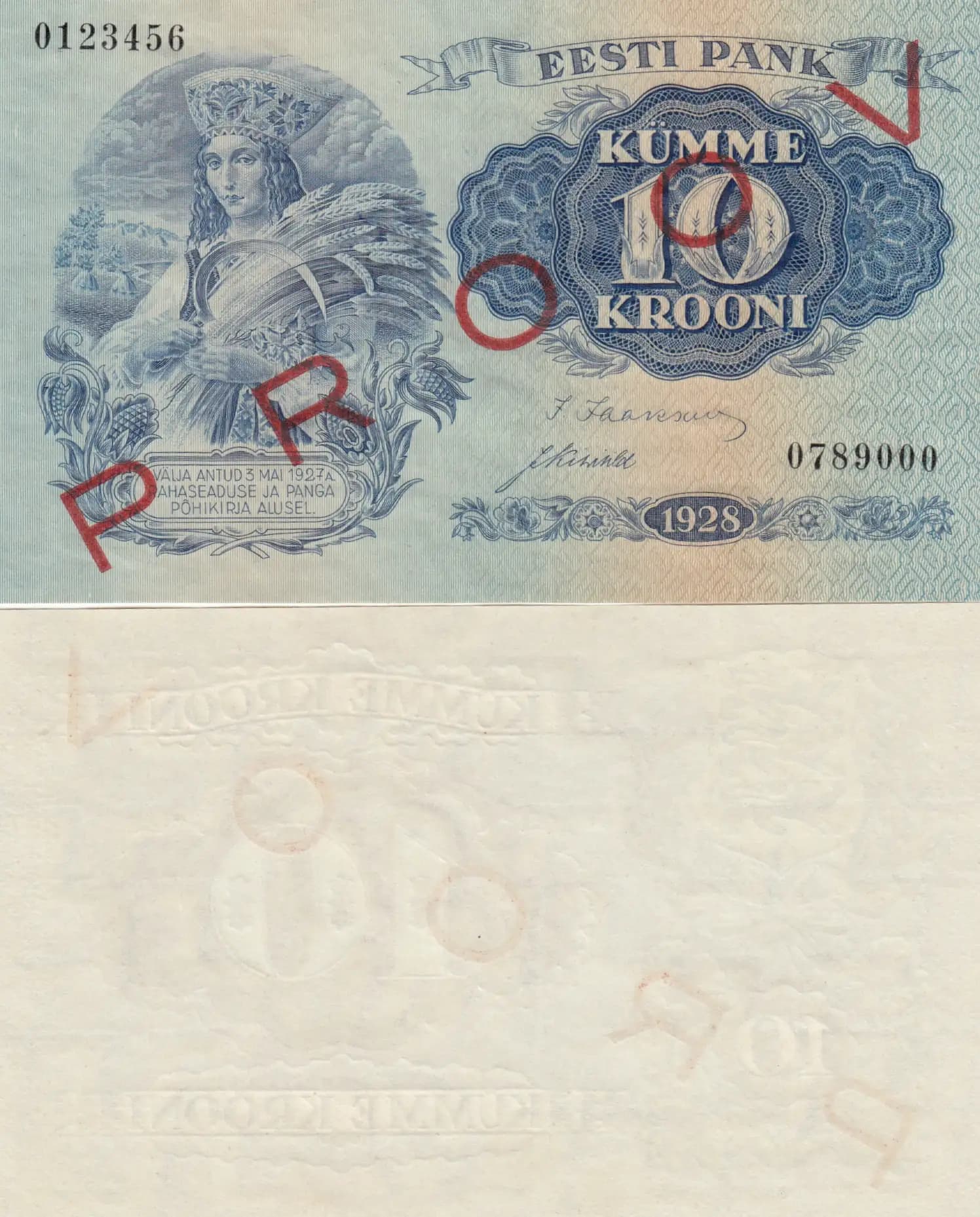
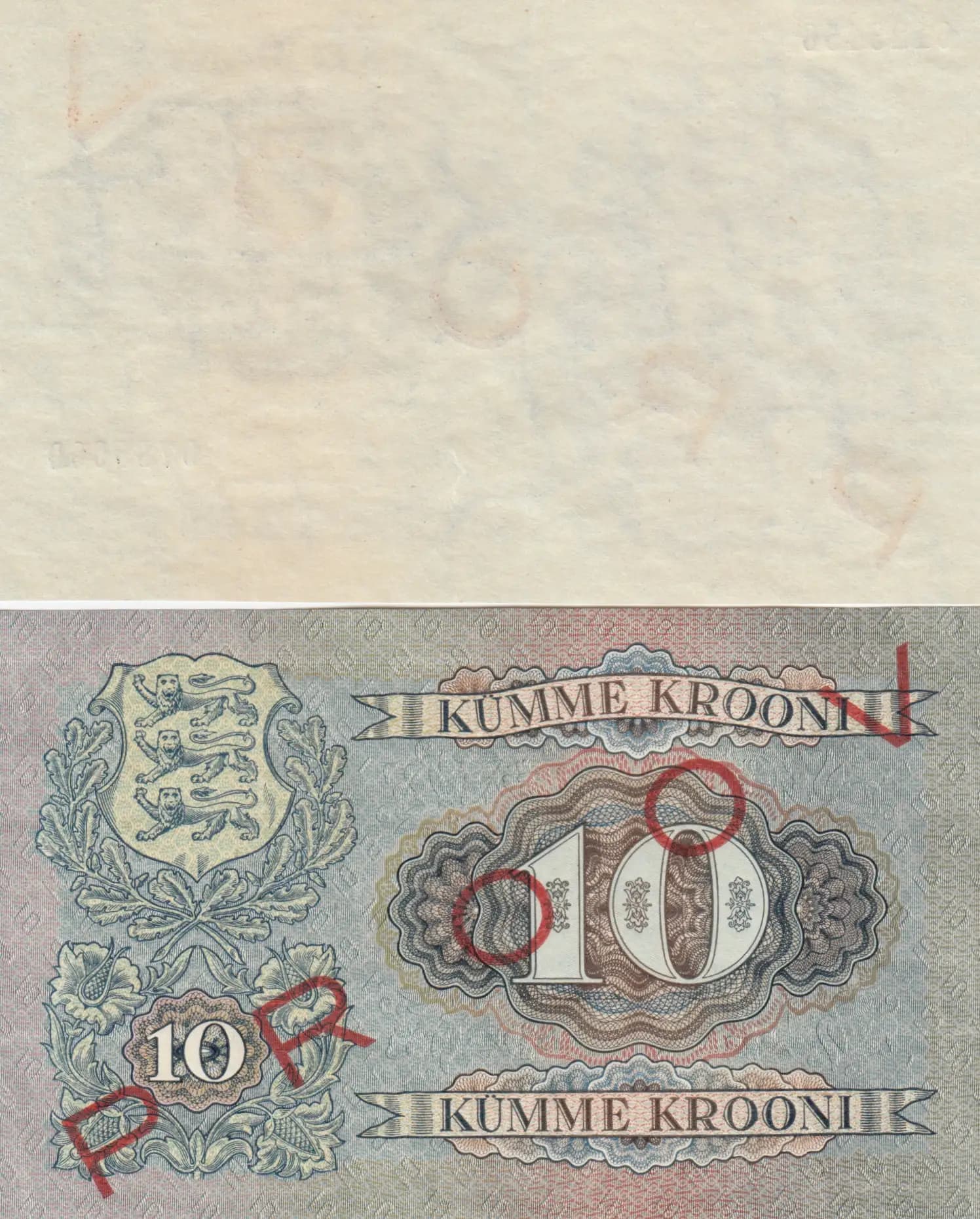
This is a 1928 Estonian 10 krooni specimen note (Pick P-63s1) in uncirculated condition, notable for its striking blue and multicolor design featuring a female figure in traditional Estonian national costume on the obverse. The reverse displays the Estonian coat of arms with three lions, characteristic of Estonia's early independence currency. As an official specimen note, it bears red 'PROOV' (specimen) overprints on the face and a large X cancellation on the back, making it a historically significant example of Estonia's interwar banknote production.
Common. While specimen notes are inherently less common than regular circulation issues, the eBay price history provided shows this note selling in the $50–$115 range for UNC specimens (2009–2016), with catalog values of $80 UNC. These price points and consistent market availability indicate this is a commonly held specimen among collectors. The 1928 10 krooni was likely printed in substantial quantities given Estonia's need to establish functional currency during this period, and specimen notes were routinely retained by banks and archives, ensuring broader survival than typical circulation notes.
Issued by Eesti Pank (Estonian Bank) in 1928, this note represents the currency of Estonia's brief period of independence between the world wars (1918–1940). The allegorical female figure in national costume carrying wheat and a sickle symbolizes the agrarian economy and national identity that Estonia sought to establish after independence from Russia and brief German occupation. The prominence of the Estonian coat of arms with its three lions reflects the nation's assertion of sovereignty and cultural heritage during this formative period.
The obverse features an allegorical female personification of Estonia or Estonian agriculture, depicted in classical style wearing an ornate headdress and draped classical clothing, positioned on the left side. She carries a sheaf of wheat and sickle, symbols of the nation's agricultural foundation and labor. The figure is surrounded by elaborate baroque and rococo ornamentation with floral and foliate elements. A large scalloped cartouche on the right contains the denomination '10' and text. The reverse displays the Estonian coat of arms—a shield containing three lions passant guardant—surrounded by ornamental baroque framing with heraldic wreaths and foliate designs. The left side carries the arms shield while a matching ornamental cartouche with the denomination '10' occupies the right. The overall color scheme is predominantly blue on the obverse and greenish-gray with brown and orange accents on the reverse, characteristic of this series.
Front side: 'EESTI PANK' (Estonian Bank); 'KUMME KROONI' (Ten Kroon); '10' (denomination); '1928' (year of issue); 'ALLA ANTUD S MAI 1927.A MAKSAUSED JA PANGA PÕHIKIRJA AIUSEL' (Issued under the May 1927 laws and bank charter); signature 'Haarvie Siima' (Bank official); serial numbers '0123456' and '0789000'. Back side: 'KUMME KROON' (Ten Kroon); 'KUMME KROONI' (Ten Kroon in genitive case); '10' (denomination). Specimen overprint: 'PROOV' (Specimen) in red on front; large red 'X' cancellation on back.
Intaglio (copperplate) engraving, evidenced by the fine line work, intricate baroque detailing, and complex security features visible in both the portrait work and heraldic elements. The precise execution of the decorative cartouches, foliate patterns, and the sharp definition of the three-lion coat of arms are characteristic of high-security intaglio production. This note was likely produced by a European security printer, possibly de la Rue or a similar specialist, though the specific printer for this Pick number is not definitively documented in standard catalogs.
This is the specimen variety (P-63s1) distinguished by the red 'PROOV' overprint on the obverse and large red 'X' cancellation on the reverse. Two signatures are noted: one visible is 'Haarvie Siima' (a known Eesti Pank official of the period). The note carries serial numbers on both sides (0123456 and 0789000 observed), though specimen notes typically have standardized or sequential numbering. No other major varieties are documented for this Pick number in standard catalogs, though minor signature and serial number combinations may exist depending on production batches.