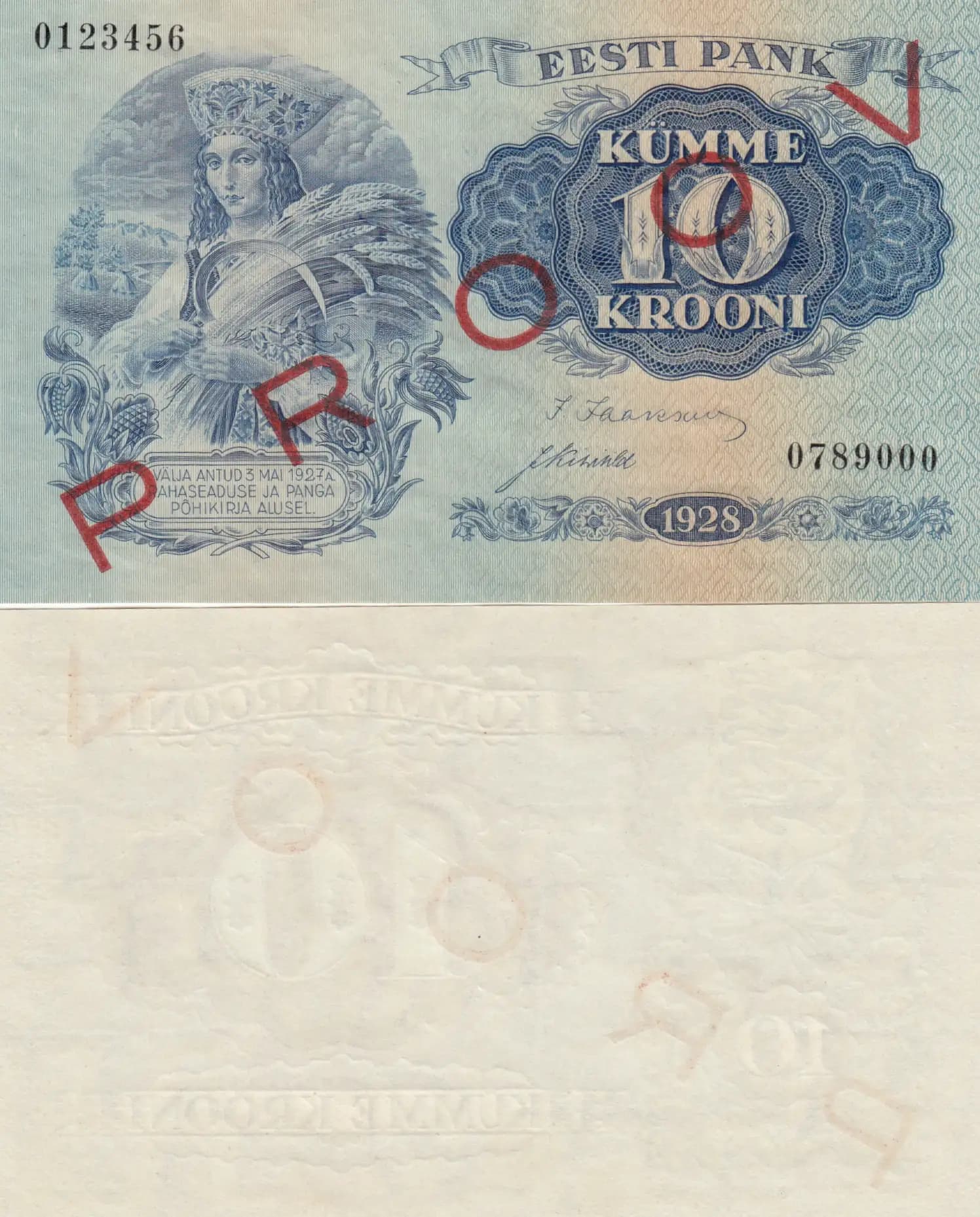
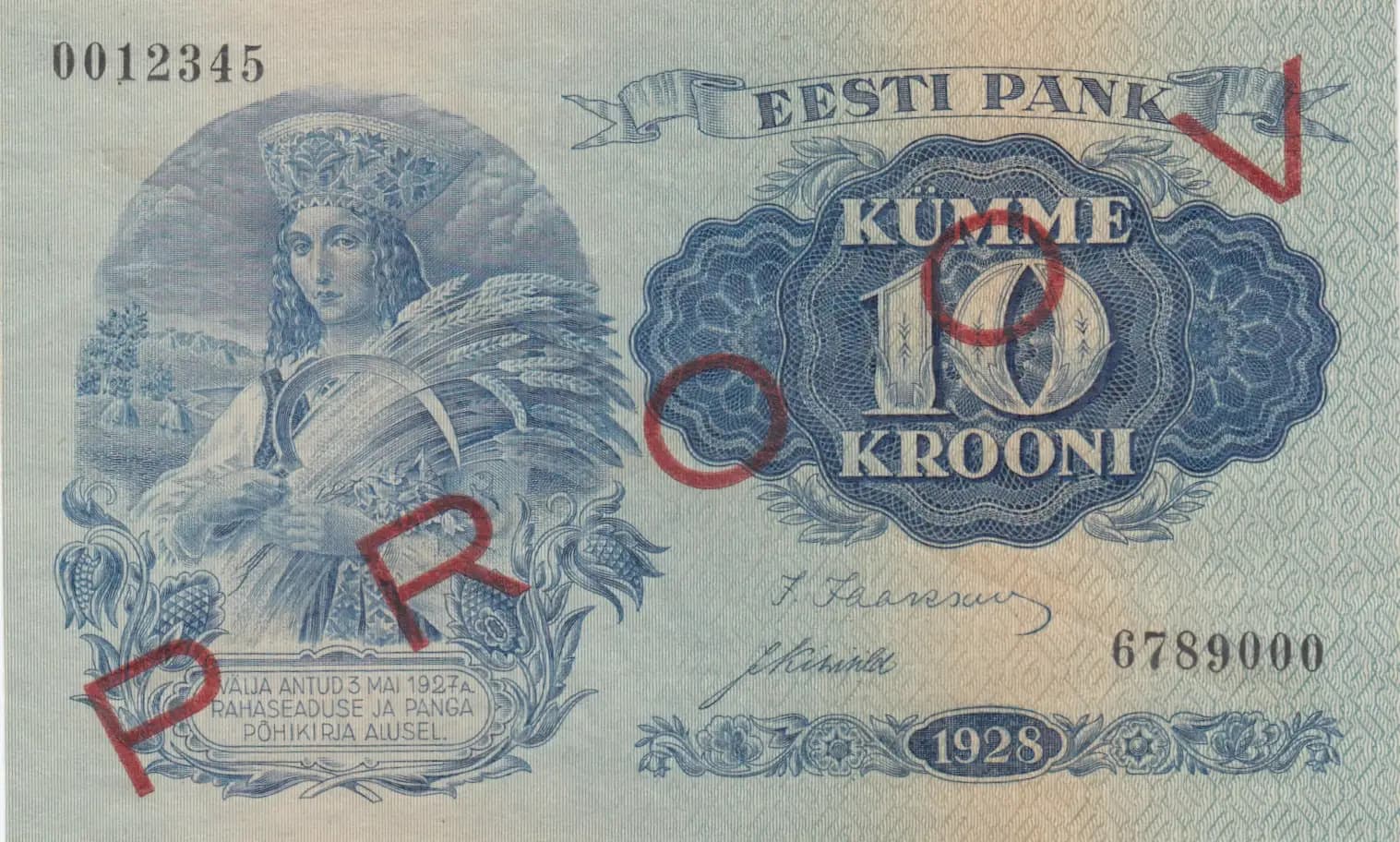
10 krooni 1928
Market Prices
18 salesAbout This Note
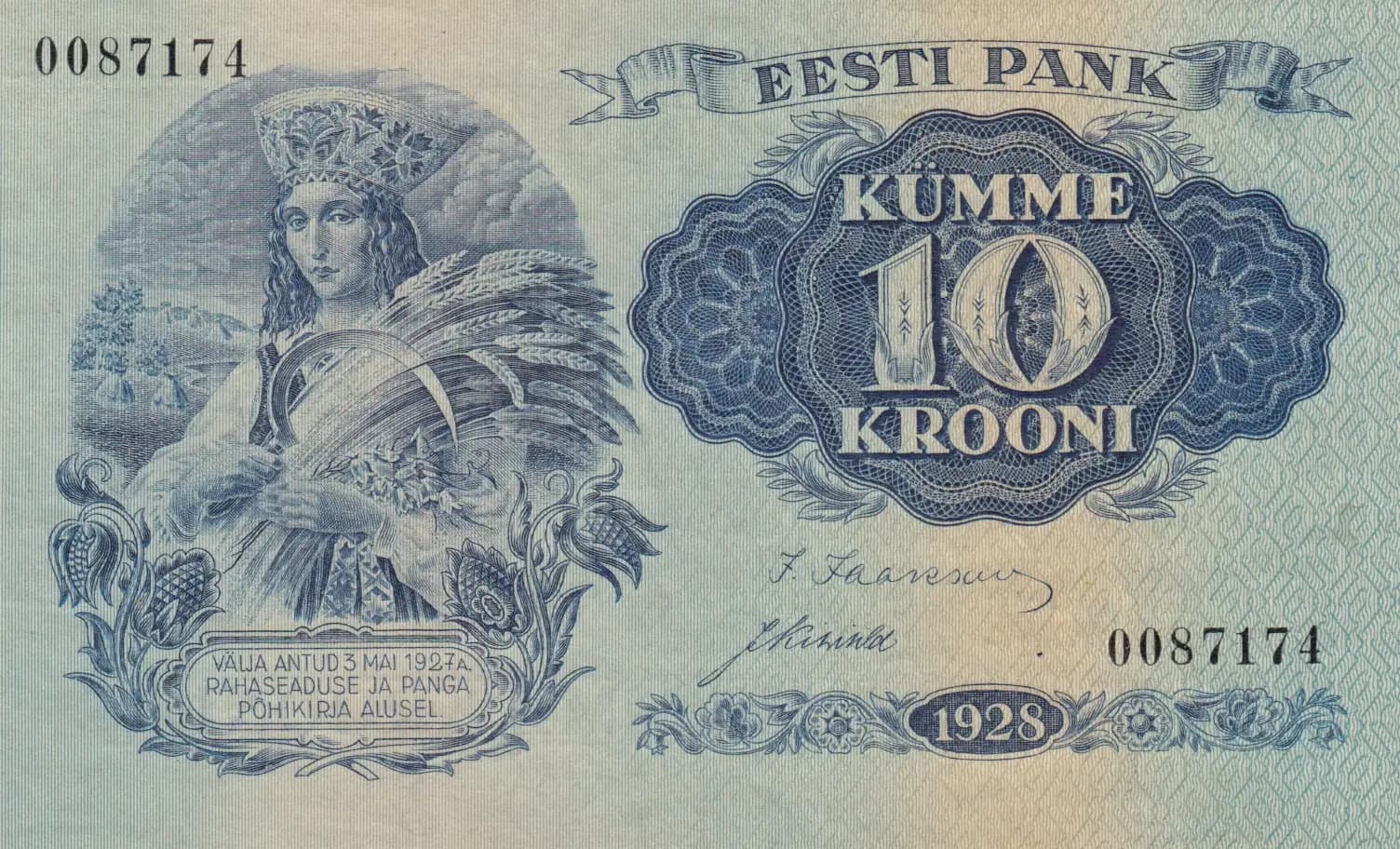
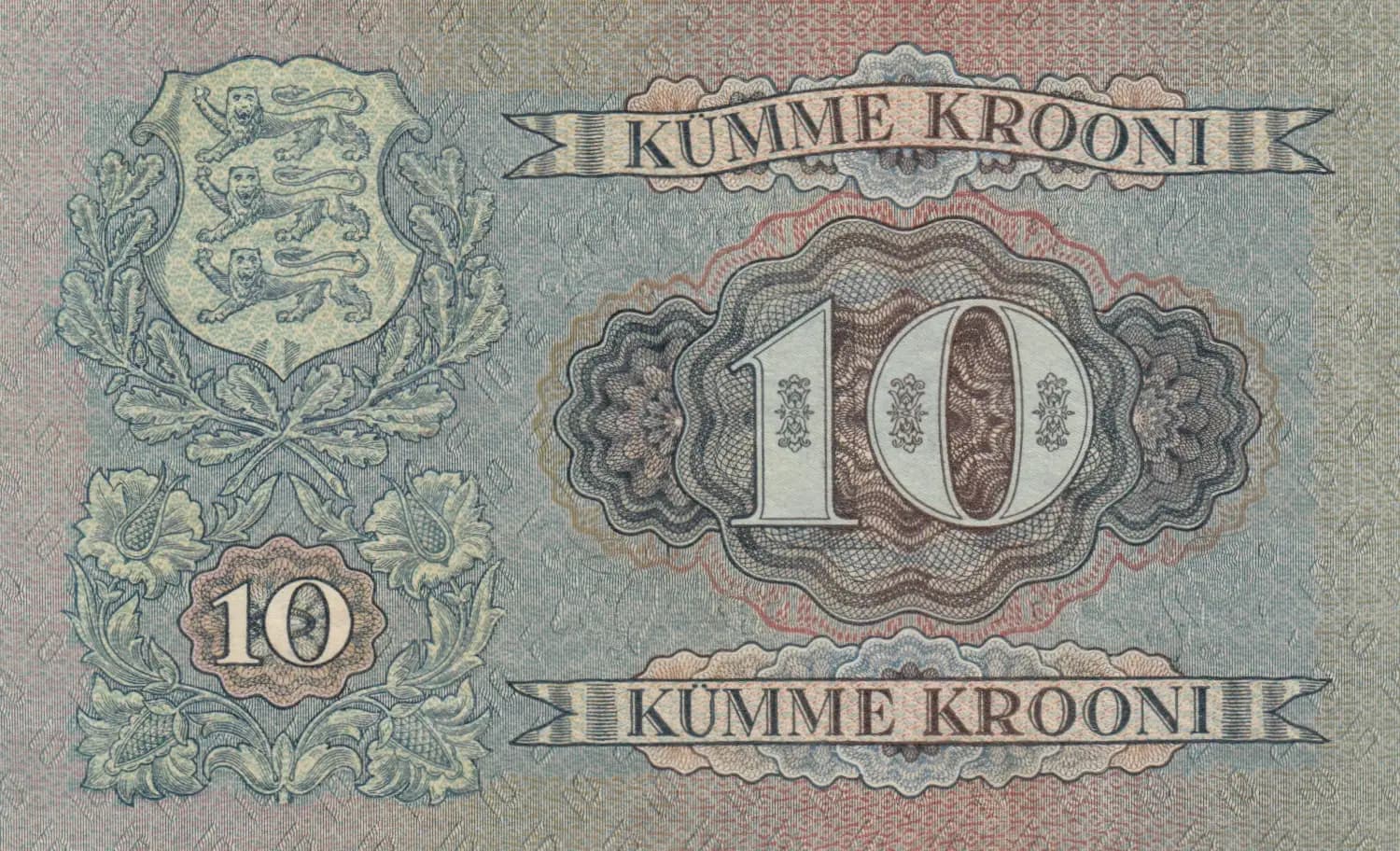
This 10 krooni note from Estonia's 1928 issue represents the early monetary independence of the Estonian Republic, presented in exceptional uncirculated condition. The front features an allegorical maiden wearing a crown and holding wheat sheaves, symbolizing Estonian prosperity and agricultural heritage, rendered in blue with fine classical engraving. The reverse displays the Estonian coat of arms with three lions and the denomination in multicolored design, and the overall preservation shows pristine paper quality with no wear, folds, or circulation marks.
Common. The eBay sales data shows consistent trading in the $5-$15 range for fine to very fine condition, with UNC examples cataloged at approximately $80 (2016 reference values). The substantial transaction history across multiple years and condition grades indicates adequate supply in the collector market. Print runs for this 1928 Estonian issue were substantial, and the note has not been recalled or withdrawn from circulation collecting. No scarcity premium is warranted based on available market evidence.
Issued in 1928 under the authority of the May 1928 Estonian monetary law, this note commemorates the young Estonian Republic's establishment of its independent banking system through Eesti Pank. The allegorical female figure carrying wheat sheaves reflects the nation's agrarian foundation and prosperity during the interwar period, while the heraldic three-lion coat of arms emphasizes Estonian sovereignty following independence from Russian imperial rule. This currency represents a brief but significant era of Estonian financial autonomy that would end with Soviet occupation in 1940.
The obverse features the Maiden of Estonia (Eesti Neitsi), an allegorical female figure representing the nation, depicted in right profile wearing an ornate crown and holding wheat sheaves and a sickle—symbols of agricultural prosperity and labor. She is contained within an ornamental architectural frame with elaborate scrollwork on the left side of the note. The right side displays the denomination 'KUMME KROONI' (10 Kroon) in decorative cartouches with heraldic framing. The reverse showcases the three-lion coat of arms of Estonia within an ornamental heraldic shield surrounded by floral and scrollwork motifs, with the large denomination numeral '10' prominently displayed in an elaborate decorative cartouche flanked by ribbon banners. The color scheme employs blue on the obverse and blue with multicolored accents (green, brown, red/pink) on the reverse.
FRONT SIDE: 'EESTI PANK' (Bank of Estonia); 'KUMME KROONI' (Ten Kroon); 'VABARIIGI MAI 1928.A RAHASEADUSE JA PANGA POHIKIRJA ALUSEL' (By virtue of the Republic's May 1928 monetary law and the bank's charter); '1928' (year of issue); Serial number '0087174' (appears twice); Two signatures including 'K. Kaarem...' (bank official signature). BACK SIDE: 'KUMME KROONI' (Ten Kroon, appears twice in banner ribbons above and below the denomination numeral); '10' (large denomination numeral in decorative cartouche).
Intaglio engraving (copperplate printing), evidenced by the fine line work, complex guilloche patterns, microline detailing in the cartouches and borders, and the characteristic depth and clarity of classical engraving visible throughout both sides. The sophisticated security features including intricate scrollwork, multiple ornamental frames, and fine-line background patterns are consistent with high-quality security printing standards of the late 1920s. This note was printed by a European security printer, likely De La Rue or a similar specialist, though specific attribution requires additional documentation.
This example appears to be P-63a (the standard variety) based on the visual characteristics. PMG records indicate P-63a and P-63s variants exist for this Pick number, with the 's' designation typically indicating specimen notes with special markings or overprints. The observed specimen shows two signatures as standard for regular circulation issues of this type. The serial number '0087174' and signature 'K. Kaarem...' may help determine the specific printing run, but no specific variety designation is evident from the visual analysis without access to specialized Estonian numismatic references documenting signature varieties or serial number ranges.