1 dollar 1965
“Antigua”
Market Prices
20 salesAbout This Note
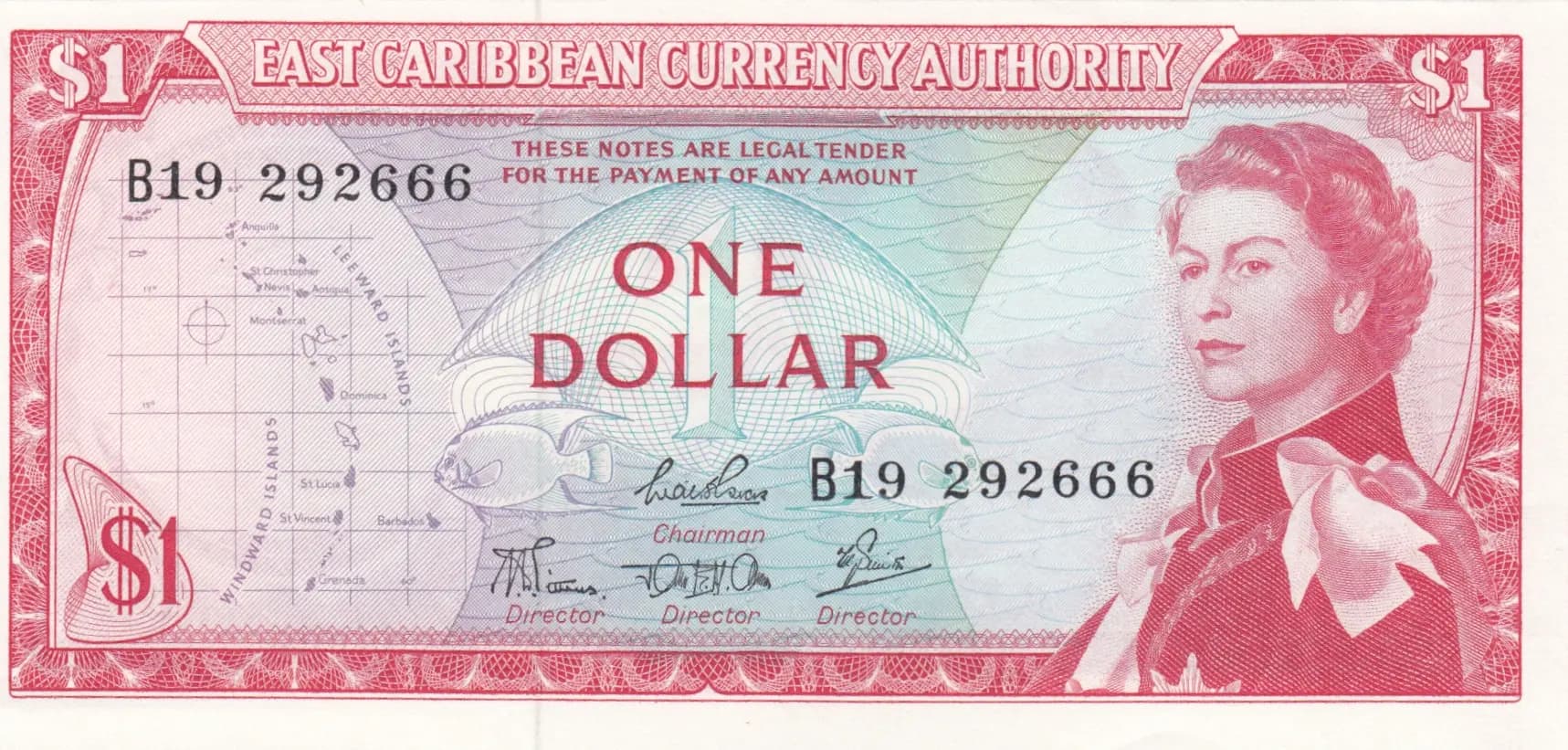
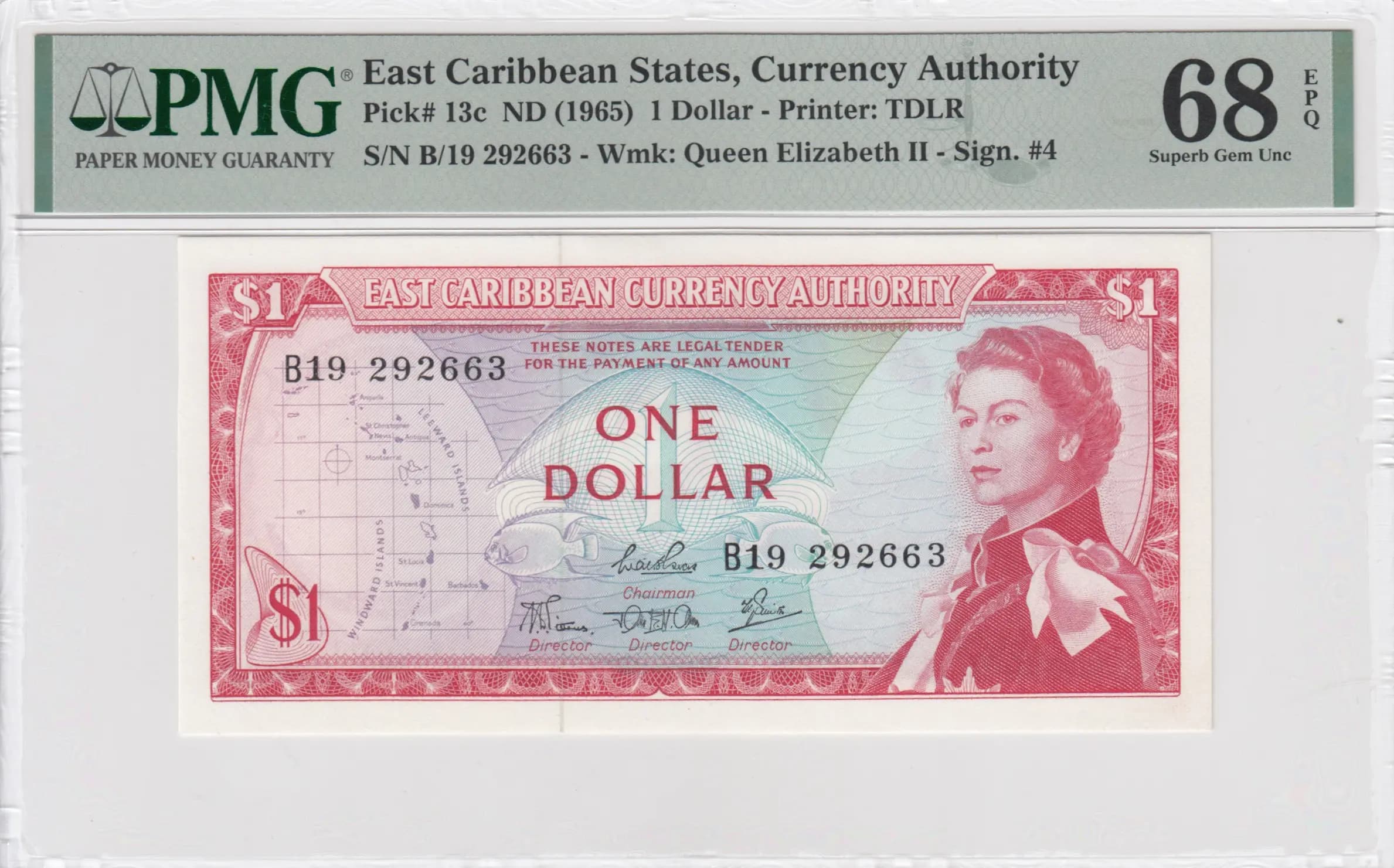
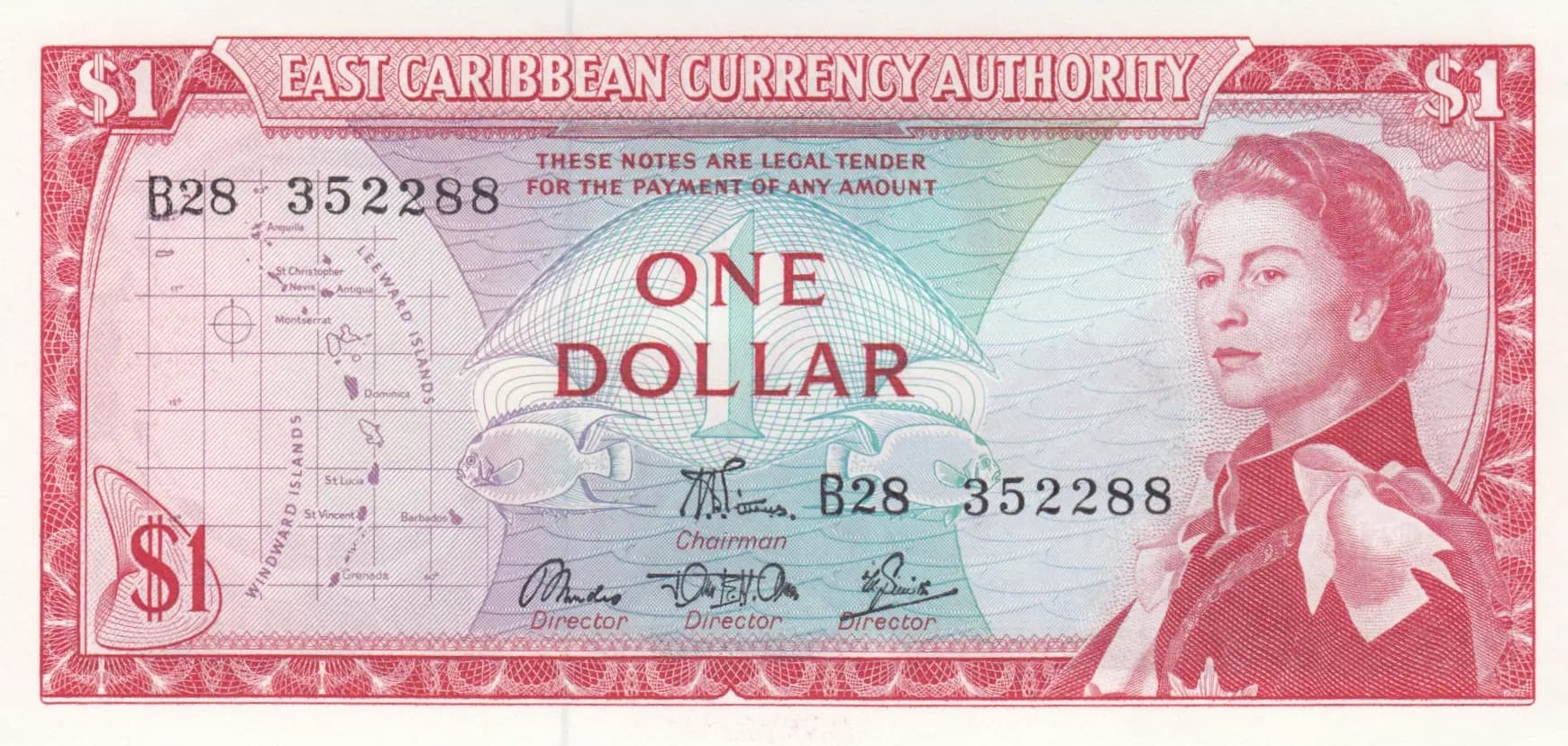
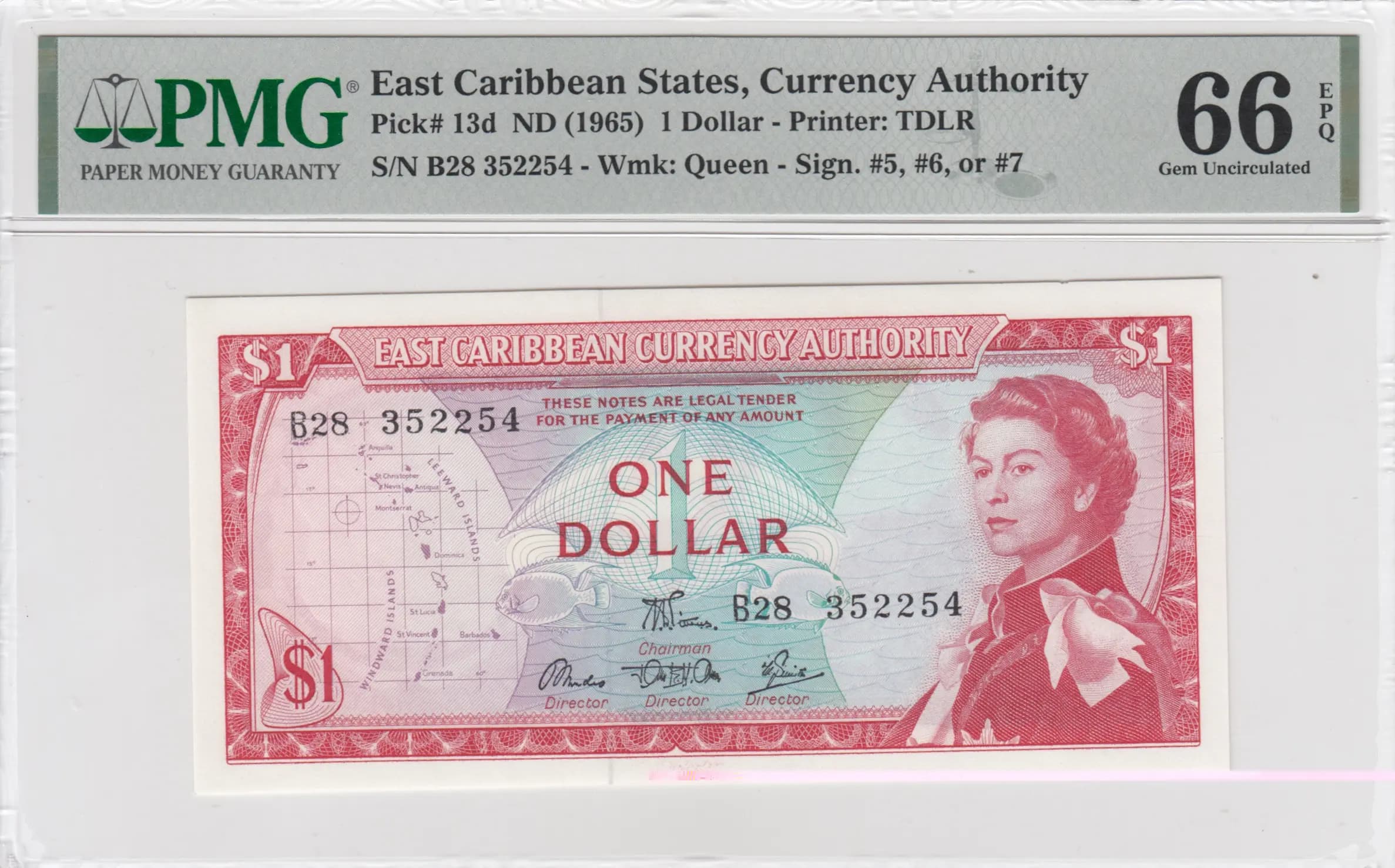
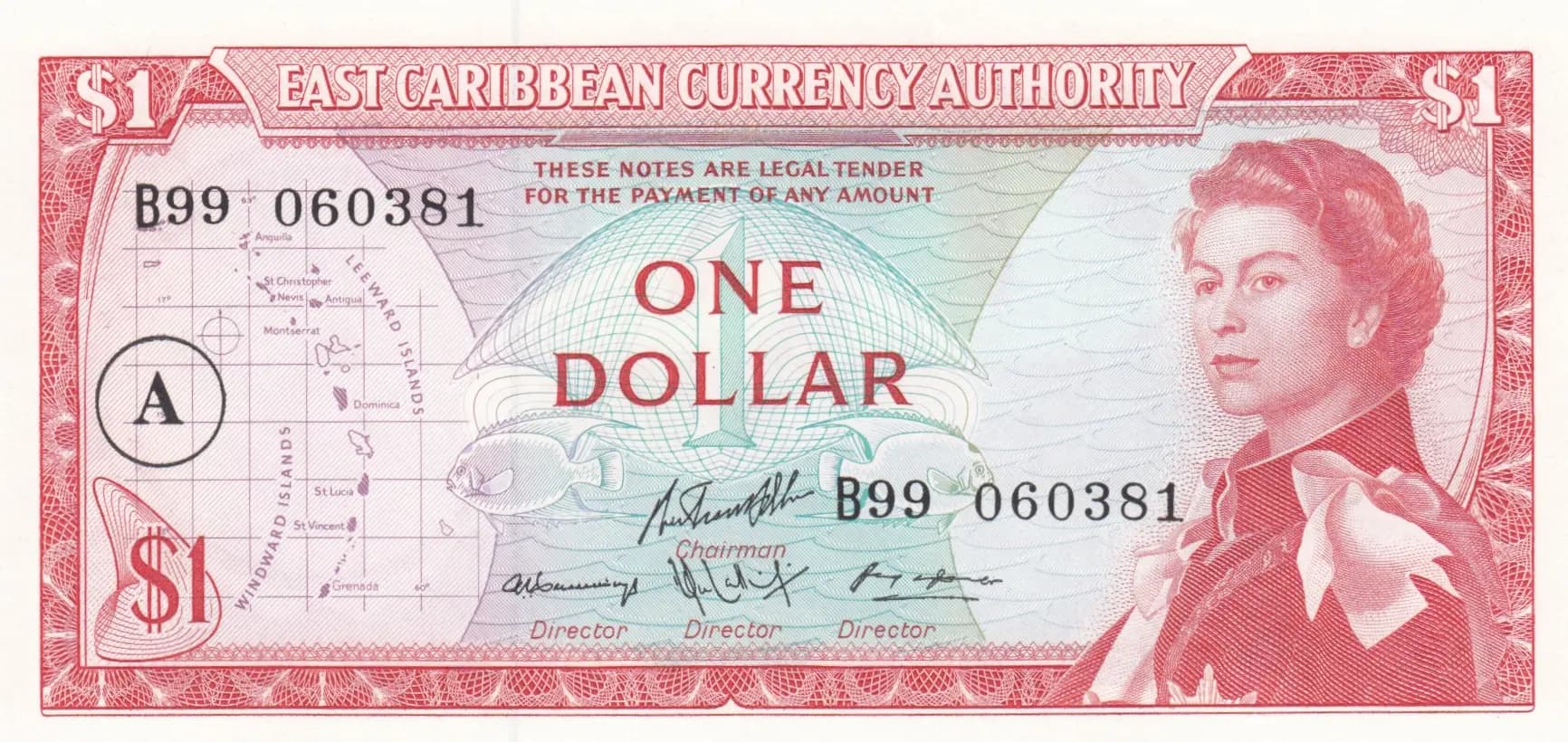
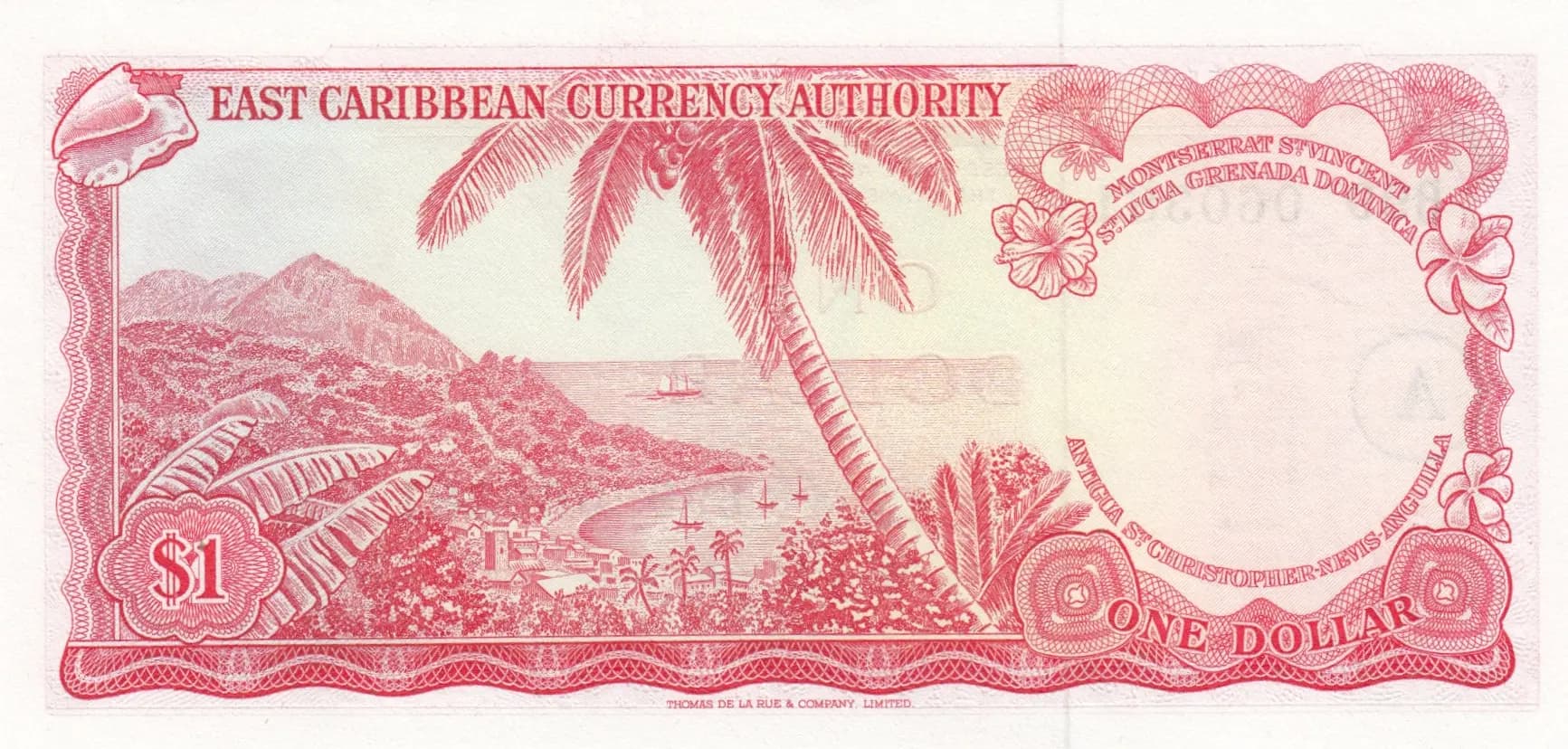
This is an uncirculated 1965 East Caribbean Currency Authority 1 dollar note (Pick 13h) featuring Queen Elizabeth II in profile on the obverse and a tropical Caribbean coastal landscape on the reverse. The note displays pristine condition with sharp, clear printing throughout, no wear or creasing, and exhibits the classic Thomas de la Rue security engraving with intricate guilloche patterns and fine line work. The 'A' overprint in circle indicates the Antigua variety, making this a desirable example of early East Caribbean currency from the post-independence period.
Common. While this note is from 1965 and represents early East Caribbean Currency Authority currency, the eBay market data shows consistent availability across multiple condition grades, with uncirculated examples selling in the $20-50 range historically and more recently in lower ranges. The print run for the 1 dollar denomination during this period was substantial, and the note remains readily available to collectors. No evidence of rarity due to recalled issues or extremely limited production.
Issued in 1965, this note represents the East Caribbean Currency Authority's early currency circulation during a period of political transition in the Caribbean territories. The obverse portrait of Queen Elizabeth II reflects the Commonwealth status of these island nations, while the reverse landscape depicting a tropical settlement amid palm trees and mountains celebrates the natural resources and geography of the member islands (Antigua, St. Lucia, Grenada, Dominica, St. Christopher, Nevis, and Anguilla). The inclusion of detailed maps and regional imagery on the note emphasizes unity among the diverse island territories under a shared currency authority.
The obverse features a formal right-facing profile portrait of Queen Elizabeth II wearing dignified formal attire, positioned on the right portion of the note. To the left is a detailed cartographic representation of the East Caribbean islands showing their geographic locations and relationships. The center of the note prominently displays the denomination 'ONE DOLLAR' in large red lettering, with dollar sign symbols positioned in the upper left and lower left corners. The note incorporates a distinctive circular 'A' overprint indicating the Antigua variety. The reverse presents an idealized tropical Caribbean landscape dominated by a prominent central palm tree, with a coastal settlement visible among mountains and lush vegetation in the background, framed by decorative botanical elements in all four corners. The reverse also displays the member island names in a horizontal band at the base.
FRONT SIDE: 'EAST CARIBBEAN CURRENCY AUTHORITY' (issuing authority); '$1' and 'ONE DOLLAR' (denomination); 'THESE NOTES ARE LEGAL TENDER FOR THE PAYMENT OF ANY AMOUNT' (legal tender declaration); 'B99 0603381' (serial number); signature lines labeled 'Chairman' and 'Director' (three instances). BACK SIDE: 'EAST CARIBBEAN CURRENCY AUTHORITY' (issuing authority); '$1' and 'ONE DOLLAR' (denomination); 'ST.LUCIA GRENADA DOMINICA ST.CHRISTOPHER NEVIS ANGUILLA' (member territories); 'THOMAS DE LA RUE & COMPANY LIMITED' (printer identification).
Intaglio (copperplate) engraving by Thomas de la Rue & Company Limited of London. The security features include intricate guilloche patterns throughout the background, fine line engraving on the portrait and landscape elements, detailed topographical rendering of the Caribbean coastline and vegetation, and ornamental border designs. The note exhibits the hallmark characteristics of high-security currency production from this period, with sharp, crisp impressions and complex layered engraving visible in both the portrait and landscape sections.
This is the Pick 13h variety, characterized by the 'A' overprint in a circle on the obverse, indicating the Antigua territorial designation. The visual analysis confirms the presence of this circular 'A' emblem on the left portion of the note. The serial number prefix 'B99' and the specific design elements (map layout, portrait style, landscape reverse) are consistent with the 1965 first issue. No other notable varieties (signature differences, date variations, or print run markers) are apparent from the visual examination.