1 dollar 1965
Market Prices
11 salesAbout This Note
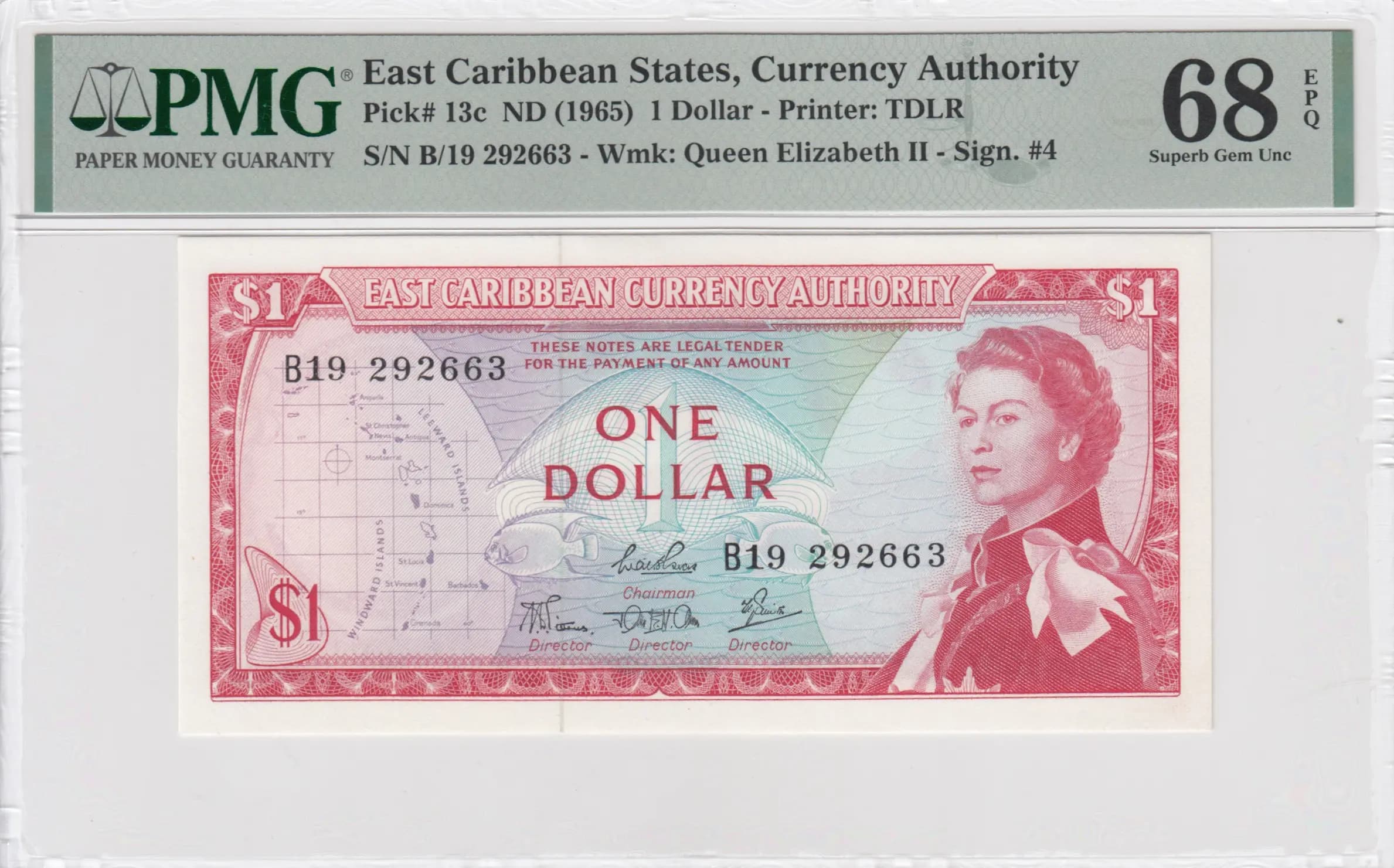
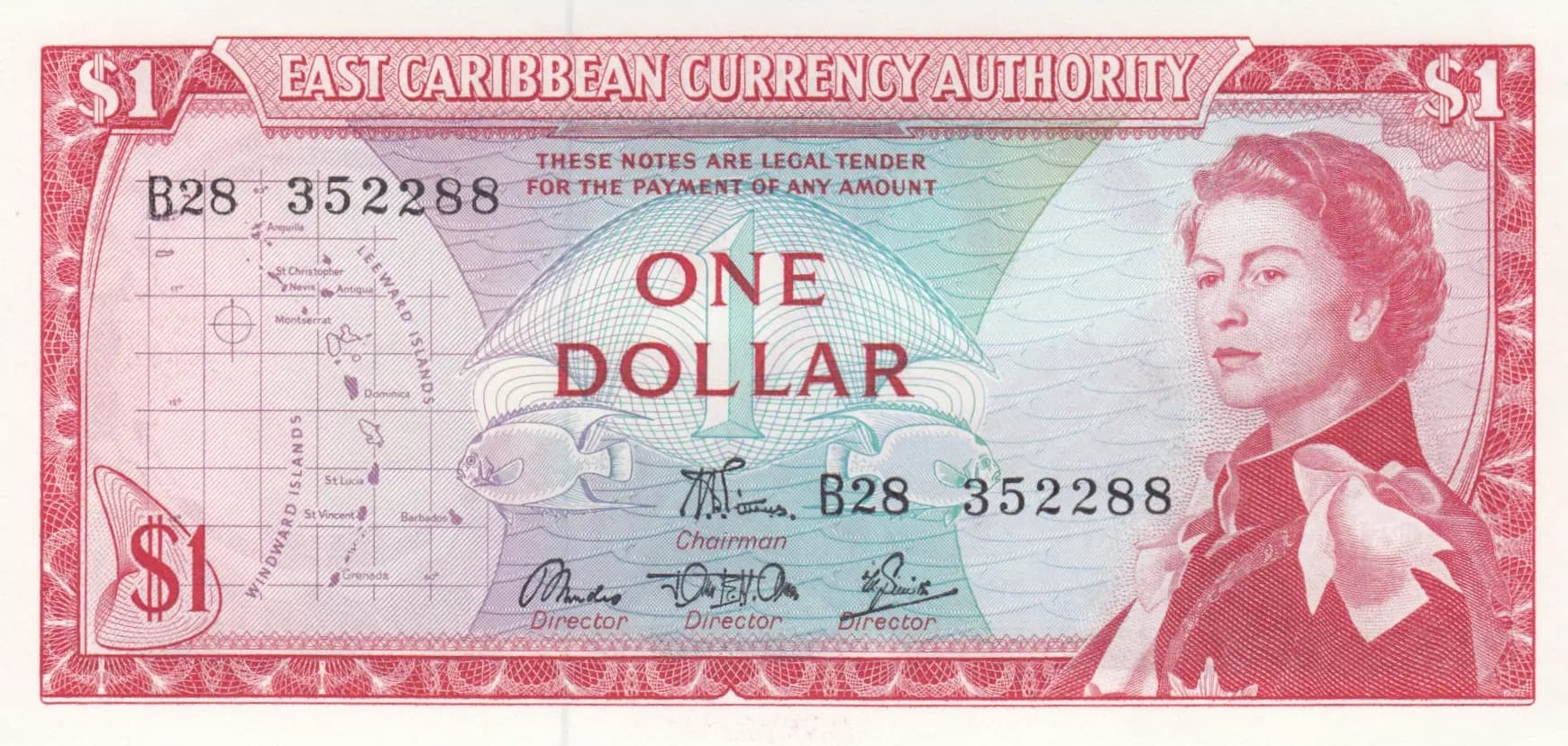
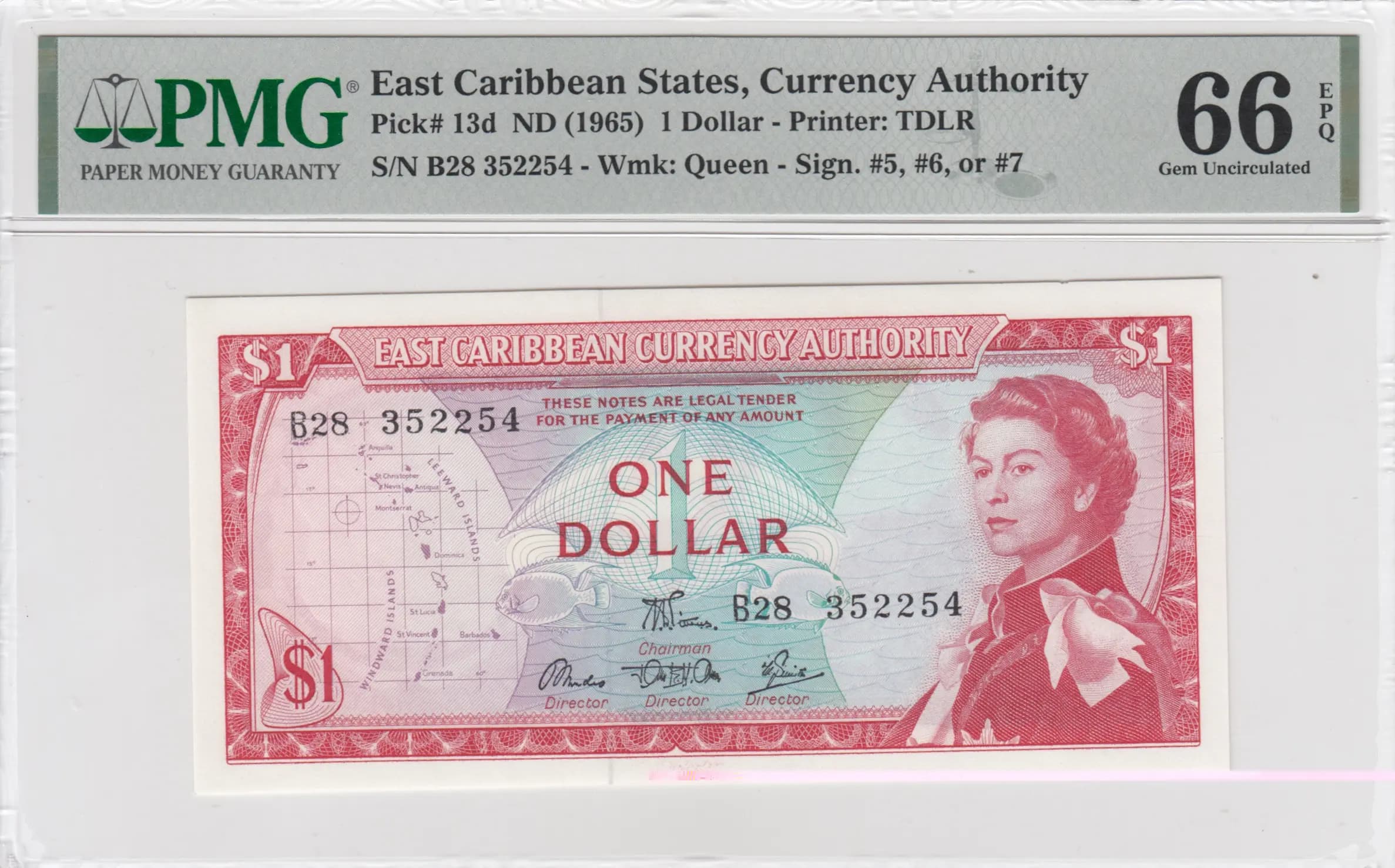
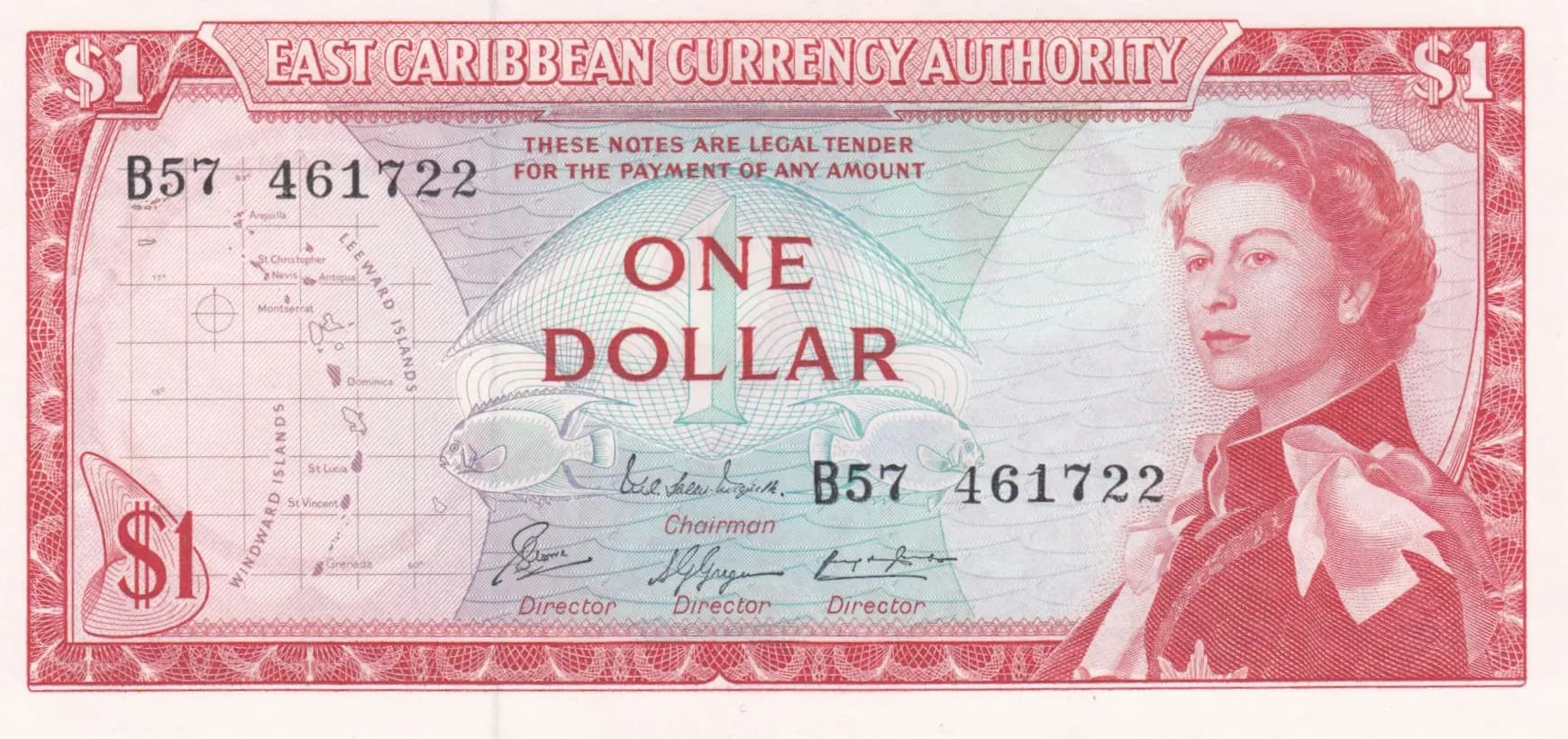
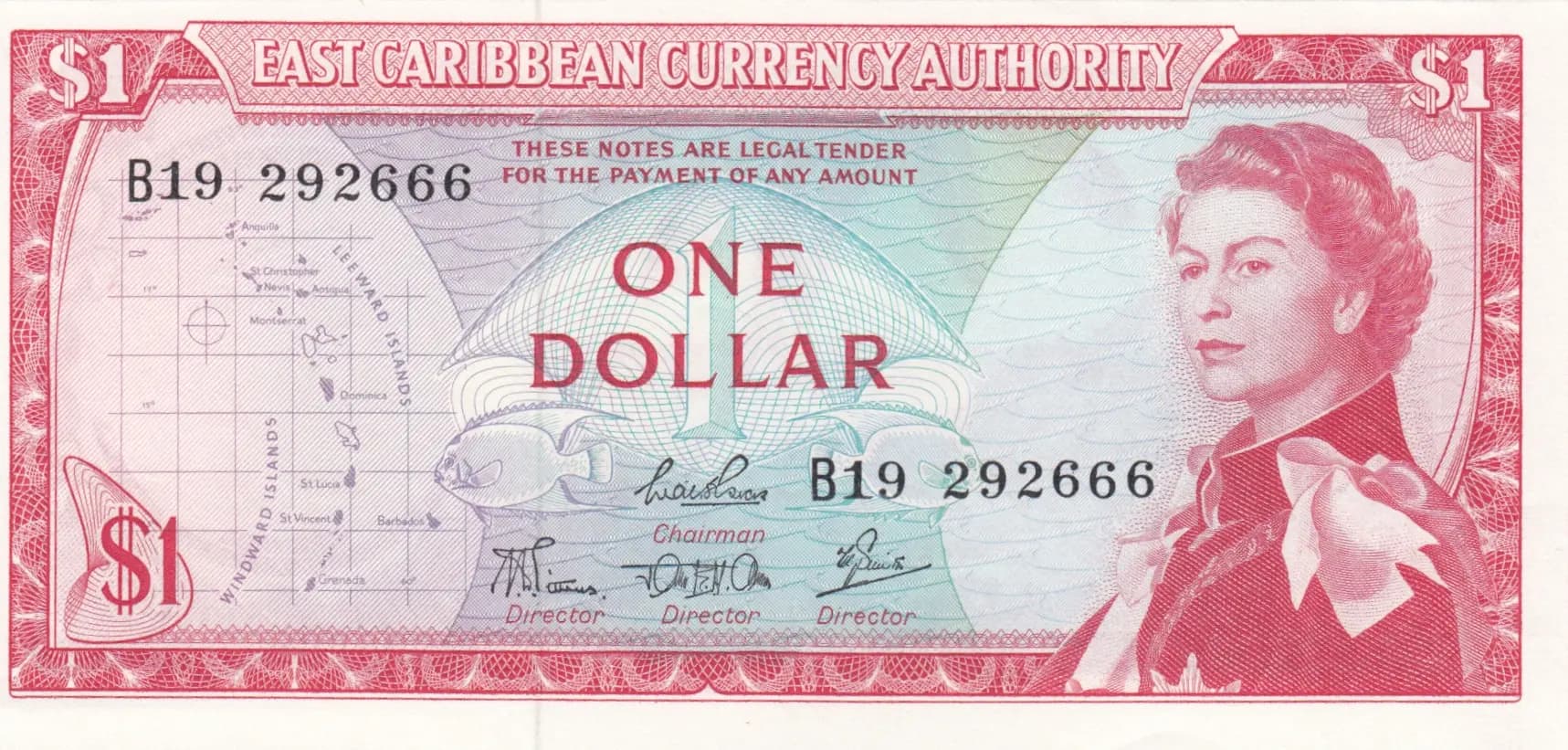
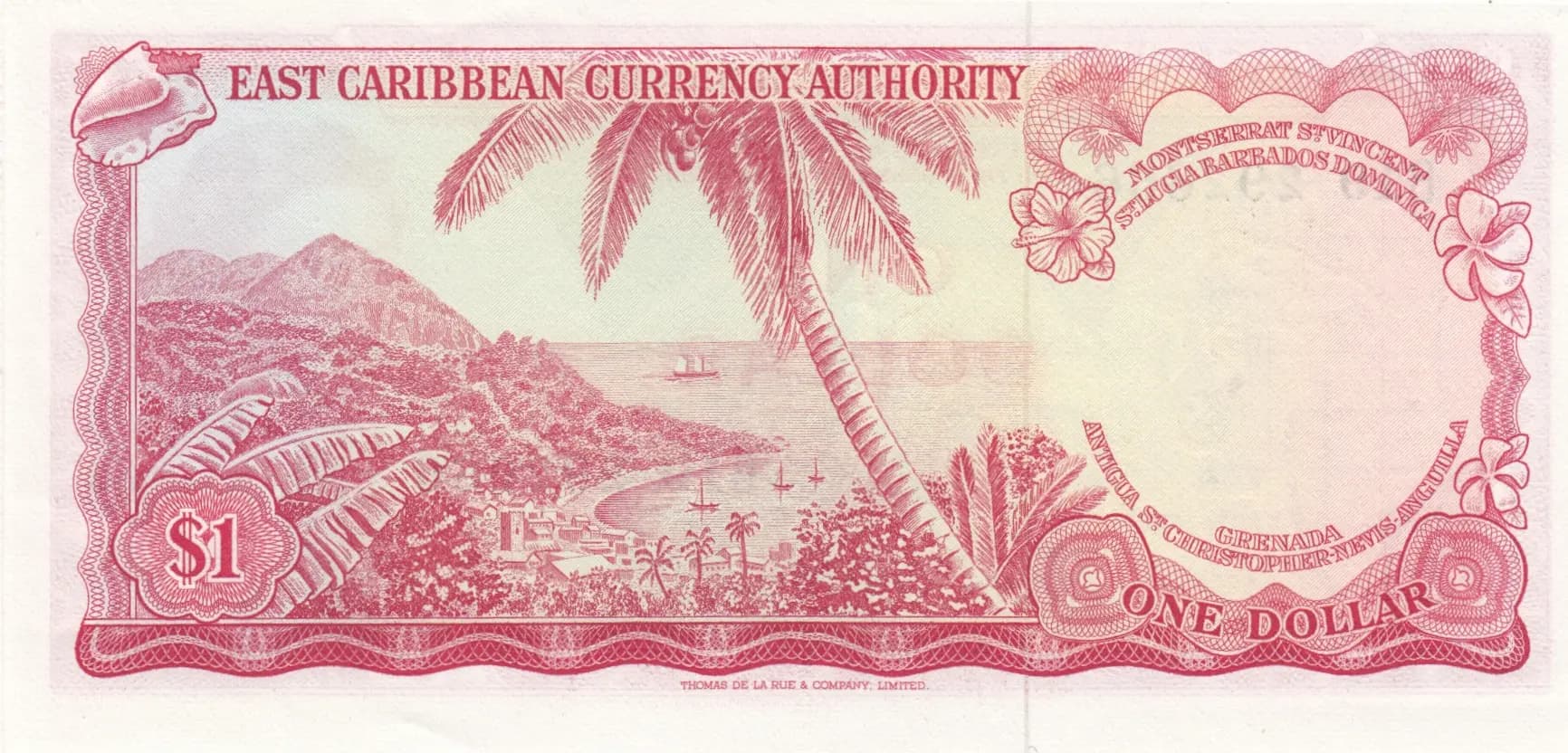
This is an East Caribbean Currency Authority 1 dollar note from 1965 (Pick-13c), printed by Thomas de la Rue in London. The obverse features Queen Elizabeth II in profile on the right with a detailed map of the Caribbean territories on the left-center, rendered in red/pink with green and blue accents. The reverse depicts a tropical coastal landscape with palm trees, mountains, and sailing vessels, characteristic of the Eastern Caribbean region. While the visual analysis indicates some wear and creasing on the obverse, the reverse appears well-preserved with clear engraving; the note's UNC catalog grade suggests high collectibility for this early East Caribbean Currency Authority issue.
Common. The eBay market data provided shows recent sales of this note in various grades ranging from $2 to $131.25 (for PMG 67), with most circulated examples selling under $20 and even UNC examples trading modestly relative to their $200 catalog value. The 1965 East Caribbean Currency Authority 1 dollar note was part of a substantial regular issue with wide distribution across multiple territories; no evidence suggests a limited print run or recall. The note's presence in multiple sales across different years and grades further confirms its common status in the collector market.
Issued in 1965 by the East Caribbean Currency Authority, this note represents the early monetary period of the newly independent or semi-independent Caribbean territories following decolonization. The map prominently displaying Anguilla, St. Christopher, Montserrat, Nevis, Dominica, St. Lucia, Barbados, and Grenada illustrates the geographic scope of the currency union. The reverse's romanticized tropical landscape—with palm trees, coastal settlement, and sailing vessels—reflects the tourism and colonial-era imagery prevalent in mid-20th-century Caribbean banknote design, while Queen Elizabeth II's portrait underscores the Commonwealth connection of these territories.
The obverse portrays Queen Elizabeth II in formal profile facing left, positioned on the right side of the note in red/pink tones. A detailed engraved map of the Eastern Caribbean region occupies the left-center, identifying member territories of the currency union. A stylized shell or fan-like ornament appears at the center, flanked by dollar sign ($) symbols in the corners. Guilloche patterns and decorative borders frame the design in cream and dark red/maroon. The reverse features a romanticized tropical scene: a prominent palm tree in the center-right, with a coastal settlement, mountains, and sailing vessels in the water. Banana or tropical vegetation appears on the left, while floral emblems decorate the right border. A dollar sign cartouche and denomination markers complete the design, with the printer attribution 'THOMAS DE LA RUE & COMPANY, LIMITED' visible in the lower margin.
FRONT: '$1' and 'ONE DOLLAR' (denomination markers); 'EAST CARIBBEAN CURRENCY AUTHORITY' (issuer); 'THESE NOTES ARE LEGAL TENDER FOR THE PAYMENT OF ANY AMOUNT' (legal tender declaration); 'B19 292666' (serial number); 'Chairman', 'Director', 'Director', 'Director' (signature titles). BACK: 'EAST CARIBBEAN CURRENCY AUTHORITY' (issuer); 'MONTSERRAT STINCHET', 'ST LUCIA BARBADOS DOMINICA', 'GRENADA', 'CHRISTOPHERUS NEVIS' (territorial identifications); '$1' and 'ONE DOLLAR' (denomination); 'THOMAS DE LA RUE & COMPANY, LIMITED' (printer attribution).
Intaglio (engraved) printing by Thomas de la Rue & Company Limited, London. The note exhibits characteristic fine-line guilloche patterns, intricate engraved map detailing, detailed portrait engraving with fine line work, and cross-hatching in the landscape elements on the reverse. These security features and artistic elements are consistent with the high-quality intaglio process employed by this premier security printer during the 1960s.
Serial number prefix 'B19' is visible on the obverse (B19 292666). The note bears four signature lines typical of the East Caribbean Currency Authority notes of this period (Chairman and three Directors). No overprints or errors are evident from the visual analysis. The specific variety corresponds to the standard 1965 issue; signature variations may exist depending on the tenure of authority officials, but without additional examples for comparison, the precise variety within Pick-13c cannot be definitively established from this single specimen.