1 dollar 1965
About This Note
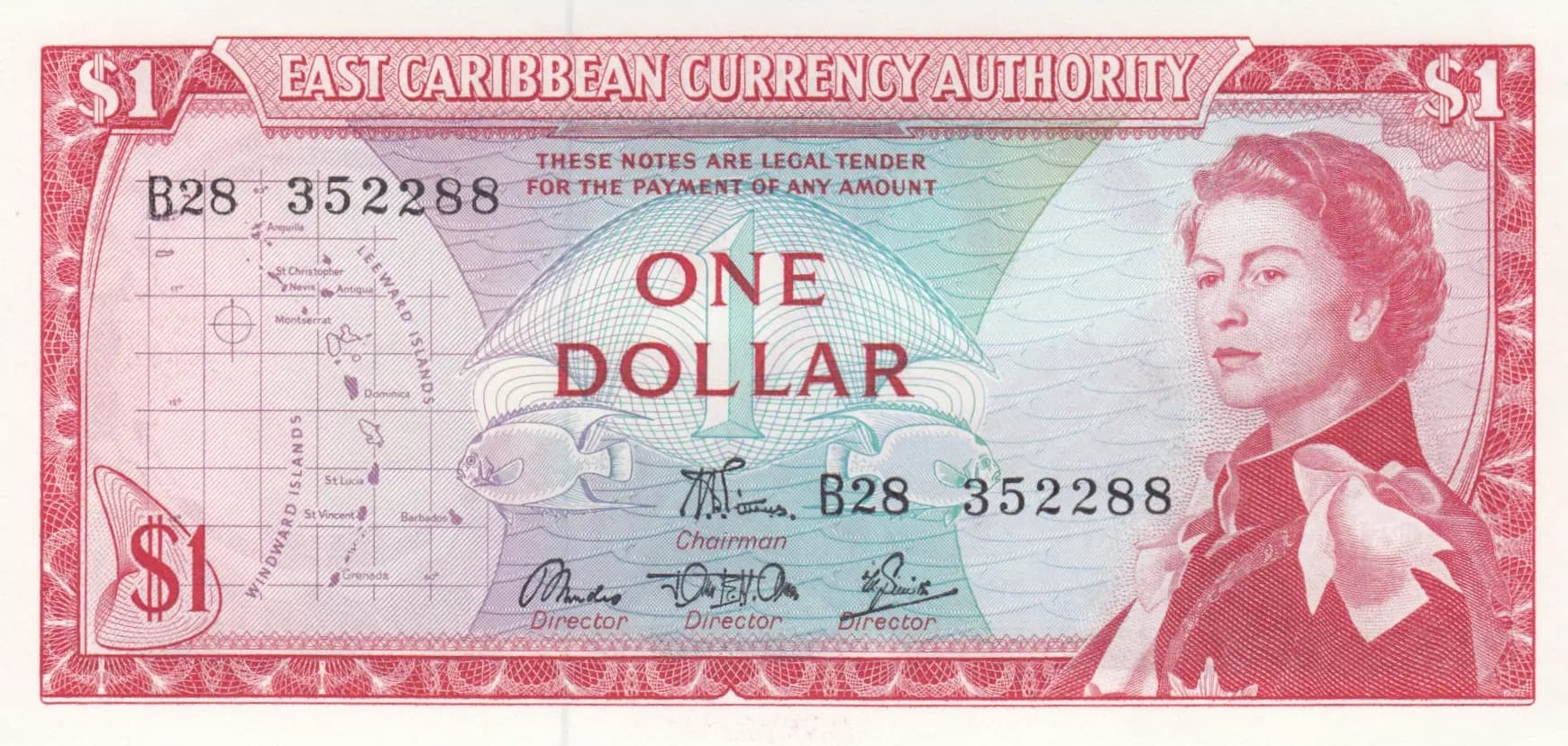
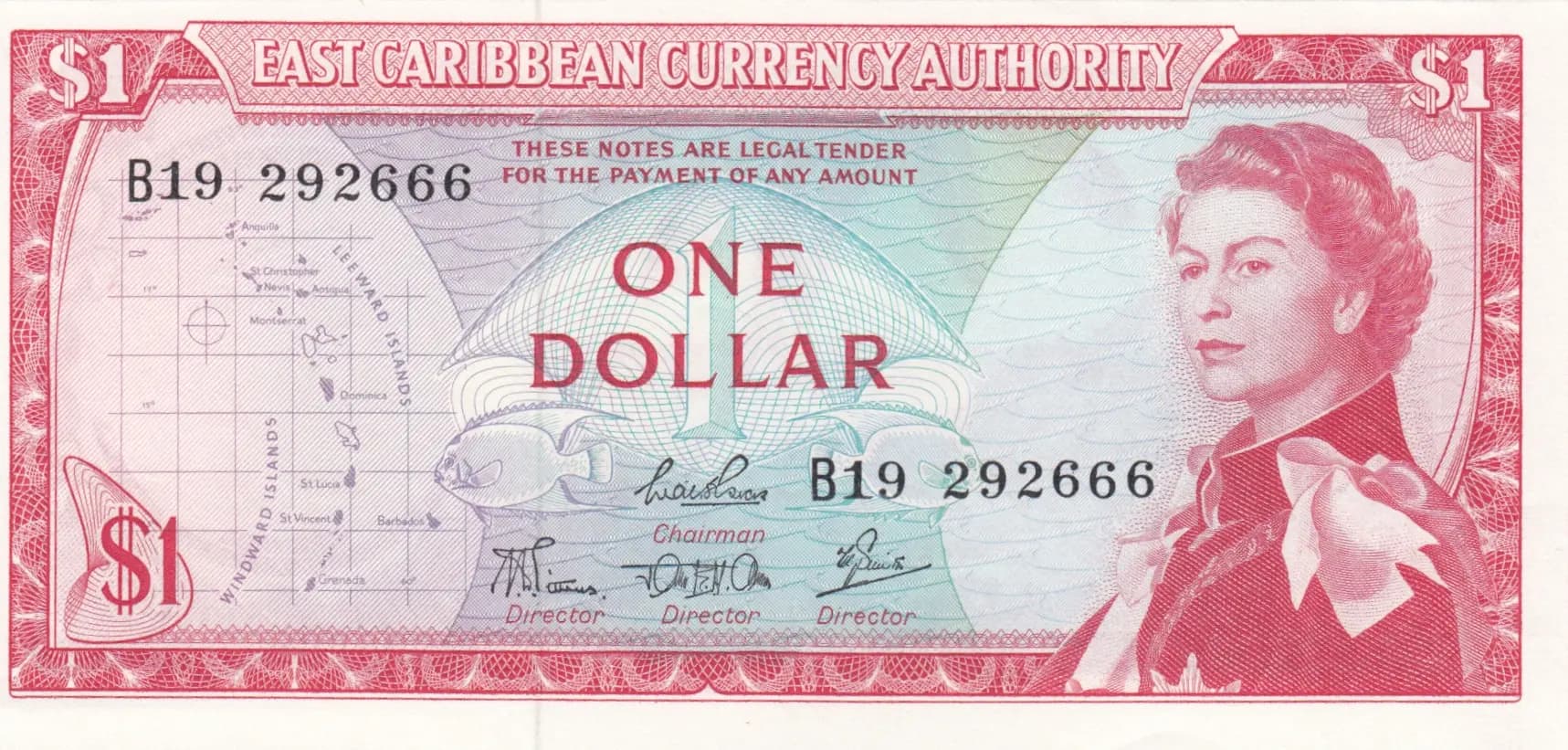
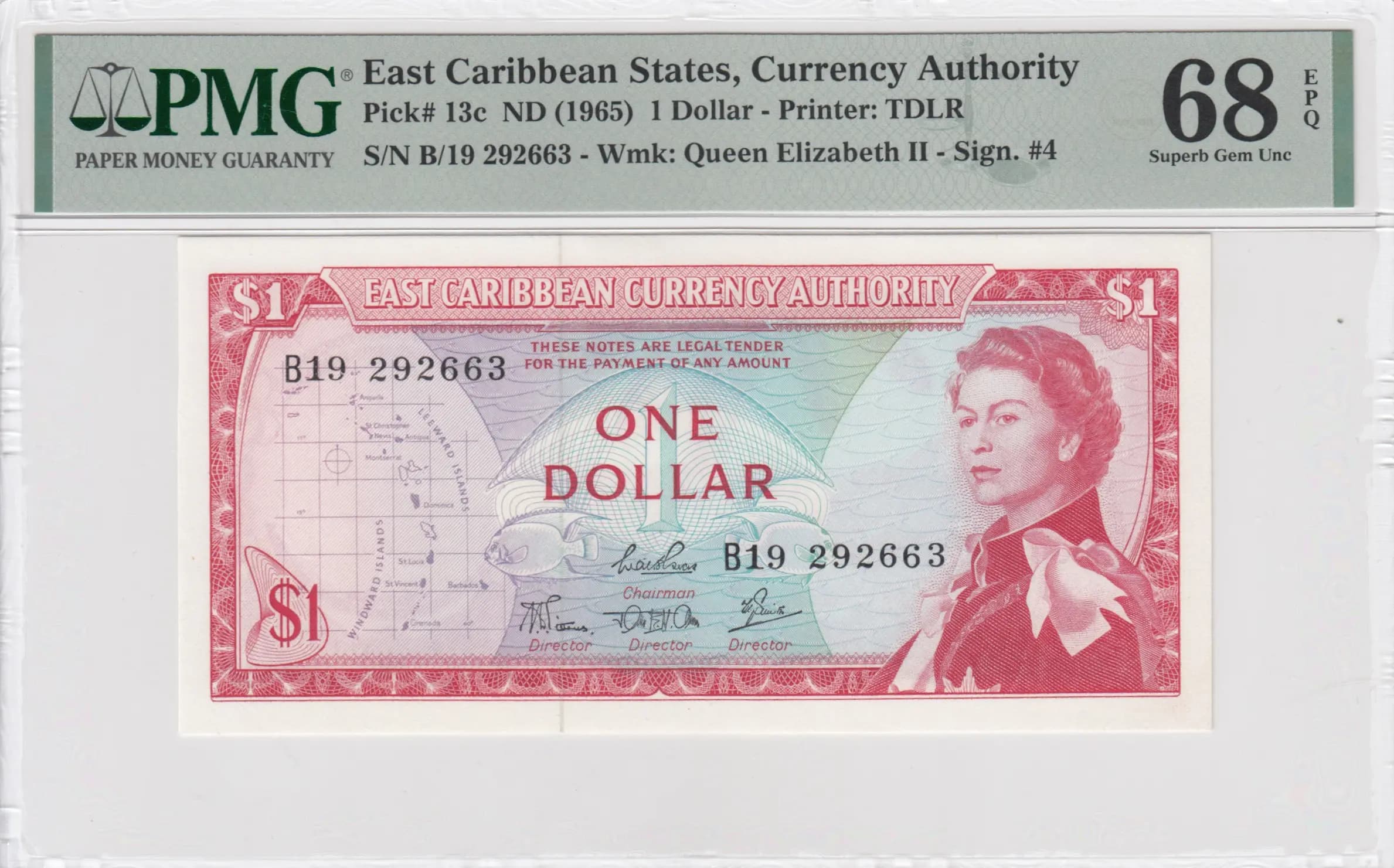
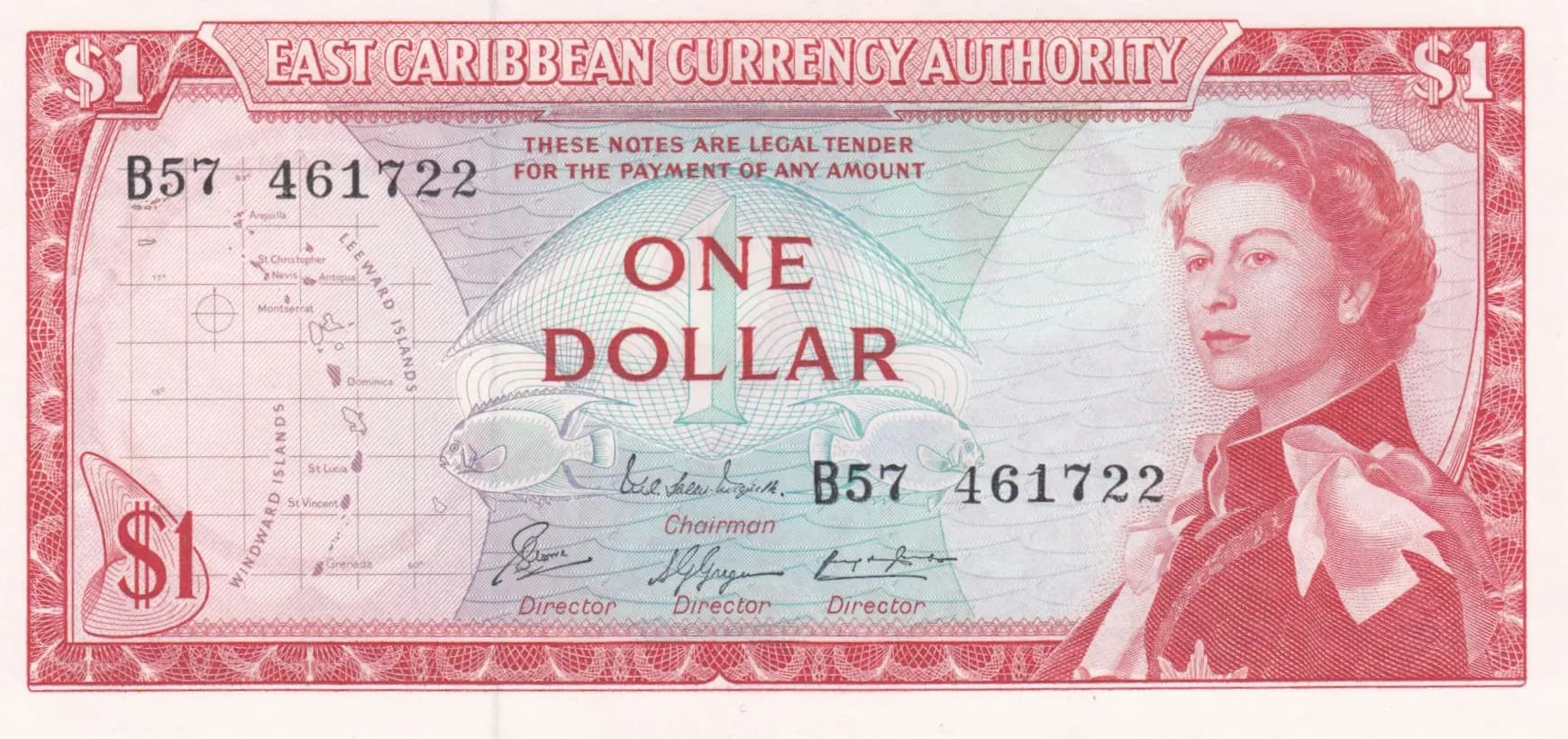
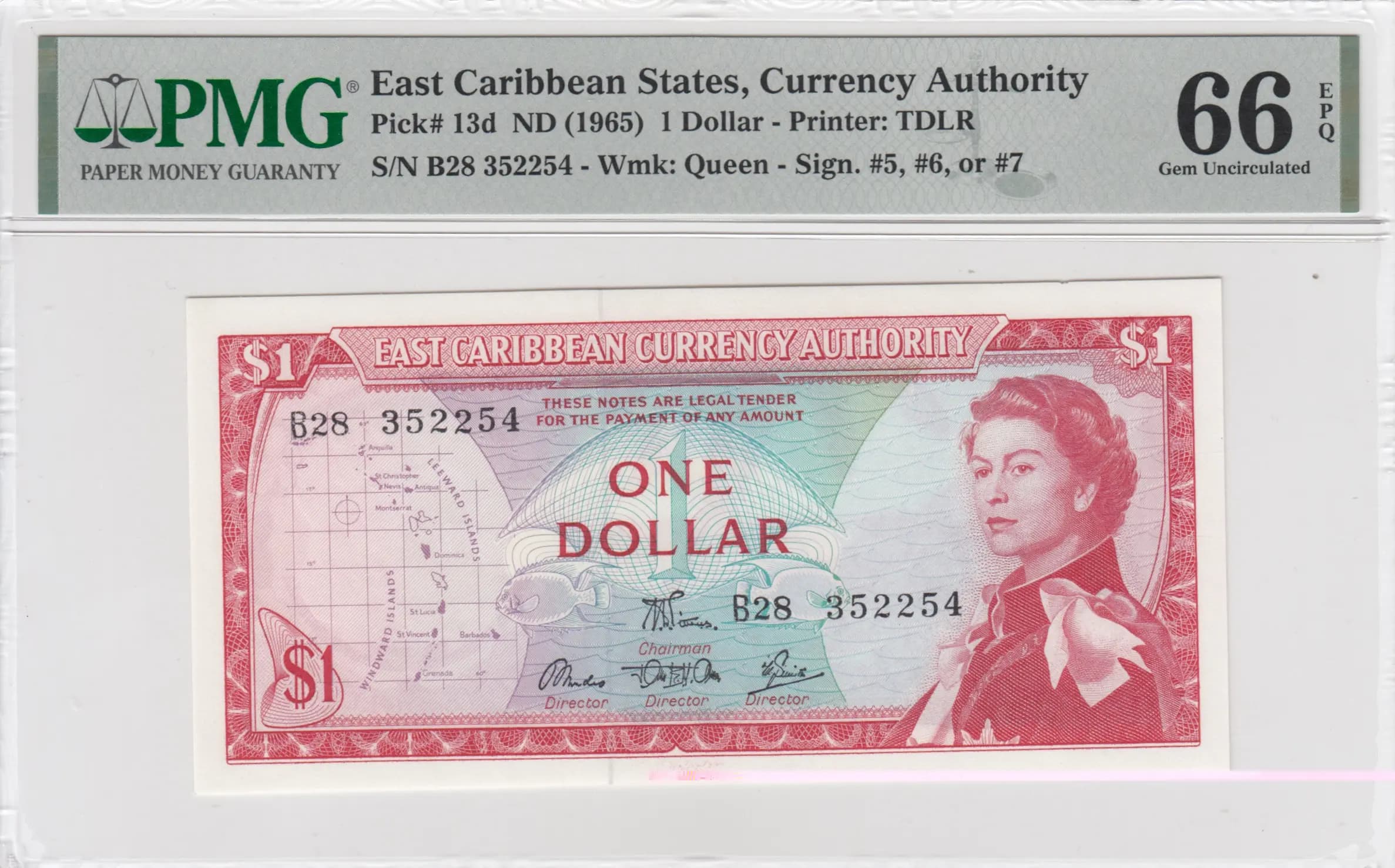
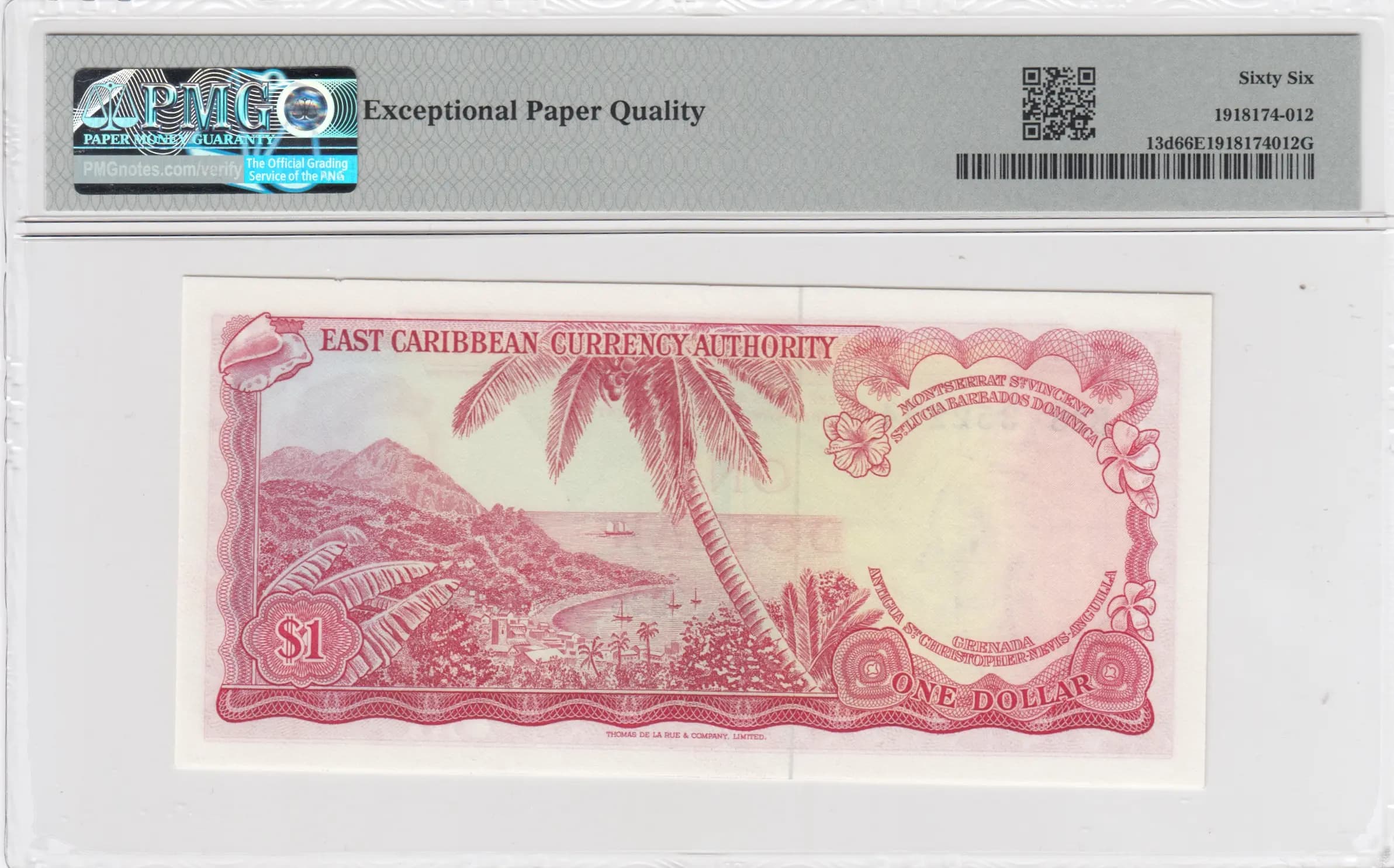
This is a PMG 66 EPQ example of the East Caribbean Currency Authority's 1965 one dollar note (Pick P-13d(1)), displaying exceptional gem uncirculated condition with pristine paper quality and no visible wear. The note presents the iconic portrait of Queen Elizabeth II alongside a detailed map of the Eastern Caribbean region on the obverse, while the reverse showcases a tropical coastal landscape with mountains and palm trees, representative of the member territories. Both sides exhibit the fine line engraving and crisp impressions characteristic of Thomas de la Rue's prestigious printing work, making this a desirable example of early East Caribbean currency.
Common. The East Caribbean Currency Authority's 1965 one dollar notes were produced in substantial quantities to serve the monetary needs of multiple Caribbean territories. These notes remain readily available in the collector market, and PMG 66 EPQ examples, while representing premium condition, do not command significant scarcity premiums. The absence of any recorded print run restrictions, recalls, or short-lived issuing period indicates standard production levels typical of circulating currency from this era.
Issued in 1965 during the early years of the East Caribbean Currency Authority's operation, this one dollar note represents the regional monetary cooperation among former British Caribbean colonies. The front design's map of the Eastern Caribbean and the reverse's tropical landscape featuring specific islands—Montserrat, St. Lucia, Barbados, Dominica, Grenada, and Saint Vincent—reflect the political geography and economic identity of the newly coordinated currency union. The prominence of Queen Elizabeth II's portrait underscores the Commonwealth connection maintained by these territories at the time of issuance.
The obverse features a right-facing profile portrait of Queen Elizabeth II positioned on the right side, serving as the primary security portrait. The left side displays a detailed map of the Eastern Caribbean region showing the various islands and territorial boundaries served by the currency authority. A small sailing ship illustration anchors the center design near the 'ONE DOLLAR' denomination text. The reverse depicts a scenic tropical coastal landscape with mountainous terrain in the background, palm trees, and maritime elements including sailing vessels on the bay, representative of the Montserrat and other island landscapes. Ornate decorative frames and floral elements in all four corners, along with circular emblems, enhance the aesthetic design. The color scheme of predominantly red and pink with green and cream accents creates visual distinction typical of mid-20th century Commonwealth currency design.
FRONT SIDE: 'EAST CARIBBEAN CURRENCY AUTHORITY' (issuing authority); '$1' and 'ONE DOLLAR' (denomination markings); 'THESE NOTES ARE LEGAL TENDER FOR THE PAYMENT OF ANY AMOUNT' (legal tender declaration); 'B28 352254' (serial number); 'Chairman', 'Director', 'Director' (signature lines for three officials). BACK SIDE: 'EAST CARIBBEAN CURRENCY AUTHORITY' (issuing authority); '$1' and 'ONE DOLLAR' (denomination); 'MONTSERRAT STREET', 'ST LUCIA BARBADOS DOMINICA', 'GRENADA SAINT VINCENT' (territorial references); 'THOMAS DE LA RUE & COMPANY, LIMITED' (printer attribution).
This note was produced using steel engraving, the signature technique of Thomas de la Rue & Company, Limited (as credited on the reverse). The fine line pattern work throughout the design, intricate border details, detailed landscape engraving on the reverse, and the map engraving on the obverse are all characteristics of high-quality intaglio printing. The crisp impressions and fine detail preservation visible in this PMG 66 EPQ specimen confirm the traditional steel plate engraving methodology employed by this renowned British security printer.
The observed specimen carries serial number B28 352254, indicating the B series prefix. The Pick P-13d(1) designation itself indicates this is a specific variety within the 1965 one dollar issue. Additional varieties may exist differentiated by signature combinations (the note shows three signature lines for Chairman and two Directors), and different serial number prefixes may indicate distinct printing batches, though the core design remained consistent across the 1965 issue.