1 dollar 1965
About This Note
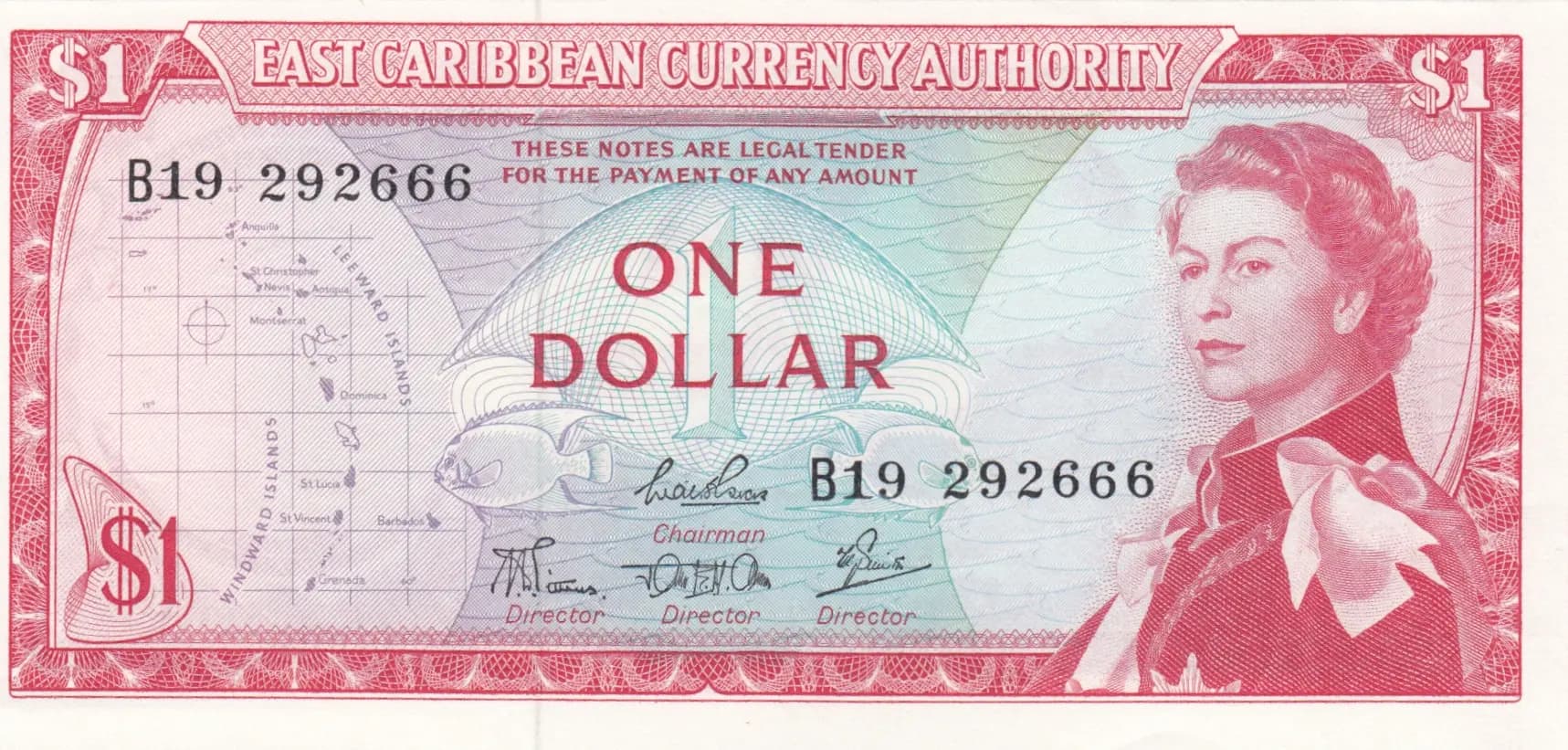
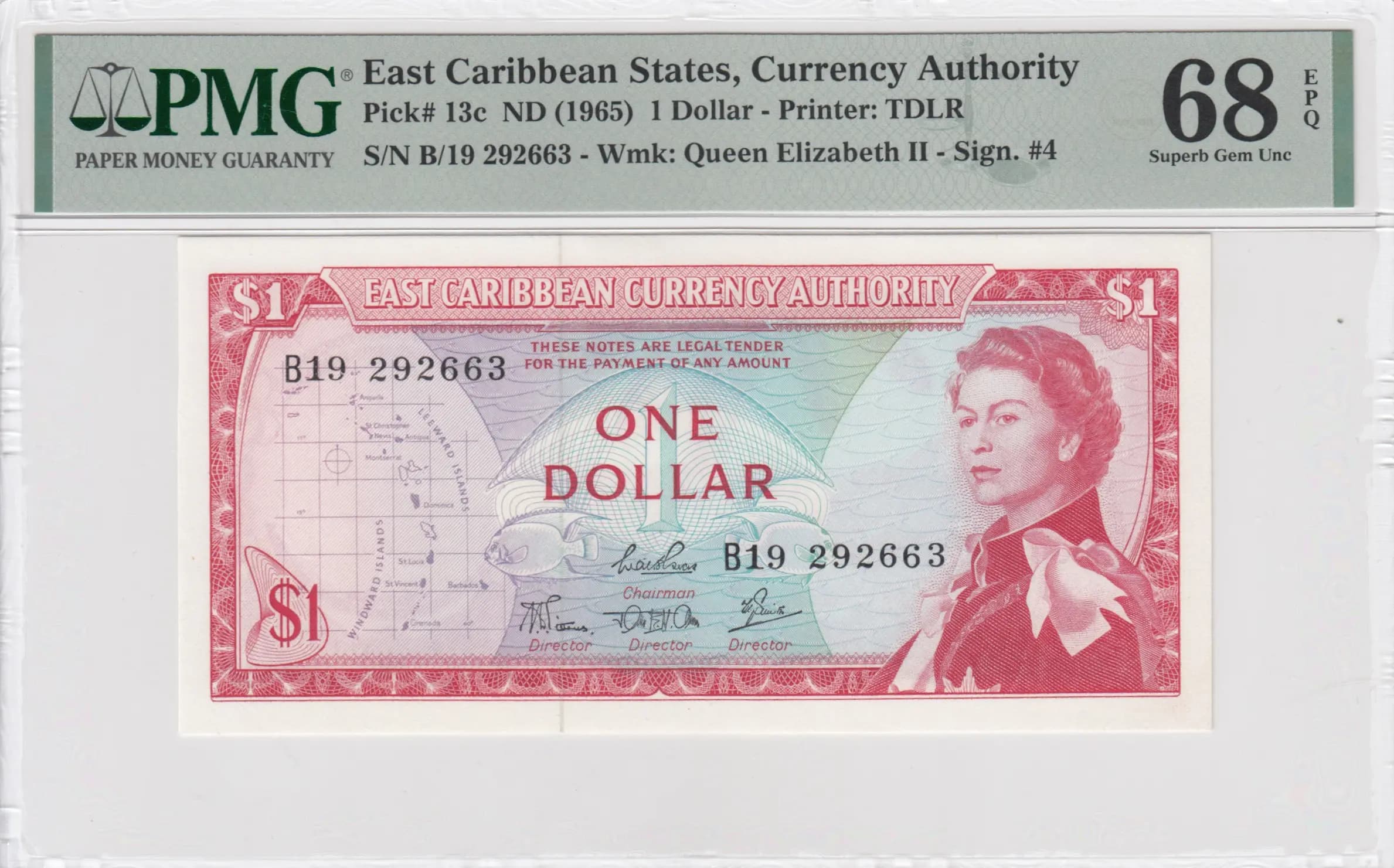
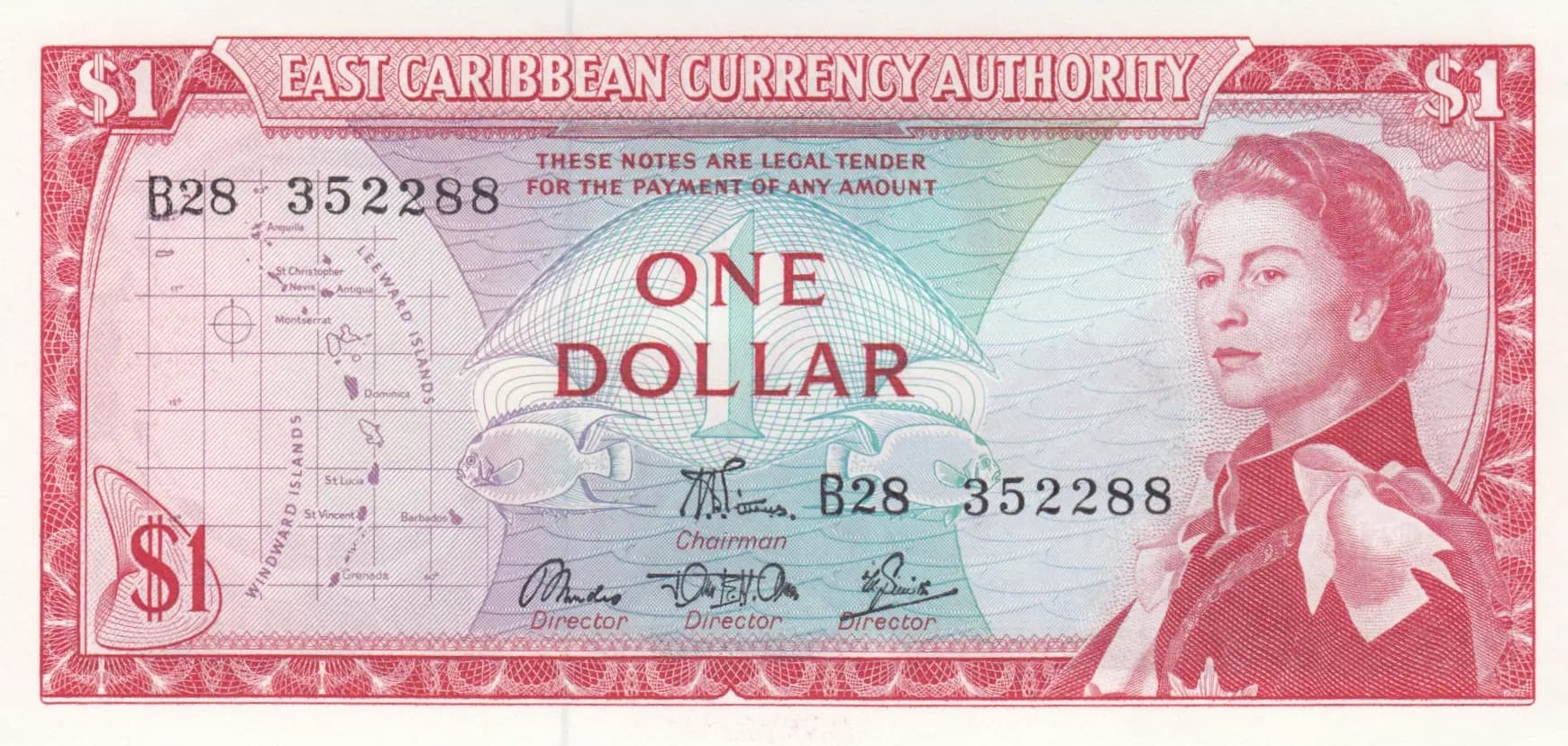
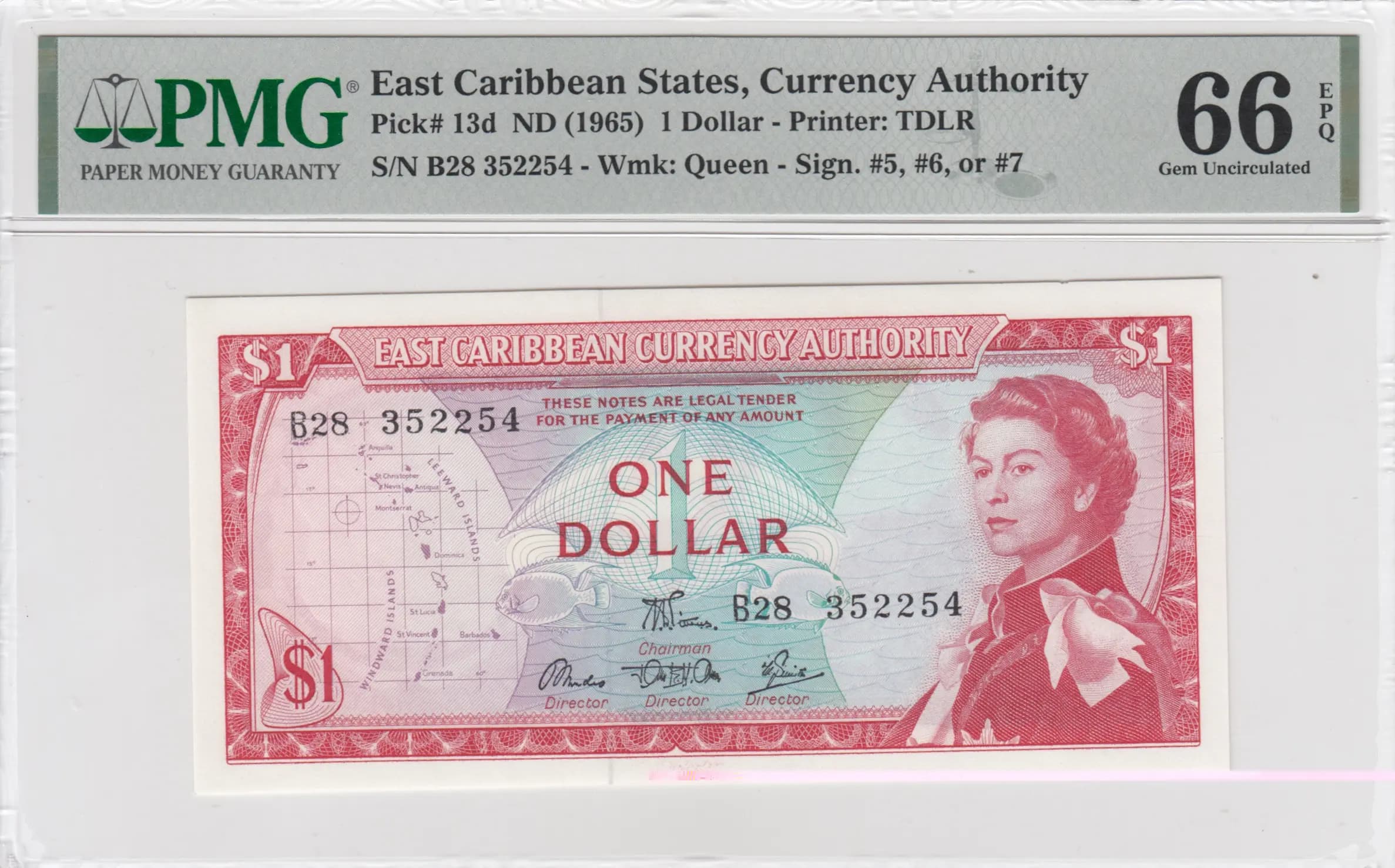
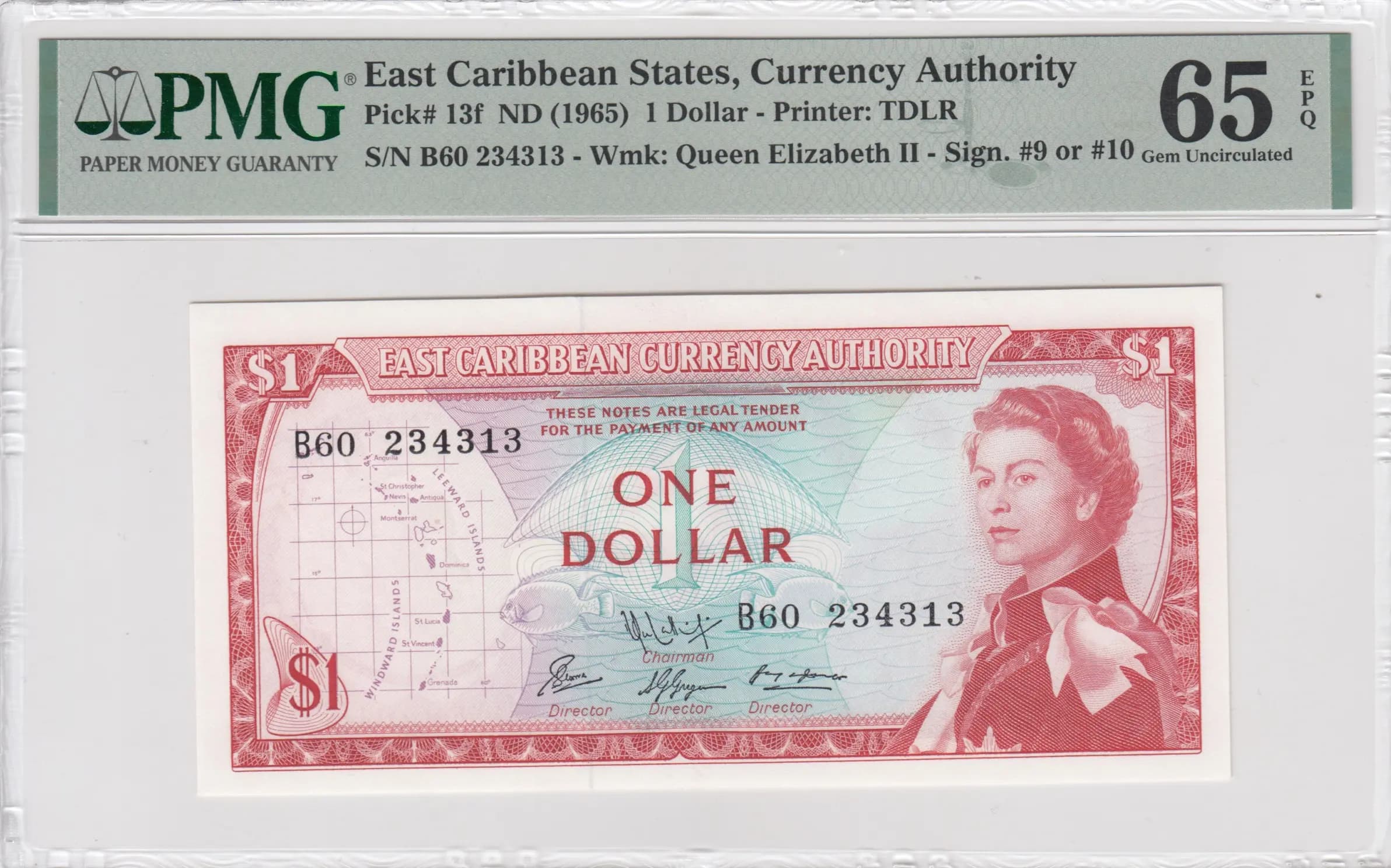
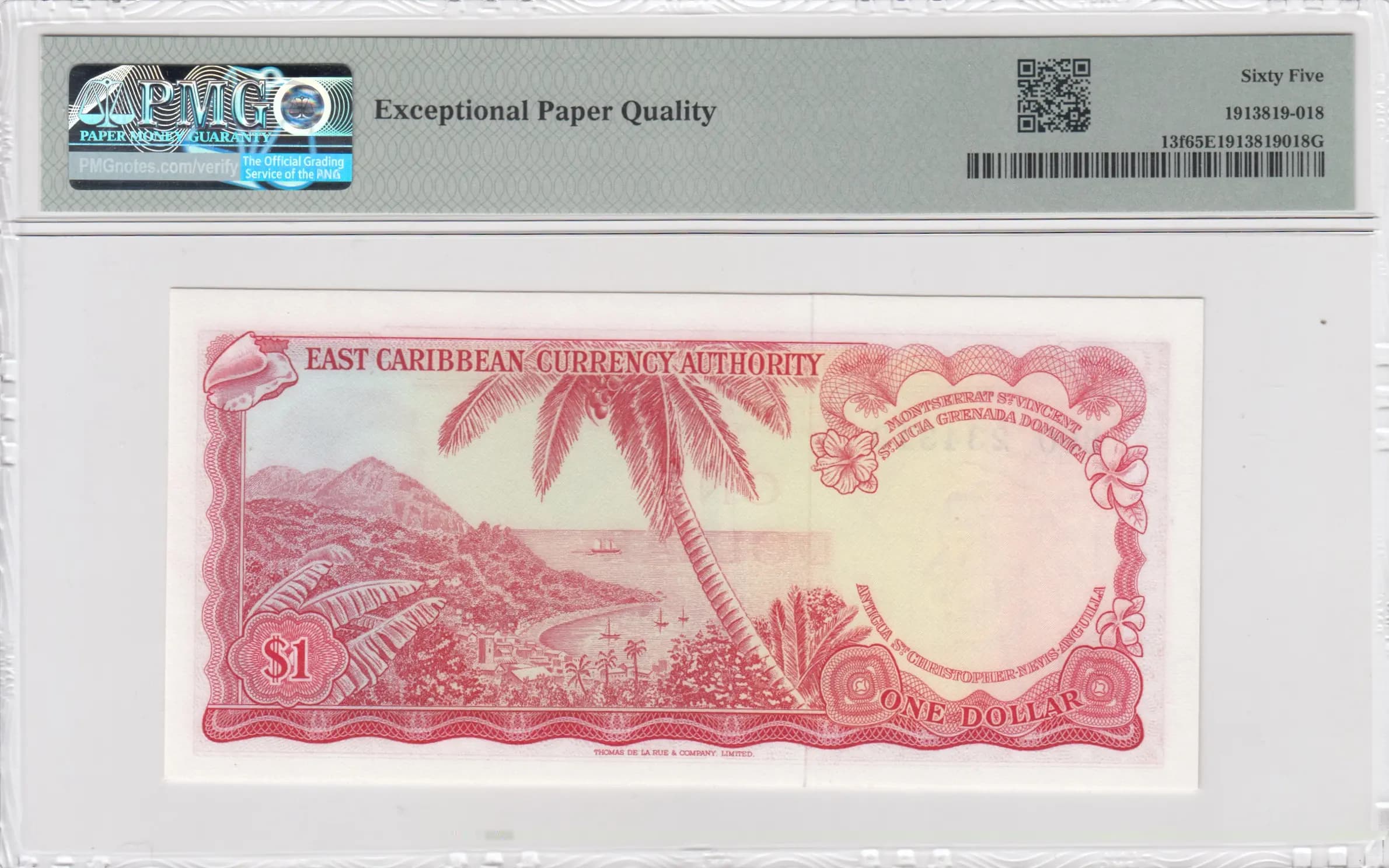
A pristine example of the 1965 East Caribbean Currency Authority 1 dollar note (Pick 13f(1)) graded PMG 65 EPQ, showcasing the early currency design of the newly-formed monetary union. The note features an elegant portrait of Queen Elizabeth II on the obverse alongside a detailed map of the Caribbean region, while the reverse depicts a tropical coastal landscape with palm trees, mountains, and a sailing vessel. This gem uncirculated specimen displays the crisp, flawless printing characteristic of Thomas de la Rue's work with no visible wear, folds, or discoloration.
Common. The 1 dollar denomination of the 1965 East Caribbean Currency Authority issue was produced in substantial quantities as the foundational circulating note of the new monetary system. No evidence suggests limited print runs, early recall, or scarcity in the market. While gem uncirculated examples (PMG 65 EPQ) are less common than heavily circulated specimens, this denomination and date remain readily obtainable in the collector market at modest valuations, consistent with common status for this Pick number.
Issued in 1965 by the East Caribbean Currency Authority, this note represents the currency unification of eight Caribbean territories following the dissolution of the British West Indian currency system. The obverse's map of the Caribbean islands and the reverse's tropical coastal scene with sailing ship reflect the region's maritime heritage and colonial economic ties to Britain, symbolized by the prominent portrait of Queen Elizabeth II. The inclusion of all participating nations on the reverse (Antigua, Barbuda, Dominica, Grenada, Montserrat, Nevis, St. Kitts, St. Lucia, St. Vincent, and the Grenadines) emphasizes the multi-island cooperation that defined this monetary authority.
The obverse features a formal profile portrait of Queen Elizabeth II positioned on the right side, rendered in the classical engraved style typical of Commonwealth currency. To the left is a detailed cartographic representation of the East Caribbean islands and surrounding waters shown with gridlines, establishing the geographic identity of the currency union. The center is dominated by large red denomination text reading 'ONE DOLLAR,' flanked by decorative guilloche patterns and security borders. The reverse presents an idyllic tropical landscape scene depicting a coastal settlement with prominent palm fronds, mountainous terrain in the background, and a period sailing ship on the water—imagery celebrating the region's natural beauty and maritime traditions. Corner ornaments feature shell motifs and hibiscus flowers in scalloped frames, reinforcing the tropical theme. The color scheme of predominantly red and pink with green and blue accents creates a distinctive visual identity for the early East Caribbean note series.
FRONT SIDE: 'EAST CARIBBEAN CURRENCY AUTHORITY' (issuing authority); '$1' and 'ONE DOLLAR' (denomination); 'THESE NOTES ARE LEGAL TENDER FOR THE PAYMENT OF ANY AMOUNT' (legal tender declaration); 'B60 234313' (serial number); 'Chairman' and 'Director' (signature lines for authorized officials). BACK SIDE: 'EAST CARIBBEAN CURRENCY AUTHORITY' (issuing authority); '$1' and 'ONE DOLLAR' (denomination); 'ANTIGUA BARBUDA DOMINICA GRENADA MONTSERRAT NEVIS ST KITTS ST LUCIA ST VINCENT GRENADINES' (enumeration of participating member states); 'THOMAS DE LA RUE & COMPANY LIMITED' (printer attribution).
Steel plate engraving and intaglio printing, executed by Thomas de la Rue & Company Limited, London. The note exhibits the hallmark characteristics of fine line engraving with sophisticated guilloche patterns, cross-hatching for depth and security, and intricate detail work in both the portrait and landscape elements. Multiple layers of color were applied through sequential intaglio passes, resulting in the crisp, sharp impression visible throughout the note. A watermark featuring Queen Elizabeth II's portrait was incorporated during paper manufacture as an additional security feature.
Pick 13f(1) represents the first signature combination of the 1965 issue. The observed specimen carries serial number prefix 'B60' and sequential number '234313', representing a standard numbering range for the first printing series. Known varieties for this issue include different signature combinations (designated by Pick numbers 13f(1) through 13f(4)), corresponding to different pairs of authorized signatories (Chairman and Director). The signature lines visible in the analyzed images should be cross-referenced against the specific Pick variety designation to confirm this is indeed the 13f(1) variety.