1 dollar 1965
Market Prices
9 salesAbout This Note
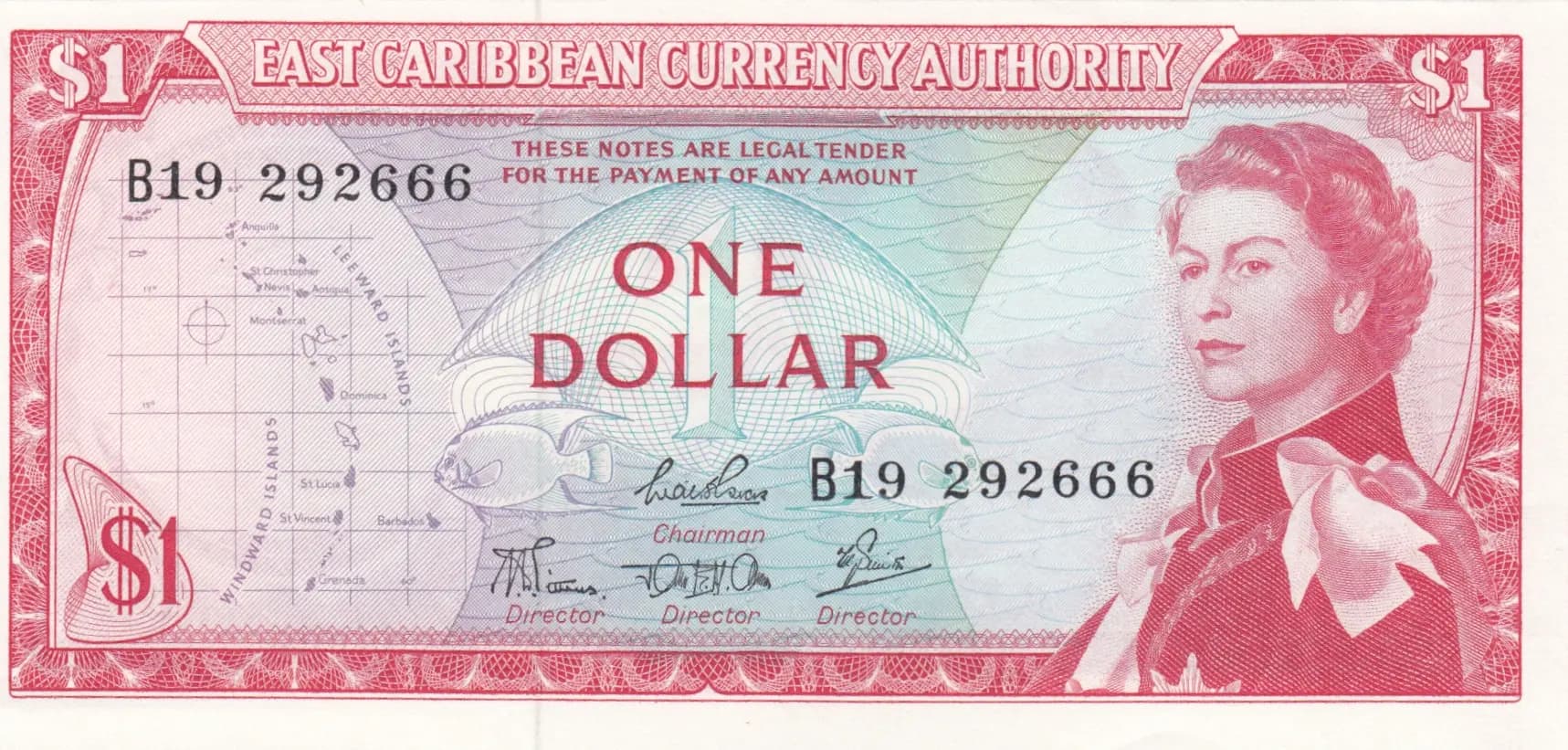
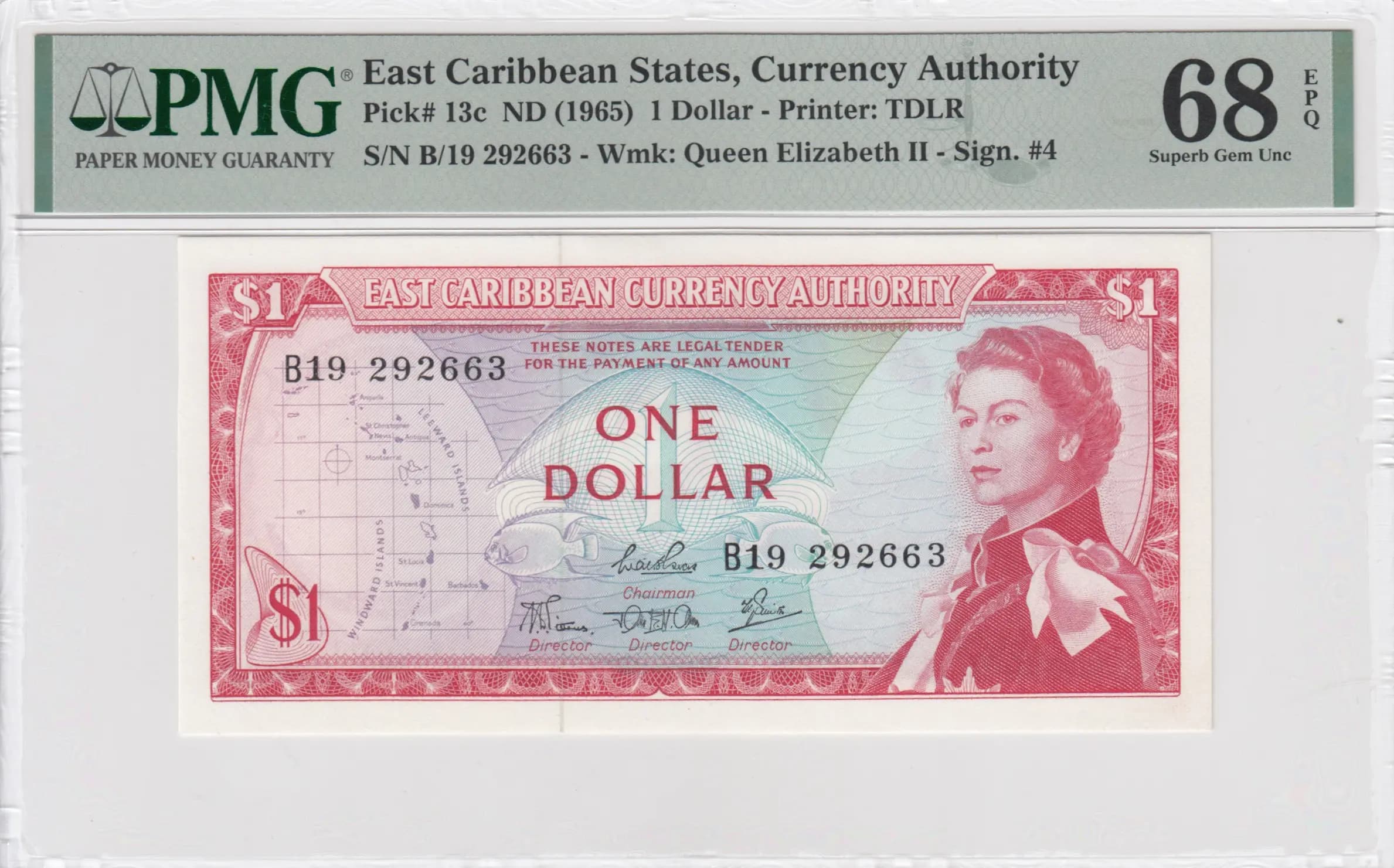
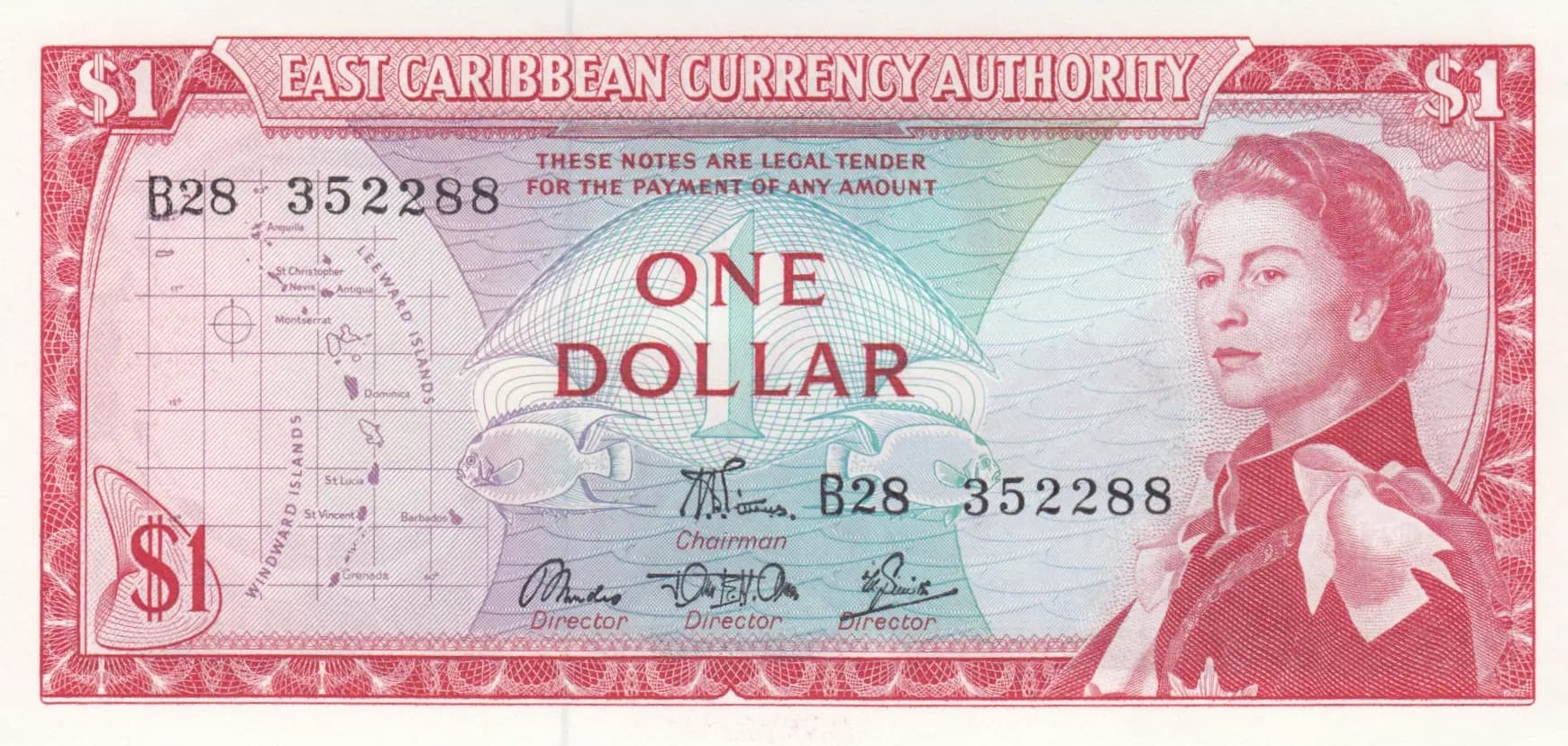
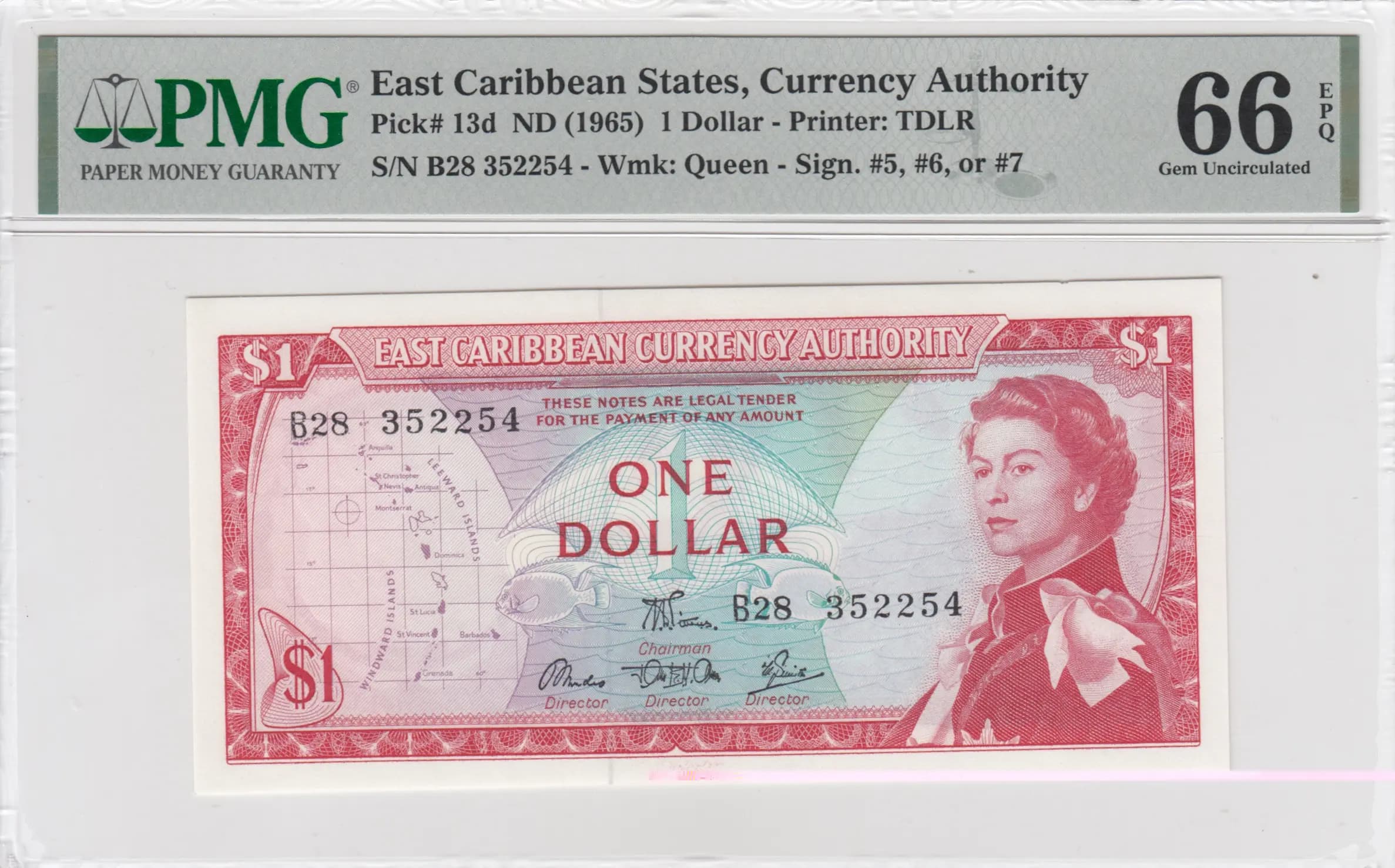
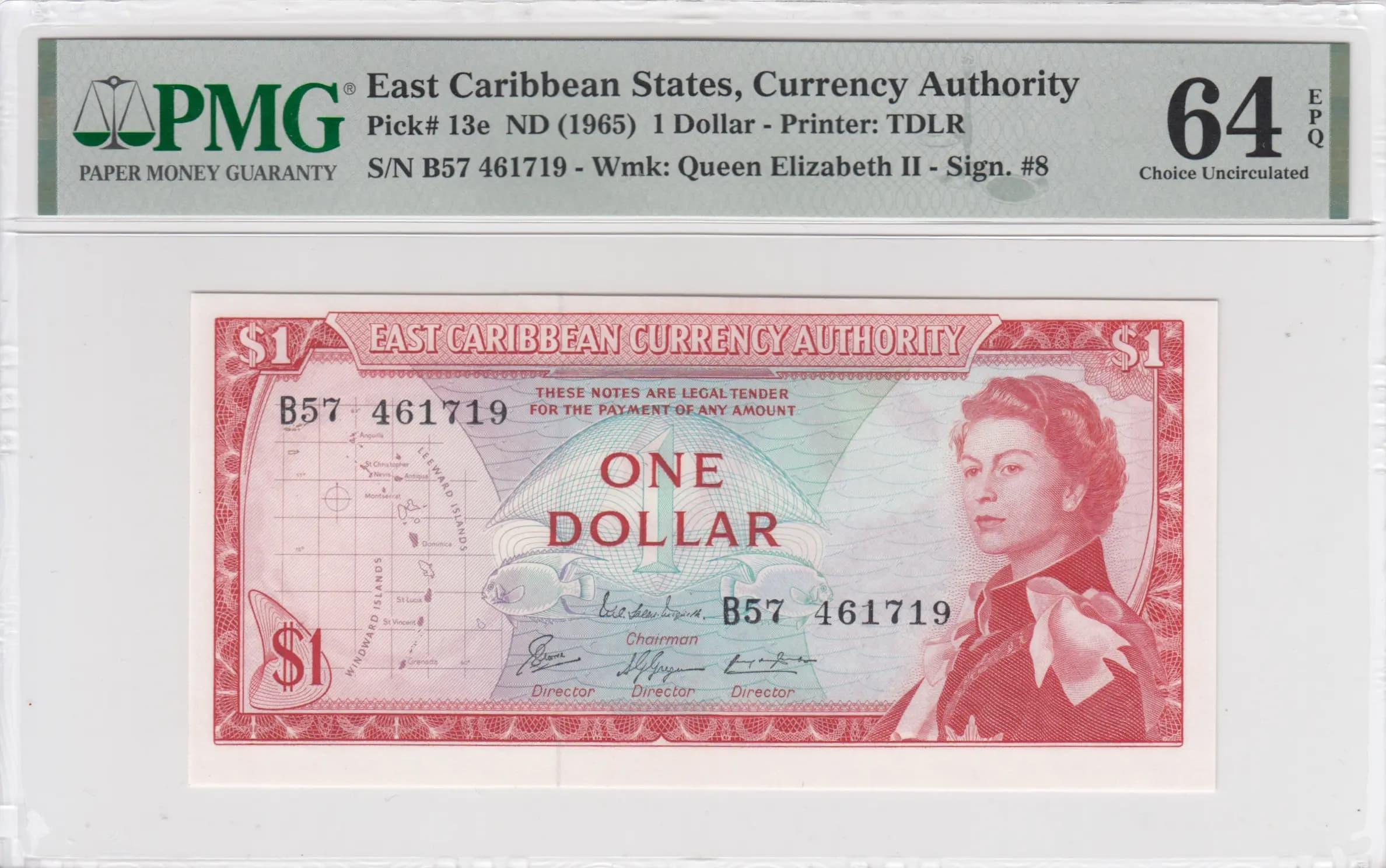
This is a PMG 64 EPQ example of the East Caribbean Currency Authority's 1965 one dollar note, a classically designed Caribbean banknote featuring Queen Elizabeth II in portrait on the obverse. The note exhibits the sharp printing quality and vibrant red-pink coloring characteristic of Thomas de la Rue's work, with no visible wear, creases, or foxing—reflecting its near-uncirculated state. As the lowest denomination from this early series, this note represents an important transitional issue in East Caribbean monetary history and remains popular with collectors of Commonwealth and regional currency.
Common. This 1965 one dollar note from the East Caribbean Currency Authority (Pick 13e) remains widely available in the collector market. eBay transaction history shows consistent sales activity across multiple condition grades from F to UNC, with typical prices ranging from $4 to $29 depending on grade and certification. The 2019 catalogue values ($12 in VF, $65 in UNC) and the steady supply of examples across different grades indicate a note with substantial original circulation and mintage. The PMG 64 EPQ grade (near-uncirculated) commands a moderate premium but is not exceptionally scarce.
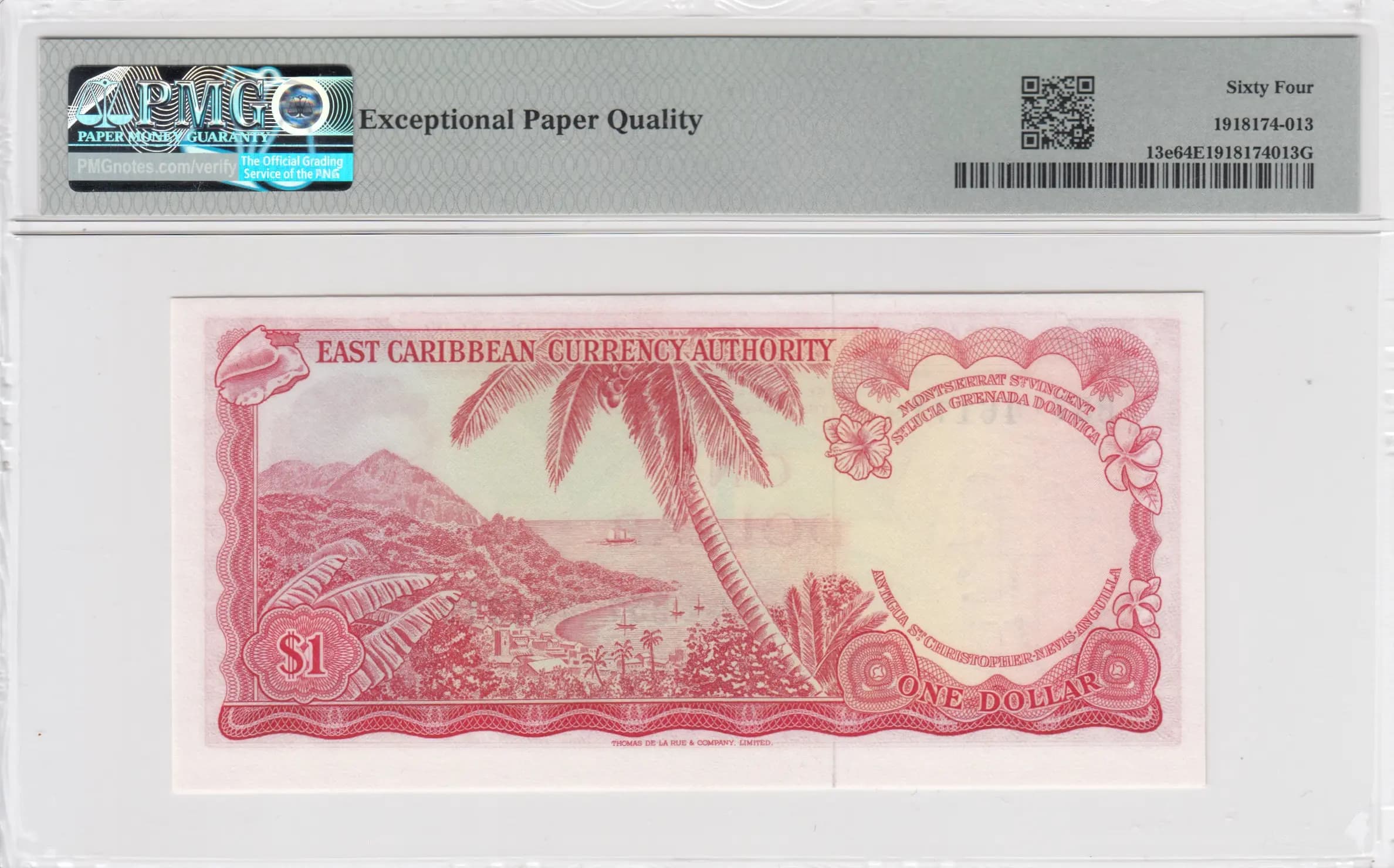
Issued in 1965 by the East Caribbean Currency Authority, this note commemorates the diverse island territories of the eastern Caribbean through its reverse vignette depicting a tropical coastal landscape with colonial-era architecture, palm trees, and a bay with vessel. The obverse portrait of Queen Elizabeth II reflects the Commonwealth status of the issuing territories (Montserrat, St. Vincent, Grenada, Dominica, and St. Christopher & Nevis as noted on the back), while the cartographic elements on the front underscore the regional nature of this shared currency arrangement during the post-colonial period.
The obverse features a formal portrait of Queen Elizabeth II positioned on the right side, rendered in red-pink tones with fine engraving detail. The center of the note contains a decorative cartouche displaying a map of the East Caribbean region in blue-green accents, flanked by ornamental borders and flourishes. Dollar signs ($) appear on the left and right edges. The reverse depicts a romanticized tropical colonial landscape vignette featuring a palm tree in the foreground, coastal mountains, period architecture consistent with 18th-19th century Caribbean settlements, and a sailing vessel on the bay, all rendered in the characteristic red-pink palette with cream and light green highlights. Floral decorative elements and ornamental borders frame the composition, with denomination indicators repeated at the lower corners.
Front side inscriptions: 'EAST CARIBBEAN CURRENCY AUTHORITY' (issuing authority); '$1' and 'ONE DOLLAR' (denomination); 'THESE NOTES ARE LEGAL TENDER FOR THE PAYMENT OF ANY AMOUNT' (legal tender declaration); 'Chairman', 'Governor', 'Director' (signature titles); Serial number 'B57 461719'. Back side inscriptions: 'EAST CARIBBEAN CURRENCY AUTHORITY' (issuing authority); '$1' and 'ONE DOLLAR' (denomination); 'MONTSERRAT STAMP ON ST VINCENT, GRENADA, DOMINICA' and 'ST. CHRISTOPHER & NEVIS' (constituent territories); 'THOMAS DE LA RUE & COMPANY, LIMITED' (printer attribution).
This note was produced using intaglio engraving by Thomas De La Rue & Company, Limited, London—the predominant security printing method for Commonwealth banknotes of this era. The fine line work, sharp detail definition, complex background patterns, and intricate engraved vignettes observed throughout both obverse and reverse confirm the use of traditional engraved plate printing, which provided both security and aesthetic sophistication. The crisp registration and color separation visible in the PMG 64 EPQ specimen indicate high-quality production standards.
The observed specimen bears serial number B57 461719, with the 'B57' prefix indicating production batch information. The note matches the standard design described in Pick catalog P-13e for the 1965 issue. No overprints, date variations, or signature variants are evident in this example. The consistent design and printer attribution (Thomas de la Rue) confirm this as the standard circulation issue; no known major varieties (such as color shifts, missing security features, or significant plate differences) are recorded for this Pick number in standard catalogues.