500 francs 1979
Market Prices
37 salesAbout This Note
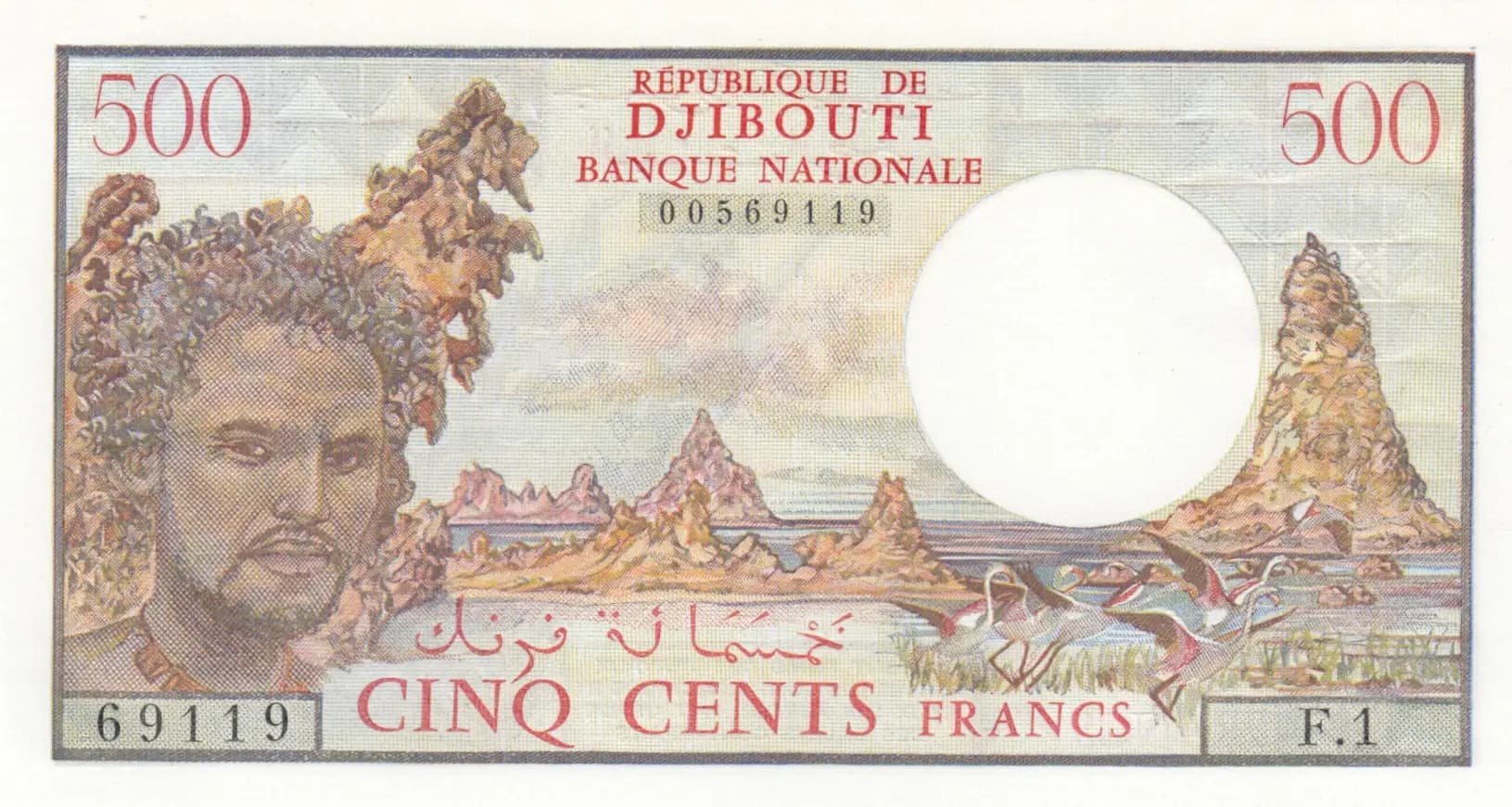
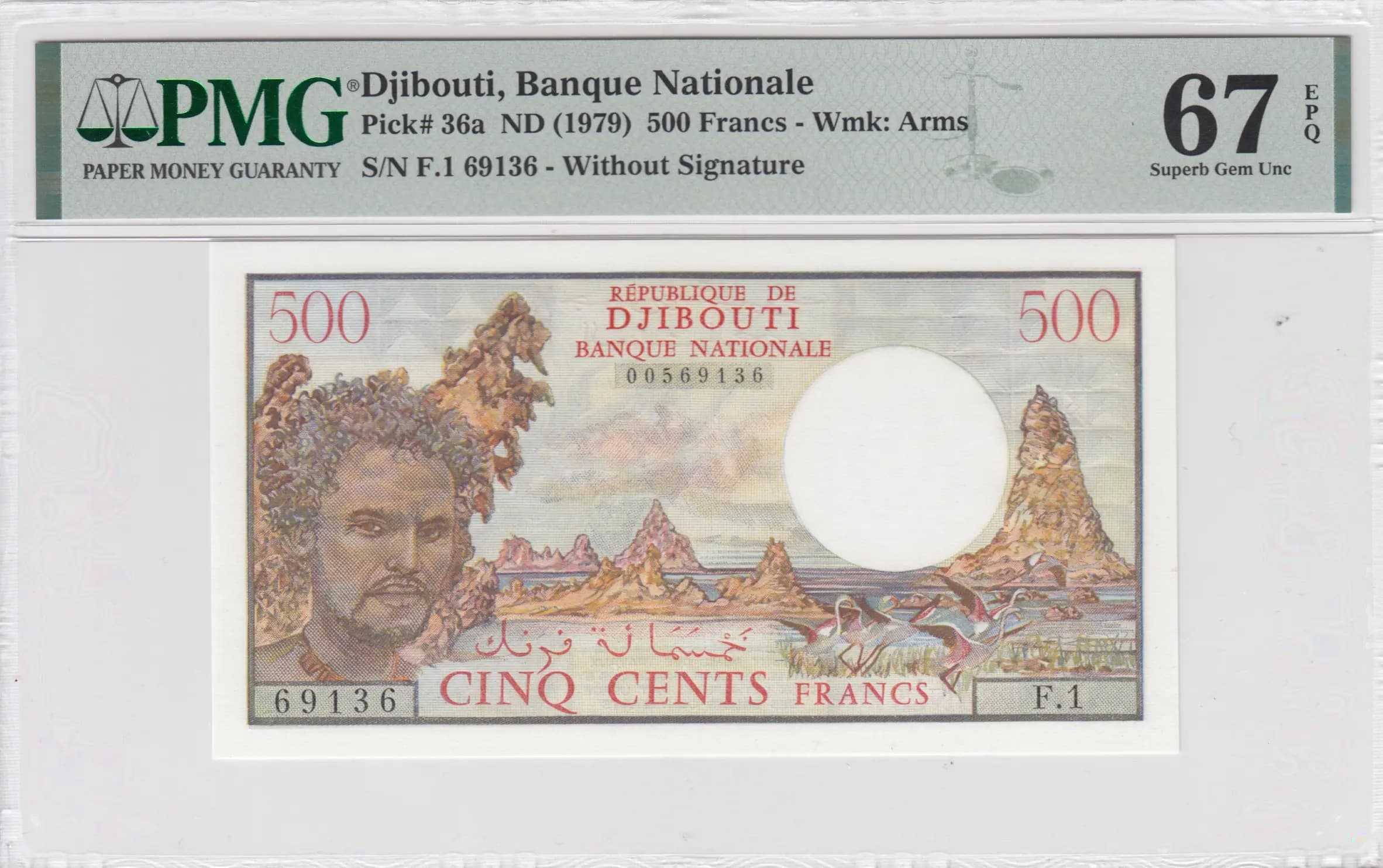
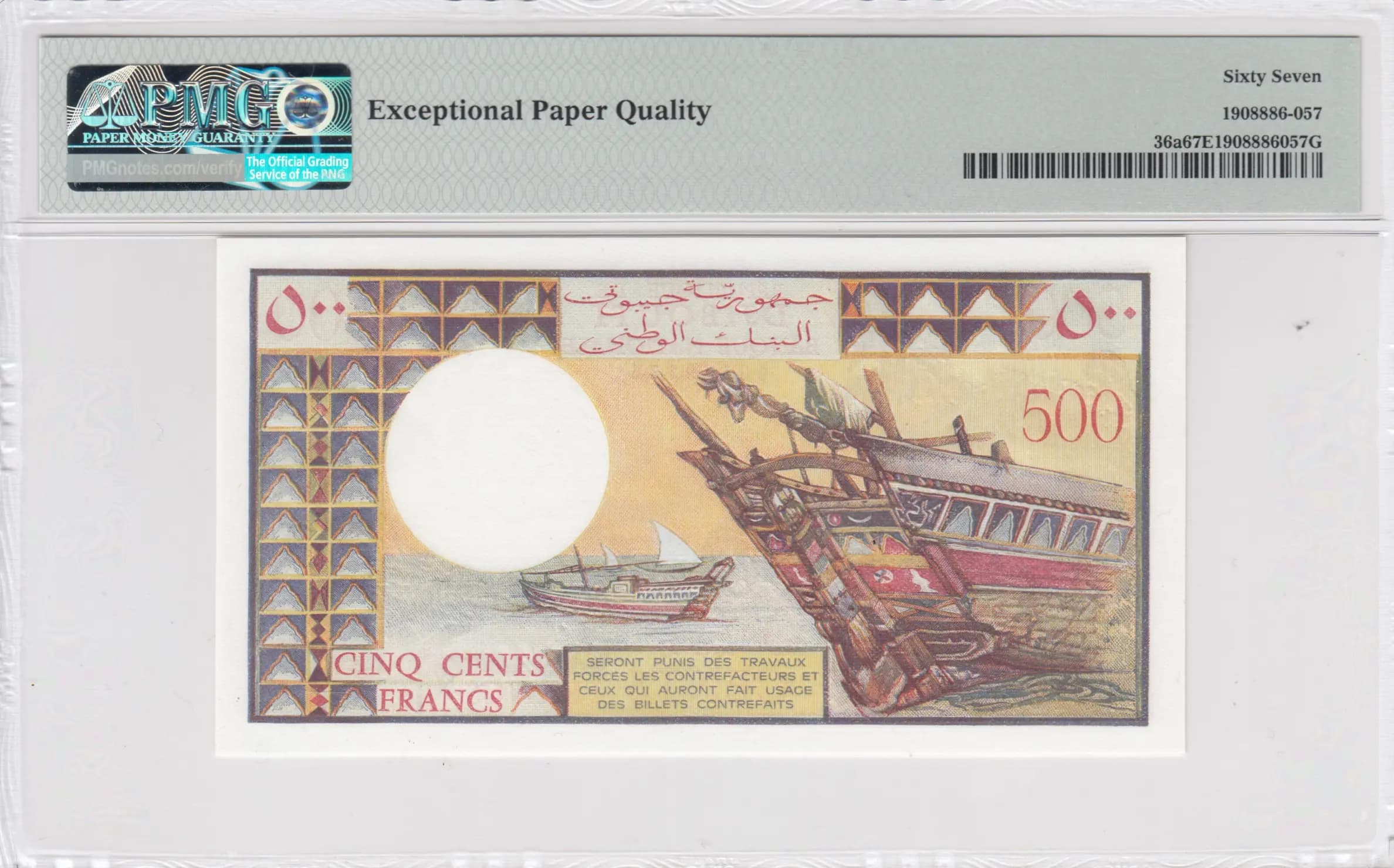
This exceptional PMG 67 EPQ example of the 1979 Djibouti 500 Francs represents a superb specimen of early post-independence currency design. The note features pristine condition with vibrant ochre, brown, and red tones on the obverse depicting a bearded man and the dramatic landscape of Lake Abbe, while the reverse showcases traditional dhows against a striking blue and gold geometric border. The crisp printing, lack of wear, and EPQ designation indicate museum-quality preservation of this relatively modest circulation issue.
Common. The 1979 500 Francs is a regular issue from Djibouti's early post-independence currency period. eBay market data shows consistent pricing in the $30-$70 range for PMG 67 examples over more than a decade, with numerous sales recorded. No evidence of limited print runs, recall, or special scarcity. The abundance of historical sales data and the regular appearance of this note in multiple grades confirm its common circulation status, despite the specimen-quality of this particular example.
Issued by the Banque Nationale de Djibouti in 1979, just three years after Djibouti's independence from France in 1977, this banknote reflects the young nation's cultural identity through its imagery of local geography and maritime heritage. The depicted Lake Abbe landscape—with its distinctive rocky pinnacles—and the traditional dhow sailing vessels represent important elements of Djiboutian geography, history, and the Red Sea trading culture that defined the region. The bilingual French and Arabic inscriptions underscore Djibouti's dual cultural heritage as a Francophone nation with deep Arabic and Islamic traditions.
The obverse features a portrait of a bearded man with curly hair in period dress positioned at the left, rendered in warm earth tones characteristic of Djiboutian artistic tradition. The central and right portion depicts the geological landmark of Lake Abbe, renowned for its striking salt-white and rust-colored rocky formations that rise dramatically from the desert floor, with a large sun or moon symbol representing the intense climate of the region. The reverse displays an ornamental geometric border of repeating triangular patterns in blue and gold framing the composition, with a maritime scene featuring traditional wooden dhows—the iconic sailing vessels of Red Sea trade—anchored or beached in the foreground. The color palette transitions from the warm earth tones of the obverse to cooler blues and golds on the reverse, creating visual balance and enhancing the note's security through color complexity.
FRONT: République de Djibouti (Republic of Djibouti) | Banque Nationale (National Bank) | 500 / Cinq Cents Francs (Five Hundred Francs) | Serial numbers: 0056913 / 69136 | Designation: F.1 | BACK: 500 / Cinq Cents Francs (Five Hundred Francs) | جمهورية جيبوتي البنك الوطني (Republic of Djibouti National Bank - Arabic) | Seront punis des travaux forcés les contrefacteurs et ceux qui auraient fait usage des billets contrefaits (Counterfeiters and those who have used counterfeit banknotes will be punished with hard labor)
Multicolor offset lithography with intaglio elements, evidenced by the crisp registration, fine detail work, and the dimensional quality visible in the geometric border patterns and portrait rendering. The blue underprint noted in the reference material suggests additional security printing layers. Standard security printer techniques for Banque Nationale de Djibouti currency of this era, likely produced by a European security printer such as Giesecke+Devrient or De La Rue, though specific attribution requires archival documentation.
This note is cataloged as Pick P-36a, identified by watermark (Arms). Pick P-36b represents a variant of the same denomination from the same series (1979 & 1988 issues). The visual analysis shows no signature present on the obverse, consistent with the catalog reference noting 'without a signature.' Serial number format and designation mark (F.1) suggest first-issue characteristics. The absence of visible signature lines distinguishes this from potential variants that may have included signature spaces or actual signatures in later printings or state issues.