100 gulden 1931
Market Prices
About This Note
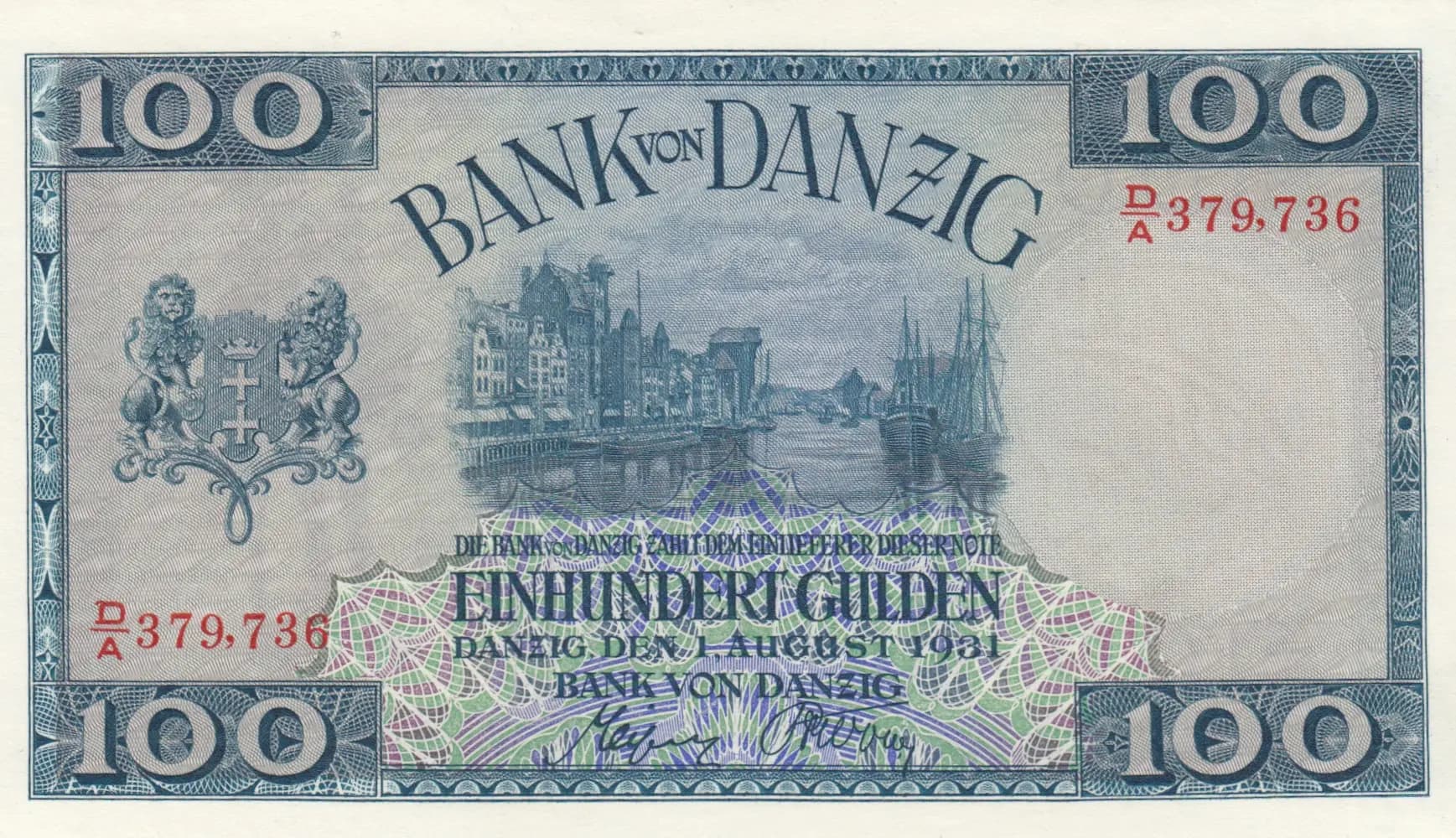
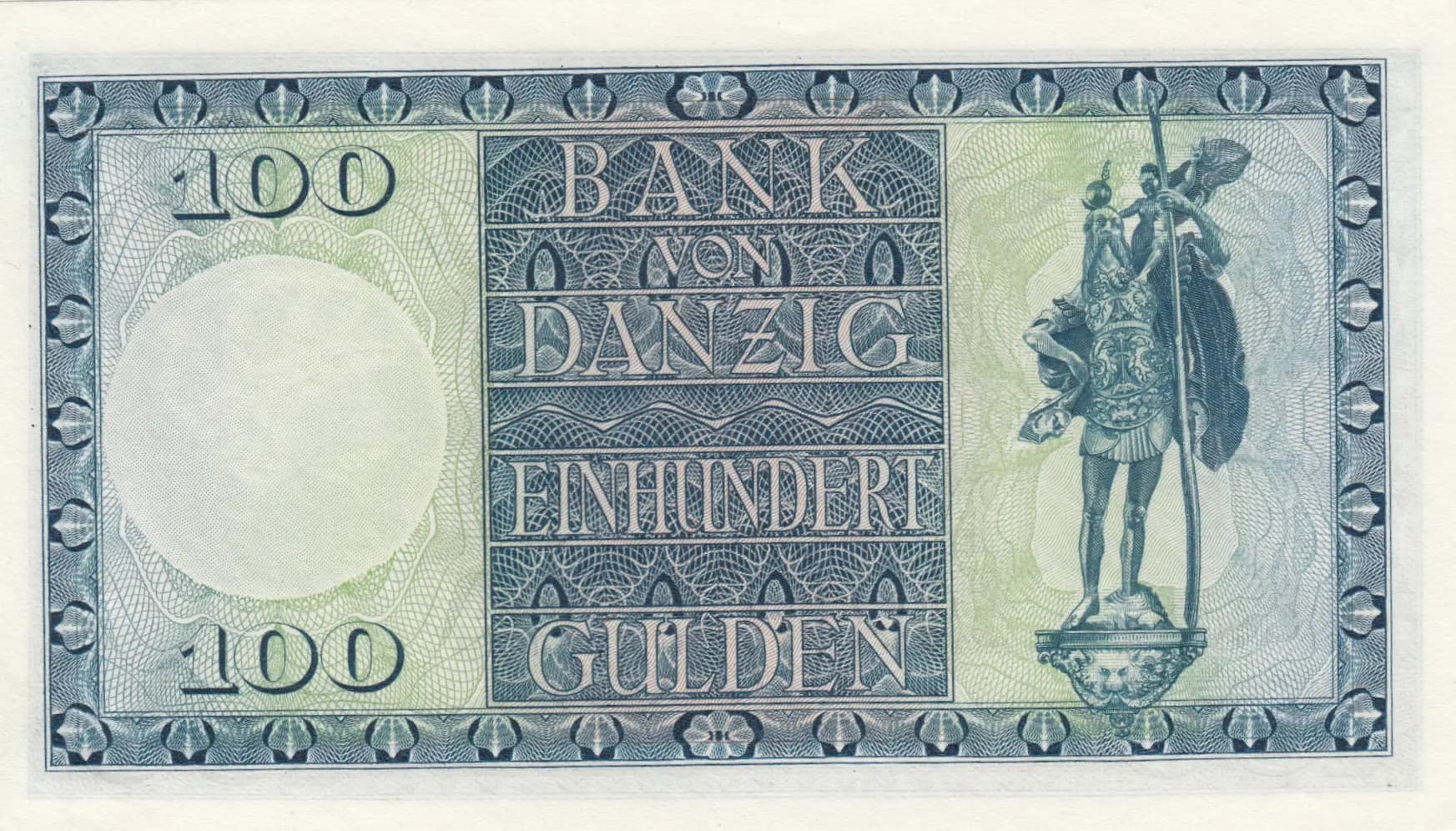
This is an exceptional uncirculated example of the Bank von Danzig's 100 Gulden note from August 1931, displaying the crisp, vibrant appearance characteristic of a note that has never entered circulation. The obverse features an impressive multi-spired cityscape of Danzig with harbor vessels, while the reverse depicts a standing military or civic figure in period uniform holding a shield and staff, reflecting the Free City's historical significance during the interwar period. The note's intricate guilloche patterns, fine line engraving, and excellent state of preservation make it a desirable piece for collectors of German-era and Free City numismatics.
Scarce. While the eBay price of $2,500 USD for UNC examples and catalogue value of $8,500 indicate a note with moderate collector demand, the limited circulation period of the Free City of Danzig (1920-1939), the specific denominations issued, and the relatively small populations of surviving high-grade examples make this a scarce issue rather than common. Notes from short-lived autonomous territories with restricted geographic circulation tend to survive in smaller quantities than major national currencies.
The Free City of Danzig (Gdańsk), established under League of Nations mandate after World War I, issued this banknote during the economically turbulent early 1930s, just before the city's territorial and political status would be dramatically altered by Nazi Germany. The architectural cityscape depicted on the obverse represents Danzig's importance as a major Baltic trading port and cultural center, while the military figure on the reverse likely represents a historical civic or military leader significant to the city's identity. This 1931 issue reflects the Free City's brief period of autonomous monetary authority before political events would lead to the cessation of its independent currency.
The obverse showcases a panoramic engraving of Danzig's historic cityscape dominated by multiple church spires and civic buildings rising from a waterfront scene populated with traditional sailing vessels, capturing the city's maritime commercial heritage. A prominent heraldic coat of arms with two lion supporters occupies the left side of the obverse, symbolizing the Free City's sovereignty and civic identity. The reverse features a full-length standing figure dressed in military regalia with a distinctive helmet or headpiece, holding a heraldic shield and a staff or sword, likely representing a significant historical figure from Danzig's civic or military past. Ornamental corner designs, decorative floral and geometric border patterns, and sophisticated cross-hatching frame both sides of the note, demonstrating the high artistic standards of early 20th-century currency design.
FRONT SIDE: 'BANKA VON DANZIG' (Bank of Danzig) | 'DIE BANKA VON DANZIG ZAHLT DEM EINHALTERER DIESER NOTE' (The Bank of Danzig pays the holder of this note) | 'EINHUNDERT GULDEN' (One hundred gulden) | 'DANZIG DEN AUGUST 1931' (Danzig, August 1931) | '100' (denomination) | Serial number 'A3379.736' | BACK SIDE: 'BANK VON DANZIG' (Bank of Danzig) | 'EINHUNDERT GULDEN' (One hundred gulden) | '100' (denomination in multiple positions)
Intaglio engraving (copperplate printing), evidenced by the fine line work, intricate guilloche patterns, complex cross-hatching in backgrounds, and the precise detail visible throughout the note. The printer is identified in the PMG population report as BWC (Brüder Wentzel Company, a prominent German security printer of the period). The security features include multiple layers of fine line engraving and sophisticated ornamental patterns designed to deter counterfeiting.
This note represents the standard P-62 variant printed by BWC. The PMG population report indicates two catalogued variants exist (P-62 and P-62s), with the 's' designation typically indicating specimen notes. The observed example is a regular circulation issue, not a specimen. Serial number A3379.736 suggests this particular note falls within the standard issuance sequence. No overprints, signatures, or other notable variety markers are evident from the visual analysis.