250 mils 1979
“1.06.79”
Market Prices
102 salesAbout This Note
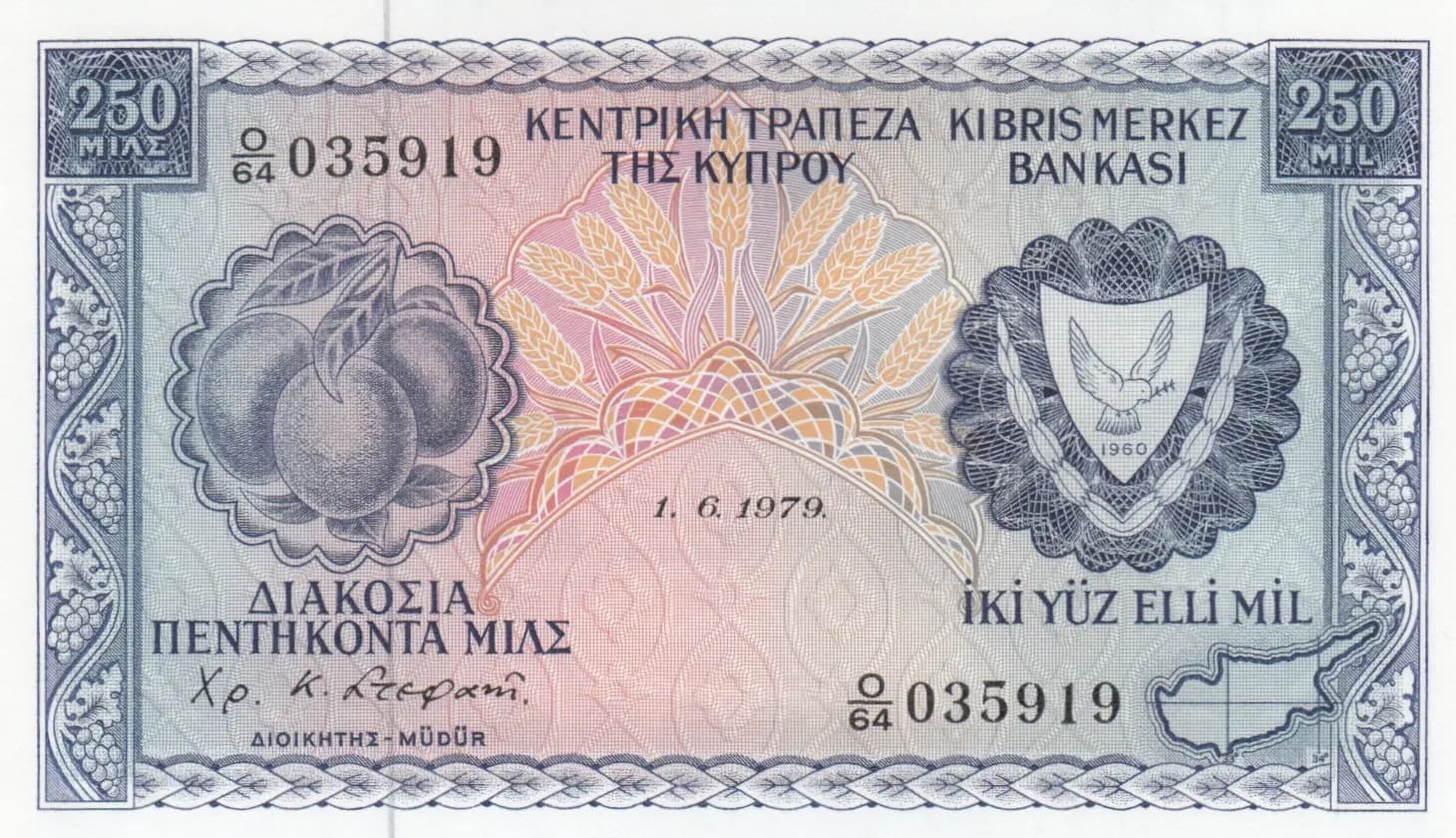
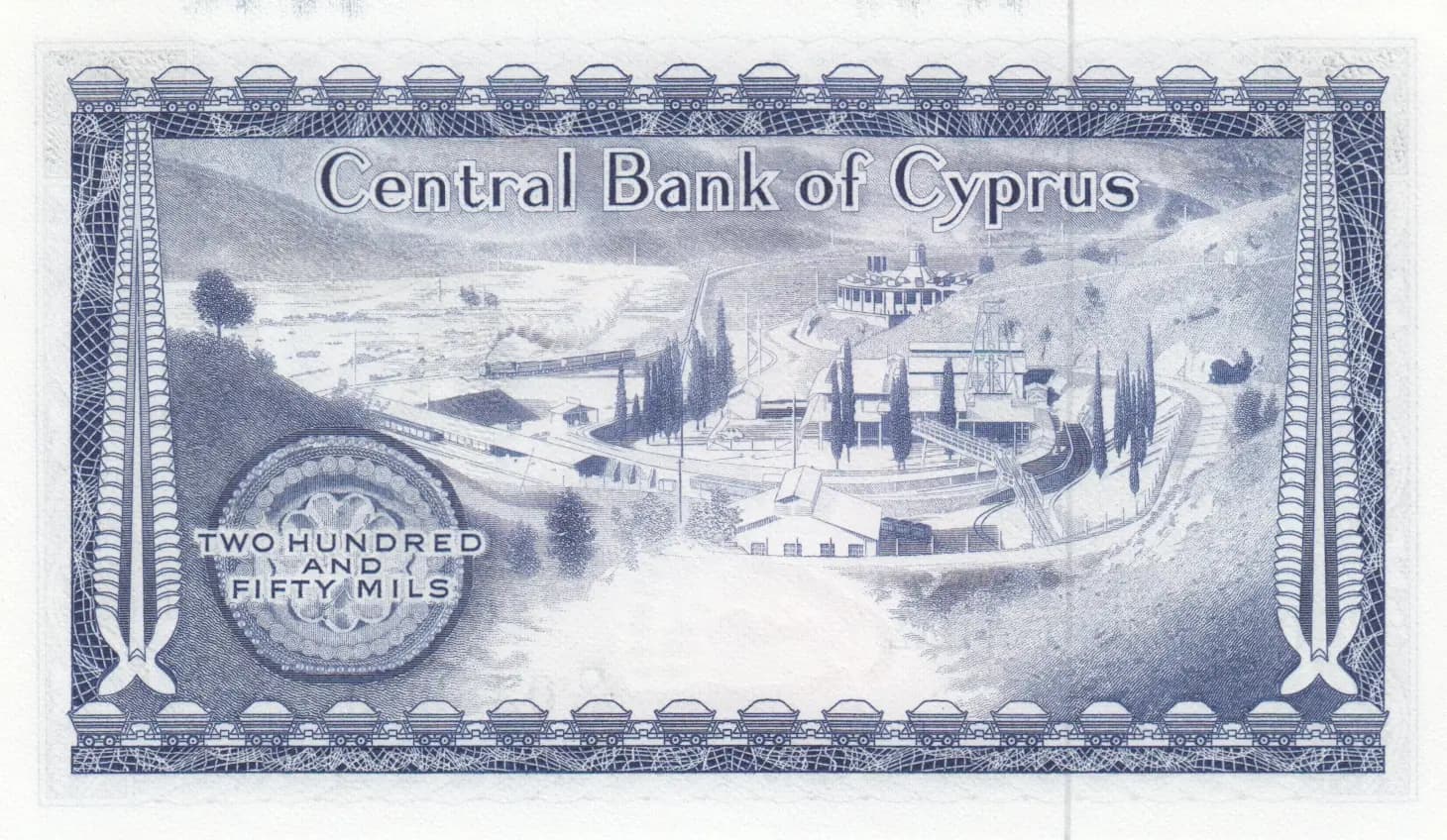
This is a striking example of the Cyprus 250 Mils banknote issued by the Central Bank of Cyprus on June 1, 1979, cataloged as Pick P-41c. The note is presented in uncirculated condition with crisp, vibrant colors—dominated by blue-gray tones complemented by golden yellows, pinks, and whites. The obverse features classical agricultural symbolism including pomegranates and wheat sheaves flanking the Cypriot coat of arms (eagle design), while the reverse depicts an industrial limestone quarry or mining operation with industrial buildings and cypress trees, reflecting Cyprus's economic foundation. This well-preserved example represents an important transitional-period banknote from Cyprus's pre-euro era, with market values for UNC specimens consistently reaching $20-$45.
Common. Despite the catalog designation P-41c indicating a specific variety variant, this note remains common in the numismatic market. eBay historical sales data shows consistent availability with numerous transactions across all condition grades, with UNC specimens regularly selling in the $15-$50 range (averaging around $25-$35). The extensive print run required to supply Cyprus's economy during the 1975-1982 period of this issue type, combined with the note's non-commemorative status as a standard circulation denomination, ensures adequate supply for collectors. The abundance of market transactions over the past 15+ years without significant price appreciation confirms common status.
Issued in 1979, this banknote represents the Central Bank of Cyprus during the period of the mil currency system (1964-1982), before Cyprus's eventual transition to the Cyprus pound and later the euro. The front's agricultural imagery—pomegranates and wheat—symbolizes Cyprus's traditional agrarian economy, while the reverse's industrial quarry scene reflects the island's mineral extraction industries and modernization during the late 1970s. The trilingual presentation (Greek, Turkish, and English) reflects Cyprus's complex political and cultural situation following the 1974 division, with the bank deliberately maintaining dual-language inscriptions to represent both communities.
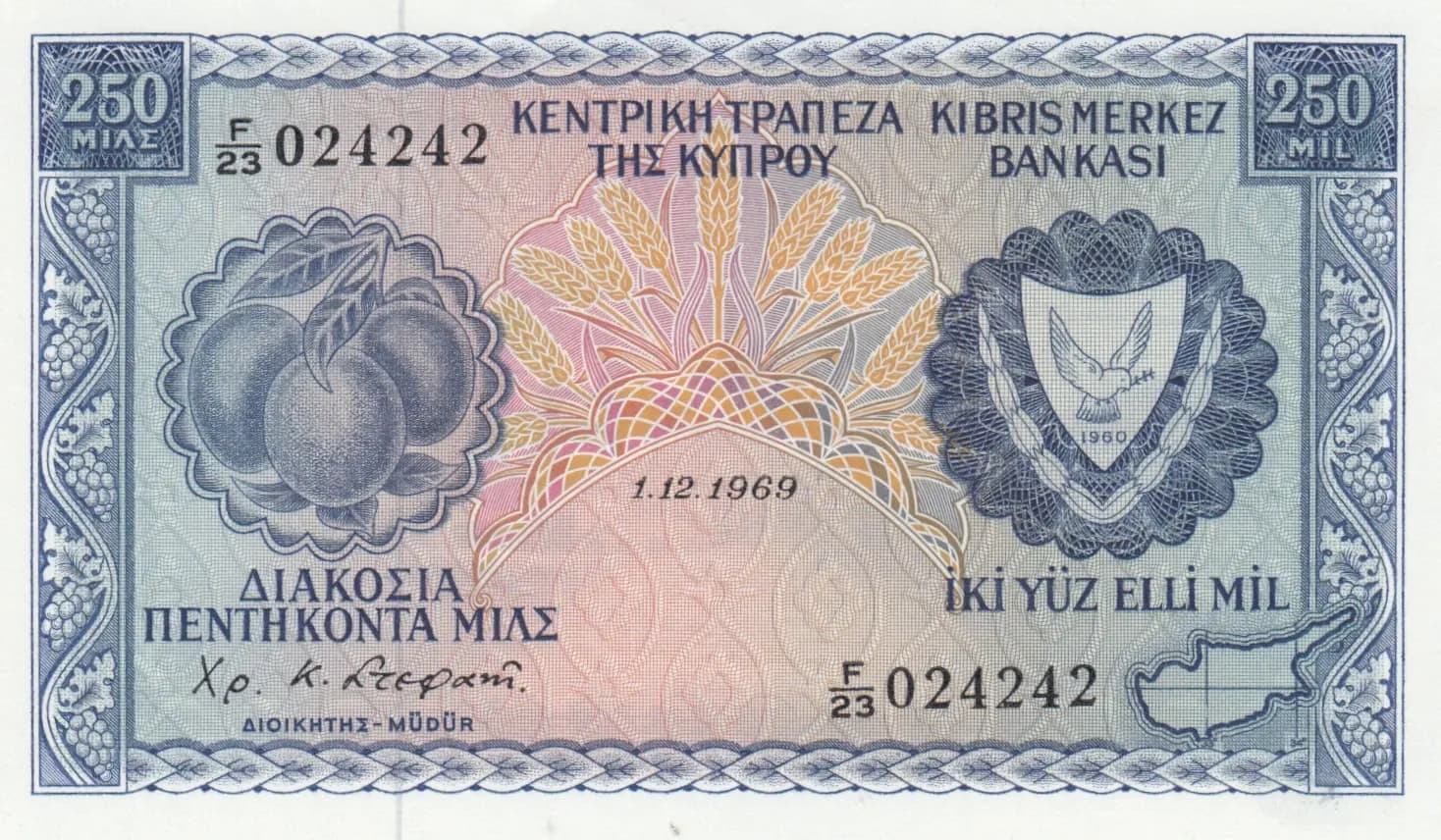
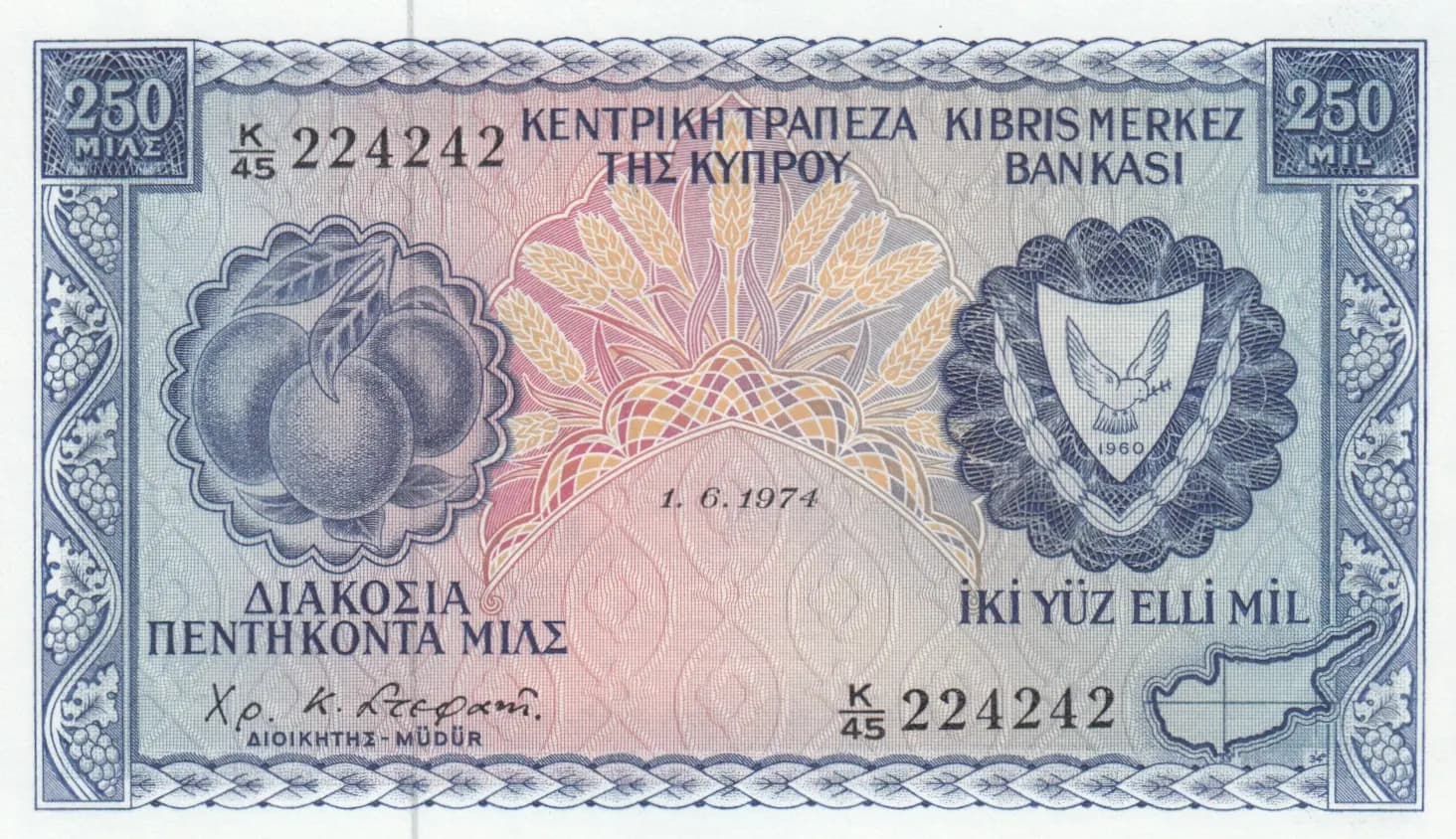
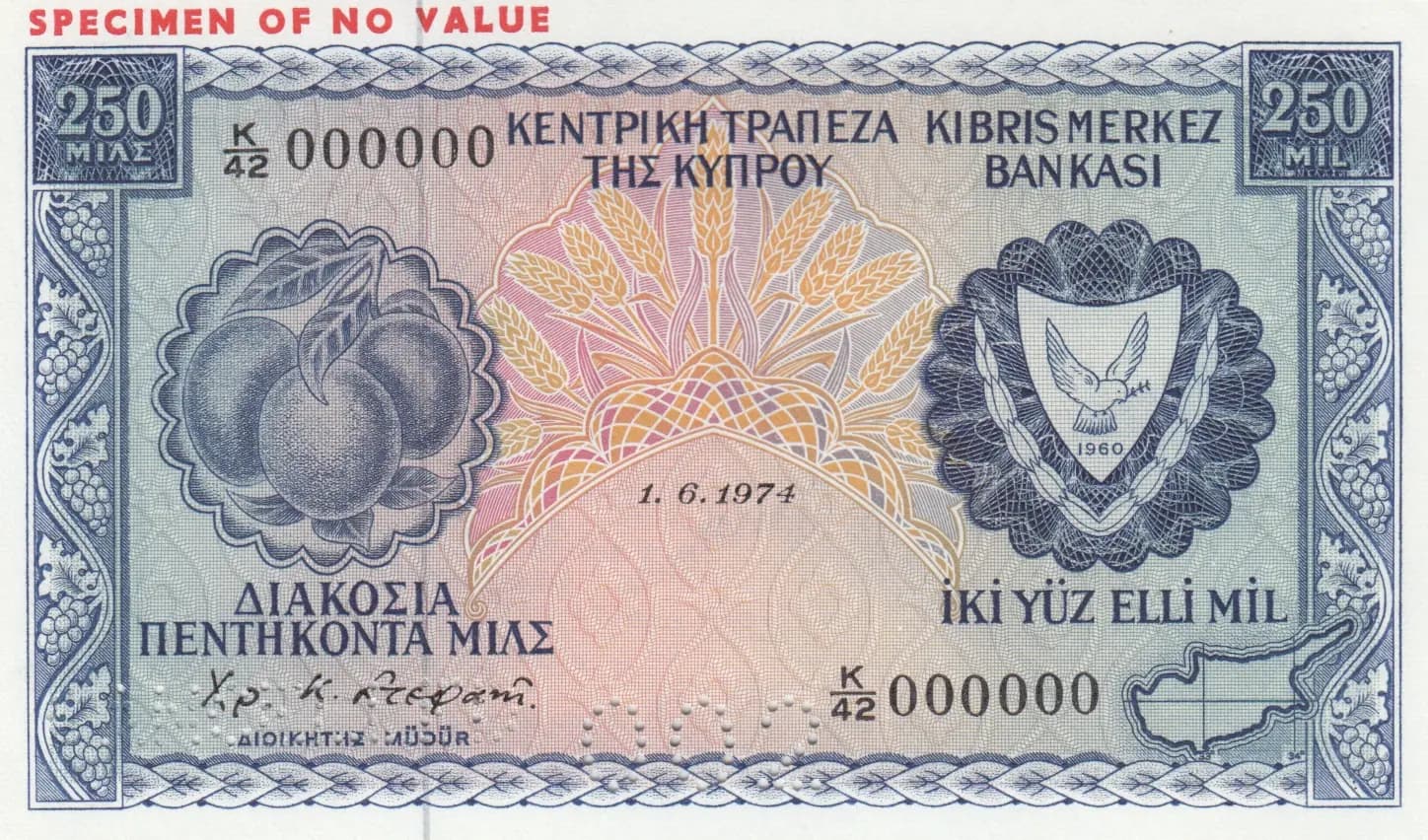
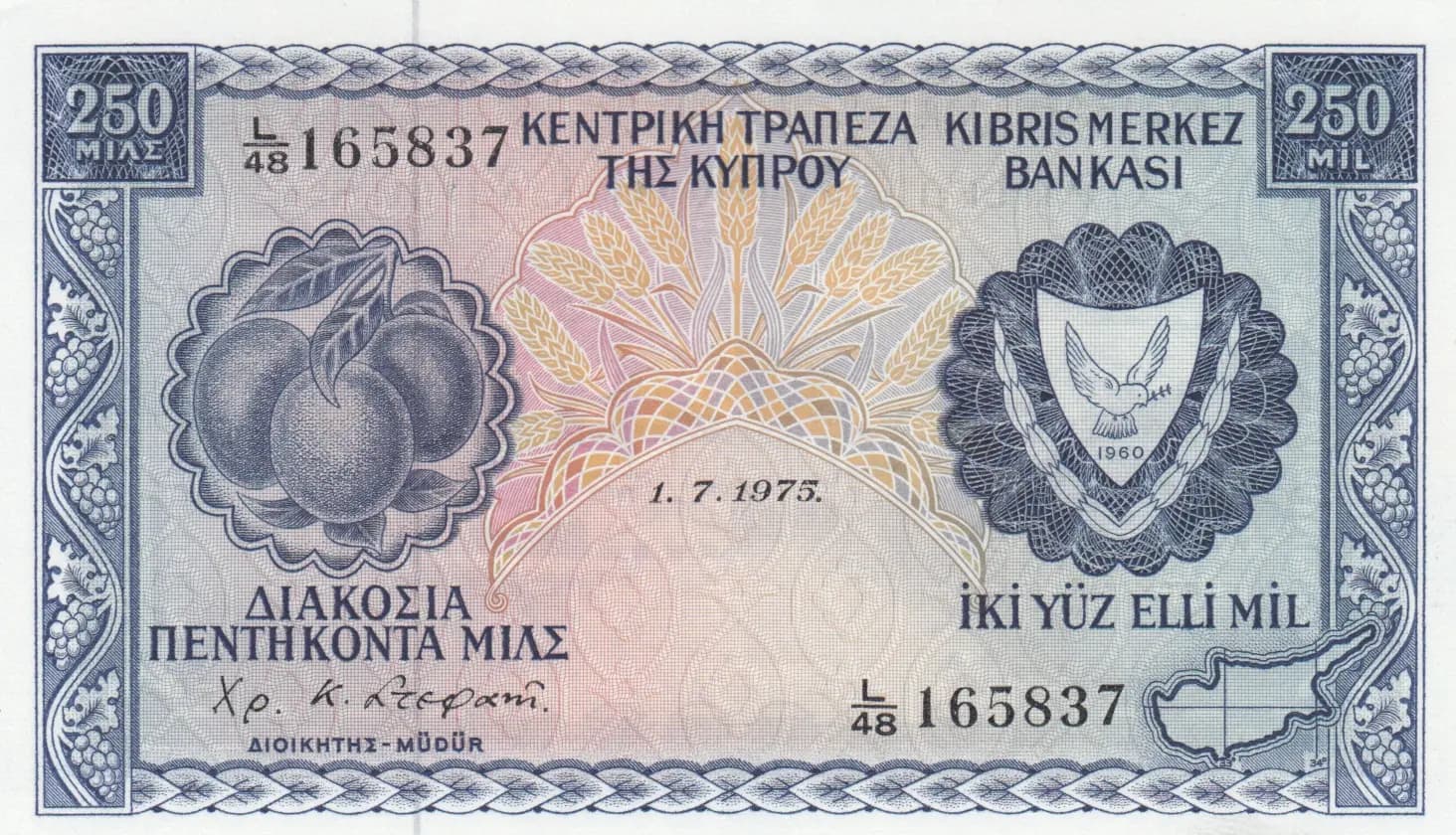
The obverse displays a well-balanced classical design with dual symmetry. On the left side is a stylized pomegranate fruit rendered in intricate detail within an ornate circular frame, symbolizing fertility and prosperity. The center features golden-yellow wheat sheaves representing agricultural abundance. The right side bears the coat of arms of Cyprus—an eagle design in an equally ornate circular frame—representing national sovereignty. All elements are separated by fine linear borders and the entire design is framed by a distinctive rope-pattern border in blue-gray tones. The reverse depicts an industrial limestone mining or quarry operation with a prominent tall smokestack, multi-story administrative or processing buildings, cypress trees characteristic of the Mediterranean landscape, and winding roads or pathways through a rolling hillside. A circular mechanical emblem (likely representing industry or mining) appears at the bottom left. The English-language text on the reverse suggests this was designed for broader international recognition. The overall engraving quality is exceptionally fine with consistent linework throughout.
FRONT: '250' (denomination in numerals); 'ΜΙΛ' (Greek: 'MIL' - mils); 'ΚΕΝΤΡΙΚΗ ΤΡΑΠΕΖΑ ΚΥΠΡΟΥ' (Greek: 'Central Bank of Cyprus'); 'ΤΗΣ ΚΥΠΡΟΥ' (Greek: 'of Cyprus'); 'KIBRIS MERKEZ BANKASI' (Turkish: 'Central Bank of Cyprus'); 'ΔΙΑΚΟΣΙΑ ΠΕΝΤΗΚΟΝΤΑ ΜΙΛΣ' (Greek: 'Two Hundred Fifty Mils'); 'İKİ YÜZ ELLİ MİL' (Turkish: 'Two Hundred Fifty Mils'); '1.6.1979' (Issue date: June 1, 1979); '64 0359 19' (Serial number); 'Χρ. κ. Βεργοτης' (Greek: Governor's signature); 'ΔΙΟΙΚΗΤΗΣ-MÜDÜR' (Greek/Turkish: 'Governor/Director'). BACK: 'Central Bank of Cyprus' (English); 'TWO HUNDRED AND FIFTY MILS' (English).
This note was produced using intaglio engraving (offset lithography with intaglio elements), a standard security printing technique for banknotes of this era. The printer is identified as BWC (Bradbury Wilkinson & Company), one of the world's premier security printers. The fine line engraving visible throughout—particularly in the ornate frames, border patterns, and landscape details on the reverse—is characteristic of intaglio work. The consistent color application and sharp impression of fine details indicate professional-grade currency production with multiple printing passes for the various color layers (blue-gray, yellow, pink, white).
This specimen is identified as Pick P-41c based on the printer designation (BWC without imprint visible in this variant). The PMG population report indicates four cataloged varieties for the base 250 Mils denomination (P-41a, P-41b, P-41c, and P-41s), though the specific distinguishing characteristics between these variants are not detailed in standard catalogs. The issue date of 1.6.1979 places this within the 1975-1982 emission period noted on both banknote.ws and realbanknotes.com. The serial number format '64 0359 19' and signature of Governor 'Χρ. κ. Βεργοτης' are consistent with notes from this specific production period. No obvious overprints or security features distinguishing this as a special issue are visible.