20 pesos 1971 specimen
About This Note
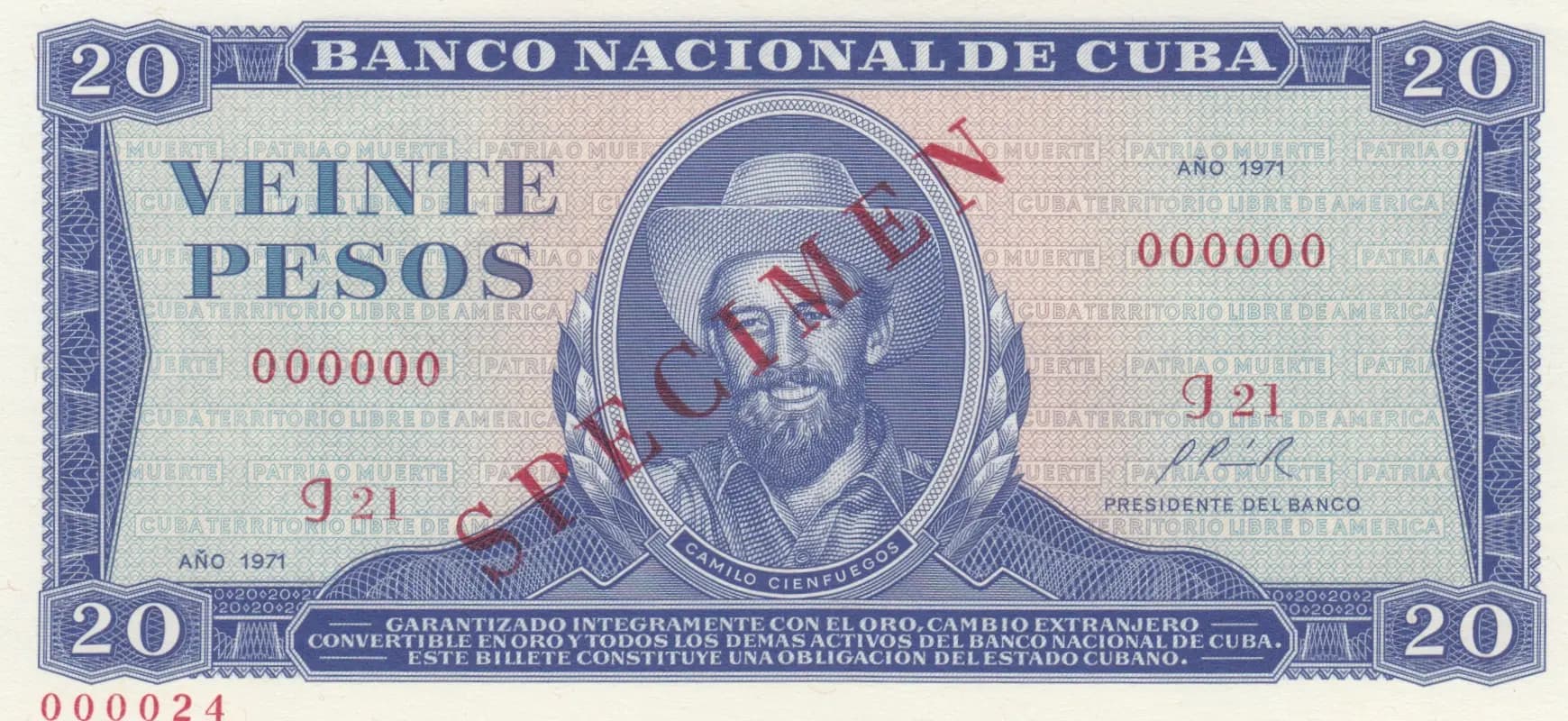
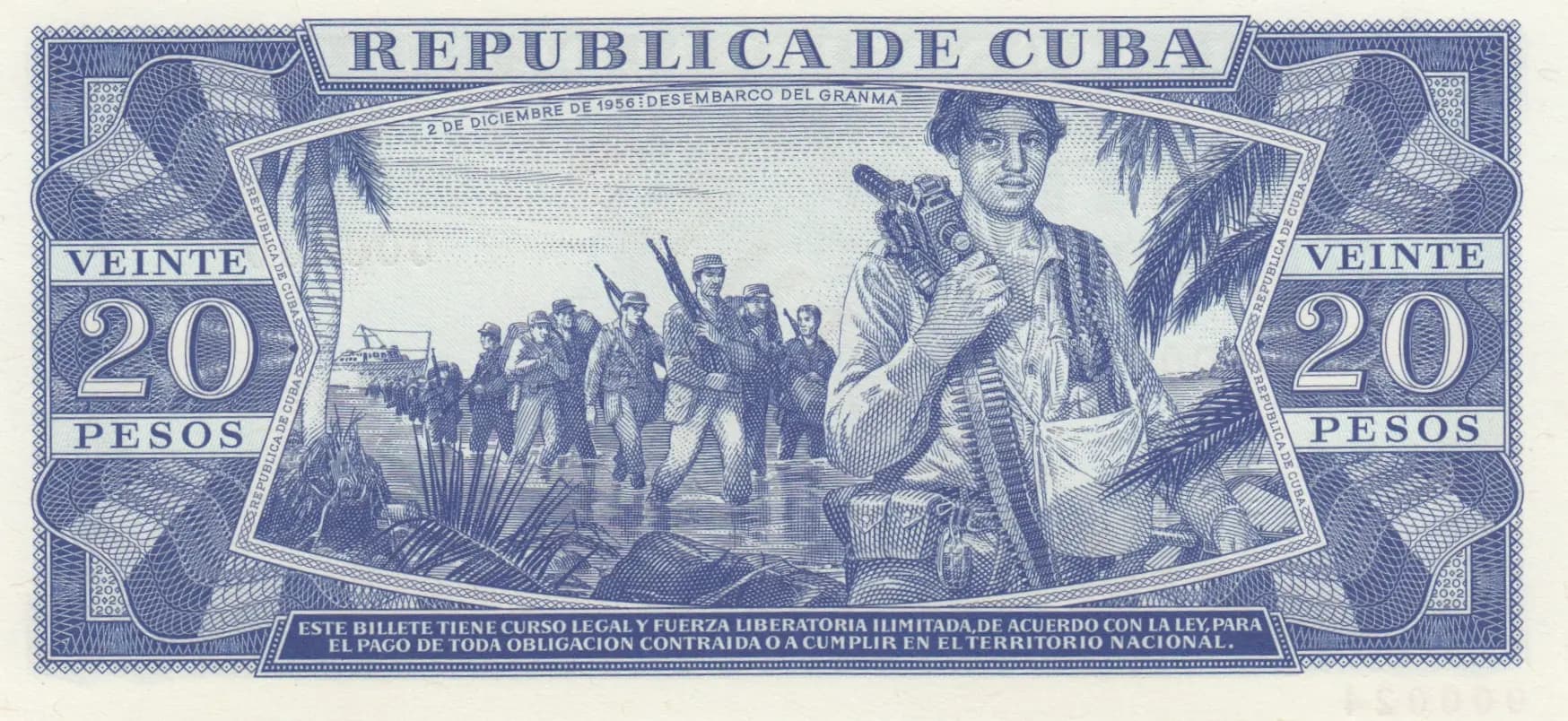
A striking 1971 Banco Nacional de Cuba 20 pesos specimen note in uncirculated condition, featuring a center portrait of Camilo Cienfuegos and a dramatic reverse depicting the December 2, 1956 landing of the Granma yacht—a pivotal moment in Cuban revolutionary history. The note displays the characteristic blue and tan color scheme of this issue with crisp engraving and the red diagonal 'SPECIMEN' overprint clearly visible, making this an important reference piece for collectors of Cuban revolutionary currency.
common
This note was issued in 1971, during the consolidation of the Cuban Revolutionary government under Fidel Castro. The front portrait honors Camilo Cienfuegos, a legendary revolutionary commander who disappeared in 1959 and became an iconic figure in Cuban national mythology. The reverse depicts the December 2, 1956 landing of the Granma yacht in Oriente Province, the historic event that launched the armed revolutionary campaign that would culminate in the overthrow of the Batista regime.
The obverse features a formal oval portrait of Camilo Cienfuegos, the revolutionary comandante, rendered in fine line engraving and positioned centrally between laurel wreaths. The portrait depicts him with his characteristic full beard and formal attire. The denomination '20' appears in decorative corner panels with 'VEINTE PESOS' inscribed below. The note's border features intricate guilloche patterns typical of high-security currency production. The reverse presents a dynamic historical scene depicting the December 2, 1956 landing of the Granma yacht, showing revolutionary soldiers in combat gear disembarking with weapons, tropical palm trees visible in the shoreline landscape. This reverse design commemorates the pivotal moment when Castro's expeditionary force began the campaign that would lead to revolution. The color scheme of blue and tan/cream throughout both sides provides strong visual contrast while maintaining the formal appearance expected of currency.
{"front":{"header":"BANCO NACIONAL DE CUBA (National Bank of Cuba)","denomination":"VEINTE PESOS (Twenty Pesos) / 20","portrait_identification":"CAMILO CIENFUEGOS","motto":"PATRIA O MUERTE (Homeland or Death)","national_motto":"CUBA TERRITORIO LIBRE DE AMERICA (Cuba Free Territory of America)","date":"AÑO 1971 (Year 1971)","guarantee_text":"GARANTIZADO INTEGRAMENTE CON EL ORO, CAMBIO EXTRANJERO CONVERTIBLE EN ORO Y TODOS LOS DEMAS ACTIVOS DEL BANCO NACIONAL DE CUBA. ESTE BILLETE CONSTITUYE UNA OBLIGACION DEL ESTADO CUBANO. (Guaranteed entirely with gold, foreign exchange convertible into gold and all other assets of the National Bank of Cuba. This banknote constitutes an obligation of the Cuban State.)","specimen_overprint":"SPECIMEN","serial_numbers":"000000 / 000024 / 921"},"back":{"header":"REPUBLICA DE CUBA (Republic of Cuba)","historical_inscription":"2 DE DICIEMBRE DE 1956: DESEMBARCO DEL GRANMA (December 2, 1956: Landing of the Granma)","denomination":"VEINTE PESOS (Twenty Pesos) / 20","legal_tender_clause":"ESTE BILLETE TIENE CURSO LEGAL Y FUERZA LIBERATORIA ILIMITADA DE ACUERDO CON LA LEY, PARA EL PAGO DE TODA OBLIGACION CONTRAIDA O A CUMPLIR EN EL TERRITORIO NACIONAL. (This banknote has legal tender status and unlimited liberatory force in accordance with the law, for the payment of any obligation contracted or to be fulfilled in the national territory.)"}}
Intaglio engraving (line engraving/copperplate), the standard security printing technique for Cuban banknotes of this period. The fine guilloche patterns, detailed portraiture, and complex historical scene on the reverse all demonstrate the hallmarks of traditional intaglio production. This note was produced by the Banco Nacional de Cuba's in-house printing facility; Cuban currency of this era typically employed intaglio engraving combined with letterpress for serial numbers and overprints, as evidenced by the red specimen overprint visible on this example.
This is a specimen note, identifiable by the red diagonal 'SPECIMEN' overprint across the obverse. Specimen notes of Cuban currency were prepared by the printer for presentation to banking authorities, museum collections, and as reference examples—they were never intended for circulation. The serial numbers shown (000000 and 000024) are typical of specimen examples, which commonly feature zero-filled or low serial number sequences. The Pick 195as designation (with the 's' suffix) specifically indicates this specimen variety. Cuban notes from this series may exist in multiple signature varieties and with different bank official titles, though the core design remained consistent.