1 peso 1956
Market Prices
1 saleAbout This Note
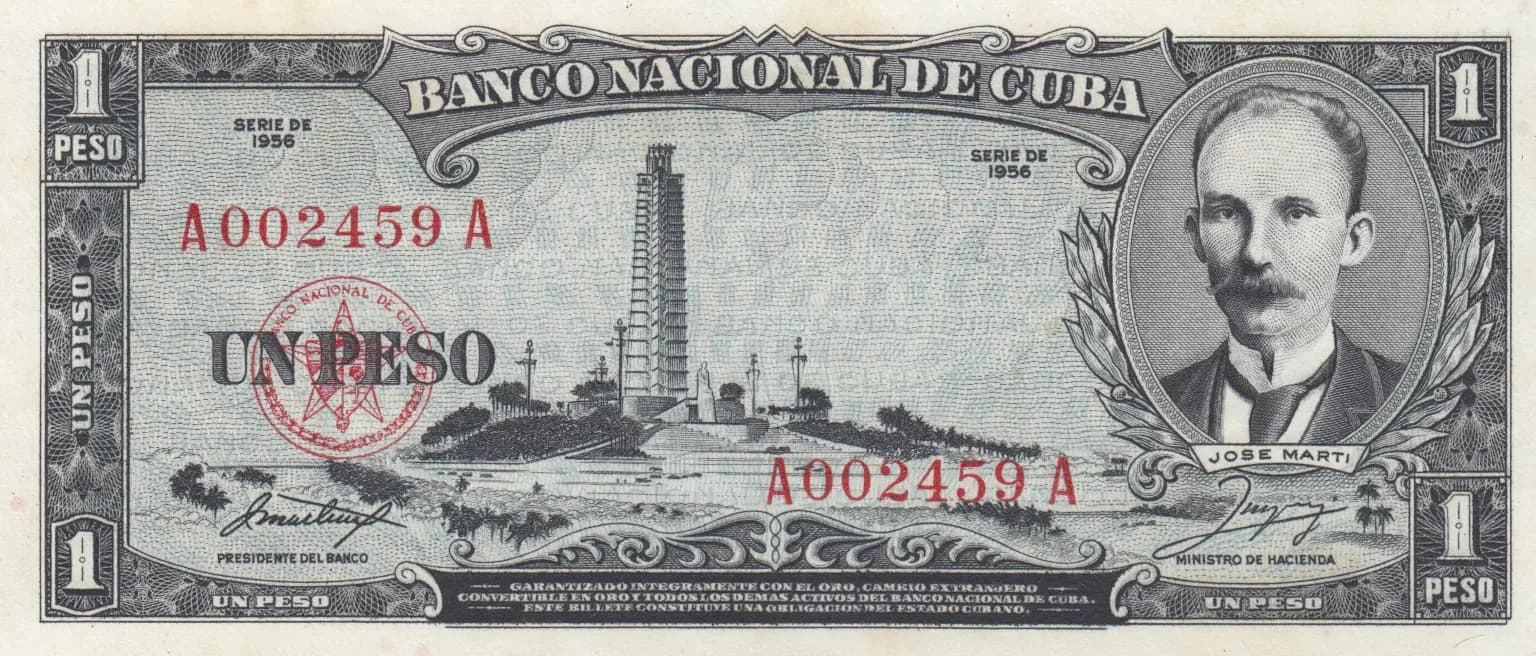
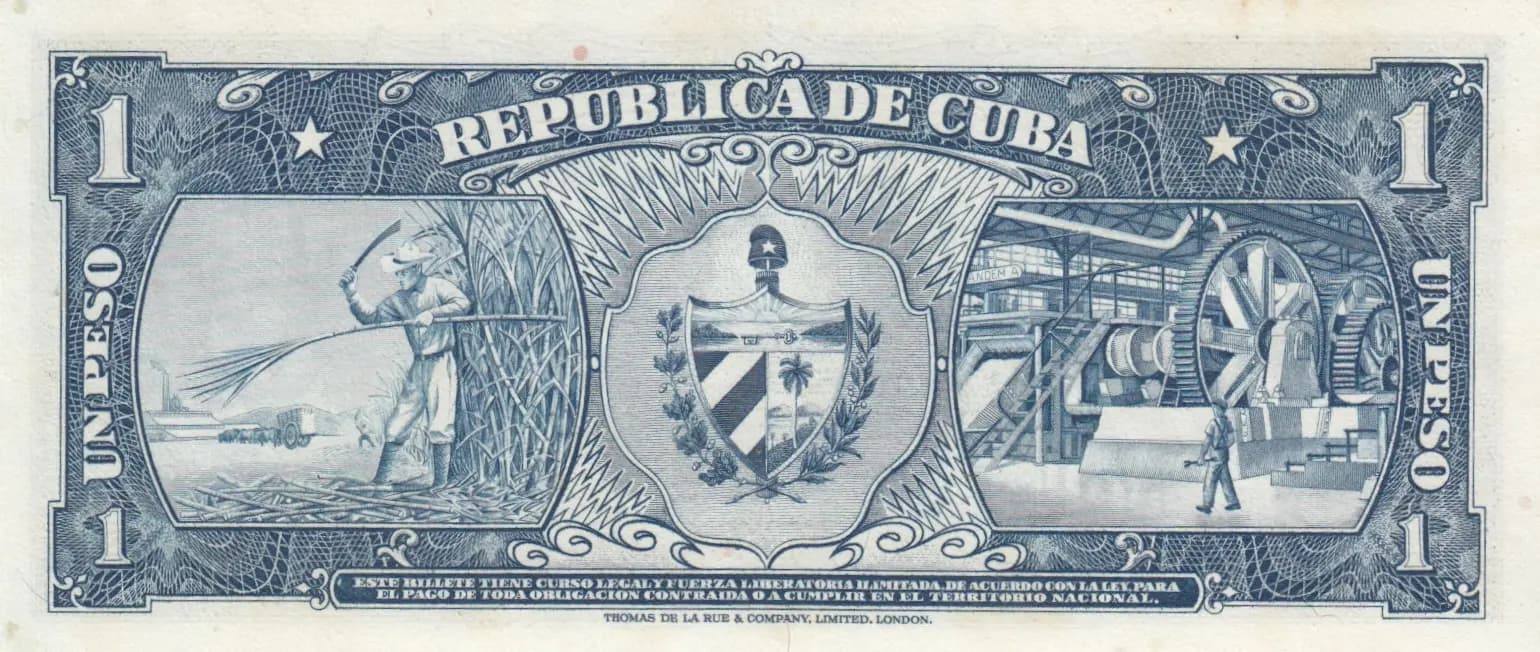
This is an exceptional example of Cuba's 1956 one-peso note (Pick 87a), graded UNC and printed by Thomas de la Rue of London. The obverse features a striking portrait of José Martí with a monument vignette in the center, while the reverse displays three scenes depicting Cuban agricultural and industrial life—sugar cane harvesting, coat of arms, and factory processing. The note exhibits sharp, clear printing with intricate engraving throughout and no visible wear, making it a desirable specimen for collectors of Cuban currency and Latin American numismatics.
Common. The catalog reference indicates this series was issued from 1956-1958 with routine regular-issue status. Market data from realbanknotes.com shows UNC specimens valued at $25 (2016 estimate), with an EF example selling for $8.88 on eBay in 2012, indicating ready availability and strong supply. There is no evidence of a small print run, recall, or short-lived issue. This note remains affordable and commonly encountered in collectors' Cuban currency holdings.
Issued in 1956 by the Banco Nacional de Cuba under the Batista regime, this note commemorates Cuba's national hero José Martí and illustrates the nation's economic foundations: sugar production and industrial development. The imagery reflects the island's agricultural heritage and modernization efforts during the mid-20th century, capturing a moment before the revolutionary transformation that would soon reshape Cuban society and its currency.
The obverse displays José Martí, Cuba's national independence hero and founding father of the nation, portrayed in formal attire with a laurel wreath border at right, accompanied by a central vignette depicting the Martí Monument—a tall obelisk tower in a coastal landscape with palm trees, representing Cuba's patriotic landmarks. The reverse illustrates three major pillars of Cuban economy and society: on the left a figure harvesting sugarcane (reflecting Cuba's dominant agricultural export), in the center the Cuban national coat of arms featuring a shield with the royal palm and crossed items, and on the right an industrial figure and factory structure representing modern manufacturing and sugar processing. The design employs ornamental scrollwork borders, denomination markers in all corners, and decorative elements throughout.
{"front":{"BANCO NACIONAL DE CUBA":"National Bank of Cuba","1 PESO":"1 Peso","SERIE DE 1956":"Series of 1956","UN PESO":"One Peso","JOSE MARTI":"José Martí","PRESIDENTE DEL BANCO":"President of the Bank","MINISTRO DE HACIENDA":"Minister of Finance","A002459 A":"Serial number"},"back":{"REPUBLICA DE CUBA":"Republic of Cuba","1 UN PESO 1":"1 One Peso 1","UN PESO":"One Peso","ESTE BILLETE ES LEGAL Y FUERZA LIBERATORIA LIMITADA EL PAGO DE TODA OBLIGACION CONTRAIDA O A CUMPLIR EN EL TERRITORIO NACIONAL":"This note is legal and has limited liberatory force in payment of all obligations incurred or to be fulfilled in the national territory","THOMAS DE LA RUE & COMPANY, LIMITED, LONDON":"Thomas de la Rue & Company, Limited, London (printer credit)"}}
Intaglio (engraved) printing on high-quality security paper, executed by Thomas de la Rue & Company Limited of London, one of the world's premier security printers. The method is evident from the fine detailed linework, intricate background patterns, and micro-engraving visible throughout the note. Red overprinted serial numbers and bank seals were applied as a secondary security measure.
This specimen is identified as Pick 87a, the standard 1956 issue. The serial number A002459 A indicates it belongs to the 'A' series prefix. Known varieties for this Pick number include different signature combinations of bank officials (Presidente del Banco and Ministro de Hacienda) and printer variants, though the Thomas de la Rue printing is consistent. No unusual overprints or date variations are observed on this example.