500 yuan 1946
Market Prices
9 salesAbout This Note
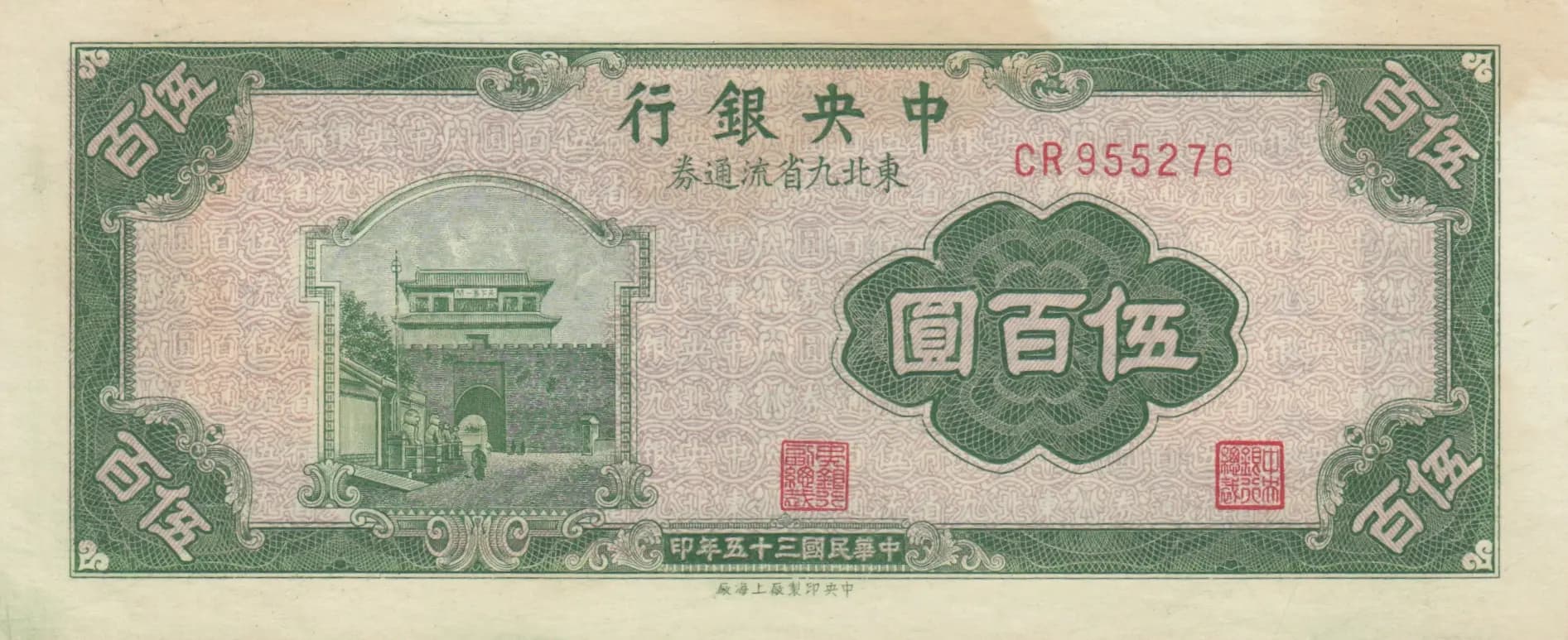
This 500 yuan note from the Central Bank of China (1946) presents in AU condition with vibrant green and cream coloring, featuring a beautifully rendered traditional Chinese gate/fortified tower at the center-left of the obverse. The note displays excellent preservation with sharp printing clarity, minimal wear, and crisp color saturation—notable given the note's age and the historically turbulent period of its issue. The intricate security printing with fine geometric patterns and ornamental scrollwork throughout reflects the sophisticated anti-counterfeiting measures of the era.
Common. The eBay market data provided shows consistent sales in the $0.99 to $61 range depending on condition, with most sales in the $3–$15 range. The 2016 catalog values for this denomination are modest ($0.60 for VG, $10 for UNC), and the relatively frequent appearance of this note in sales records indicates substantial circulation and print run. Notes of this type and era that routinely sell for under $15 in average grades are classified as common in the collector market.
Issued during 1946 by the Central Bank of China, this note represents a transitional period in Chinese monetary history during the later stages of the Republic of China era (the dating shows 中華民國五十五年, Year 55 of the Republic). The depicted gate architecture symbolizes Chinese sovereignty and continuity, while the specific designation as a 'Northeast Nine Provinces Circulating Note' (東北九省通流券) reflects the complex regional monetary arrangements following the Japanese occupation and suggests this note's restricted circulation within the northeastern territories.
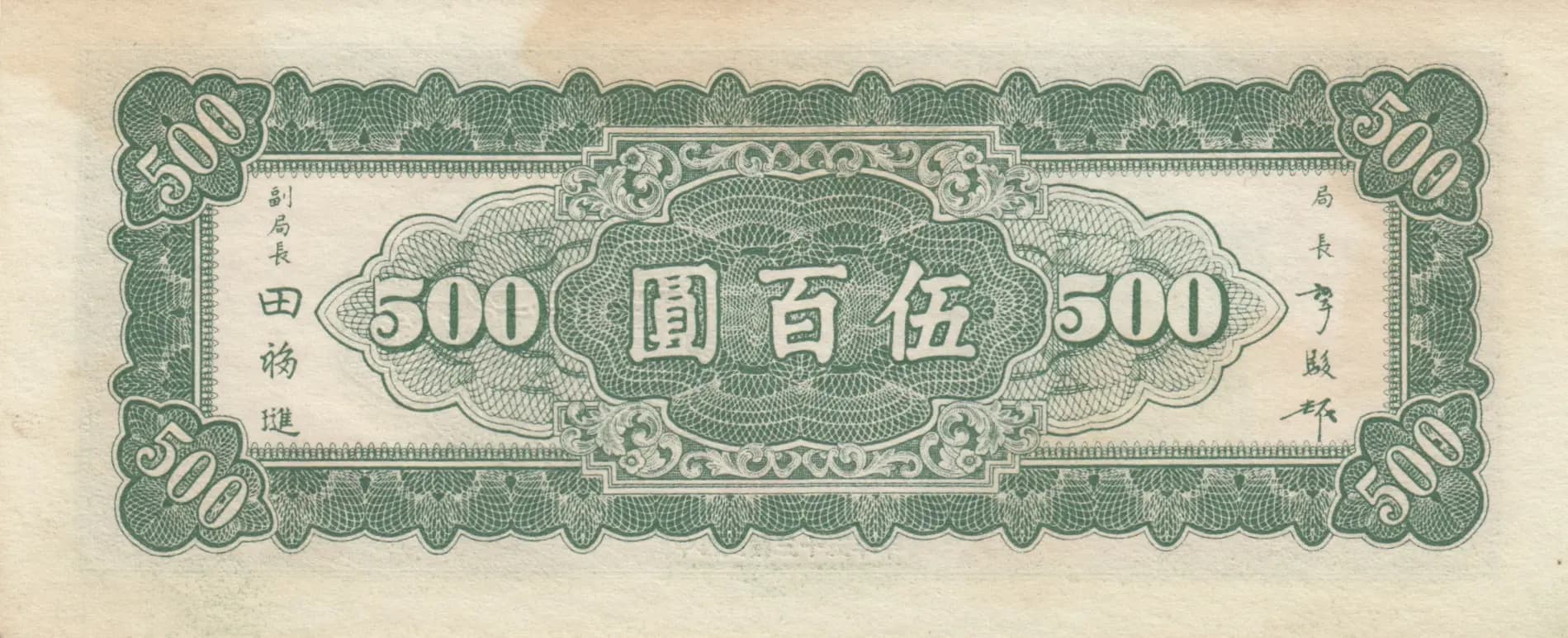
The obverse features a prominently displayed traditional Chinese fortified gate or tower structure (likely representing a significant historical or symbolic edifice from northeastern China) rendered in the center-left portion with architectural detail showing multiple tiers and crenellations. The denomination is displayed in an ornate cloud-shaped cartouche on the right side—a design element steeped in classical Chinese aesthetics. The reverse presents a symmetrical, highly formal design centered on an elaborate cloud-cartouche containing the denomination in both Chinese characters (伍百圓) and Arabic numerals (500), flanked by official inscriptions and signature lines. Both sides employ ornamental Chinese scrollwork patterns and extensive geometric security printing. Red rectangular seals and official stamps appear on the obverse right, signifying governmental authority. The color scheme of dark green on lilac underprint (obverse) and dark green on white/cream (reverse) provides excellent contrast and visual hierarchy.
{"obverse":{"centerTop":"中央銀行 - Central Bank of China","centerMiddle":"東北九省通流券 - Northeast Nine Provinces Circulating Note","centerBottom":"伍百圓 - Five Hundred Yuan","dateLine":"中華民國五十五年 - Republic of China Year 55 (1966 in Western calendar, though this conflicts with the 1946 issue date; likely represents the printing year or design year)","serialNumber":"CR955276 - Serial number in red ink"},"reverse":{"centerCartouche":"伍百圓 - Five Hundred Yuan (Chinese characters) / 500 (Arabic numerals)","leftSignatures":"行長 - Bank President/Governor (signature title); accompanied by official characters representing signatory names","rightDesignation":"長 - Chief/Long (vertical inscription marking authority)"}}
Intaglio printing (engraved/recess printing), executed by the Shanghai printer as noted in the catalog data (S/M #C303-10). The fine geometric background patterns, intricate ornamental borders, detailed scrollwork, and sharp line work visible throughout the note are characteristic of high-quality intaglio production. The precision of the security features—particularly the complex geometric patterns used as anti-counterfeiting measures—indicates advanced engraving techniques typical of Central Bank of China currency production during this period.
This specimen corresponds to Pick #P-380a (the 'a' variety designation suggests there are multiple varieties of this 500 yuan denomination from 1946). The specific variety markers include: Serial number prefix 'CR' (indicating a particular printing batch), the Shanghai printer attribution (noted in catalog as S/M #C303-10), and the designation as a 'Northeast Nine Provinces' (東北九省) regional note. The signature characters visible on the reverse would further specify the particular authorization variant. Additional varieties may exist with different signature combinations, serial number prefixes, or printer marks, consistent with multi-batch production by the Central Bank during this period.