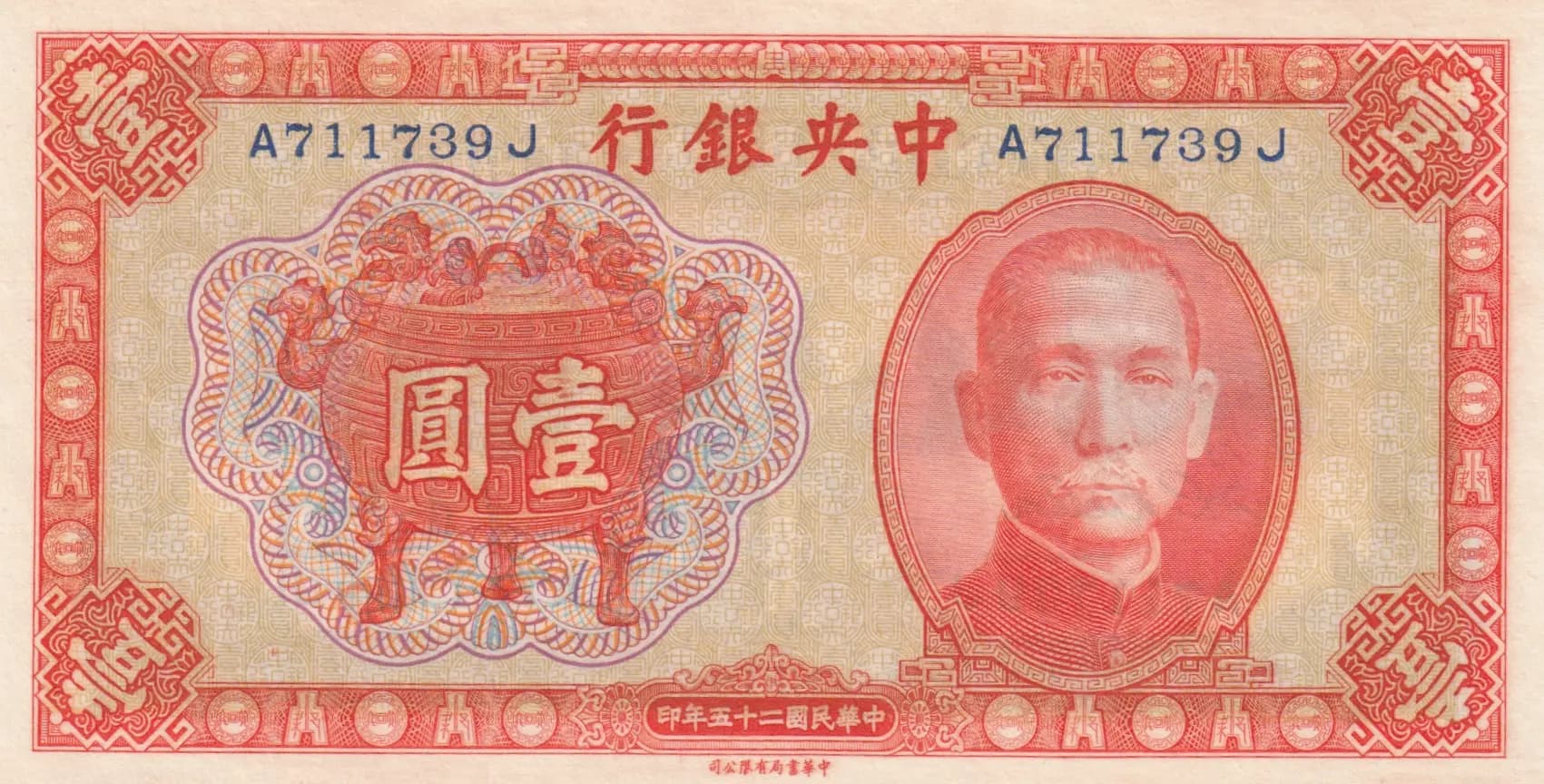
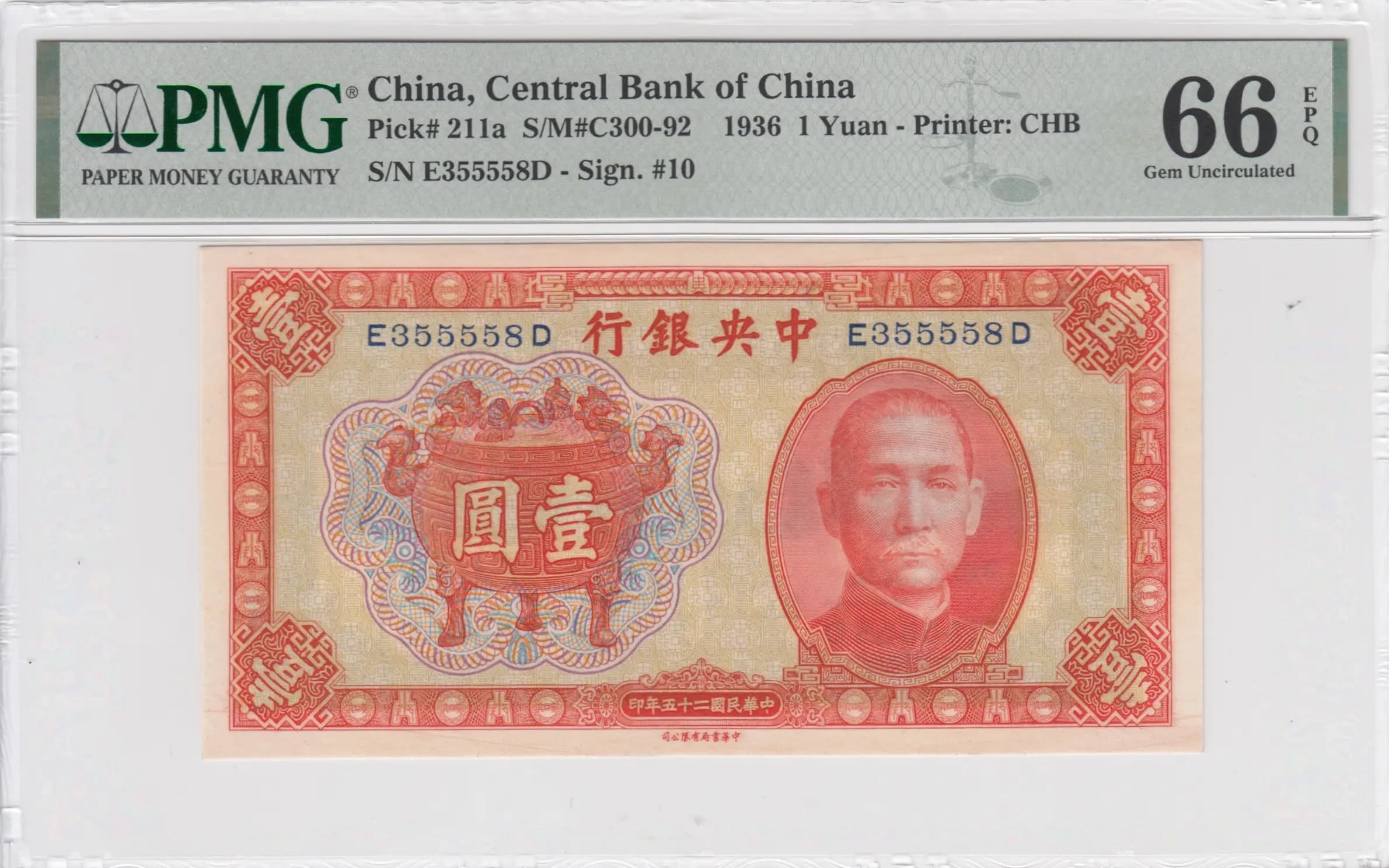
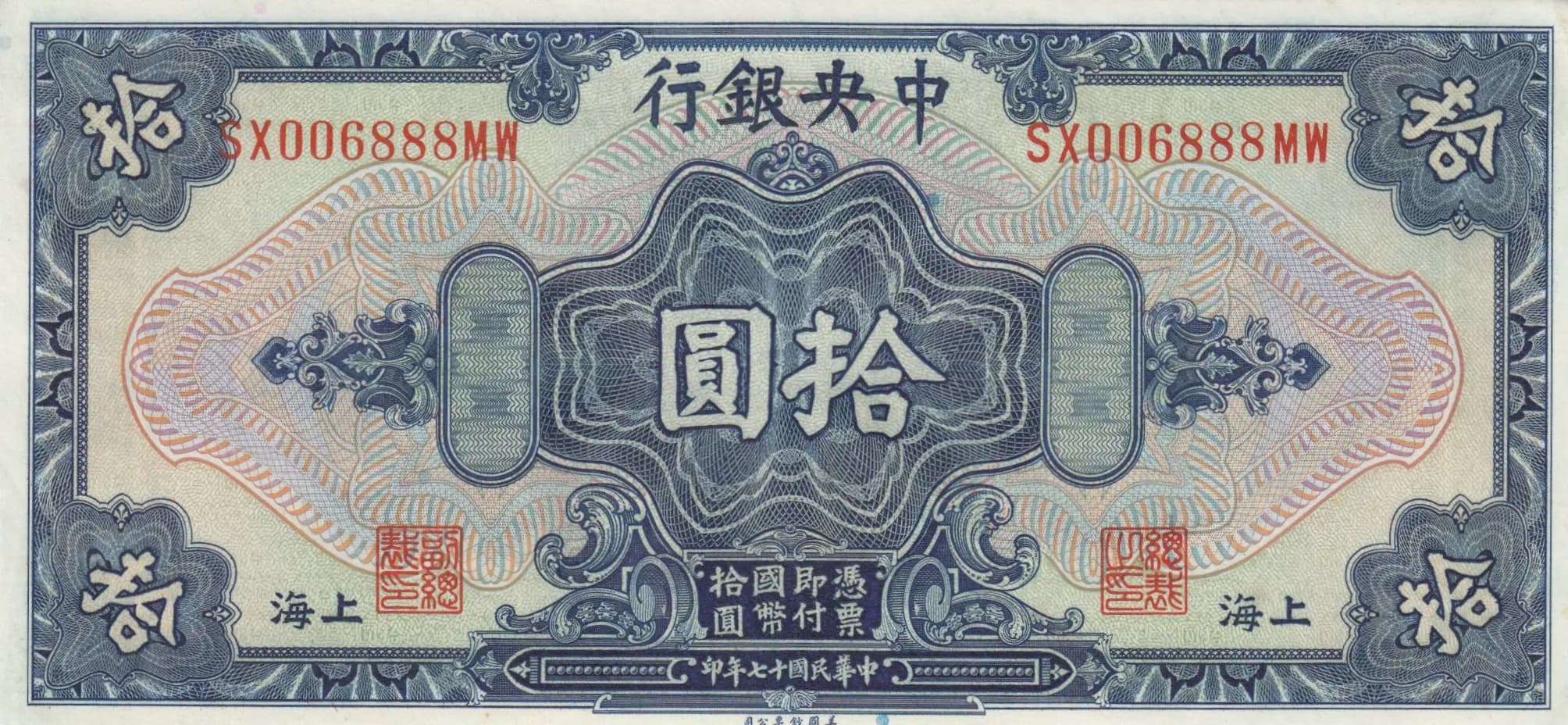
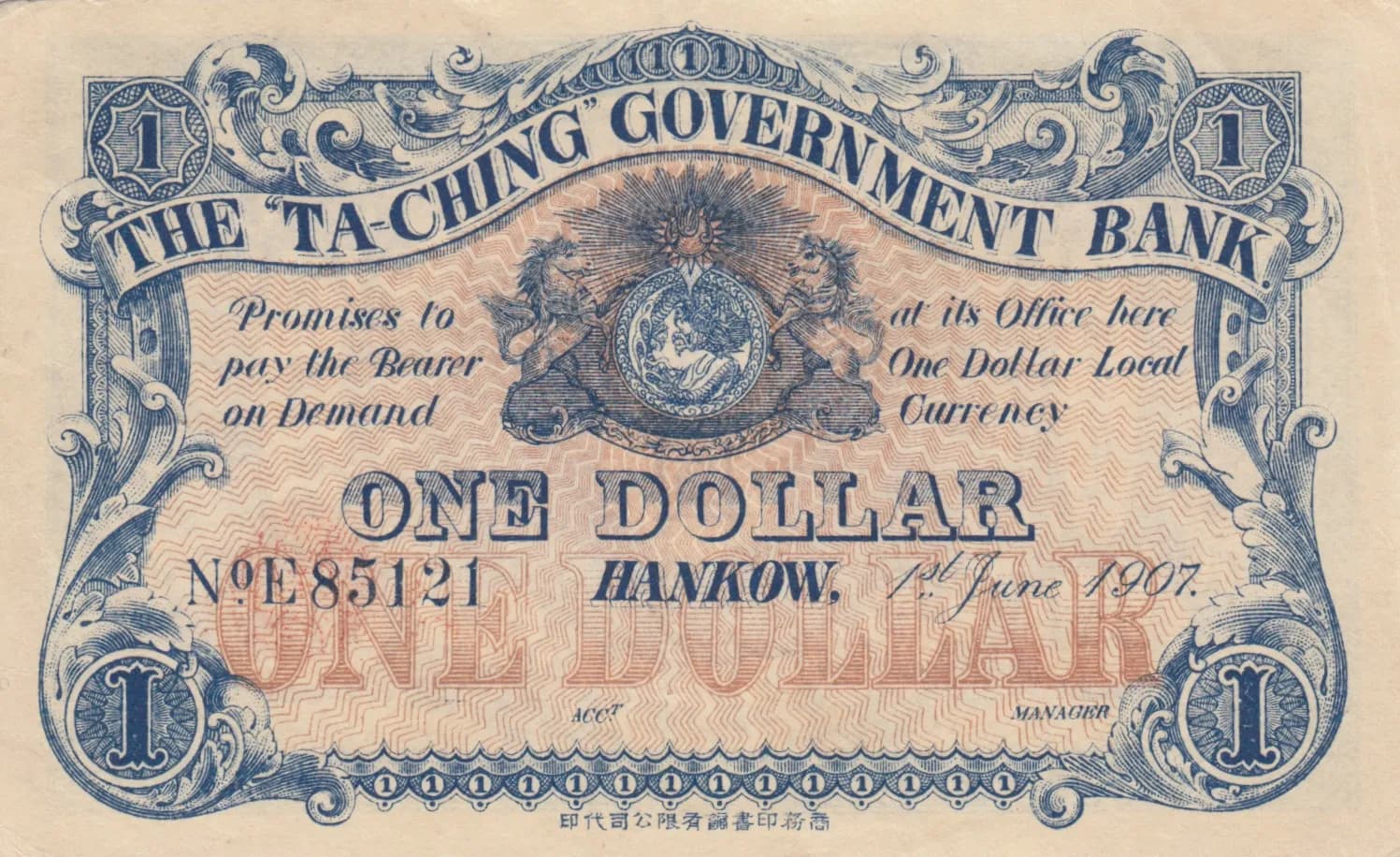
1 yuan 1936
Market Prices
18 salesAbout This Note
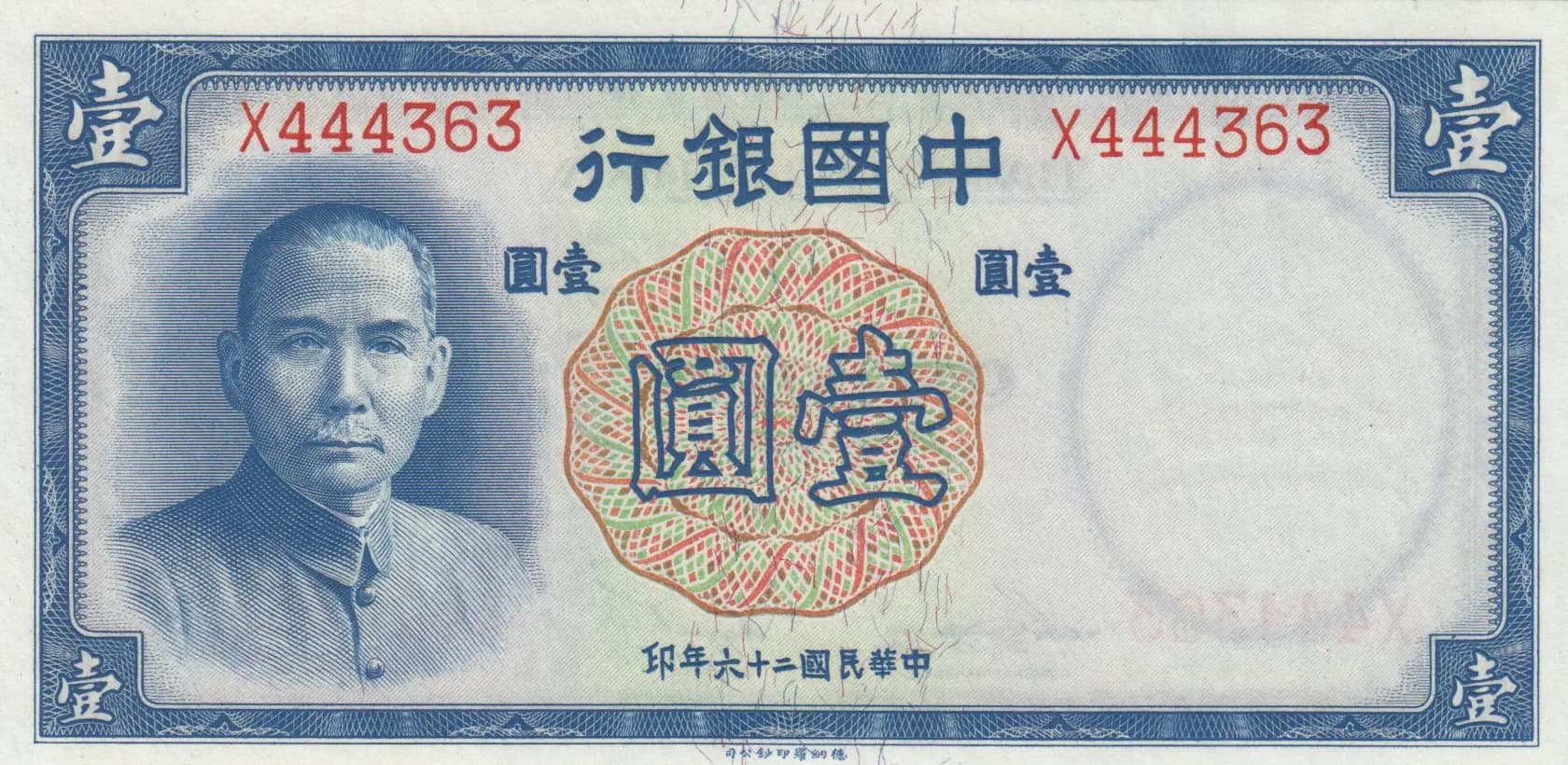
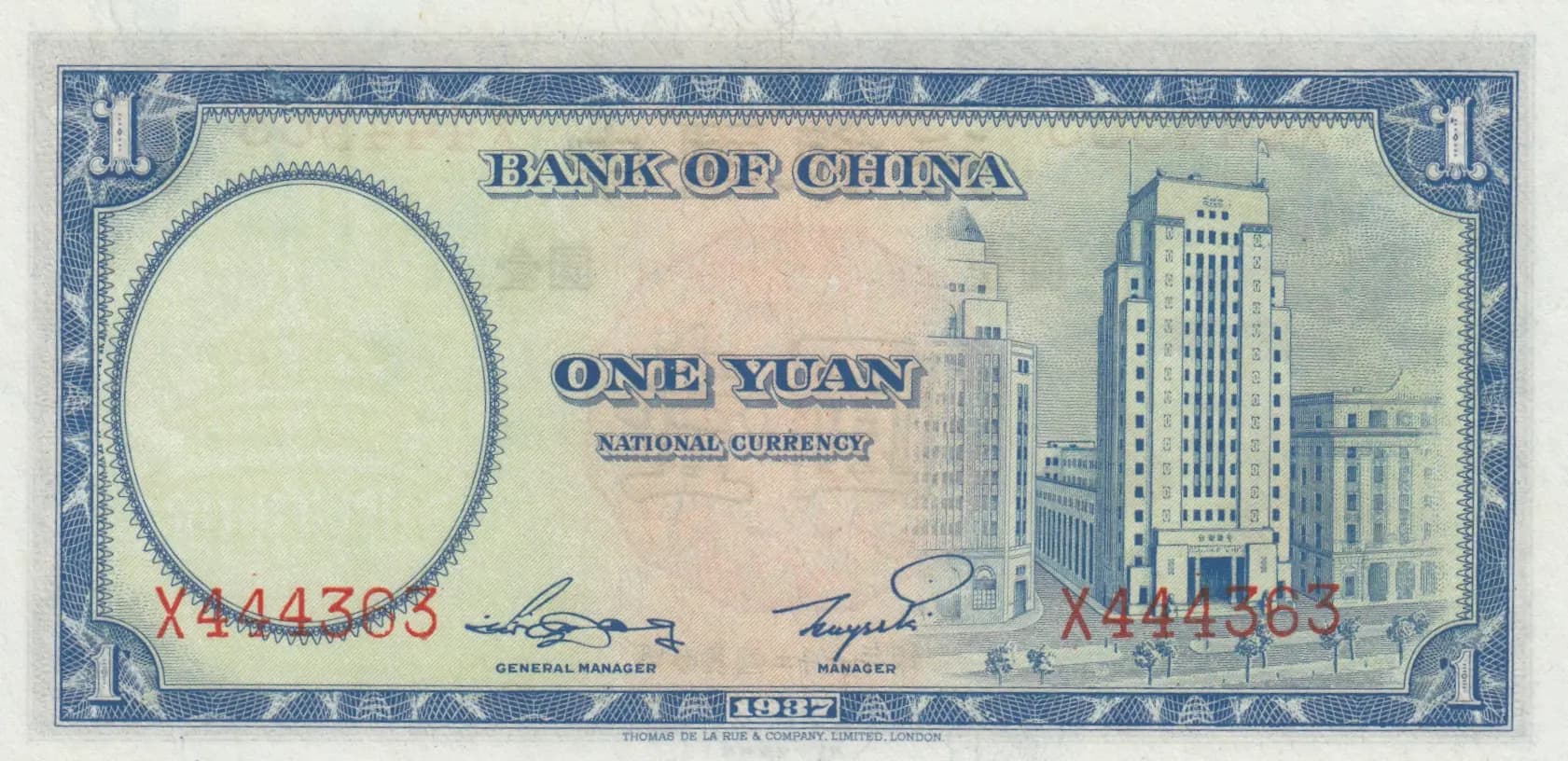
This is a Bank of China 1 Yuan note from May 1936 (Pick P-78) in AU condition, featuring a striking blue and multicolor design with a portrait of Sun Yat-sen on the obverse and an architectural cityscape on the reverse. The note displays the characteristic fine engraving and complex geometric medallion work typical of Thomas De La Rue & Company's security printing, with visible aging including light foxing and creasing consistent with its nearly 90-year age. As one of the early Republican-era currency issues with bilingual English/Chinese inscriptions, this note represents an important transitional period in Chinese monetary history.
Common. Despite its age and historical significance, this Pick P-78 note in AU condition is common in the collector market. eBay sales data shows consistent availability with AU/UNC examples selling in the $13–$23 range in recent years, and even PMG-graded examples (PMG 64) regularly selling for $18–$42. The catalog value for UNC condition is listed at $40, and AU examples typically realize lower prices. The print run was substantial enough that these notes remain widely available to collectors, making this denomination and type one of the accessible Chinese Republican issues.
This note was issued during the Second Sino-Japanese War period by the Bank of China under the Nationalist government, bearing the date of the 25th year of the Republic of China (1936). The reverse depicts modern commercial architecture—a symbol of China's modernization aspirations during the Republican era—while the bilingual English text reflects both Western influence and China's international commercial standing. The printer's mark 'Thomas De La Rue & Company, Limited, London' underscores the reliance on British security printing expertise during this formative period of modern Chinese currency.
The obverse features a formal portrait of Sun Yat-sen (the founder of the Republic of China) positioned at the left in a Chinese tunic suit, rendered in classical engraved style. The center dominates with an elaborate circular medallion displaying intricate red and green geometric lattice patterns surrounding a Chinese character seal/emblem—a decorative security element typical of Chinese Republican currency. The note is predominantly blue with cream/white background, ornamental corner designs, and fine-line engraving throughout. The reverse showcases a detailed engraved cityscape depicting modern commercial buildings in European architectural style, symbolizing China's urban modernization. The left side features a large circular ornamental border space, while English text and printer information occupy the central area. Both sides employ the finest security printing techniques with complex linework to prevent counterfeiting.
FRONT (Obverse): 中國銀行 (Bank of China), 圓壹 (One Yuan), 印年十二國民華中 (Printed in the 12th year of the Republic of China, reading right to left), Serial number X444363 (appears top left and top right in red). BACK (Reverse): BANK OF CHINA, ONE YUAN, NATIONAL CURRENCY, GENERAL MANAGER, MANAGER, Serial number X444363 (appears bottom left and bottom right in red), 1937 (Western date), THOMAS DE LA RUE & COMPANY, LIMITED, LONDON (printer attribution).
Intaglio (engraved) printing by Thomas De La Rue & Company, Limited, London—the world's premier security printer at the time. The detailed portrait, geometric medallion patterns, fine-line borders, and architectural illustration all bear the hallmarks of classical engraving with multiple plate passes to achieve the multicolor effect (green and red on blue base). The complexity of the central medallion's lattice work and the fine linework of the cityscape represent the height of anti-counterfeiting design for the 1930s era.
Serial number X444363 observed on this example. The note is identified as S/M number C294-210 per the RealBanknotes reference. The May 1936 date and the signature of the General Manager and Manager positions are standard for this issue. No overprints or unusual varieties are noted in the visual analysis. This appears to be a standard circulation example of the regular issue type from the May 1936 printing.