50 yuan 1936
Market Prices
29 salesAbout This Note
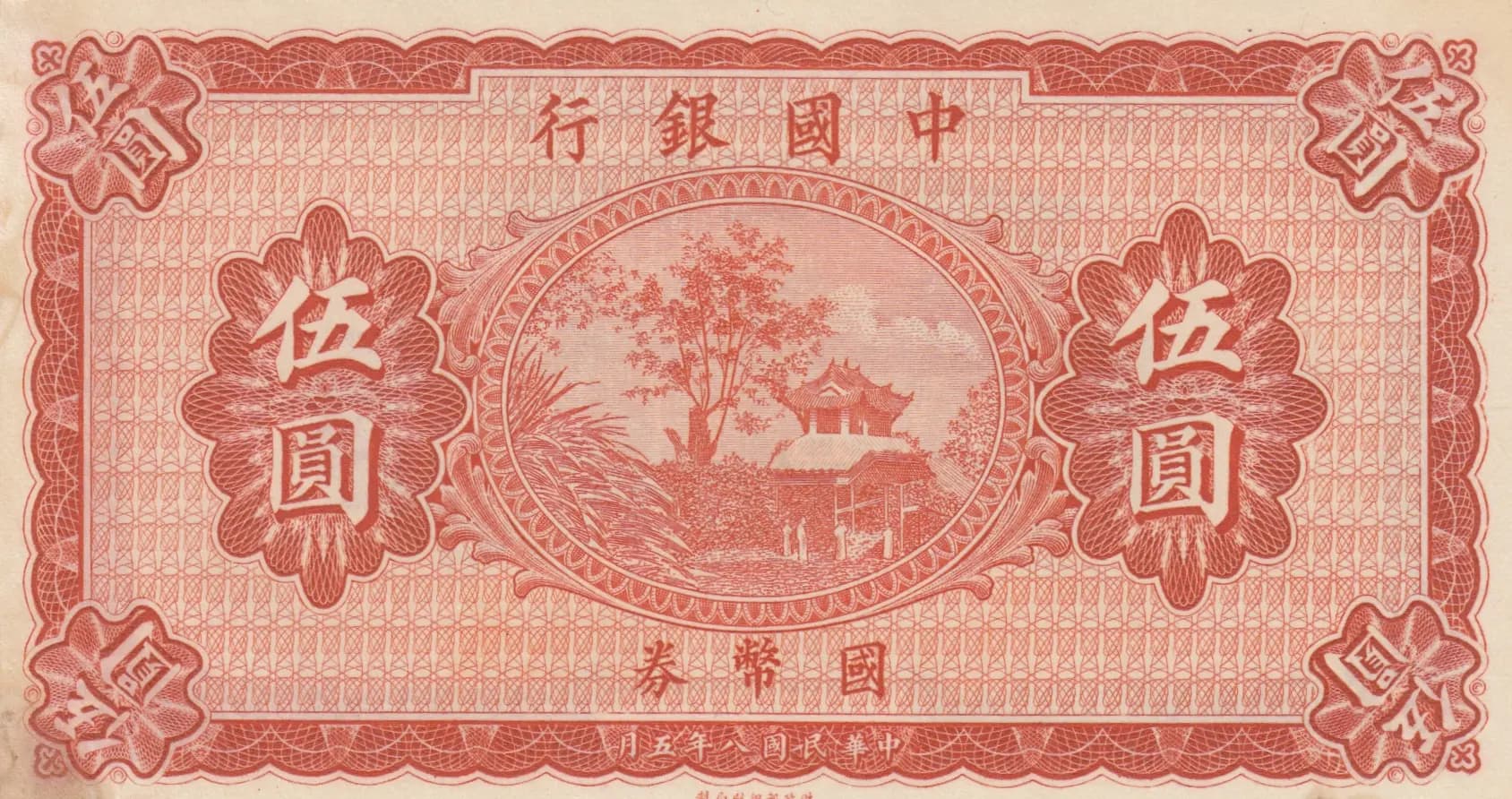
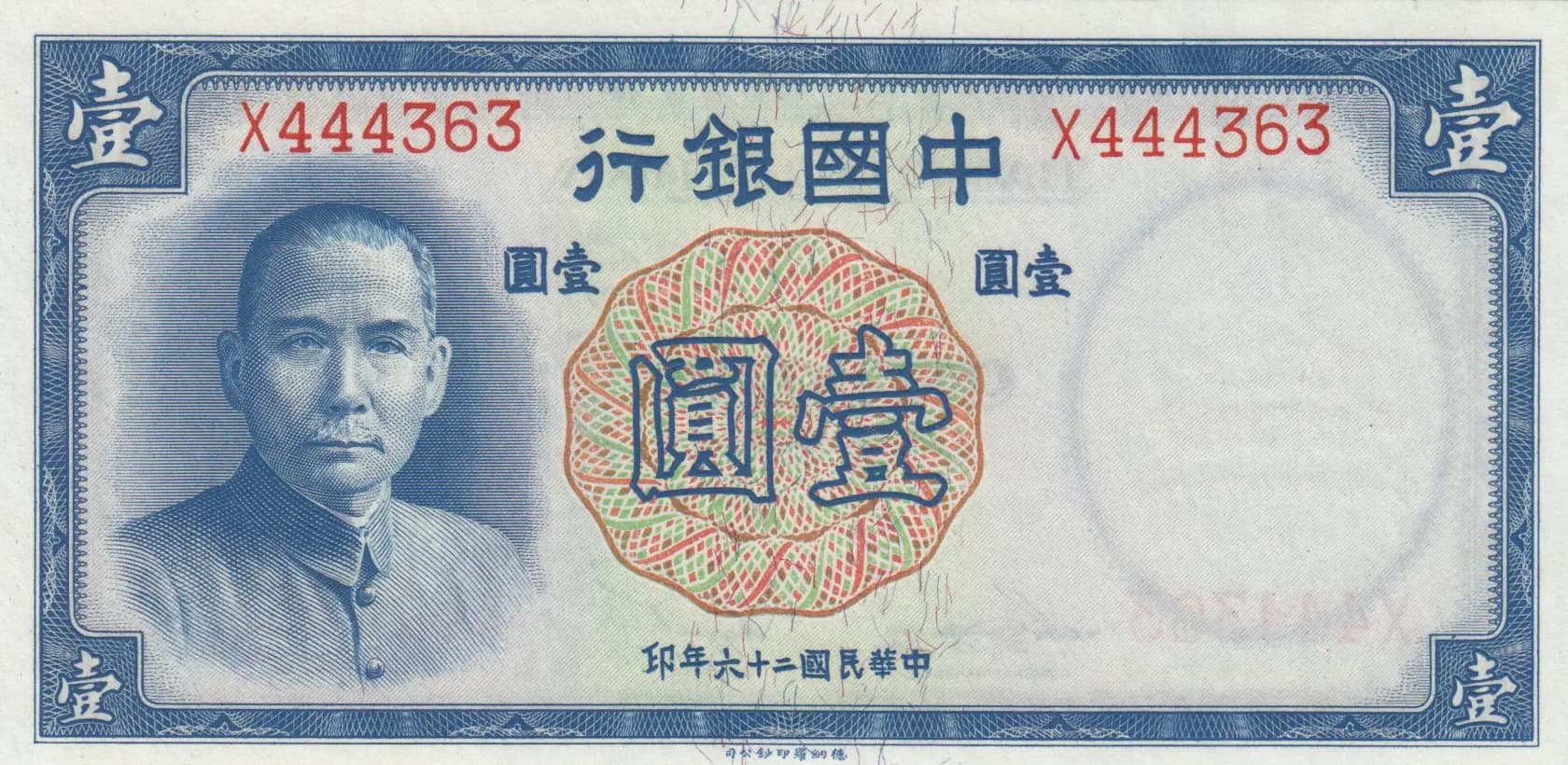
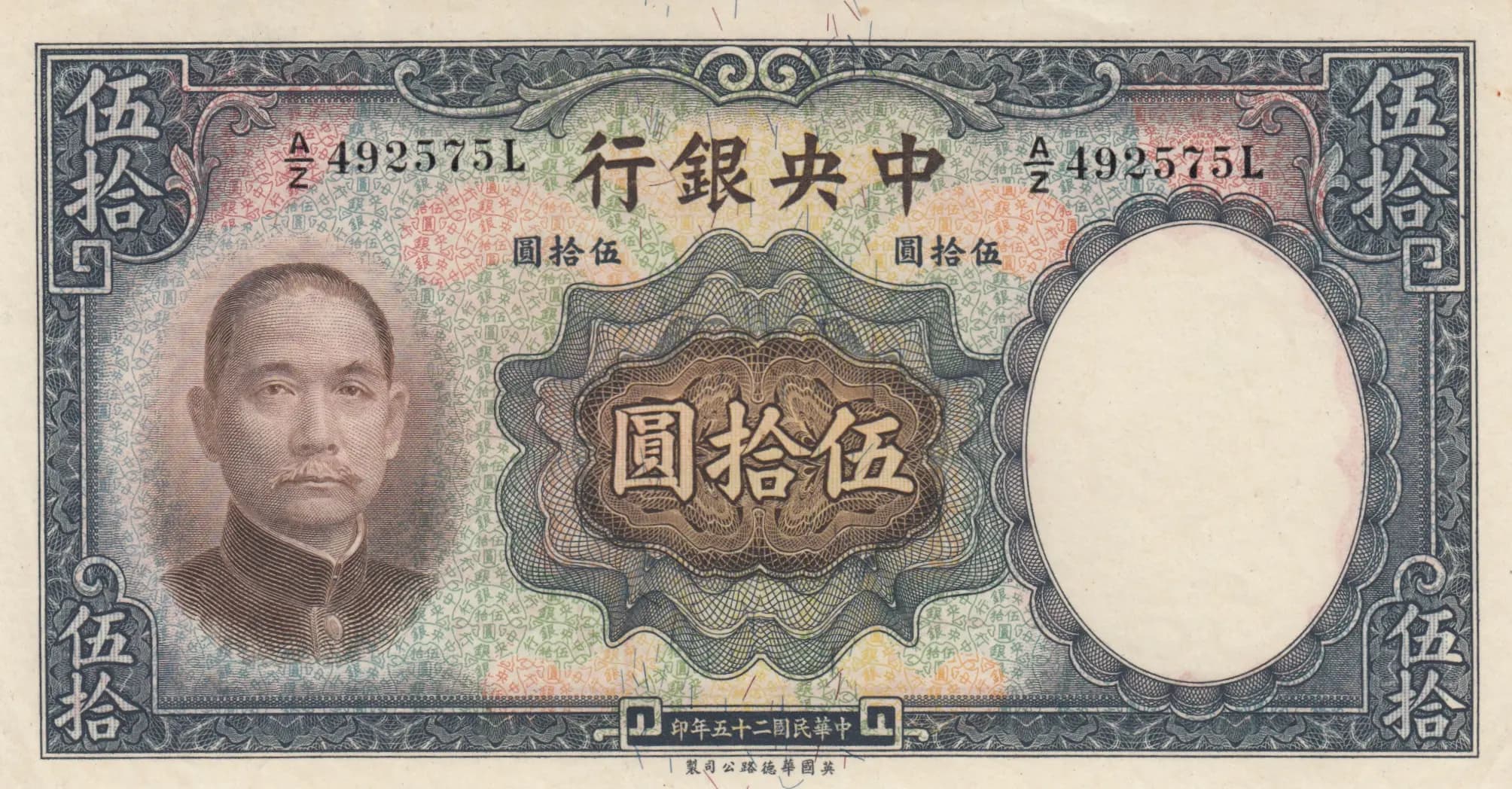
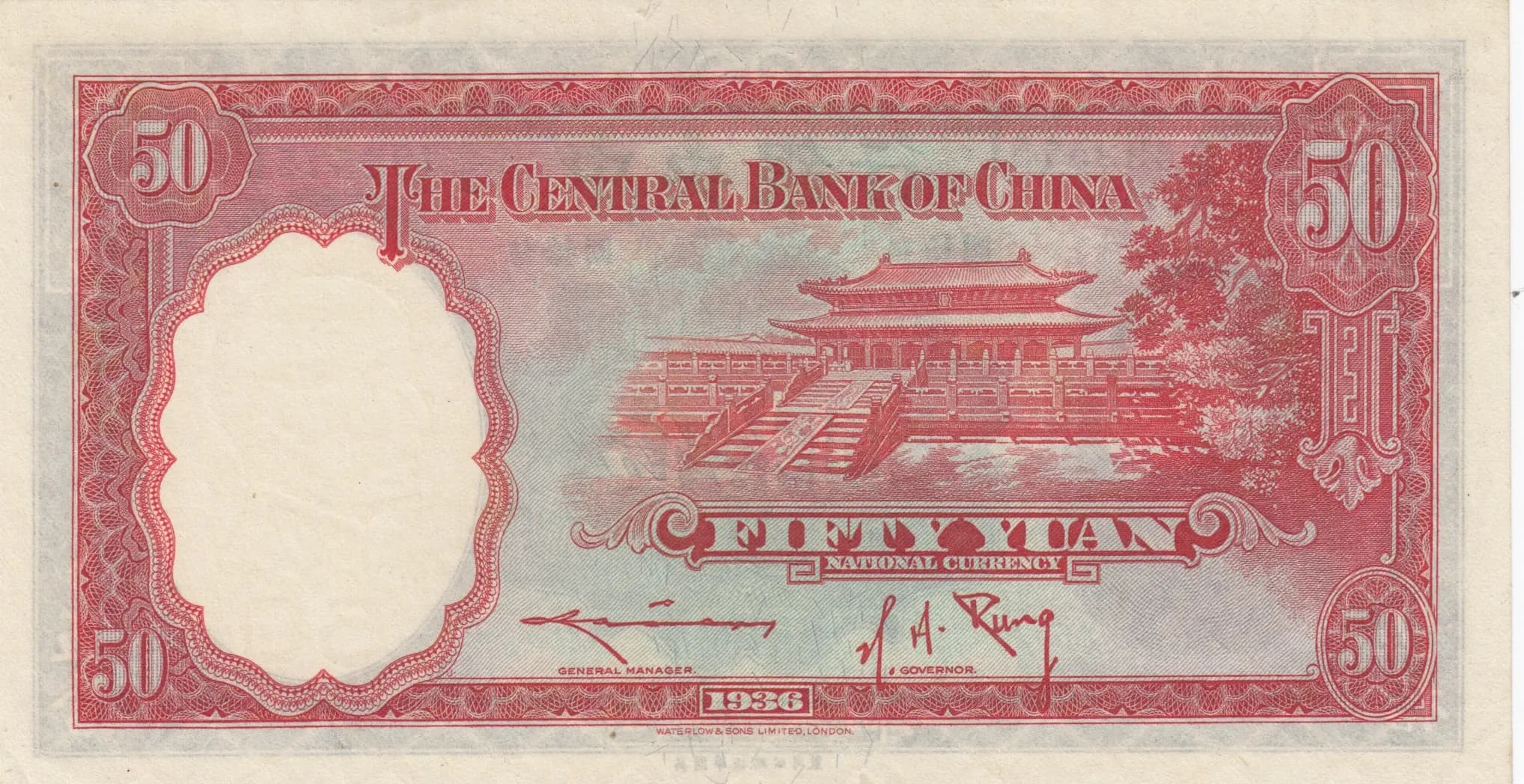
This is a Chinese Central Bank 50 yuan note from 1936, printed by Waterlow & Sons, presented in uncirculated condition. The note displays exceptional detail with ornate decorative borders, a portrait on the obverse, and a fine engraving of traditional Chinese architecture (the Palace of China in Peking) on the reverse. With no visible creases, tears, or significant wear, this example represents a well-preserved specimen of Republican-era Chinese currency that remains highly collectible.
Common. Despite being issued in 1936, the Central Bank of China 50 yuan notes from this period were produced in substantial quantities and remain readily available in today's market. eBay auction records show consistent sales across multiple condition grades, with UNC examples selling in the $13.87 to $191.38 range over the past decade, indicating steady collector interest but not scarcity. The 2016 catalogue value of $30 for UNC specimens reflects a reasonably priced, non-rare note. The availability of multiple sales records and the note's presence in general circulation during its issued period support a common classification.
This banknote was issued during the Republican period of China (1912-1949), specifically during the reign of the Central Bank of China as the primary national currency issuer. The reverse features the Palace of China in Peking (Beijing), reflecting nationalist pride in Chinese architectural heritage during a period of political consolidation under the Nationalist government. The bilingual English-Chinese inscriptions and London printer credit demonstrate the international character of Chinese banking infrastructure in the 1930s.
The obverse features a male portrait in profile facing left on the left side, rendered in fine cross-hatched engraving style with formal high collar attire, likely depicting Sun Yat-sen (founder of the Republic). A large ornate oval cartouche occupies the right side of the note, framed by elaborate scrollwork in all four corners. The color scheme combines dark blue, gray, green, pink, and brown tones. The reverse depicts the Palace of China in Peking (Forbidden City/Imperial Palace complex) as a traditional multi-tiered pagoda-style architectural complex with characteristic curved roofs, surrounded by vegetation and fortified walls. Large '50' numerals appear in ornamental cartouches at each corner of the reverse. Deep red/pink borders frame the entire design with geometric and floral patterns.
OBVERSE: 中央銀行 (Central Bank) | 圓拾五 (Fifty Yuan, appearing on both edges) | 中華民國五十二年 (Year 52 of the Republic of China) | Serial number: A4925751L (repeated on right side). REVERSE: THE CENTRAL BANK OF CHINA | CHINA YUAN | NATIONAL CURRENCY | 1936 | GENERAL MANAGER | GOVERNOR | H. Rung (signature, appearing to be the Governor's signature) | WATERLOW & SONS LIMITED, LONDON (printer's imprint) | 50 (denomination numerals in corners).
Intaglio engraving (also called copperplate engraving), the primary security printing method for banknotes of this era. The fine line work, cross-hatching in the portrait, intricate decorative patterns, and complex architectural details are characteristic of high-security intaglio production. Printed by Waterlow & Sons Limited, London, one of the world's premier security printers, known for producing banknotes for multiple governments. Multi-color printing was achieved through successive passes of the intaglio plate with different inks.
This note is catalogued as Pick 219a (W&S printer variant). A second variety, P-219b, exists with Chungking as the printer location, making the W&S variant the primary type. The serial number observed (A4925751L) represents a standard series from this printing. The signature identified as 'H. Rung' (likely H.H. Kung, Finance Minister and Central Bank governor during this period) is consistent with authentic 1936 issues from this printing series.