50 sen 1939
About This Note
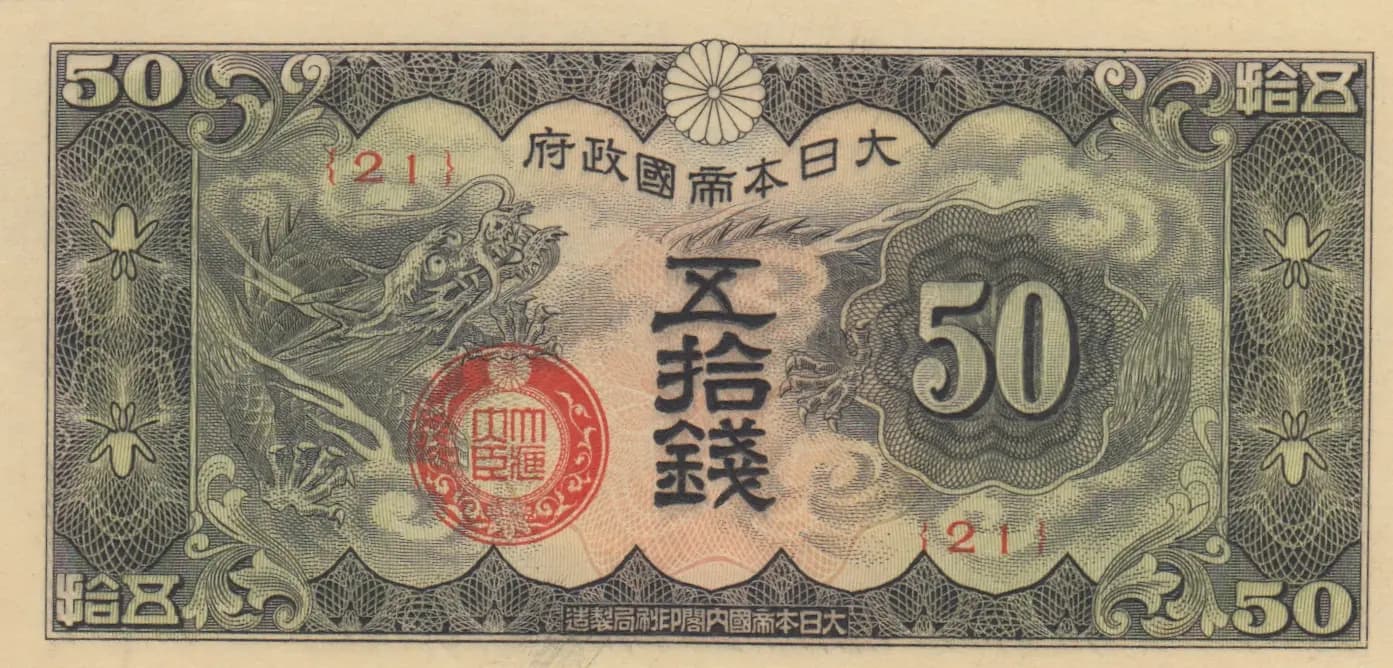
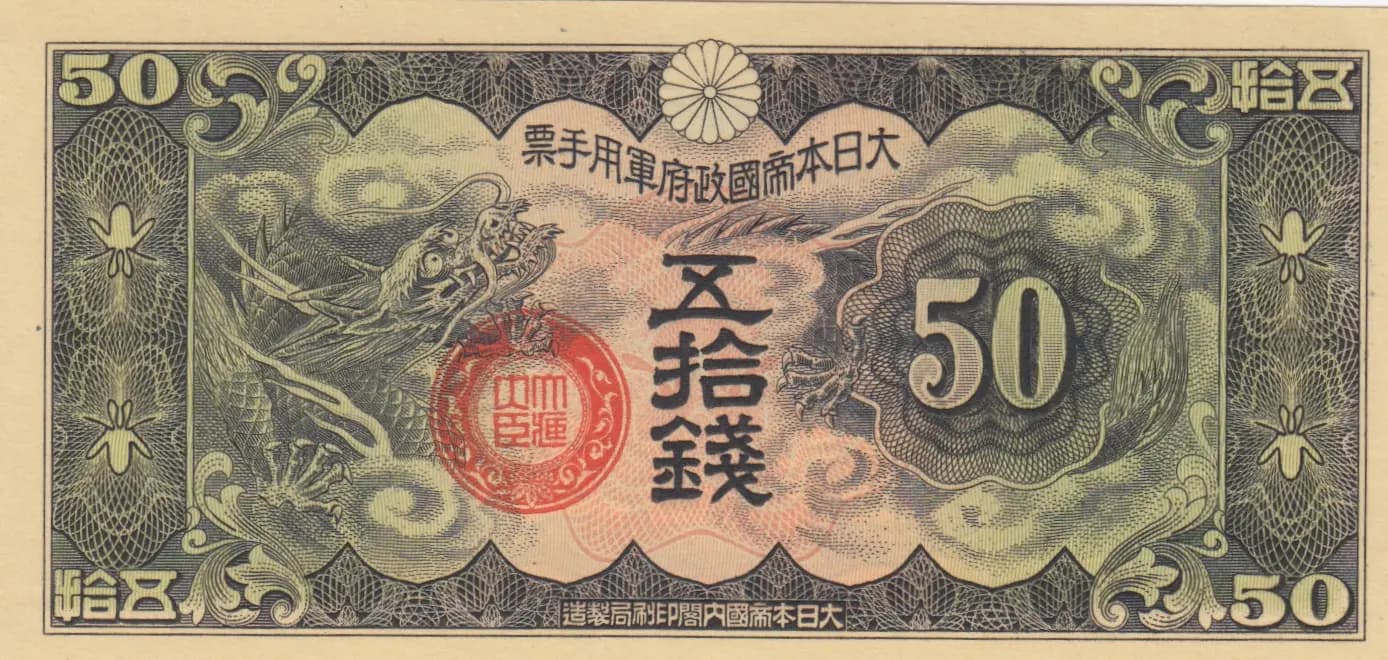
This is an uncirculated 1939 Japanese Military 50 sen banknote issued for use in occupied China, featuring an exceptional dual-dragon design with ornate decorative borders in greens, golds, and pinks. The note displays crisp, pristine printing quality with no visible wear, creases, or damage, making it an excellent example of Japanese military currency from this period. The combination of traditional East Asian dragon imagery with Japanese imperial symbolism and bilingual inscriptions makes this a significant numismatic artifact from World War II-era Asia.
common. Japanese Military 50 sen notes from 1939 (Pick M14) were issued in substantial quantities for circulation in occupied Chinese territories. The circulation and survival of these notes, combined with their straightforward production history from a major issuing authority (the Japanese Military), indicates this denomination was not produced in limited quantities. While uncirculated examples command modest premiums over circulated specimens, the note itself remains relatively common in the numismatic market.
This banknote was issued by the Japanese Military Government during their occupation and control of Chinese territories in 1939, representing an attempt to impose Japanese economic control over occupied regions. The prominent imperial chrysanthemum flower at the top center and the inscription 'Great Japan Imperial Government' reflect Japan's imperial ambitions and dominance during this period. The bilingual nature of the note (Japanese and Chinese) demonstrates the complex relationship between the occupier and the occupied territory, with the dragon motifs representing traditional Chinese cultural elements appropriated for Japanese military administration.
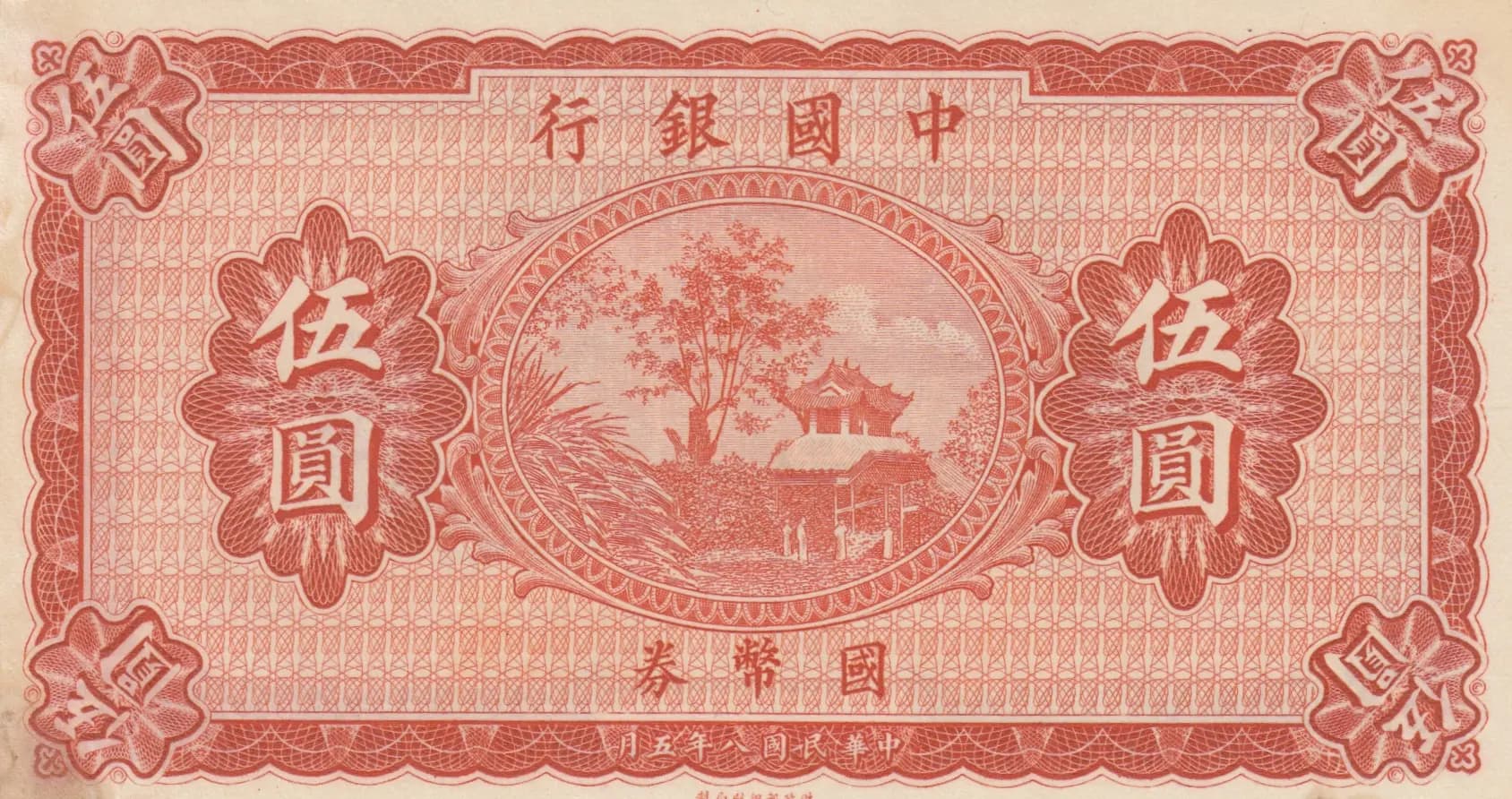
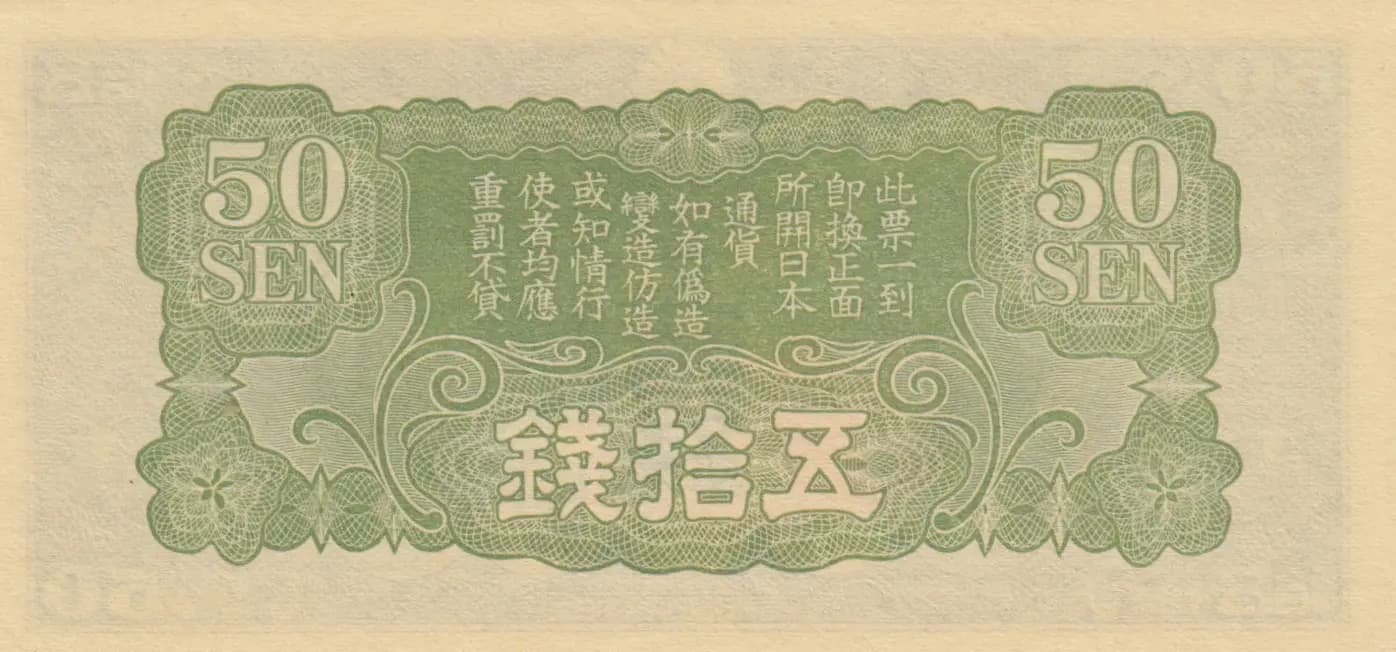
The obverse features a symmetrical design with a pair of traditional Chinese dragons positioned on the left and right sides, flanking clouds in the center composition. A large red circular seal bearing Chinese characters dominates the center, serving as the primary security and identification element. An imperial chrysanthemum flower is positioned prominently at the top center. The denomination '50' appears in all four corners in Arabic numerals within ornate frames. The reverse displays a more austere design with predominantly green coloring, featuring ornamental floral corner pieces and a decorative oval cartouche containing large Chinese characters in the center. Both sides are framed by intricate geometric and floral border patterns characteristic of early 20th-century Japanese banknote design.
FRONT SIDE: '大日本帝國政府用乗車券' (Great Japan Imperial Government Transportation Ticket) - '五拾銭' (50 sen) - '拾乗' (10 passengers). BACK SIDE: '50 SEN' (English/numeral denomination) - '英倫大' (Great Britain) - '此票開到所智正面換印到得有傳造偽如或使或者馬重罰食重' (Detailed legal text regarding counterfeiting penalties and proper use of the note, containing warnings against forgery and improper use).
This note was produced using multi-color letterpress and intaglio engraving techniques, evidenced by the fine line work, complex geometric patterns, and layered color printing visible throughout both sides. The crisp detail and precision in the ornamental borders and the dragon figures indicate skilled engraving work typical of Japanese security printing of this era. The note exhibits the characteristic sharp registration and fine line definition of high-quality intaglio printing, with multiple color separations applied successively.
This specimen represents the standard 1939 issue of Pick M14 without apparent signature or date varieties. The bilingual inscriptions (Japanese and Chinese) and the transportation ticket designation ('乗車券') are consistent with the issued type. No notable overprints, control marks, or distinguishing varieties are apparent from the visual analysis. The red central seal and chrysanthemum flower placement appear consistent with the standard design for this Pick number.