5 fen 1940
About This Note
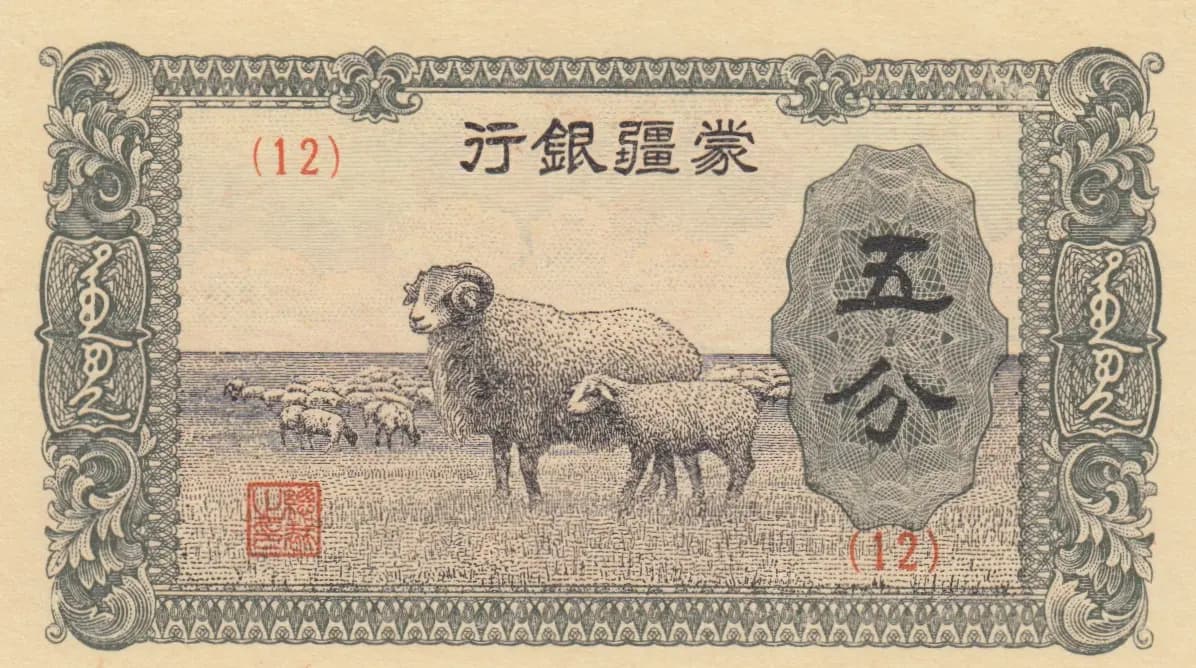
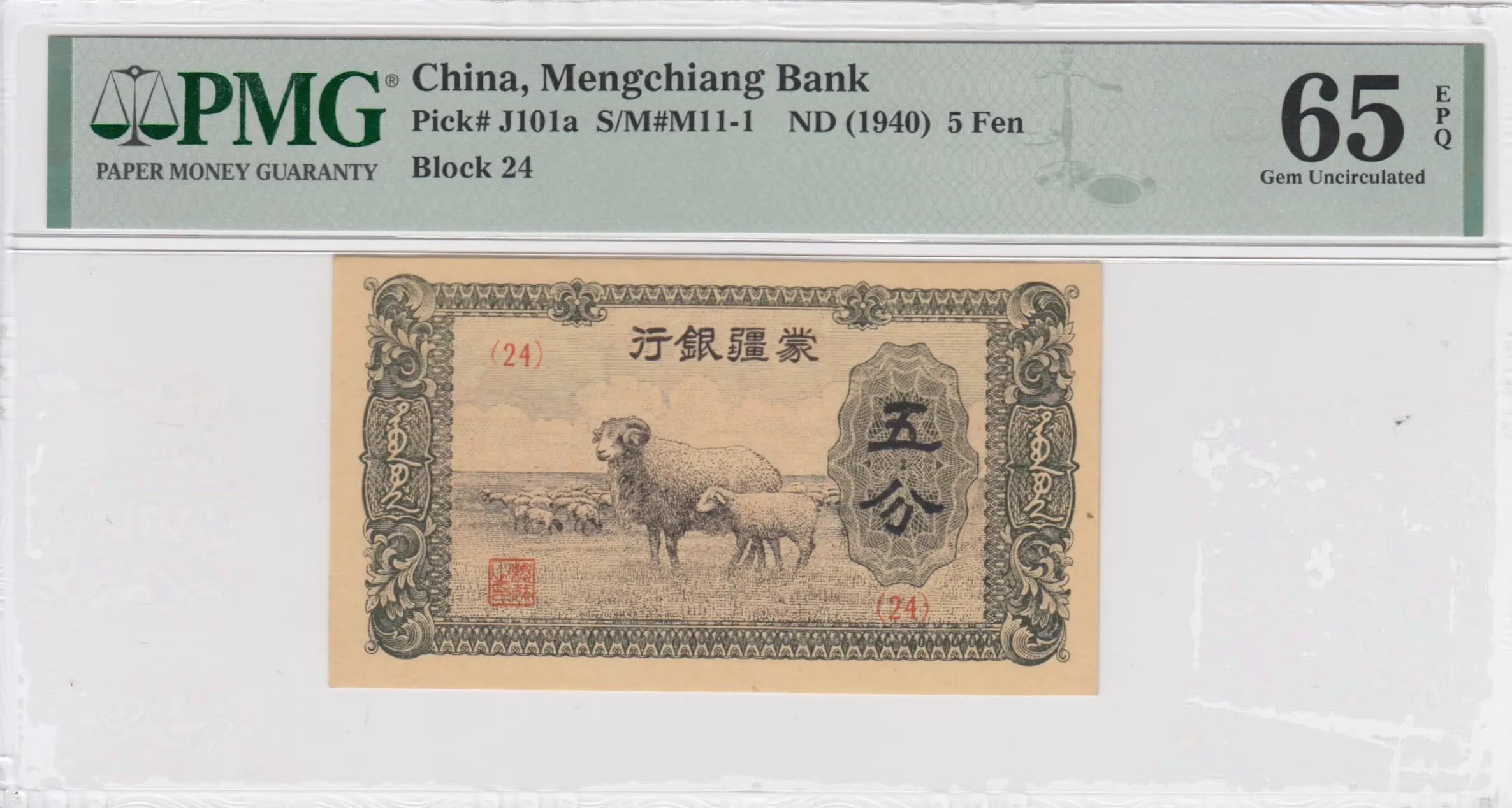
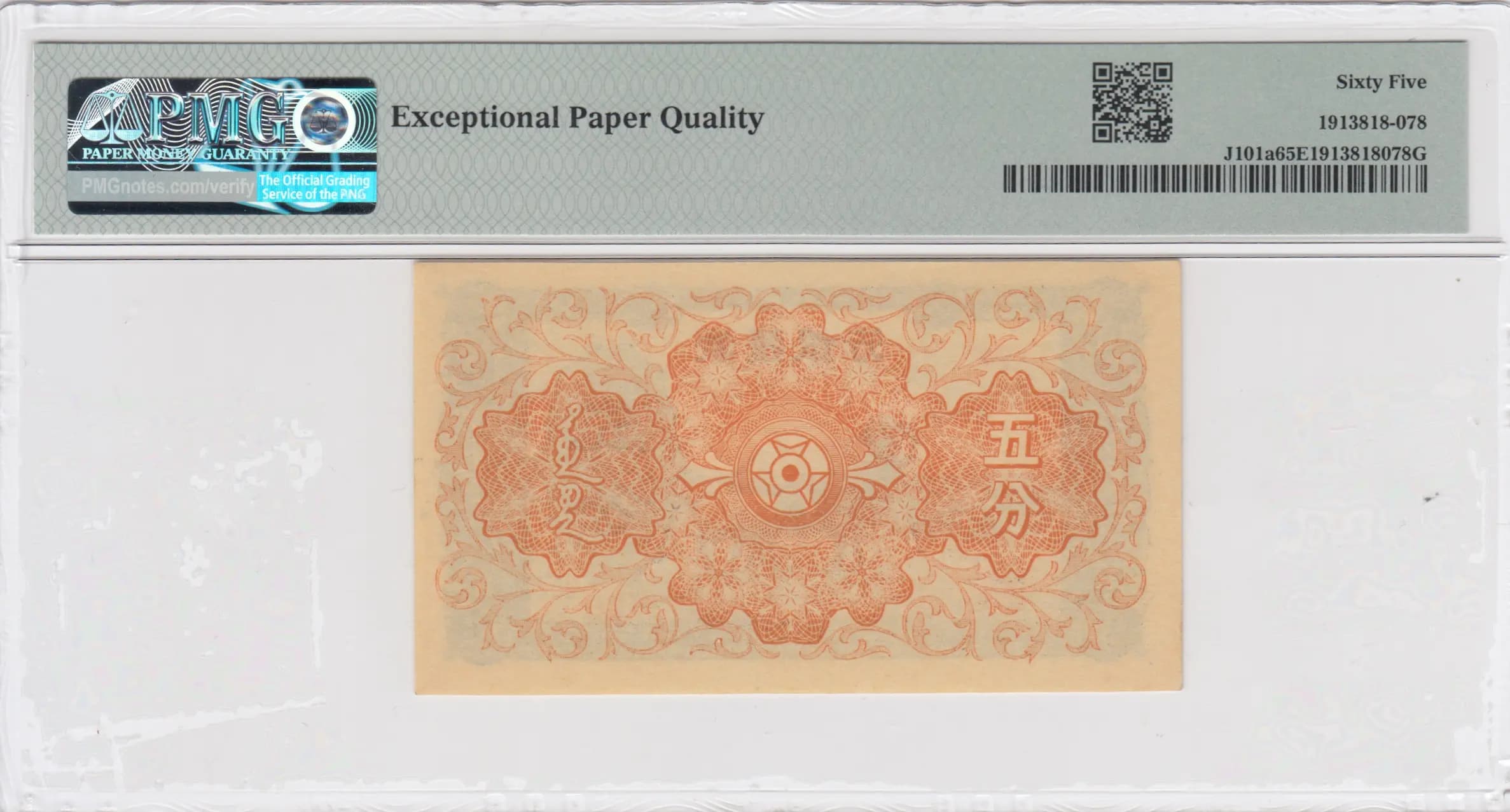
This is an exceptional Gem Uncirculated example (PMG 65 EPQ) of the 1940 Mengchiang Bank 5 fen note, featuring a striking central vignette of a camel in a desert landscape with caravan elements. The note displays pristine condition with no visible wear, creases, or damage, and showcases fine ornate decorative borders with floral scrollwork, a red circular seal, and elaborate geometric patterns on the reverse, making it a desirable specimen for collectors of Japanese-occupied Chinese currency.
Common. While Mengchiang Bank notes are of historical interest to Japanese occupation currency collectors, the 5 fen denomination in high grades is not particularly scarce. The note was produced in significant quantities during the 1940-1945 occupation period, and surviving uncirculated examples, though desirable in PMG 65 grade, are encountered with reasonable frequency in the collector market. The PMG 65 EPQ grade represents premium preservation but does not indicate rarity of the underlying note type.
The Mengchiang Bank was established by Japanese occupation authorities in Inner Mongolia during the Second Sino-Japanese War, issuing currency to facilitate economic control of the occupied Mengjiang region. The camel and desert landscape depicted on the obverse reflect the nomadic caravan trade routes central to Inner Mongolia's economy and the note's regional context. This 1940 issue represents the early period of the puppet state's monetary system before Japan's eventual defeat in 1945.
The obverse features a horizontally-oriented rectangular composition with cream/beige background and brown/gray printing. The central vignette depicts a camel (likely a Bactrian camel, typical of Mongolian caravan trade) positioned in a desert landscape with sand dunes and a distant caravan train, symbolizing the region's commercial importance. A red circular seal or chop mark appears in the upper left corner. An ornate shield or cartouche cartouche containing Chinese characters is positioned on the right side. The entire note is framed by intricate decorative borders with floral and scrollwork patterns, characteristic of early 20th-century Chinese banknote design. The denomination appears as '(24)' in red at top left and bottom right corners (indicating the printing block). The reverse displays an elaborate ornamental design in red/orange ink featuring a central circular medallion with geometric wheel-like patterns surrounded by symmetrical floral and scrollwork ornaments, typical of Buddhist and Chinese artistic motifs used by Japanese occupation banks.
Front: 蒙疆銀行 (Mengchiang Bank); 五分 (5 fen); (24) indicating Block 24. Back: 五分 (5 fen denomination marker); PMG certification inscriptions include 'Sixty Five' (grade 65), 'Exceptional Paper Quality' (EPQ designation), certification number '1913818-078', and verification URL 'PMGnotes.com/verify'.
Intaglio engraving (line engraving), evidenced by the fine, detailed line work visible throughout the decorative borders, the precision of the central vignette, and the crisp impression of ornamental patterns. This was the standard security printing technique for banknotes of this era. The Mengchiang Bank notes were typically produced by Japanese government printing facilities or under their supervision.
Pick catalog J101a indicates the standard variety of the 1940 5 fen Mengchiang Bank issue. The block number '(24)' visible in red at the corners represents the printing block designation. No signature varieties or major overprint variations are apparent in this example. This represents the base variety without significant identifying variations from other known printings of this denomination.