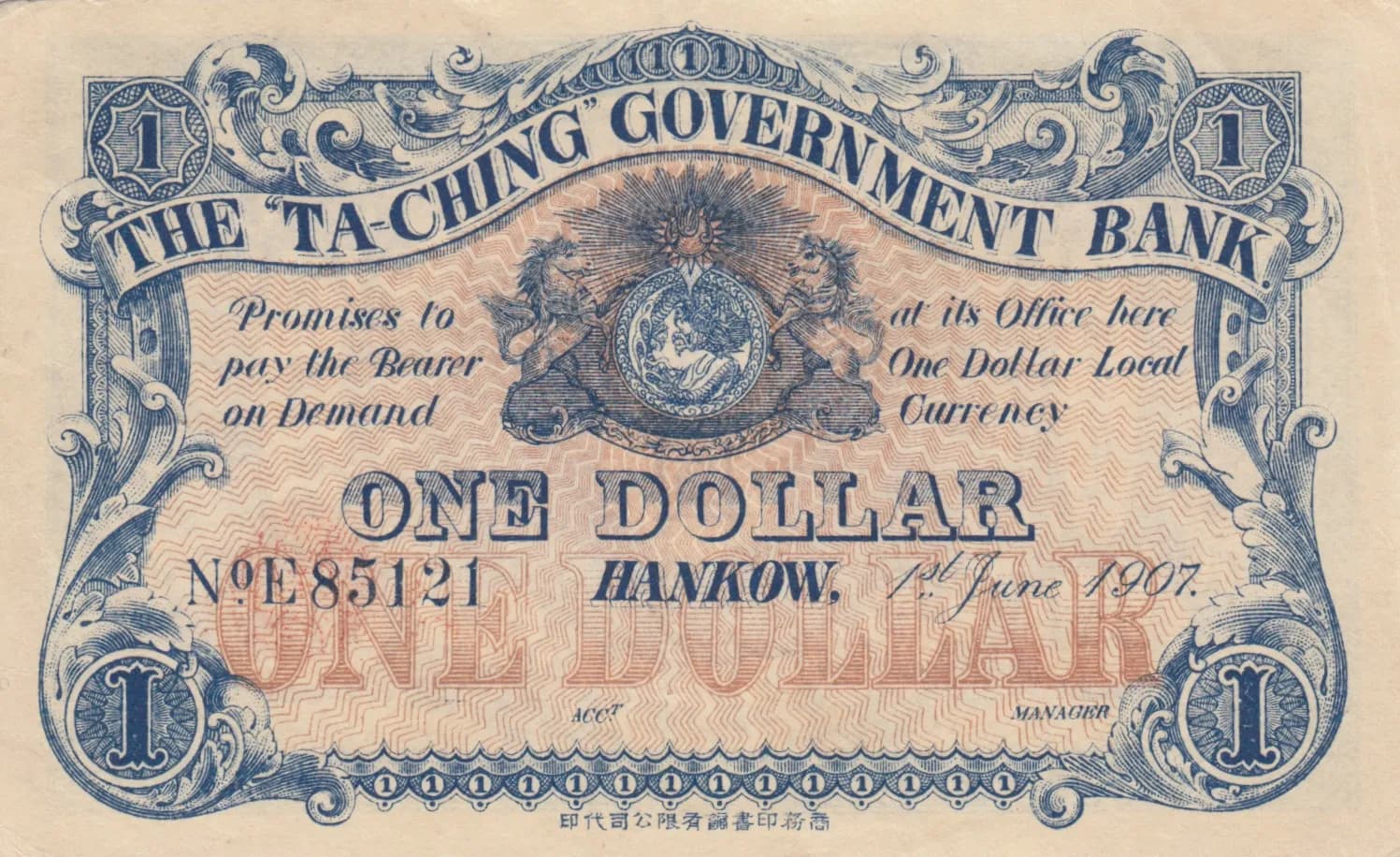
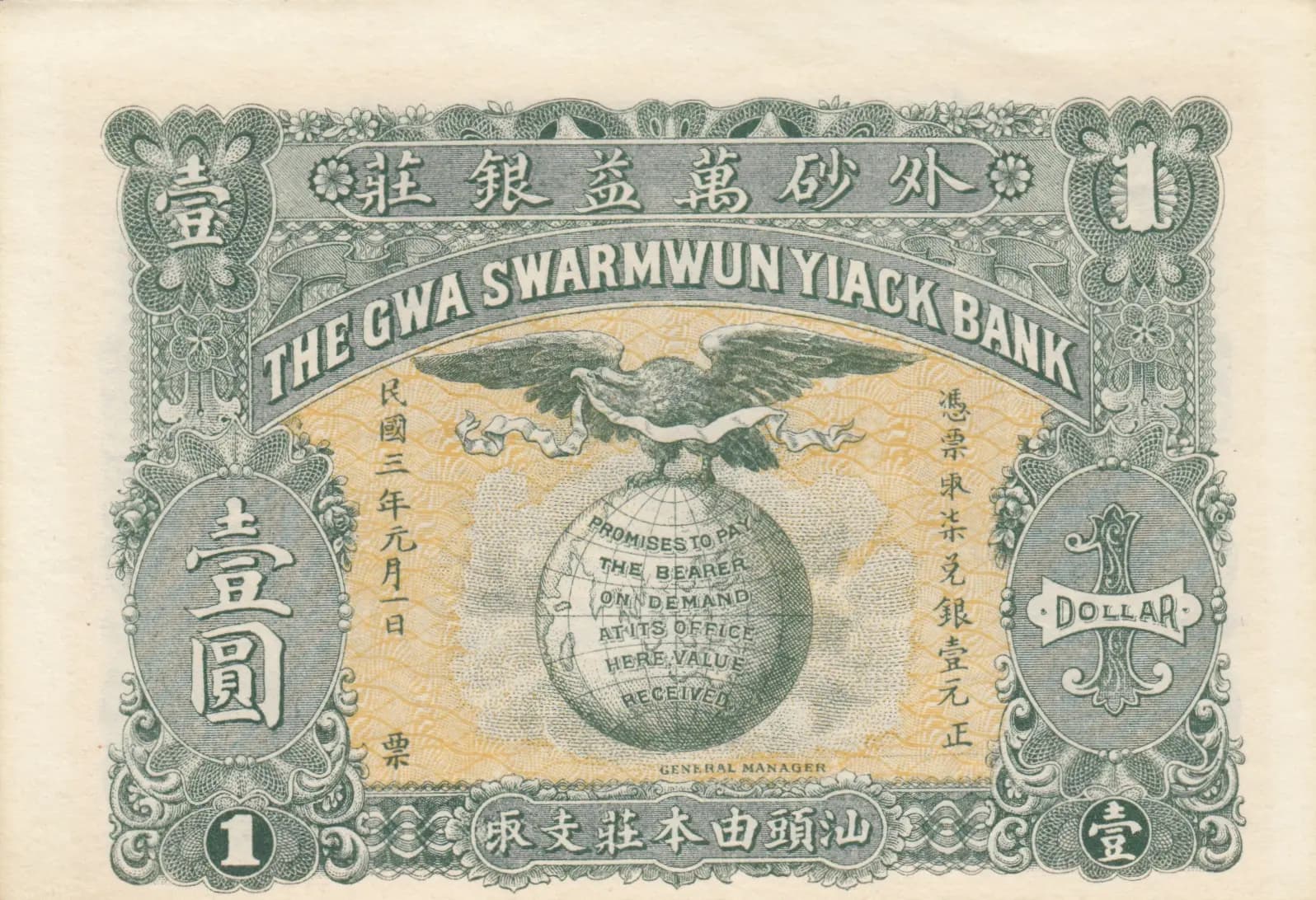
5 fen 1940
About This Note
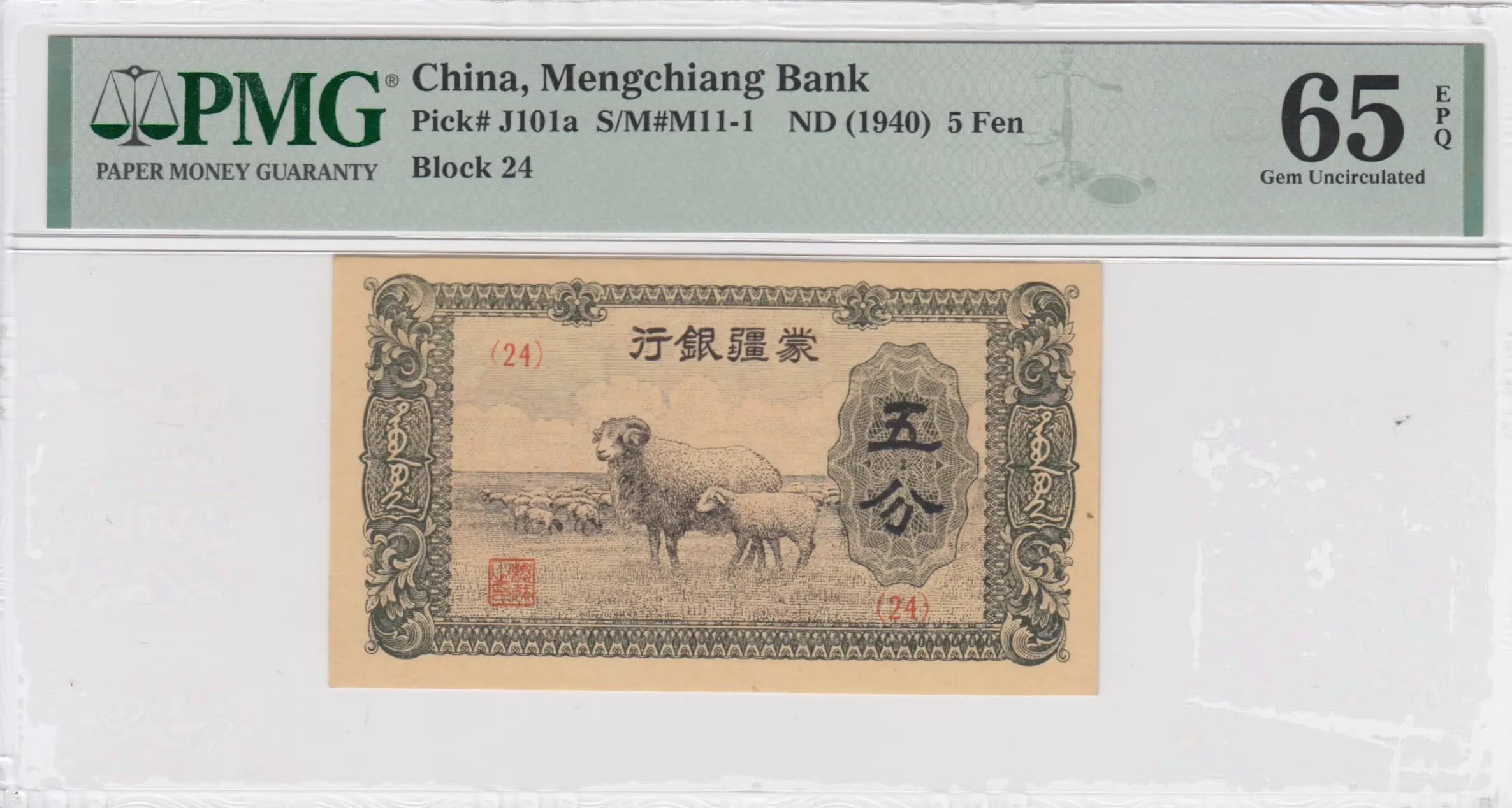
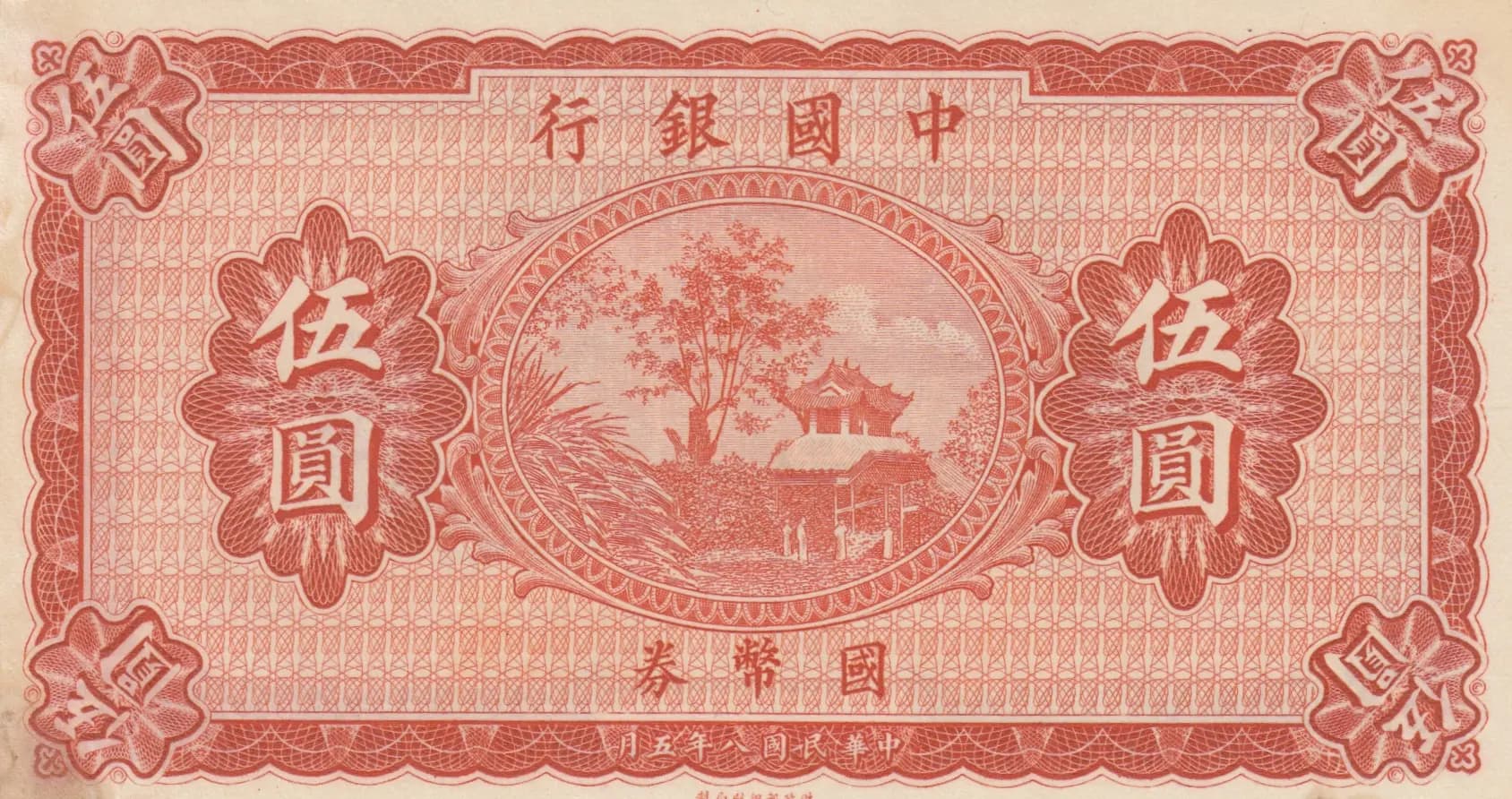
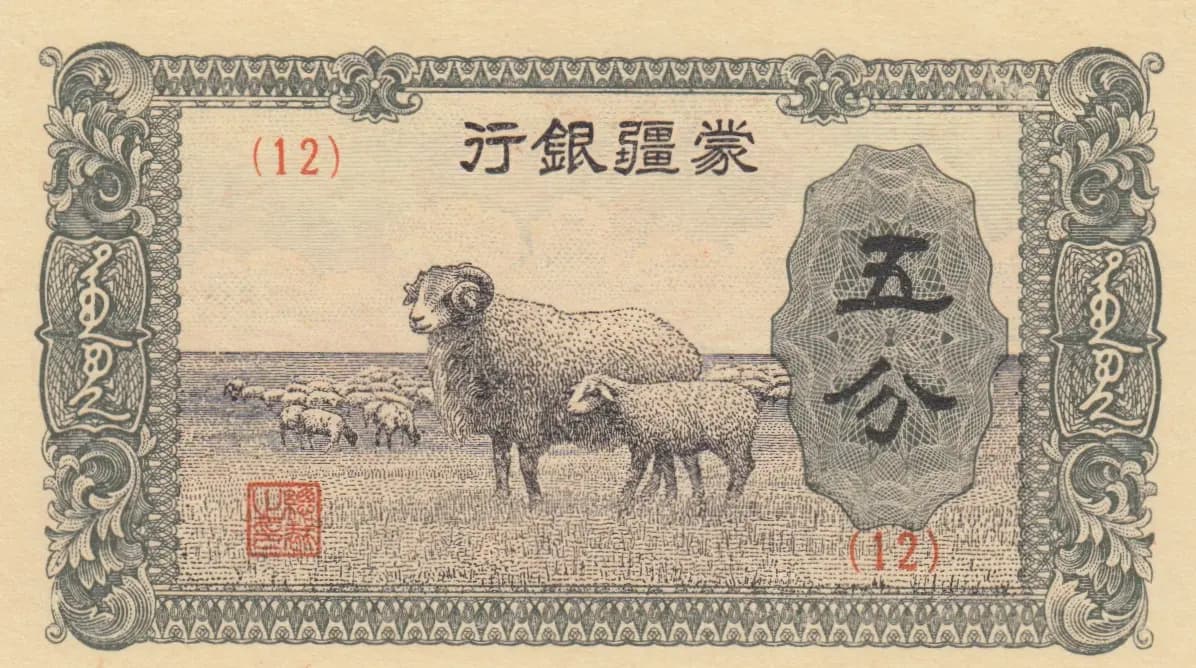
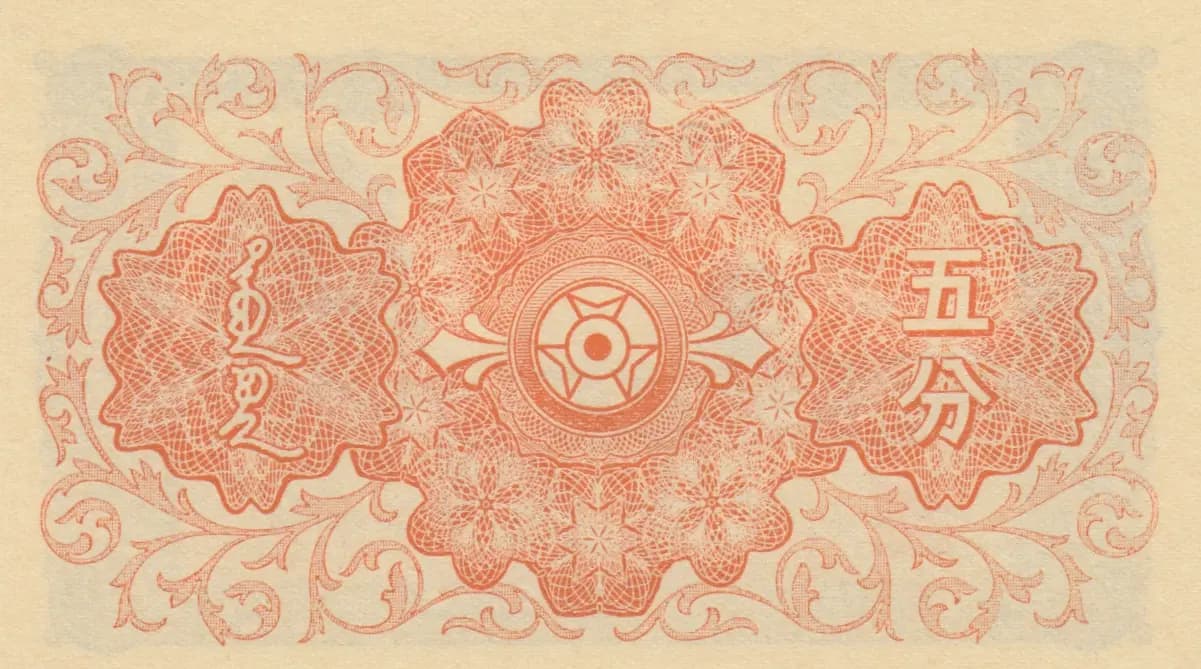
This 1940 Mengchiang Bank 5 fen note presents a charming pastoral theme unusual for currency of the period, featuring detailed engraving of a ewe with lamb in a grazing landscape on the obverse. The reverse displays an ornate decorative design in red and cream tones, typical of security printing practices of the era. The note appears to be in uncirculated condition with excellent preservation, uniform coloring, and no visible wear—a desirable example of this Japanese-occupied Chinese puppet state currency.
Common. Mengchiang Bank notes from 1940, particularly in denominations as low as 5 fen, were produced in substantial quantities to serve the occupied territory's monetary needs. While notes from puppet states have collector interest, low-denomination issues like this one typically saw extensive circulation and printing runs. The UNC condition is more notable than the note itself being rare. Mengchiang Bank currency remains relatively accessible to collectors, with this Pick number not documented as a short-run issue or recall.
The Mengchiang Bank (蒙彊銀行) issued this note during Japan's occupation and administration of Inner Mongolia (1937-1945), representing the financial apparatus of the puppet state of Mengjiang. The livestock theme—depicting sheep as a primary economic resource—reflects the agrarian and pastoral economy of the occupied Mongolian territories under Japanese control. The red seal authentication mark and refined engraving technique were standard security measures employed by Japanese-controlled printing operations during this period.
The obverse features a meticulously engraved pastoral scene depicting a ewe (female sheep) in profile facing left, accompanied by a smaller lamb beside it, set within a naturalistic landscape with additional grazing sheep visible in the background—all rendered in fine black line work against a cream background. The composition is framed by an ornate decorative border featuring scrollwork and floral patterns in a baroque revival style. A red rectangular seal or authentication stamp appears in the lower left, serving as both security marking and issuer identification. The right side contains a decorative cartouche with Chinese characters indicating denomination or issuer. The reverse showcases a completely ornamental design dominated by a central circular medallion or rosette with wheel-like geometric motif, surrounded by elaborate symmetrical scrollwork, floral flourishes, baroque flourishes, and lace-like patterns in red-orange on a cream background. The overall aesthetic reflects security printing standards of the Japanese-controlled printing operations of the 1940s.
Front: '家畜銀券' (Livestock Silver Certificate) — this is the principal inscription identifying the note's purpose as a livestock-backed certificate or general livestock-themed currency issue. '五分' (Five fen) — the denomination, five-tenths of a jiao. Reference numbers (12) appear in red on upper left and lower right. Back: The reverse contains Chinese characters within decorative cartouches on the right side of the central medallion, though specific text is not clearly legible in the visual analysis. The back is primarily decorative in nature.
Intaglio engraving (also called copperplate engraving), evidenced by the fine line work, intricate detail preservation, and sharp definition of both the pastoral landscape and ornamental patterns. The quality of engraving, registration of colors (black on front, red-orange on back), and security-focused complexity indicate production by a professional security printer, likely a Japanese printing establishment contracted for puppet state currency production during the occupation period. The fine detail work and multi-color registration are consistent with high-security banknote production standards of the 1940s.
Pick catalog P-J101a designates this as variety 'a' of the 5 fen 1940 issue, suggesting at least one known variant exists (likely P-J101b). Without access to signature varieties, watermark variations, or serial number prefix differences visible in the visual analysis, the specific distinguishing feature of variety 'a' cannot be definitively stated from the images provided. Collectors should consult detailed Mengchiang Bank references to identify distinguishing characteristics between P-J101a and P-J101b.