5 chiao 1940
About This Note
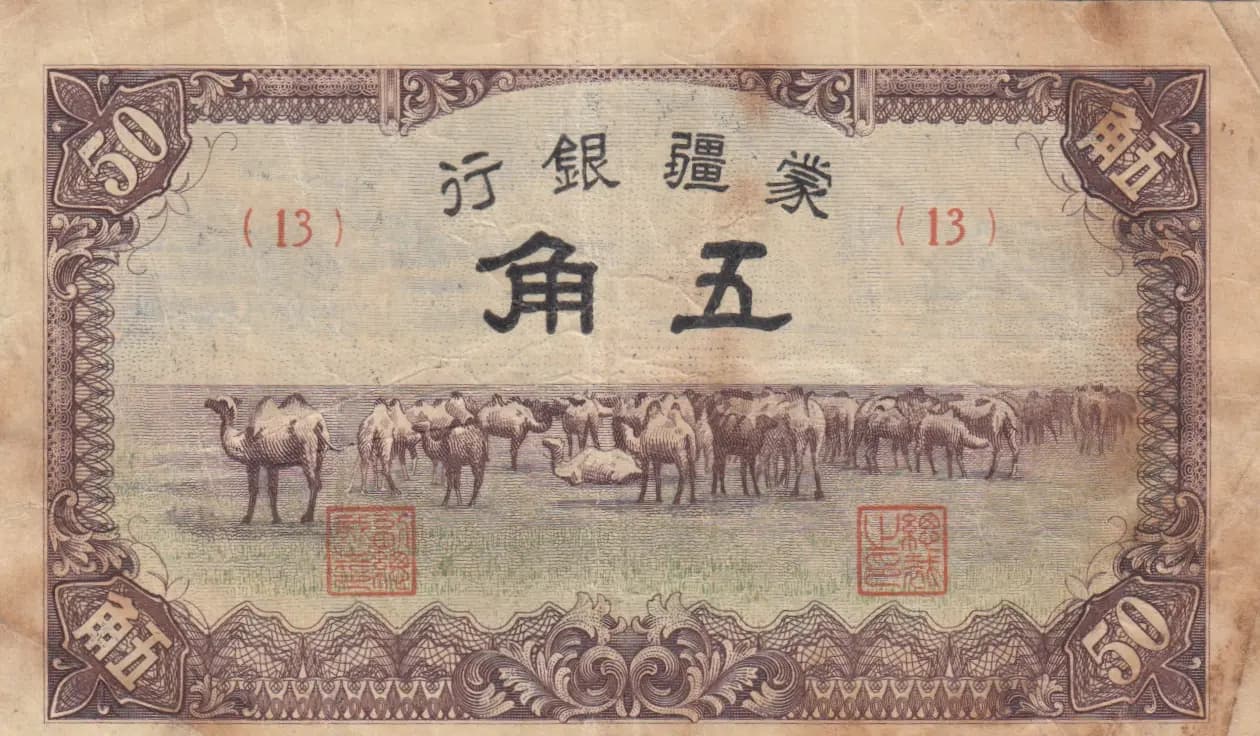
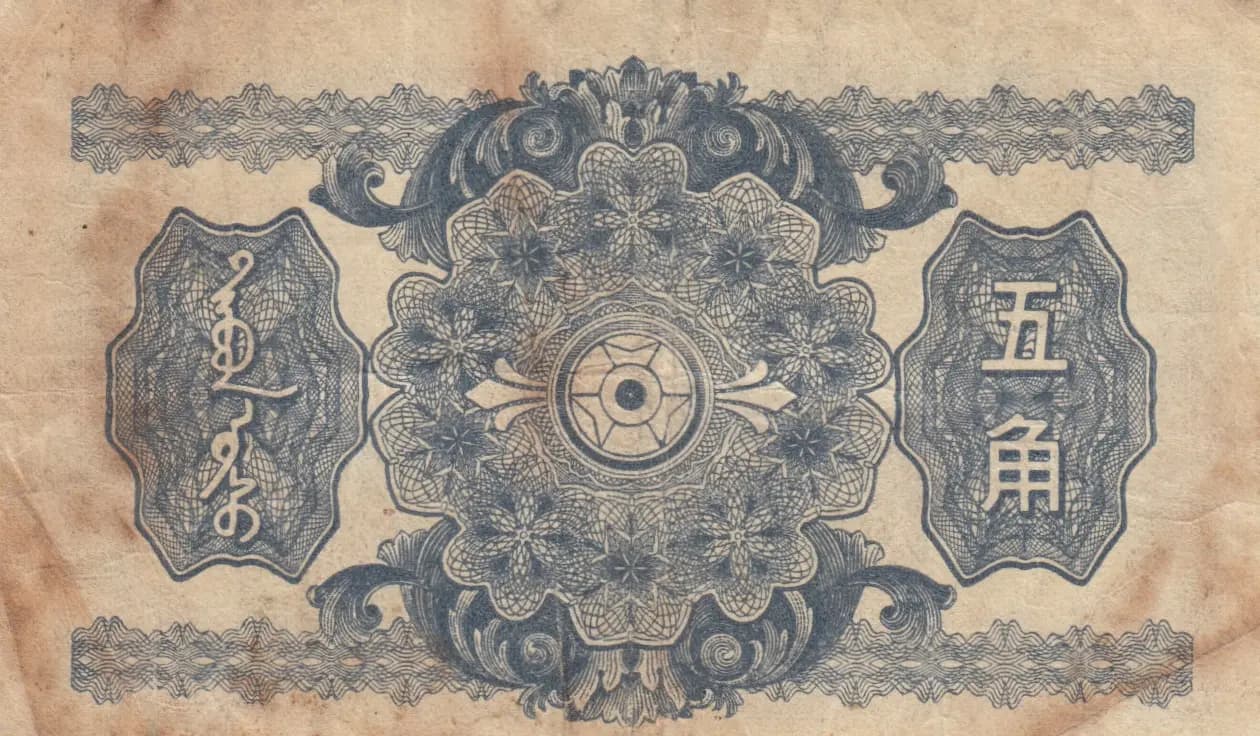
This 5 Chiao banknote from the Mengchiang Bank (1940) presents a striking desert caravan scene featuring approximately 15-20 camels traversing sand dunes, rendered in brown and purple tones with ornate decorative borders. The note exhibits Fair condition with moderate foxing, discoloration, and creasing consistent with circulation, while the reverse displays intricate fine-line engraving in blue ink with an elaborate floral mandala and central rosette design. The dual red seals and complex ornamental work reflect the security printing standards of this short-lived Japanese-occupied Chinese puppet state's currency.
Common. Mengchiang Bank notes, while historically significant as WWII-era occupation currency, were issued in substantial quantities during their brief 1937-1945 circulation period. Pick catalog listings and collector market data indicate that 5 Chiao denominations from this issuer regularly appear in dealer inventories and auction records. Fair condition examples are particularly common, as most surviving examples show circulation wear consistent with the observed foxing and creasing. Notes from this issuer have not demonstrated the scarcity characteristics required for rare classification.
The Mengchiang Bank operated under Japanese occupation in Inner Mongolia (1937-1945), issuing currency for the puppet state of Mengjiang. The camel caravan imagery on the obverse symbolizes the region's historical Silk Road trade routes and pastoral economy, while the decorative sophistication reflects Japanese printing techniques imposed during the occupation. This denomination and issuer represent a specialized chapter in WWII-era Asian numismatics, as Mengjiang notes were withdrawn from circulation after 1945.
The obverse features a panoramic desert landscape dominated by a merchant caravan of Bactrian camels moving through stylized sand dunes—a motif celebrating Mongolia's commercial heritage and transportation traditions. The composition is framed by elaborate geometric borders in brown and purple with architectural emblems positioned in the top corners. Two prominent red rectangular seals occupy the center-lower area, functioning as security markers typical of Japanese-influenced banknote design of the period. The reverse showcases virtuosic fine-line engraving: a central circular rosette or dharma wheel surrounded by radiating floral patterns in a mandala composition, flanked by Chinese character cartouches within shield-like frames. Ornamental wave and scroll borders create a comprehensive security design intended to deter counterfeiting through visual complexity.
Front side: '蒙疆銀行' (Mengjiang Bank), '五角' (Five Jiao), and '(13)' (series or plate number). Back side: '五' (Five) and partial denomination text. The back inscription appears incomplete or partially obscured in available imagery but references the denomination structure.
Intaglio engraving (line engraving and cross-hatching), characteristic of high-security banknote production. The extreme fineness of detail, especially evident on the reverse's mandala design and geometric cross-hatching, indicates production by a specialized security printer—likely a Japanese facility given the technical sophistication and the occupation context. The dual-color printing (brown/purple obverse and blue reverse) required multiple passes and careful registration.
Pick J103 references the standard 5 Chiao denomination without recorded major varieties in standard catalogs. The series plate number '(13)' visible in red on the obverse may indicate a printing plate identifier. No overprints, signature varieties, or date variations are evident from the visual analysis. Collectors should note that Mengchiang Bank notes exist in multiple denominations and can be distinguished by denomination characters ('五角' vs. other denominations) rather than by internal variety within the 5 Chiao type.