20 cents 1949
Market Prices
5 salesAbout This Note
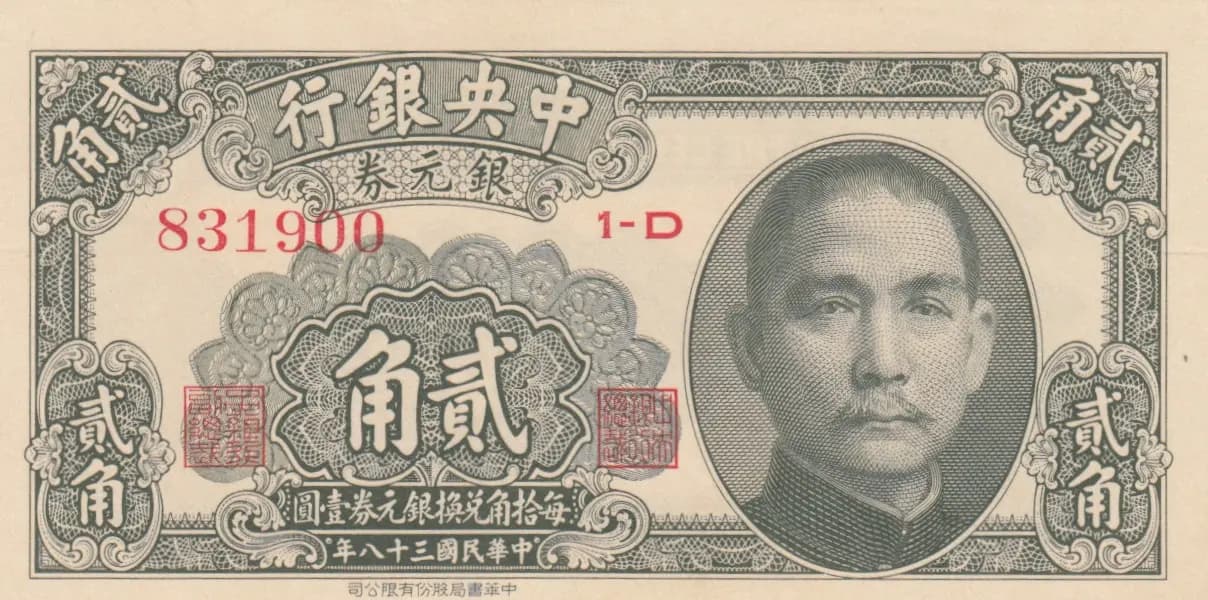
An uncirculated example of the Central Bank of China's 1949 20-cent note (Pick P-436), presenting exceptional eye appeal with crisp detail throughout. The note displays pristine condition with no evidence of circulation, featuring an ornate design combining traditional Chinese artistic elements with Western-style portraiture and bilingual inscriptions. This denomination represents a transitional period in Chinese currency as the Nationalist government faced its final years before the 1949 communist victory.
Common. eBay price data shows this note trading consistently in the $3–15 range across multiple grades (F to EF), with UNC catalog value of $15 (2016). The regular issue status and multiple examples appearing in the market indicate adequate circulation within collector channels. Notes of this denomination and period that sell regularly for under $20 are classified as common.
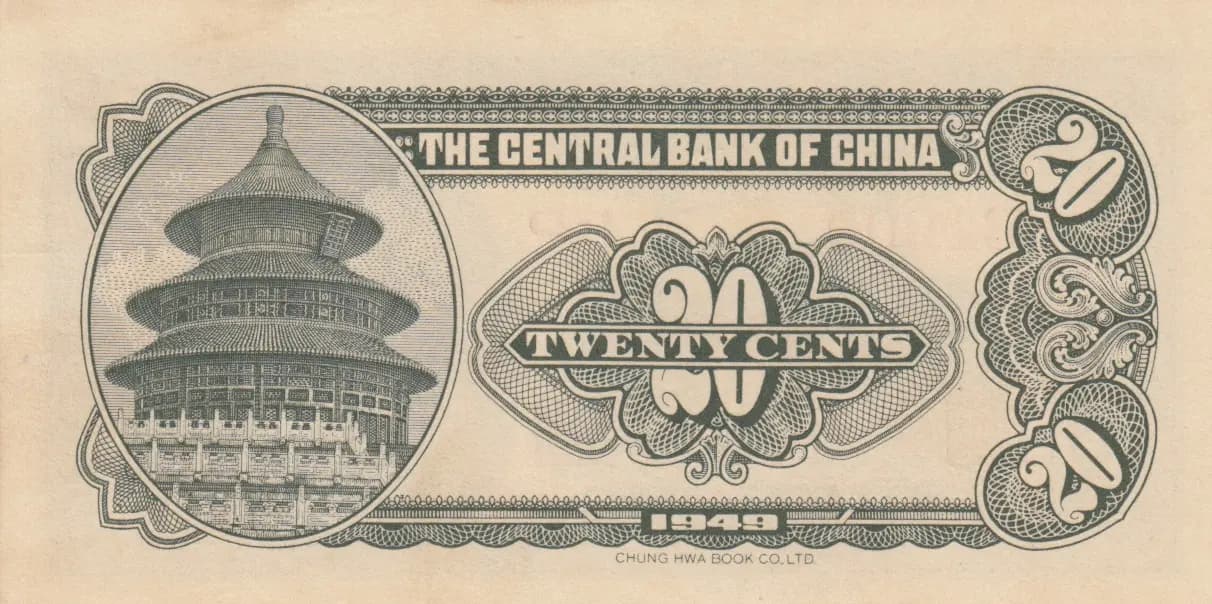
Issued by the Central Bank of China in 1949, this note marks the final stage of Nationalist currency production before the People's Republic of China's establishment in October 1949. The bilingual English-Chinese design reflects the international commerce aspirations of the Republic of China era, while the temple/pagoda imagery on the reverse (likely depicting the Temple of Heaven) symbolizes traditional Chinese cultural continuity. The note's denominations in both cents and yuan reflect the fractional currency systems in use during the later Republican period.
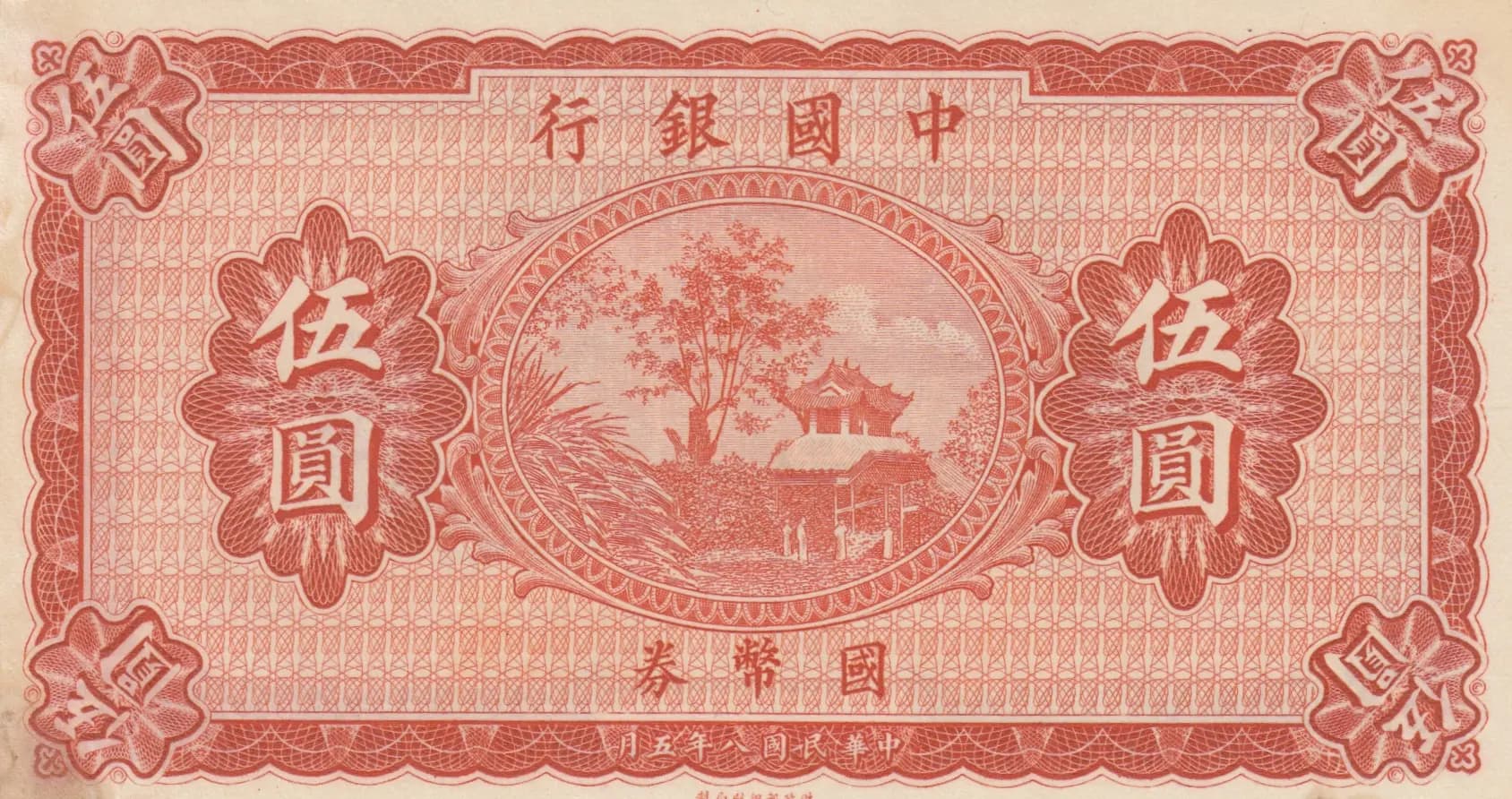
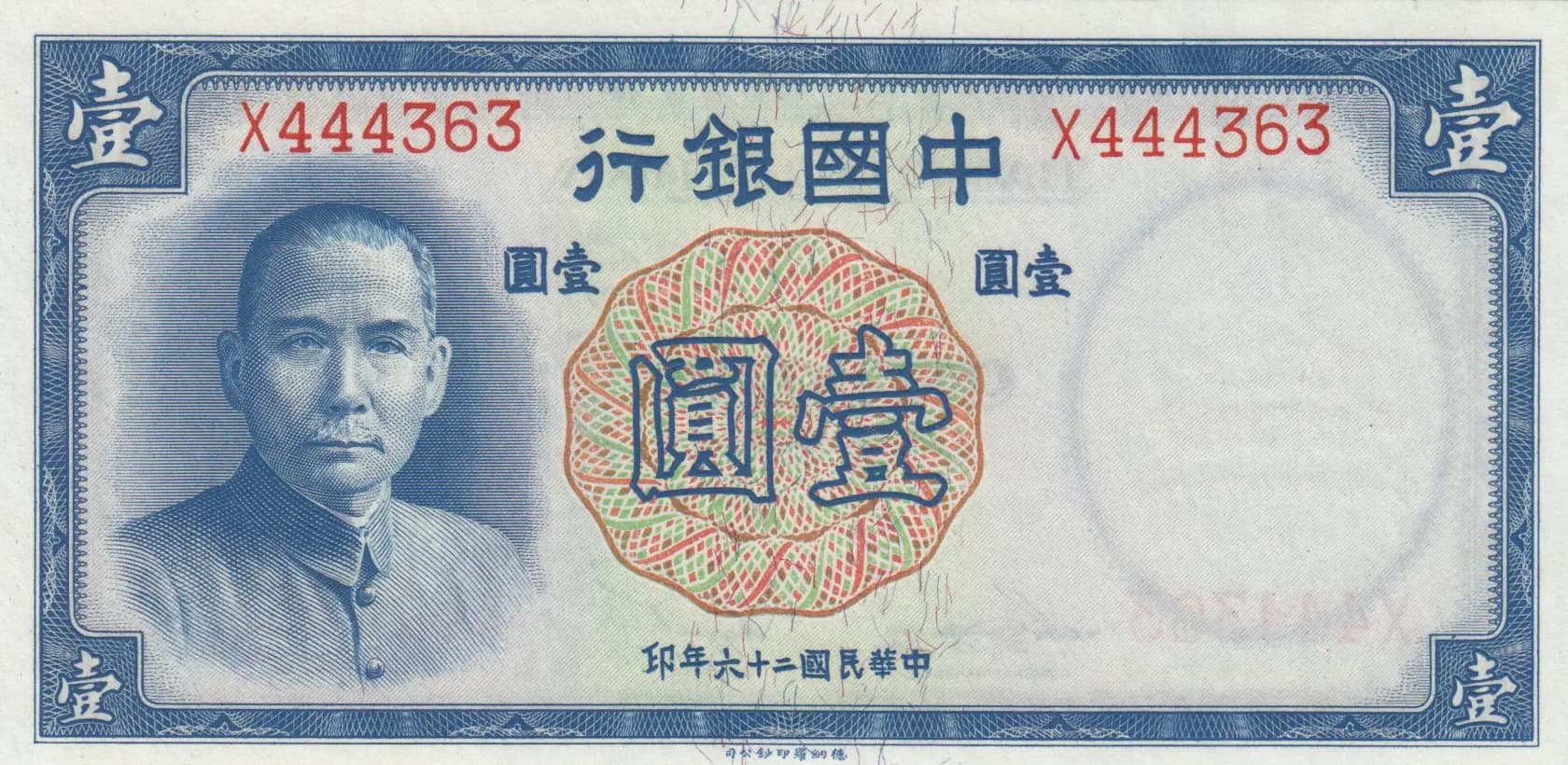
The front features a formal portrait of a man in Western business attire positioned on the right side, identified as a prominent figure of the period, rendered in careful engraved profile. The denomination '貳佰' (200 cents = 20 yuan) is prominently displayed in an ornate cartouche. Two red square official seals characteristic of Chinese currency of the era are positioned center-left. The reverse depicts a multi-tiered pagoda temple building (Temple of Heaven) housed within an ornate oval frame—a symbol of Chinese cultural heritage and historical continuity. Both sides employ extensive decorative border work with floral and geometric patterns typical of high-security currency design of the Republican period.
FRONT: '中央銀行' (Central Bank), '元央銀' (Bank of China Yuan), '貳佰' (Two Hundred), '中華民國十八年' (18th Year of the Republic of China—corresponding to 1929 in the ROC calendar), '1-D' (plate/series designation), Serial number: '831900'. BACK: 'THE CENTRAL BANK OF CHINA' (English denomination authority), 'TWENTY CENTS' (English denomination), 'CHUNG HWA BOOK CO. LTD.' (printer attribution).
Intaglio engraving process, executed by Chung Hwa Book Company, Ltd. (as credited on the reverse). The detailed line work visible in the portrait rendering, architectural imagery, and intricate border patterns are characteristic of steel-plate engraving. The crisp impression and fine detail preservation in this uncirculated example demonstrates professional security printing standards of the period.
This example is identified by series designation '1-D' with serial number '831900', indicating it belongs to the first printing/series of this design. The '1-D' designation may represent Plate 1, Series D. The date marking '中華民國十八年' (ROC Year 18 = 1929 by Western calendar, though the note was issued in 1949) reflects the custom of the Republic of China to use their own calendar system. No evidence of overprints, surcharges, or emergency modifications is visible, confirming this as an unmodified regular-issue specimen from the final 1949 printing.