100 yuan 1945
About This Note
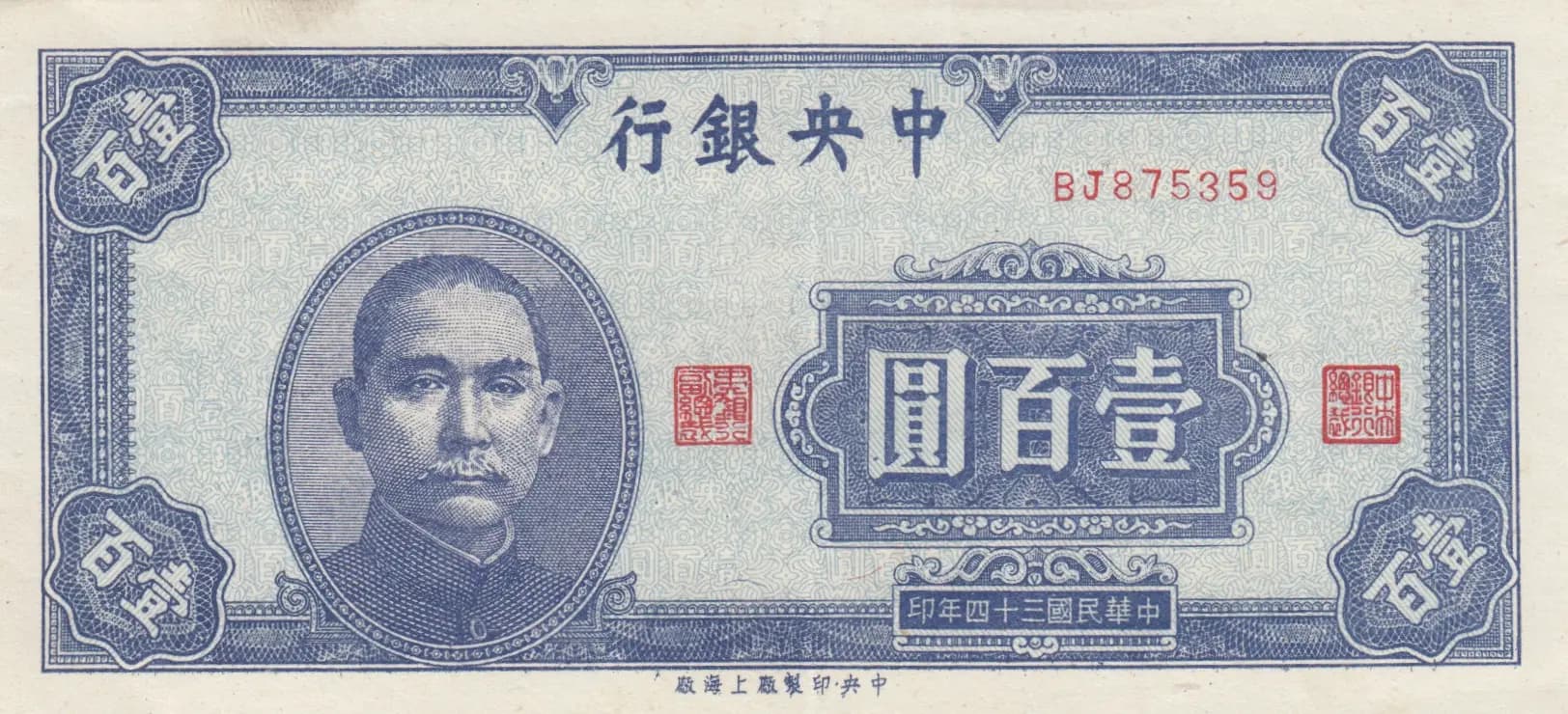
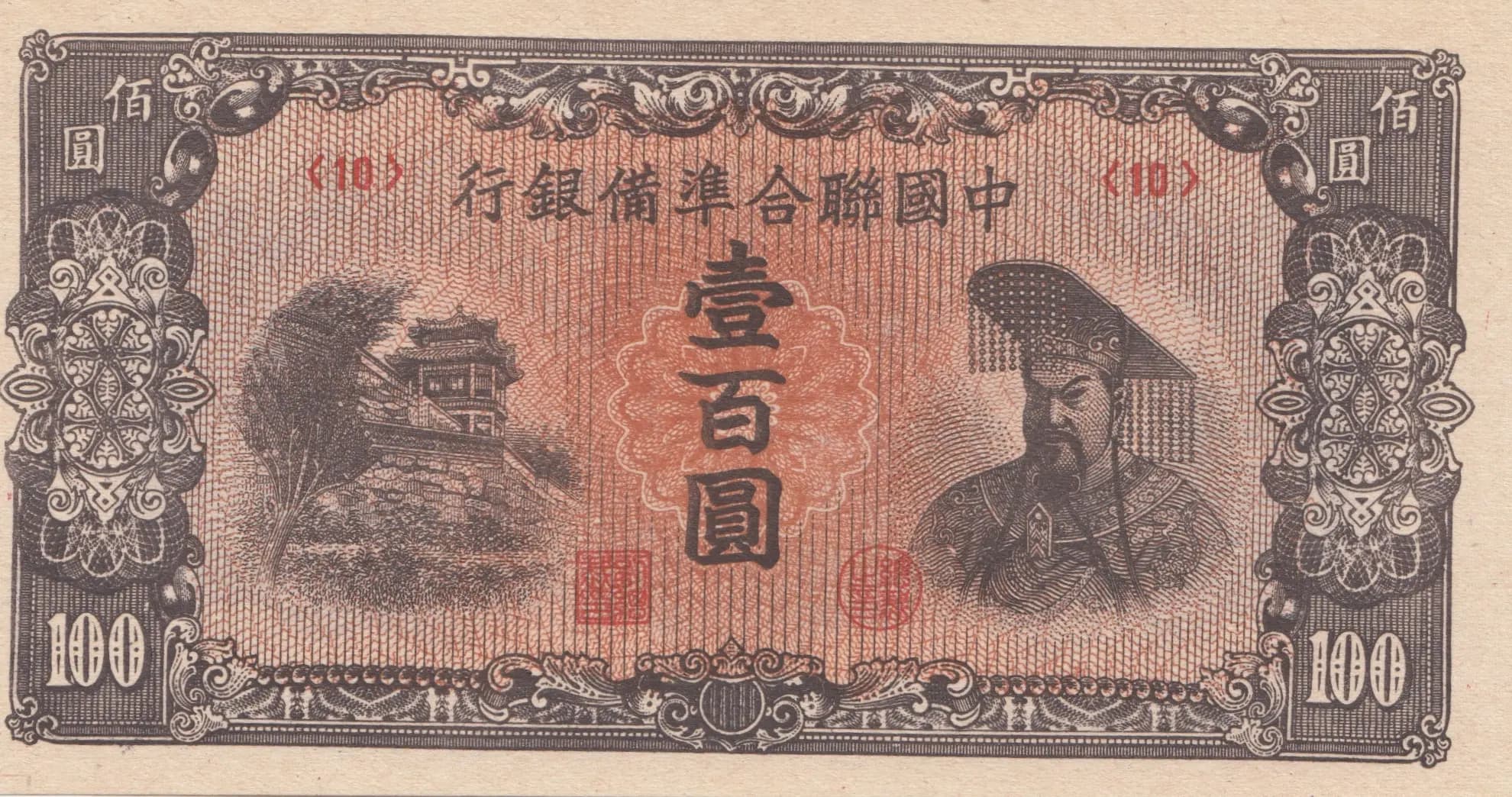
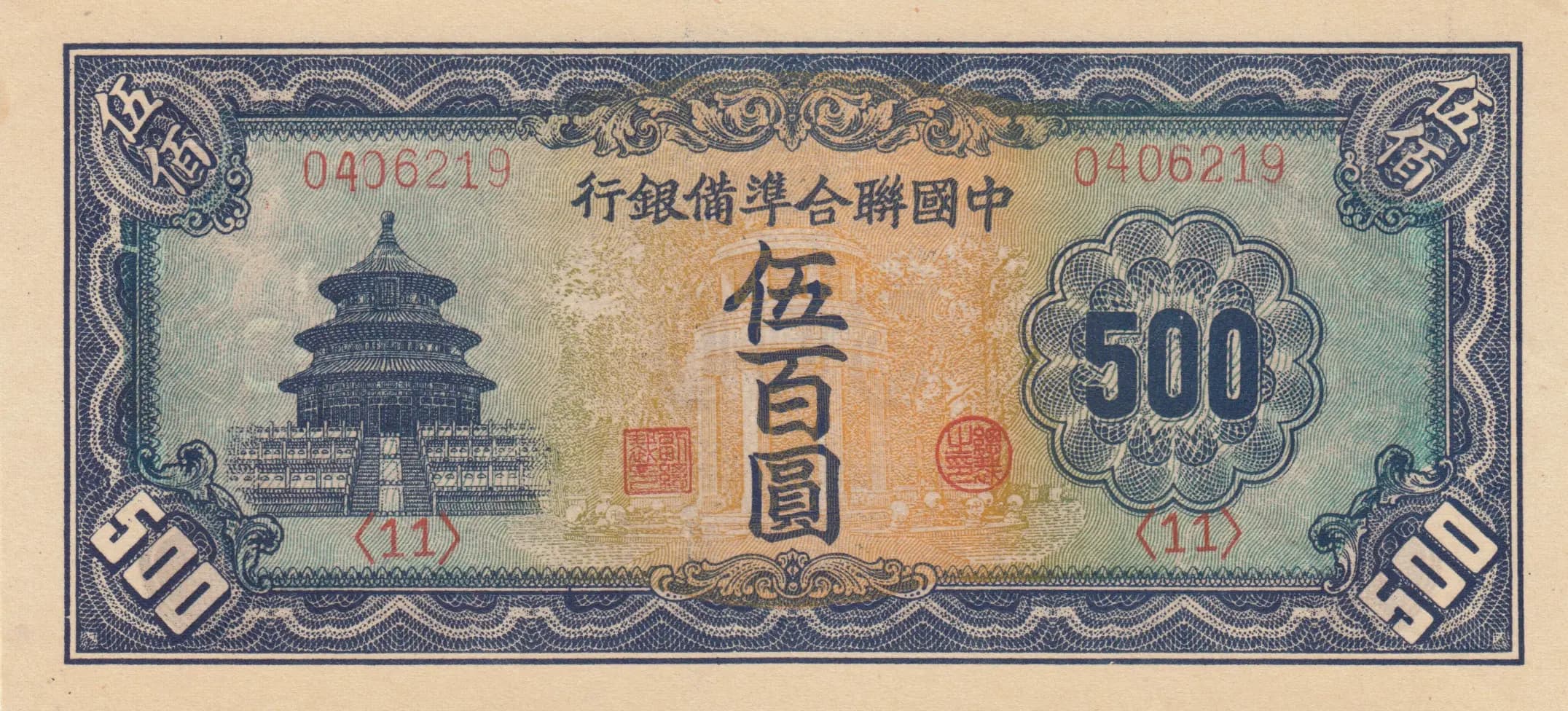
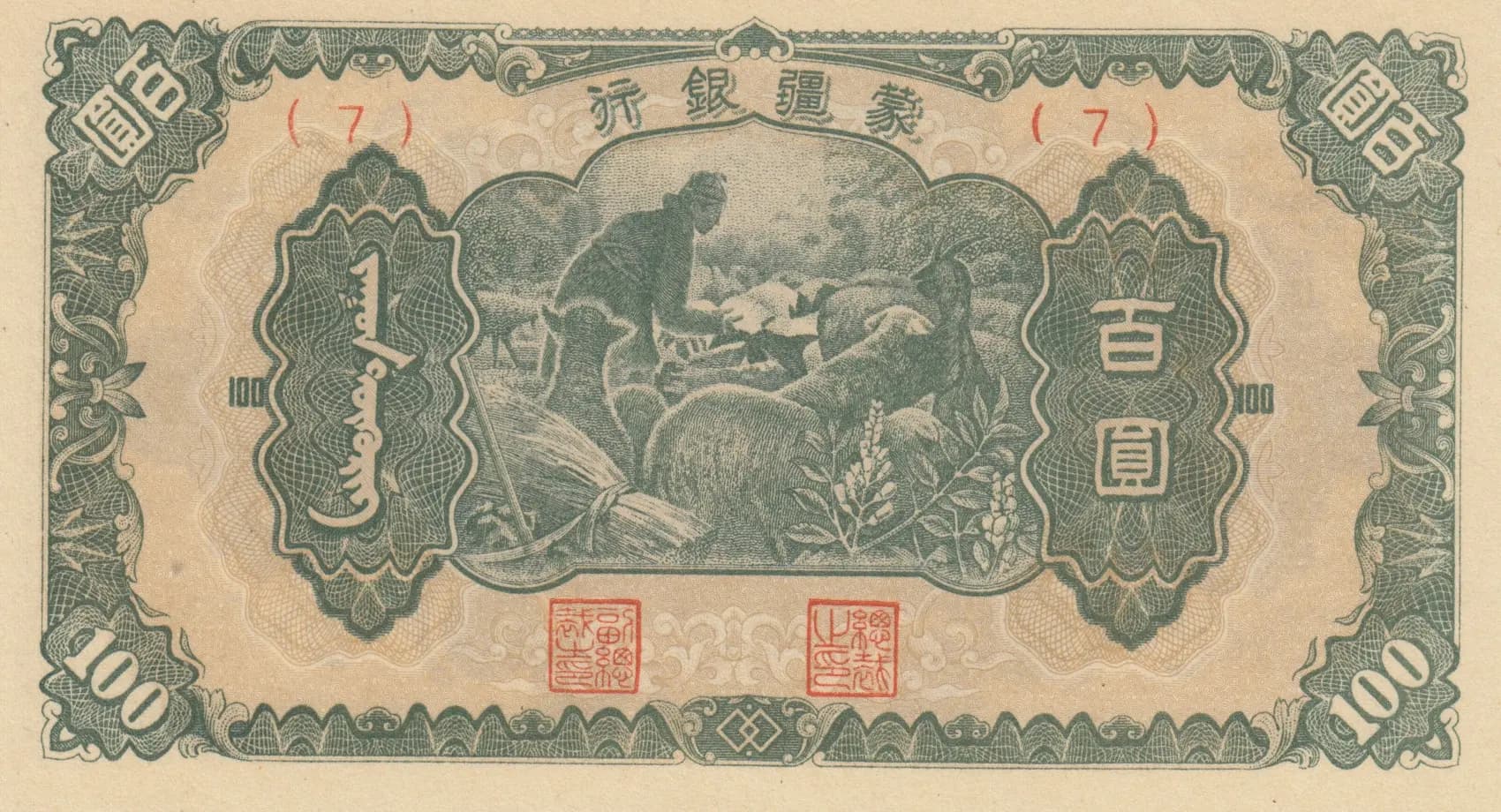
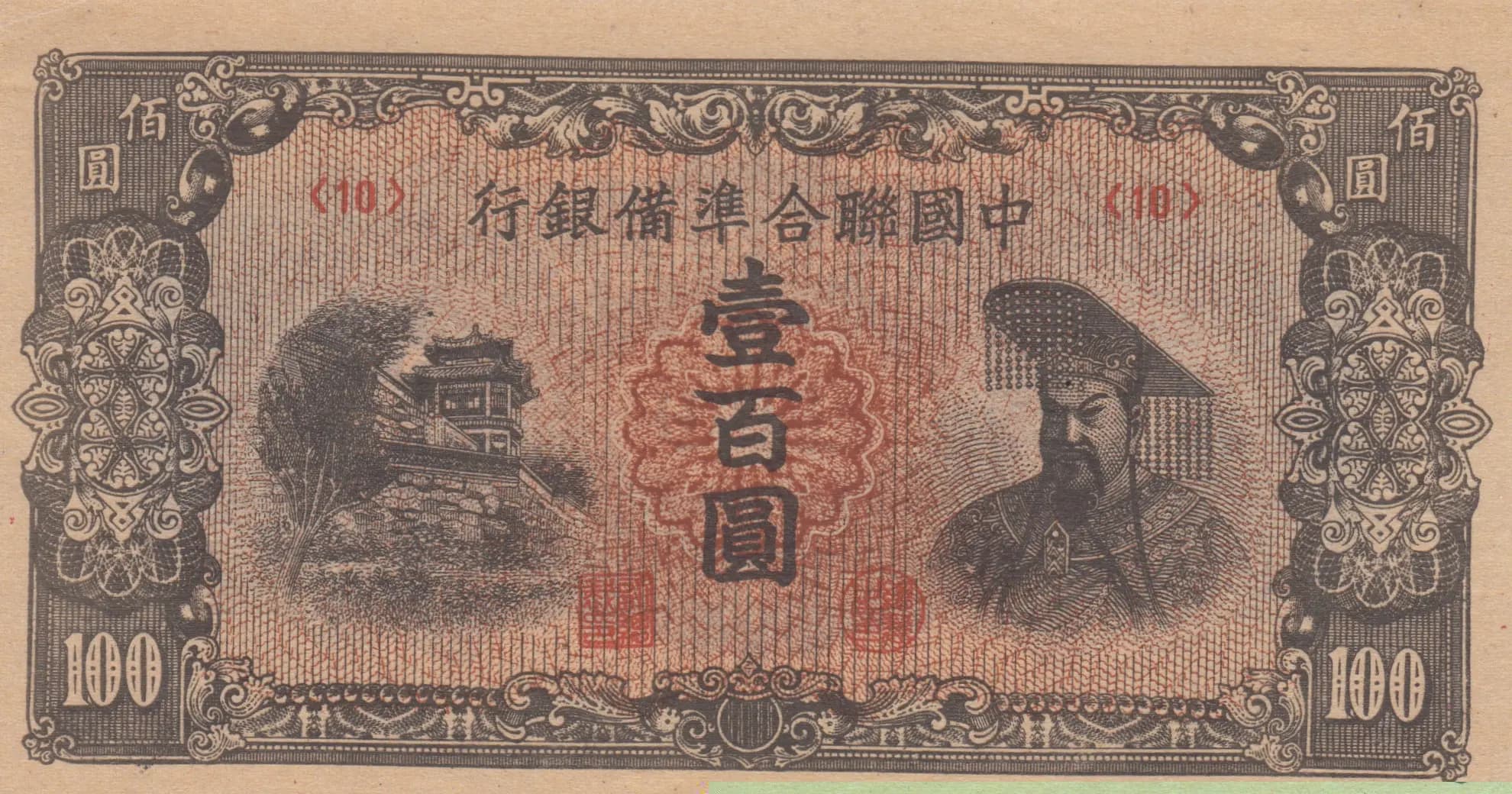
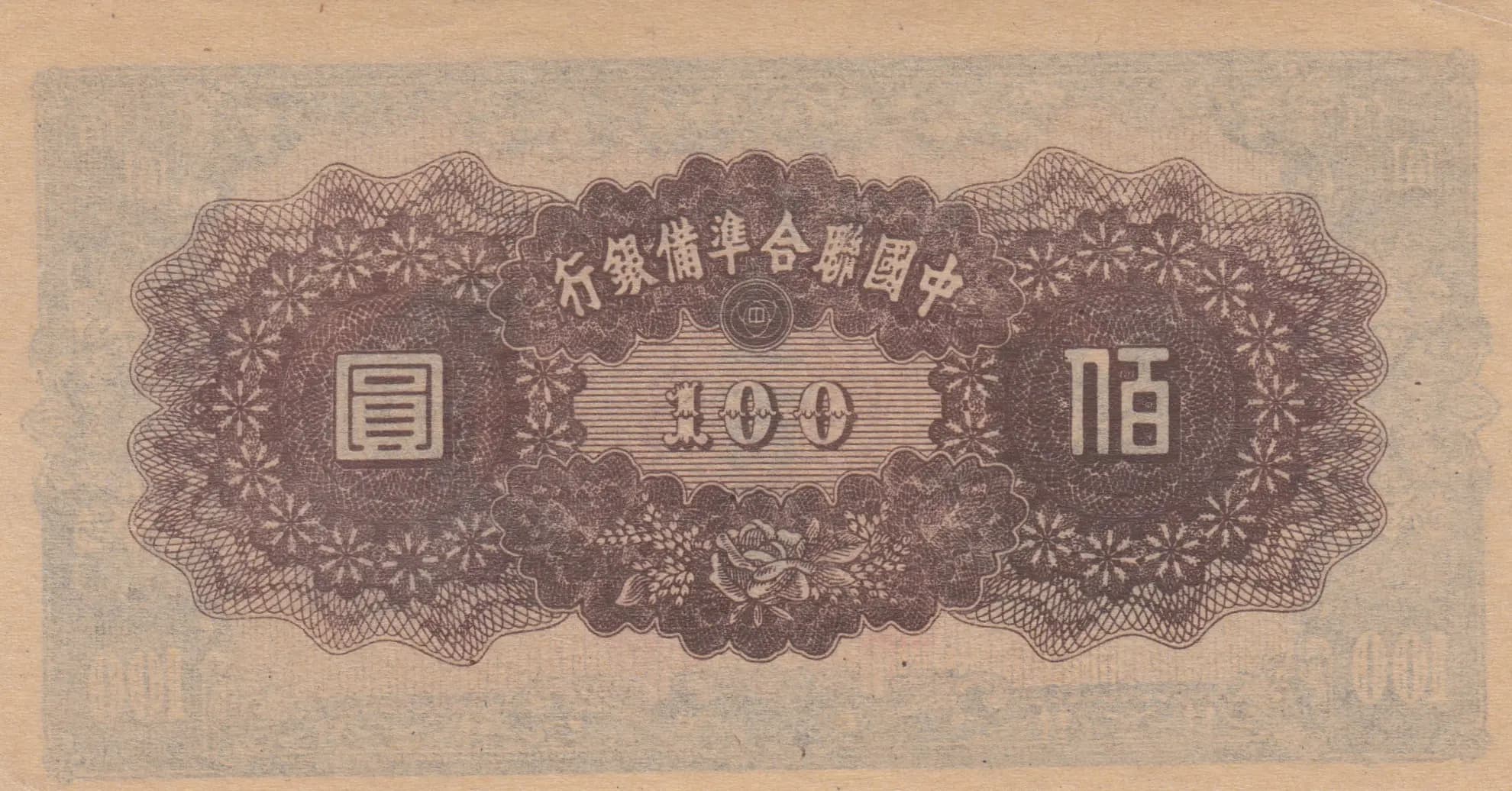
An exceptional example of the 1945 Federal Reserve Bank of China 100 yuan note (Pick J88a(2)), graded AU with visible but moderate aging consistent with circulation during the late wartime period. The note displays the characteristic ornate engraving of Chinese banknotes from this era, featuring dual portraits of historical figures flanking a central red overprint stamp, a pagoda structure, and intricate decorative borders executed in fine line work and cross-hatching. The red overprint and overall legibility of both obverse and reverse designs make this a significant piece of Chinese monetary history from the Republic period.
Common. The Federal Reserve Bank of China's 1945 100 yuan notes were produced in substantial quantities during their period of circulation, and surviving examples in the AU condition grade are not considered scarce by modern collecting standards. While wartime currency from China remains collectible, this particular denomination and issuer combination appears regularly in the secondary market, typically at modest valuations. The AU grade reflects normal circulation wear rather than exceptional scarcity.
Issued during the final year of World War II, this note represents the Federal Reserve Bank of China's currency during a period of tremendous economic and political upheaval. The use of Chinese traditional characters (繁體字) and the institutional name '中國聯合準備銀行' (China United Preparation Bank) reflects the complex banking structures established to manage China's wartime finances. The prominent red overprint stamp visible on the obverse suggests a revalidation or special authorization marking, a common practice during this turbulent period to control currency circulation and prevent counterfeiting.
The obverse features a sophisticated classical design typical of high-denomination Republic-era Chinese currency. Two bearded male portraits in profile—one facing right on the left side, one facing left on the right side—frame the central composition, likely representing historical figures of significance to the Republic. A traditional multi-tiered Asian pagoda or architectural tower occupies the left side, symbolizing cultural heritage. The center bears a large red ornamental stamp or seal with Chinese characters, characteristic of the overprint revalidation system. Elaborate decorative borders incorporating floral motifs, geometric patterns, and cloud-like elements frame the entire composition. The reverse presents a highly symmetrical design centered on a large decorative cartouche containing the numeral '100' in outlined form, surrounded by cloud scrolls and floral elements arranged in mirror-image patterns. All architectural ornamentation and denomination indicators employ the fine line engraving technique.
Front side: 中國聯合準備銀行 (China United Preparation Bank); 壹百圓 (One Hundred Yuan); 佰 (Hundred); 圓 (Yuan); 100 (Arabic numeral denomination). Back side: 中國聯合準備銀行 (China United Preparation Bank); 佰圓 (Hundred Yuan); 100 (Arabic numeral denomination). The repetition of the issuing institution name on both sides emphasizes the authority of the Federal Reserve Bank of China.
Intaglio engraving (copperplate printing), evidenced by the fine line work, extensive cross-hatching, and intricate detail throughout both sides. The precision of the decorative elements, portraits, and security patterns indicates professional security printing of the highest standard practiced in the 1940s. The complex interplay of line densities creates the tonal effects and three-dimensional appearance characteristic of period banknote production. While specific printer information for Pick J88a(2) is not definitively attributed in available literature, such notes were typically produced by or under the supervision of the Central Bank of China's security printing facilities or contracted international security printers.
Pick catalog designation J88a(2) indicates this is a specific variety of the 1945 100 yuan issue. The visual analysis confirms the characteristic red overprint stamp visible on the obverse, which is a defining feature of this variety. The absence of visible signatures or date changes in the observed images is consistent with the institutional printing standards of the Federal Reserve Bank of China. No evidence of serial number variations or secondary overprints beyond the central red stamp is apparent, though serial number series and printing date variations may exist within this Pick number that are not discernible from the images provided. Collectors should verify serial number prefixes and printing details when assessing specific examples for variety classification.