100 yuan 1945
About This Note
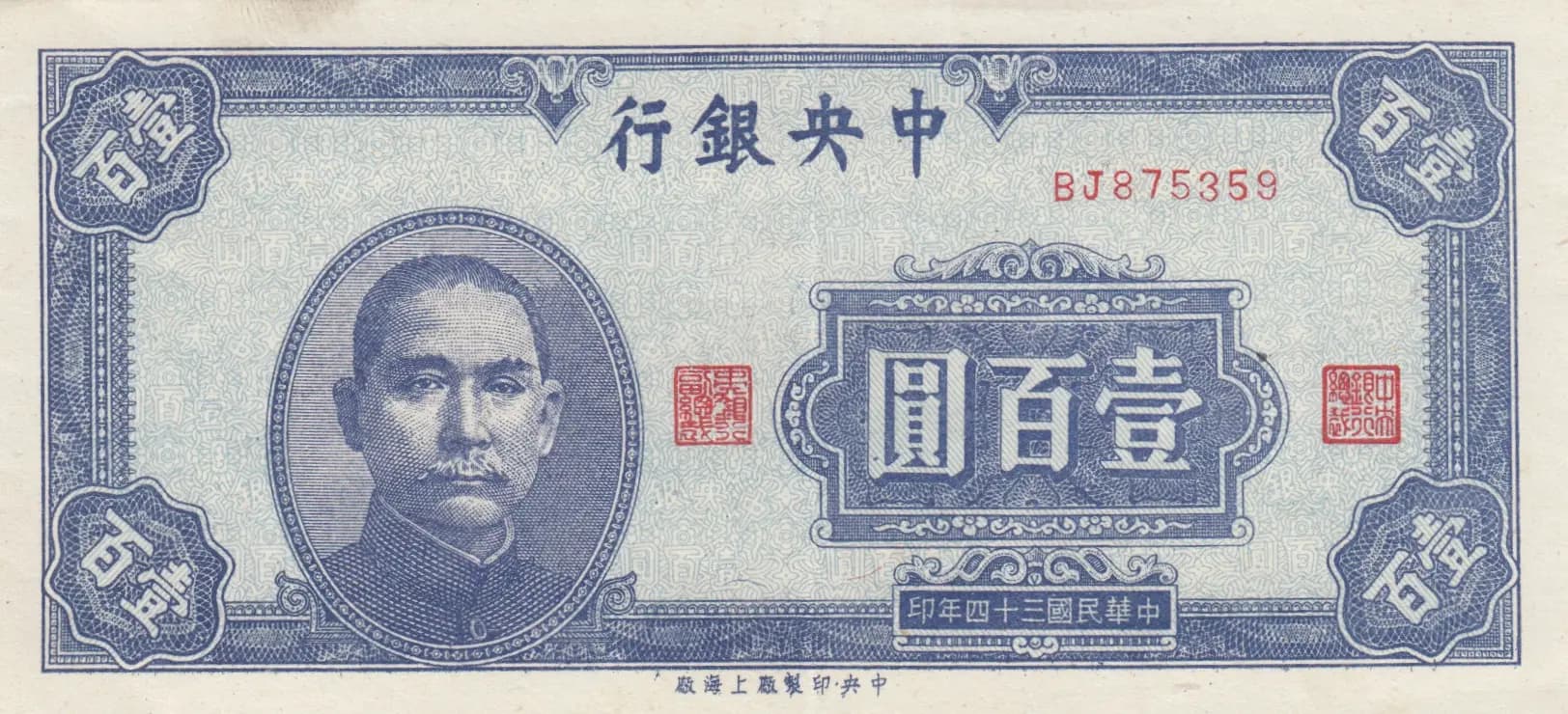
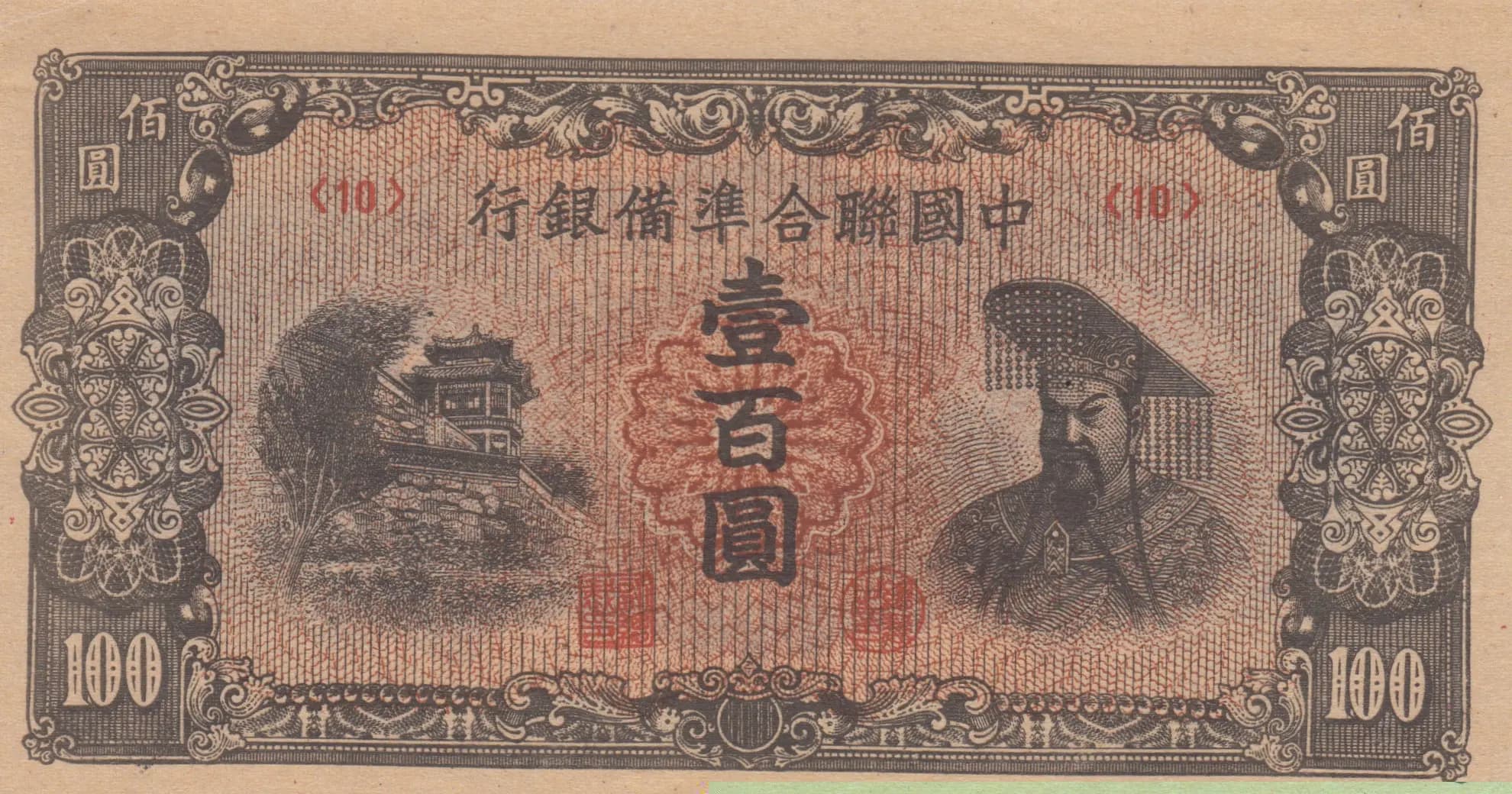
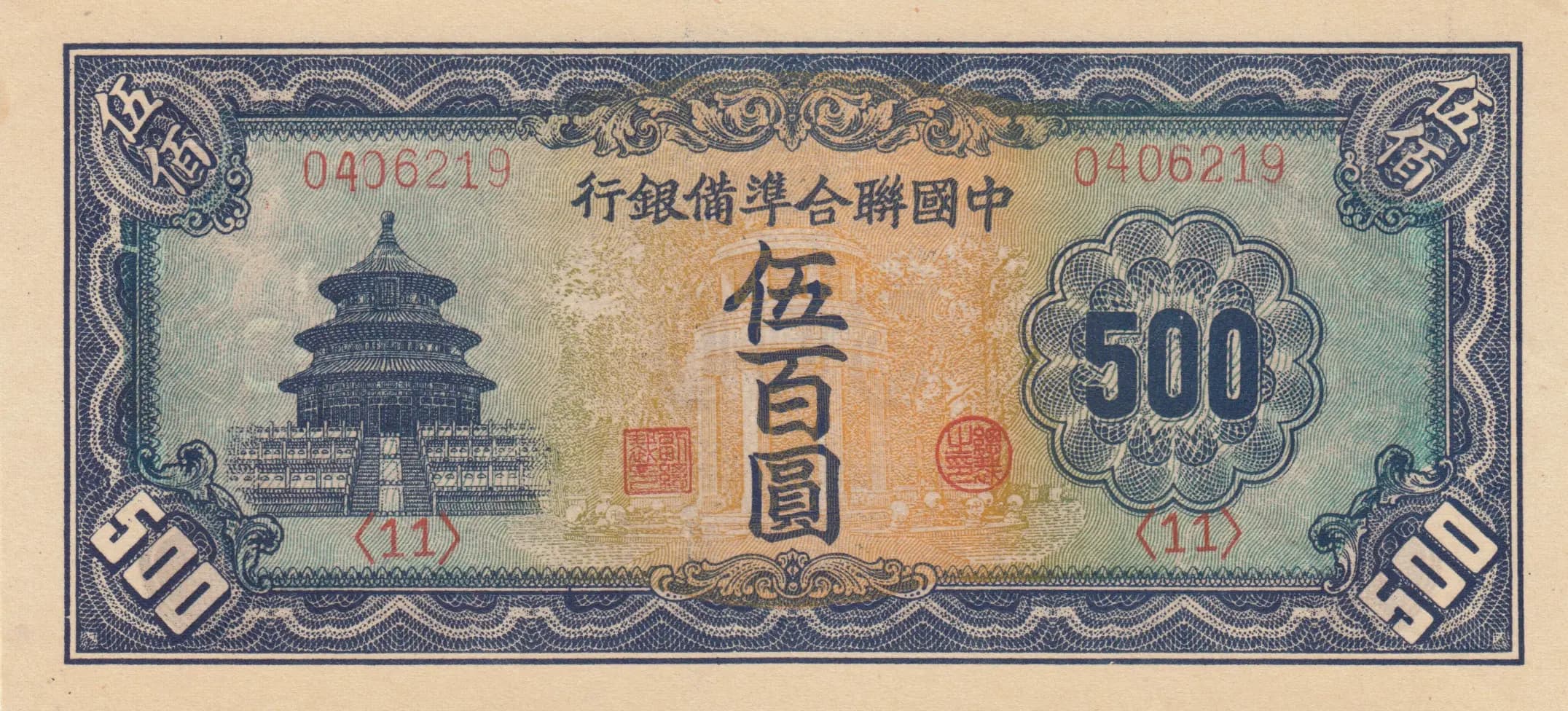
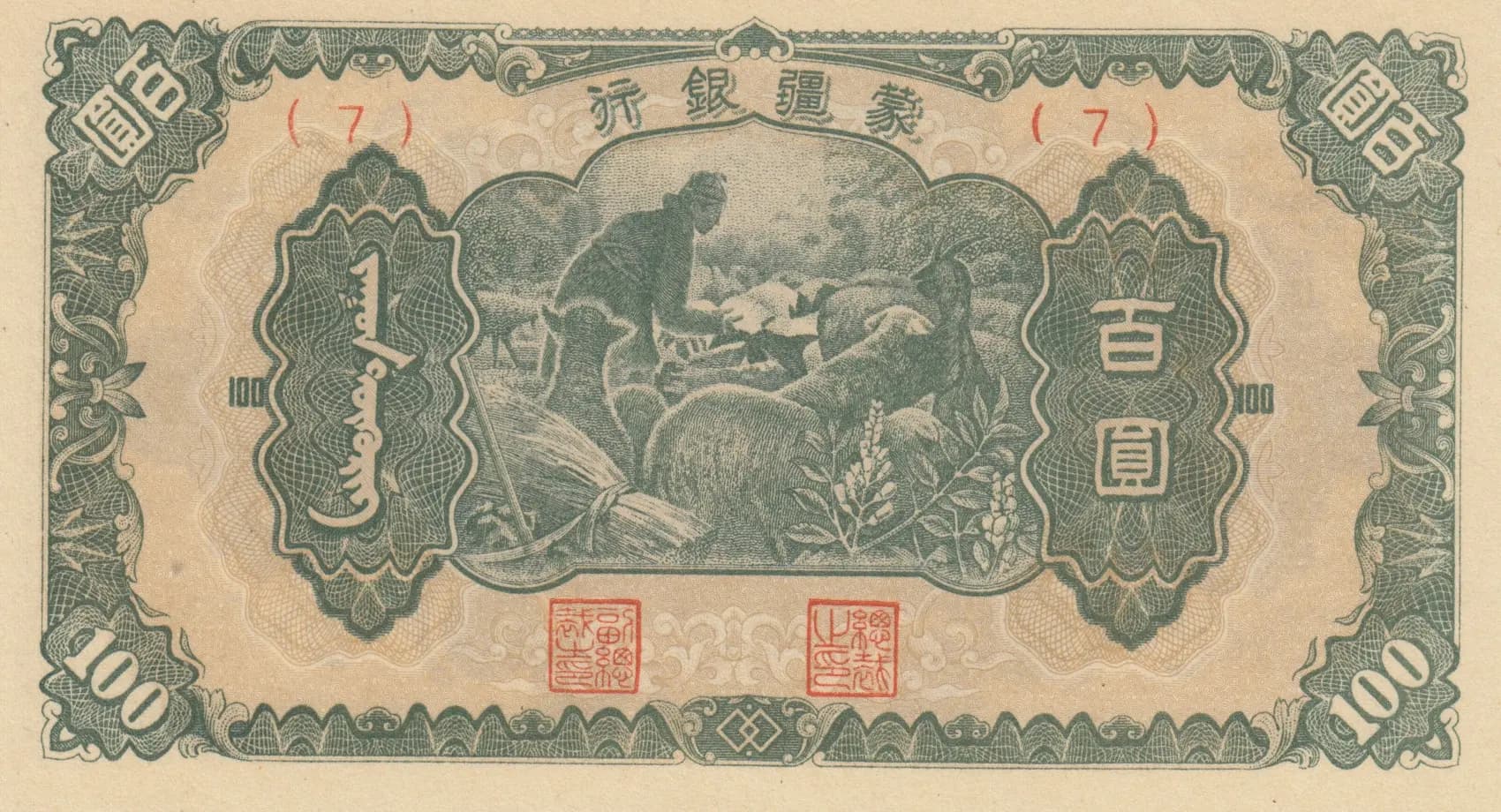
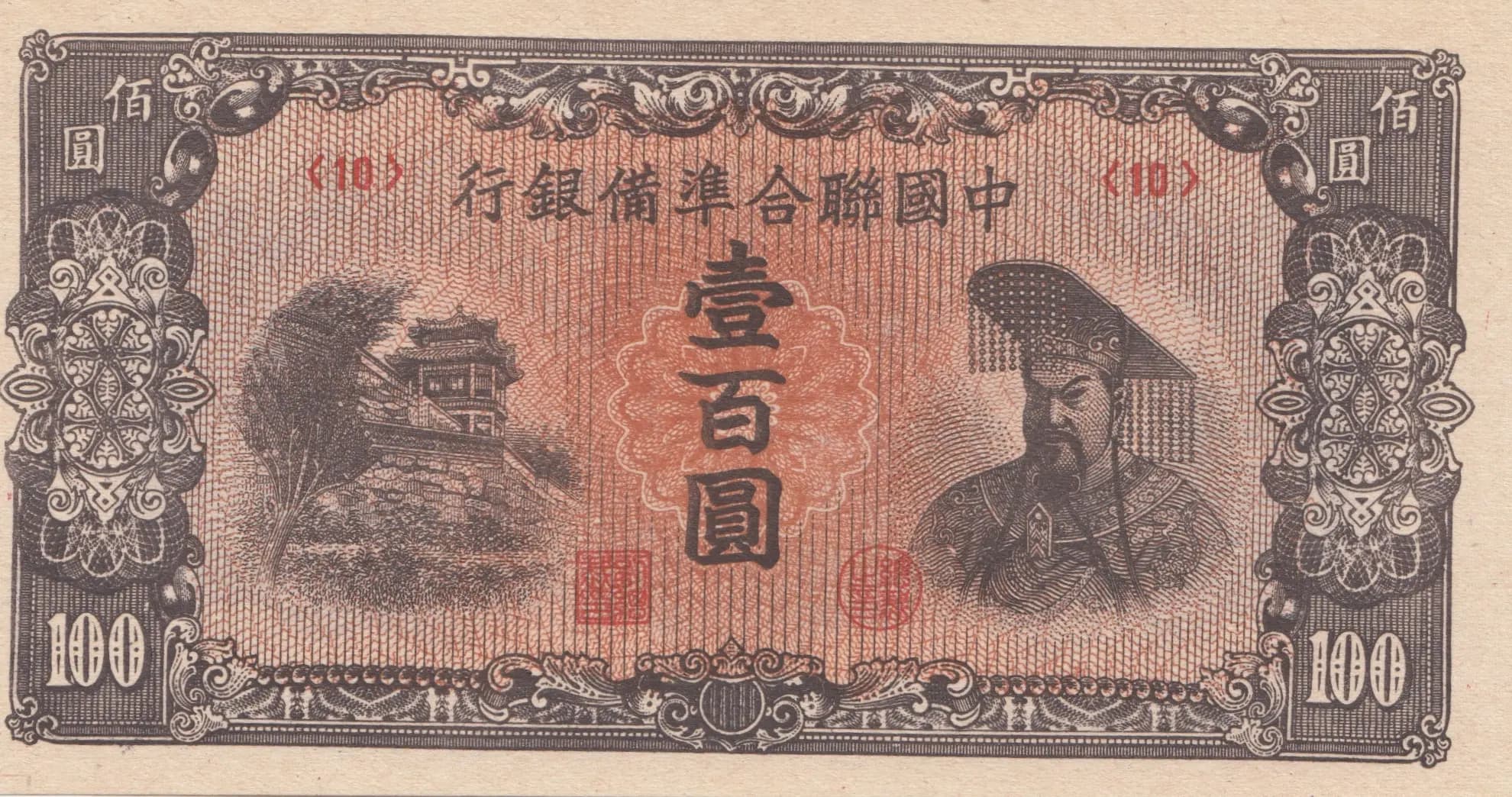
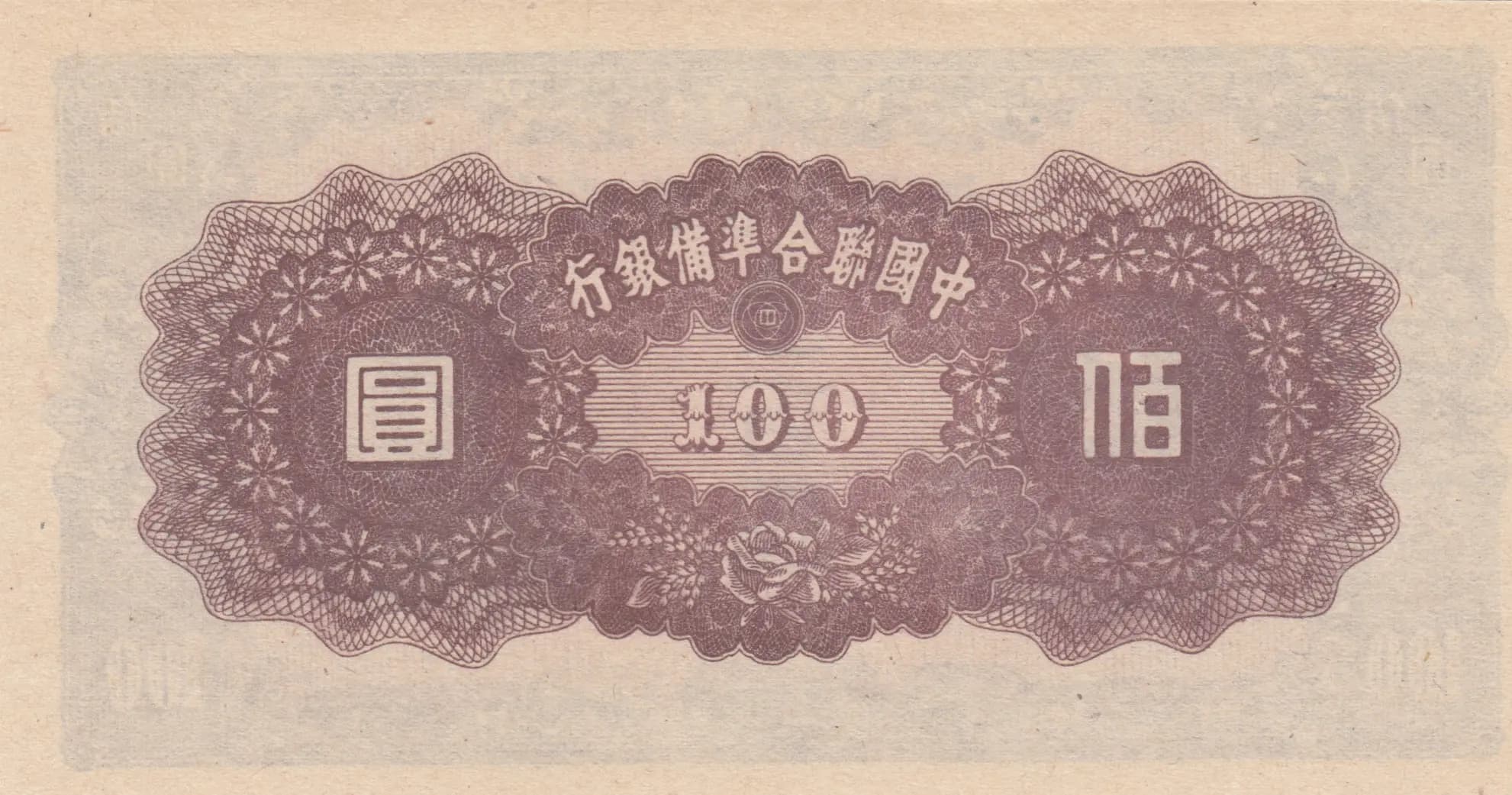
This is an exceptional example of a 1945 Chinese Federal Reserve Bank 100 Yuan note (Pick J88a(1)) in Uncirculated condition, featuring beautifully preserved period engraving with rich brown, tan, and red coloration on aged paper. The front showcases an elegant male portrait in formal dress with a distinctive hat on the right side, paired with a pagoda landscape on the left, while the back displays an ornate scalloped cartouche with intricate floral medallion work. The fine line engraving and complex ornamental designs are exceptionally well-preserved, making this a notable specimen from the final year of the Republic of China's Central Reserve Bank operations.
Common. While the 1945 date marks the final year of Federal Reserve Bank of China operations, Pick J88a(1) notes from this issuer and denomination appear with sufficient frequency in the collector market to be considered standard for the series. No specific print run restrictions, recall notices, or extraordinary scarcity factors are known for this particular Pick number. The UNC condition grade indicates well-preserved examples exist in reasonable quantities, which further supports a common classification.
Issued during the final year of the Second Sino-Japanese War and just as the Chinese Civil War was escalating, this note represents the Central Reserve Bank of China's monetary authority during the tumultuous late Japanese occupation and immediate post-war period. The formal portraiture and traditional architectural imagery (the pagoda) reflect the bank's attempt to project stability and national identity during a period of severe economic and political crisis. The dual-language inscriptions (Traditional Chinese with both regional names on front and back) demonstrate the complex jurisdictional arrangements of the Republican period monetary system.
The front features a classical Republican-era design with a central red/pink ornamental cartouche containing the denomination, flanked by meaningful national symbolism: a multi-tiered pagoda tower set within a landscape vignette on the left (representing traditional Chinese architecture and cultural continuity), and a formal male portrait in profile on the right wearing period formal attire with a distinctive hat (likely a high government official or national leader, though not definitively identified in available sources). The elaborate decorative borders employ fine scrollwork and floral corner ornaments typical of high-security engraved currency of the era. The reverse presents a more purely ornamental design, dominated by a large scalloped or cloud-shaped cartouche containing a central floral medallion with geometric patterning, reflecting classical Chinese aesthetic principles. The symmetrical layout and refined geometric patterns throughout both sides demonstrate sophisticated security printing practices of the 1940s.
FRONT: 中國聯合準備銀行 (Central Reserve Bank of China / China United Reserve Bank); 壹百圓 (One Hundred Yuan); numerals: 15, 100. BACK: 中華民國中央儲備銀行 (Republic of China Central Reserve Bank); 100; 圓 (Yuan); 佰圓 (Hundred Yuan). Note: The front inscription references the 'United Reserve' while the back uses the official 'Central Reserve Bank' designation, reflecting institutional nomenclature variations of the period.
Intaglio engraving (line engraving), the standard security printing method for Chinese banknotes of this period. The fine line work, geometric background patterns, and intricate ornamental detailing visible throughout both sides are characteristic of engraved plate printing. The note was likely produced by the Central Bank's primary security printer; for Chinese notes of this era, this would typically have been either the Shanghai printing facilities or international security printers under contract to the Chinese government. The aged paper appearance and color consistency suggest original period production rather than modern reprinting.
The Pick catalog designation J88a(1) indicates this is the first (primary) variety of the J88a type. Observable variety factors would include: signature variations (comparing officials' signatures if present), specific serial number prefixes, and subtle printing characteristic differences. The visual analysis does not provide sufficient resolution to definitively identify signature variations or specific serial number prefixes. Collectors should compare serial number prefixes, signature combinations, and plate varieties against detailed Pick catalog references for this specific Pick number to determine if additional distinct varieties exist beyond the primary J88a(1) designation.