100 yuan 1945
About This Note
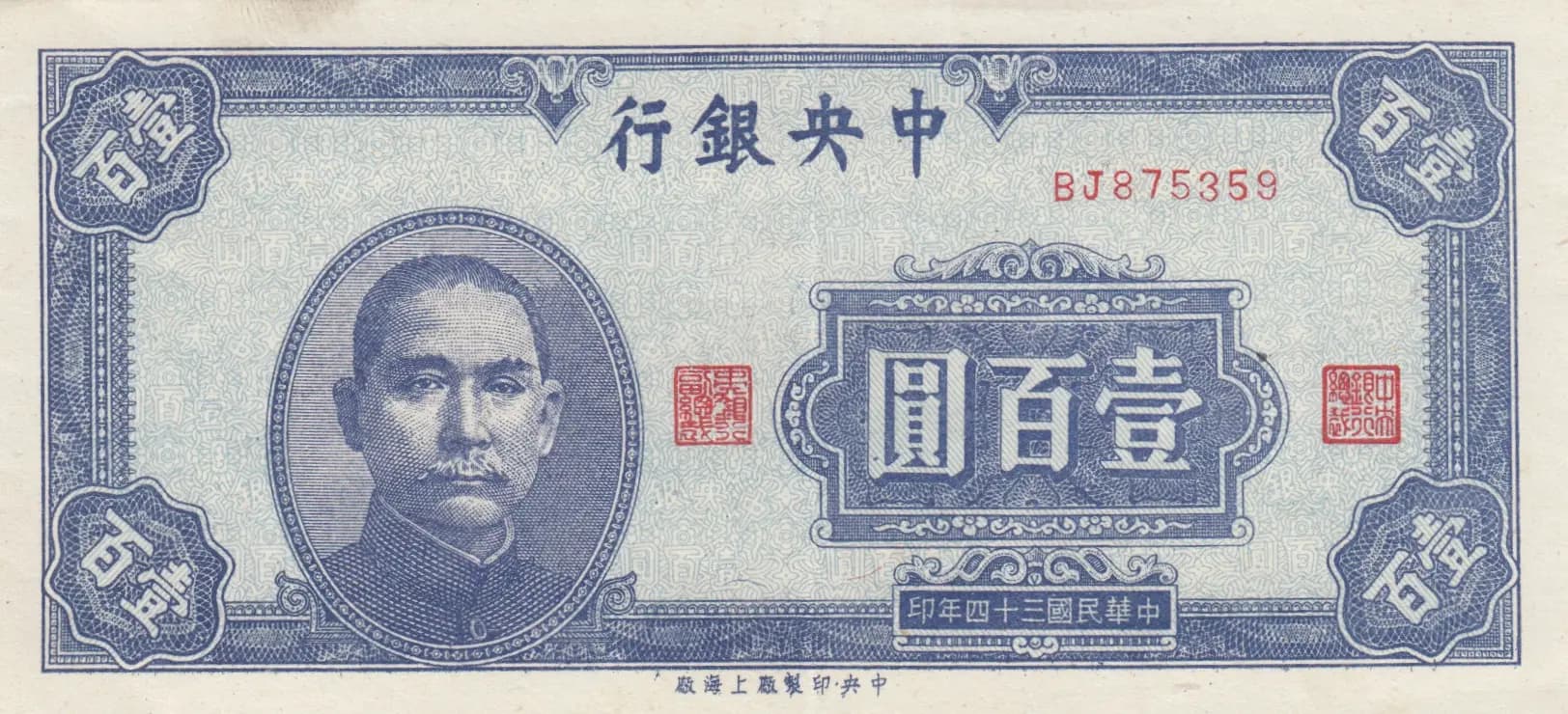
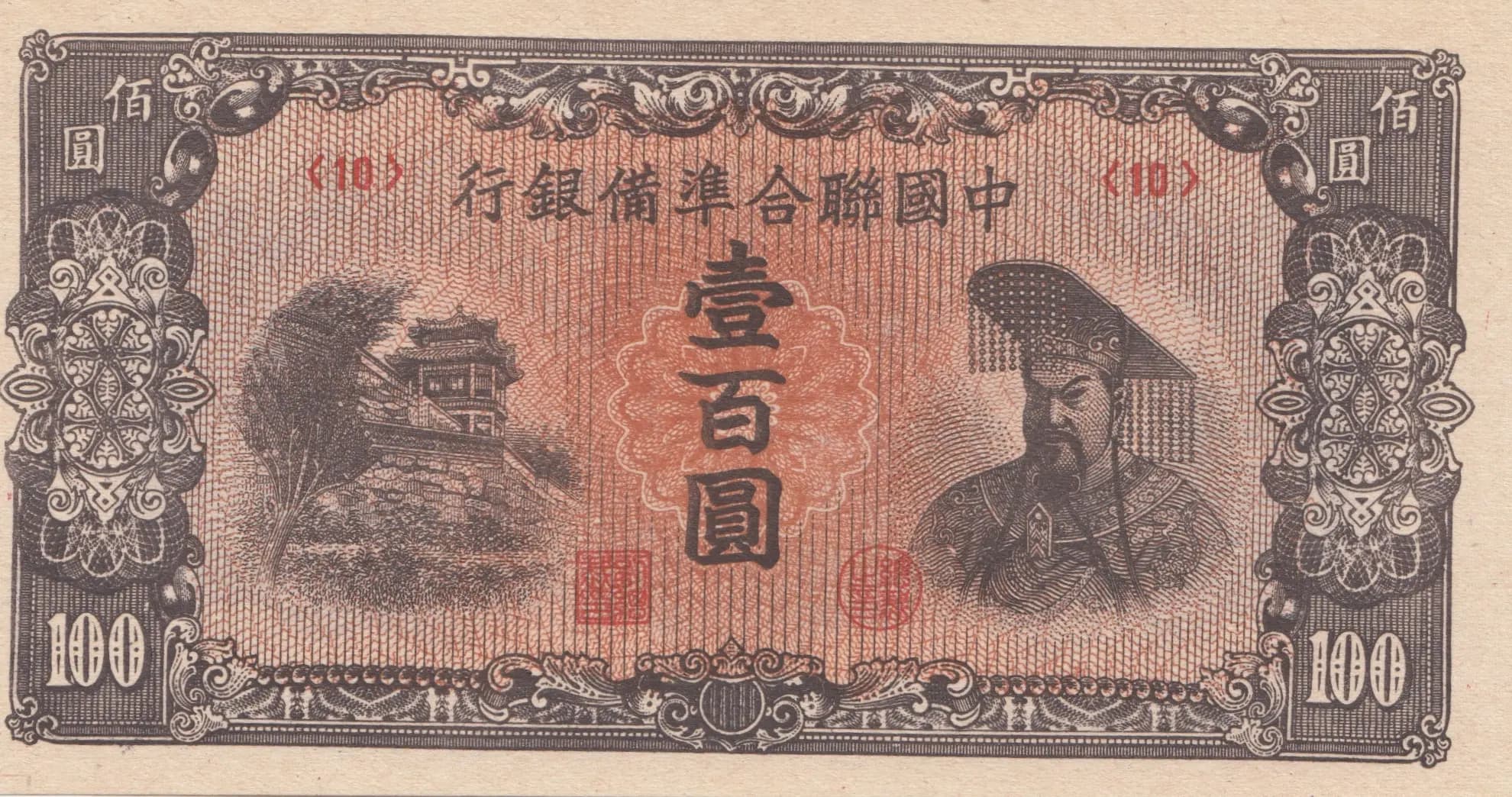
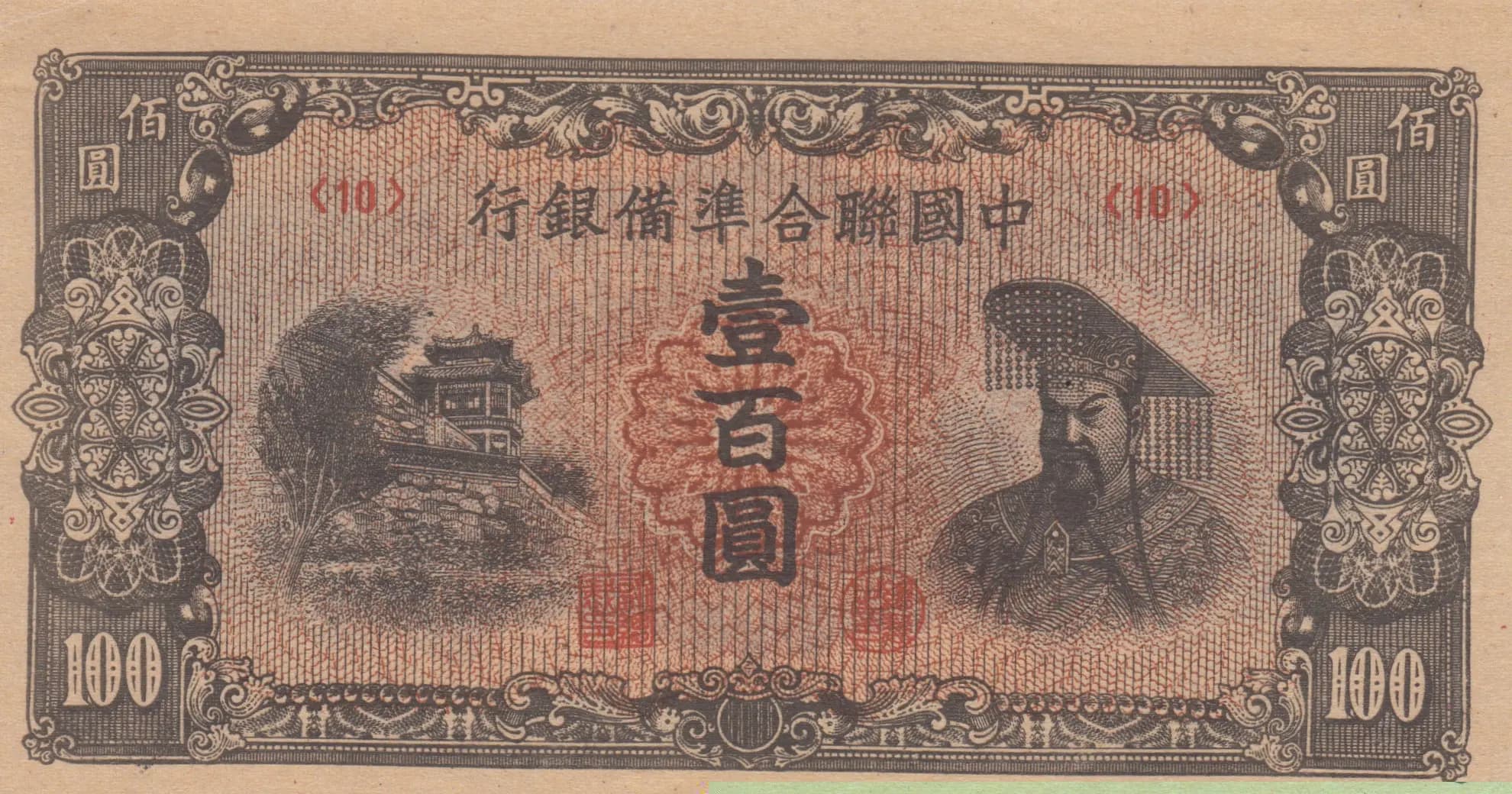
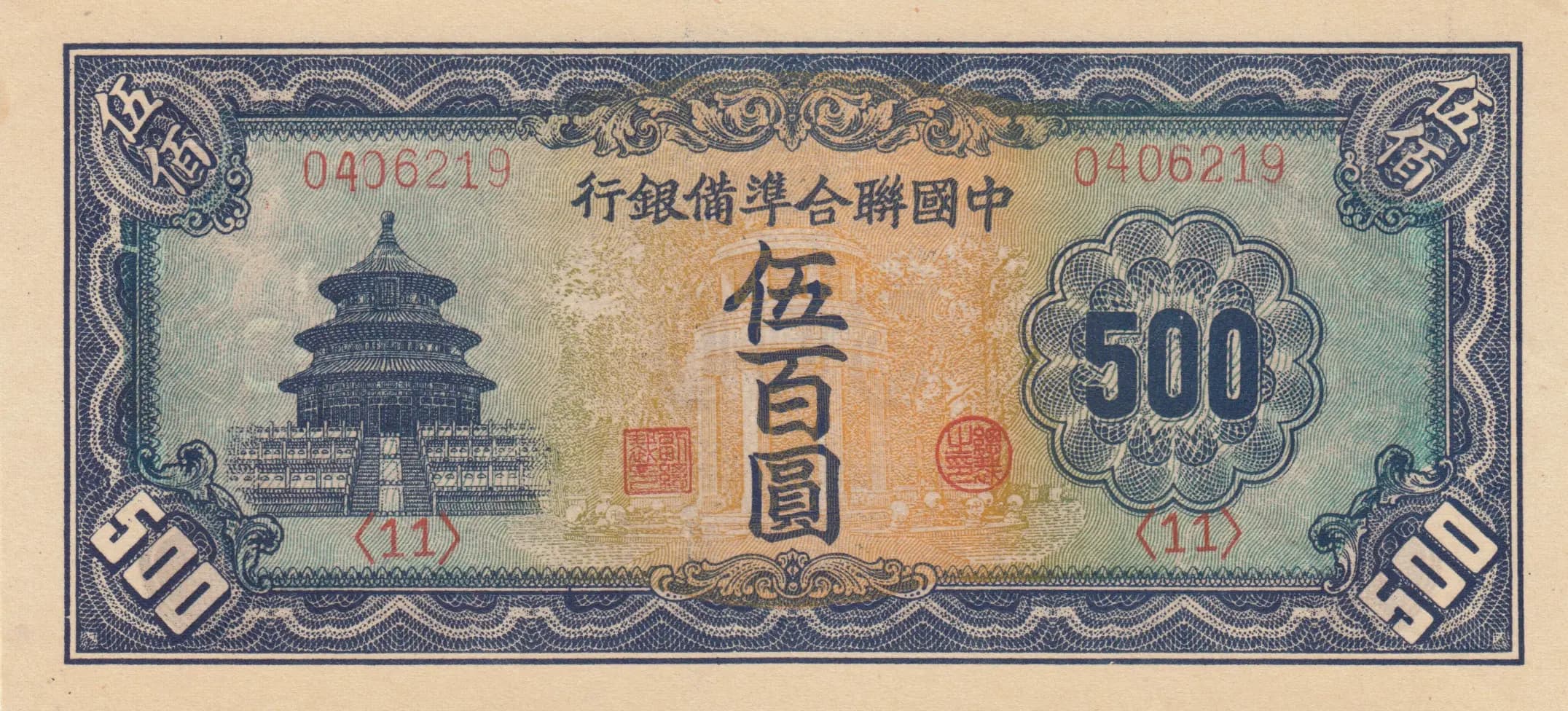
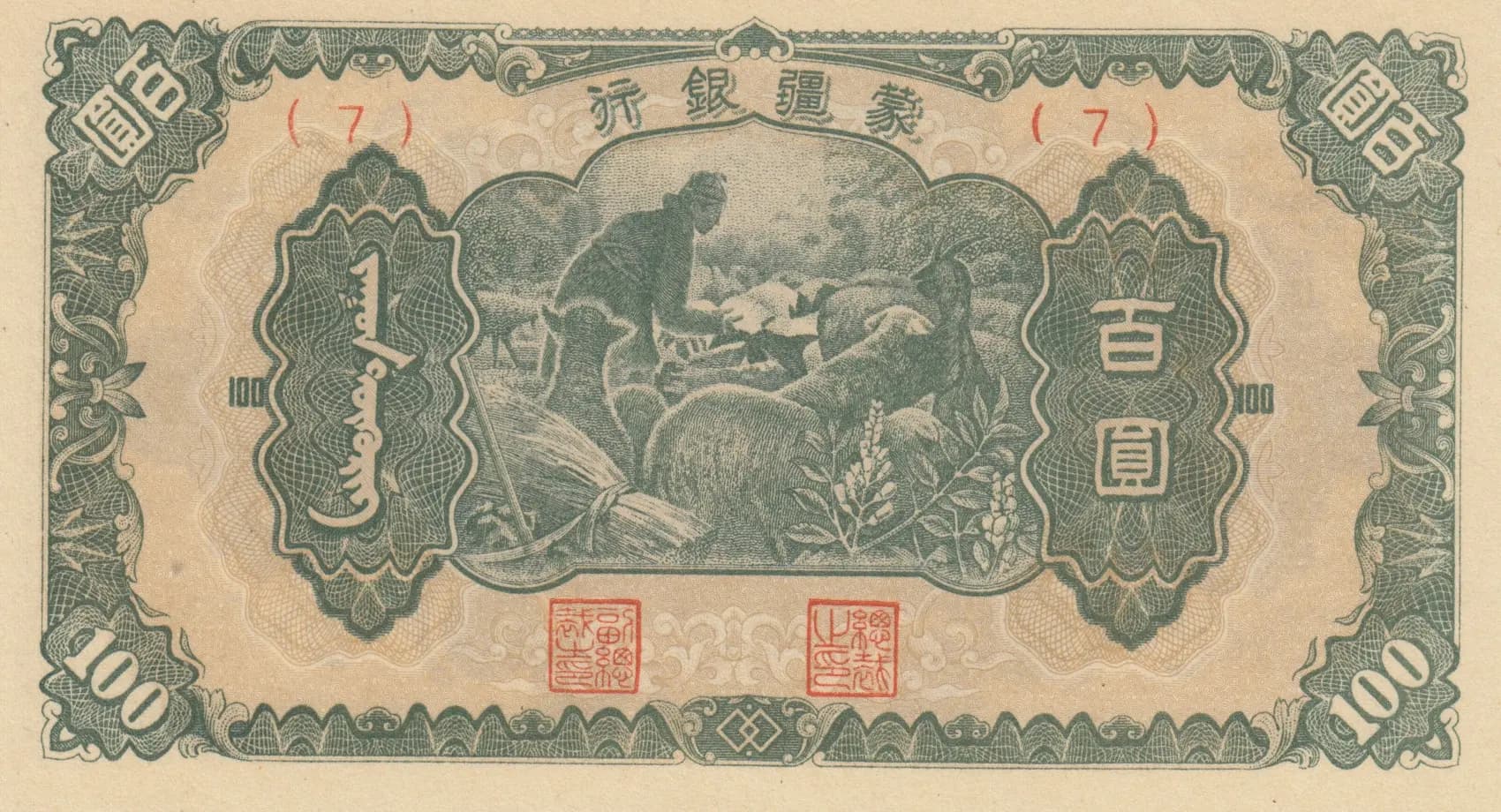
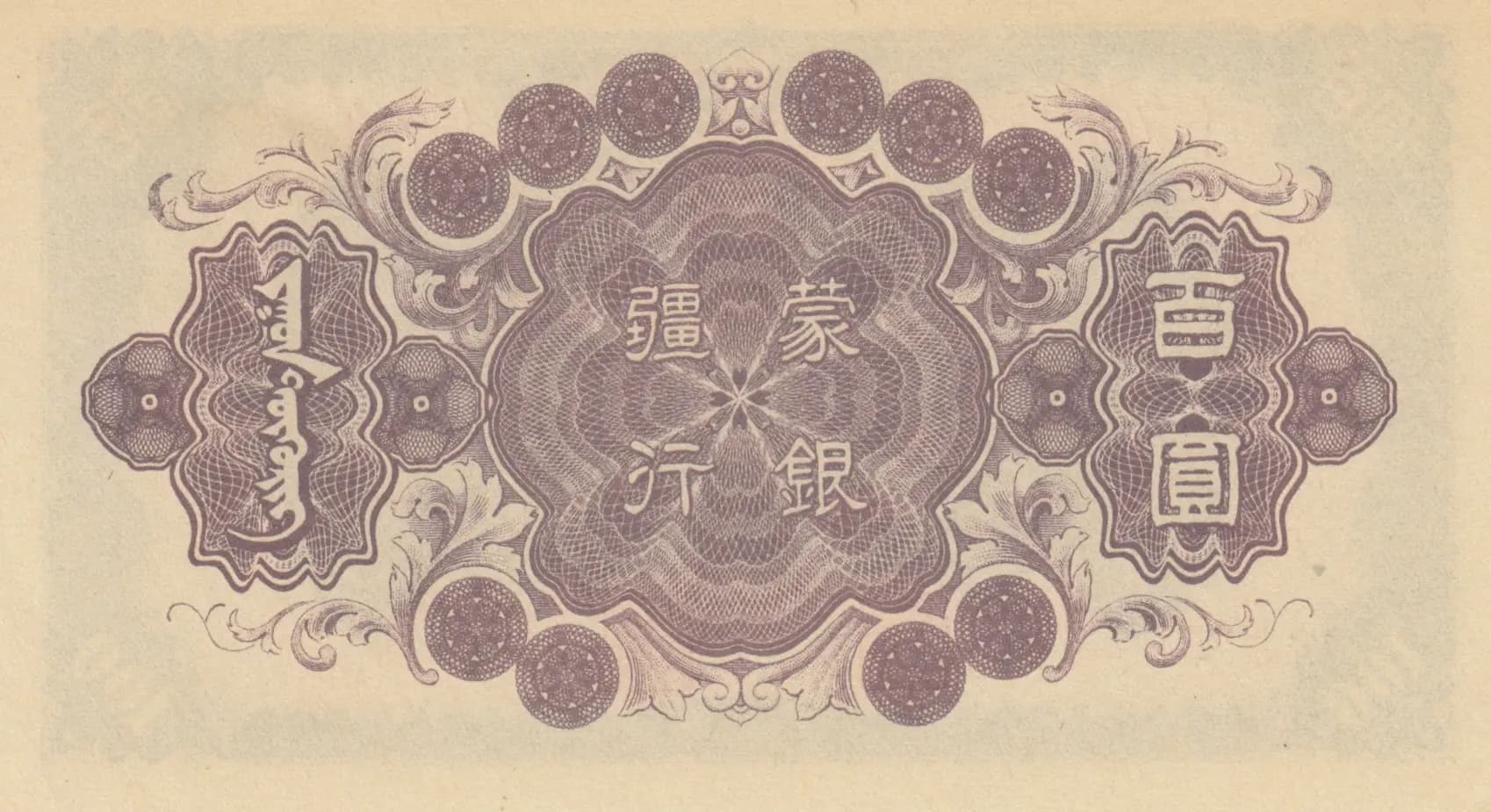
This is a stunning UNC example of the Mengchiang Bank 100 Yuan from 1945, featuring an agricultural-themed design that reflects the wartime Japanese-occupied Mengjiang puppet state's economy. The front displays an intricate vignette of agricultural workers in a harvesting scene rendered in green and beige tones, while the reverse showcases an elaborate purple ornamental design with geometric and floral motifs. The sharp engraving, vivid color work, and complete absence of circulation wear make this an exceptional specimen of this historically significant regional currency.
Common. While Mengjiang puppet state currency is historically significant and collected by specialists in WWII Japanese occupation currencies, the 100 Yuan denomination from 1945 does not exhibit characteristics of extreme rarity. The Mengchiang Bank issued substantial quantities of currency throughout its existence, and 100 Yuan notes in high denominations typically had broader circulation. The UNC grade enhances value relative to circulated examples, but the note itself represents standard production for this final year of issuance.
Mengjiang (Mengchiang) was a Japanese puppet state in Inner Mongolia during the Second Sino-Japanese War and WWII (1937-1945), and the Mengchiang Bank was established to facilitate Japanese economic control of the region. The agricultural imagery prominently featured on the front reflects the puppet state's emphasis on agricultural production as part of Japanese war-effort resource extraction. This note's 1945 issuance date places it at the very end of the war, making it part of the final currency circulation before the collapse of the puppet regime following Japan's surrender.
The front features a central agricultural vignette showing multiple workers engaged in harvesting activities among crops and vegetation, enclosed within an ornate cartouche with elaborate curved borders. Shield-shaped denomination frames appear on both left and right sides containing numerals. Two red square seals with Chinese characters are positioned at the bottom center, characteristic of Chinese and puppet-state currency design. The design employs a sophisticated color palette of green (representing agriculture and vitality), cream/beige backgrounds, and red accents. The reverse abandons figurative imagery in favor of a purely decorative approach, with a central radiant medallion surrounded by eight symmetrical circular ornamental designs composed of geometric and floral motifs rendered in purple/mauve. The entire design showcases fine engraving work with intricate scrollwork, flourishes, and geometric border patterns throughout.
Front: 農業銀行 (Mengchiang Agricultural Bank), 百圓 (One Hundred Yuan), 100, 圓 (Yuan). Back: 農業銀行 (Mengchiang Agricultural Bank), 中央銀行 (Central Bank), 百圓 (One Hundred Yuan), 圓 (Yuan), 1. The back inscriptions suggest dual institutional involvement typical of puppet state financial structures under Japanese oversight.
Intaglio engraving (steel plate engraving) executed with exceptionally fine linework. The complexity of the decorative borders, the delicate details in the agricultural vignette, and the precision of the geometric elements on the reverse are all consistent with high-quality bank note engraving of the period. The sharp impressions and fine line definition observed throughout indicate professional security printing, likely produced by the Japanese Government Printing Bureau or a similar high-security printer operating under Japanese control during the occupation.
No specific signature, serial number, or date varieties are discernible from the visual analysis provided. The note exhibits standard Mengchiang Bank 100 Yuan design elements consistent with 1945 issuance. Potential varieties for this Pick number (P-J110) may include different signature combinations or serial number prefixes, which would require direct examination of serial elements not fully resolved in the provided images.