100 yuan 1938
About This Note
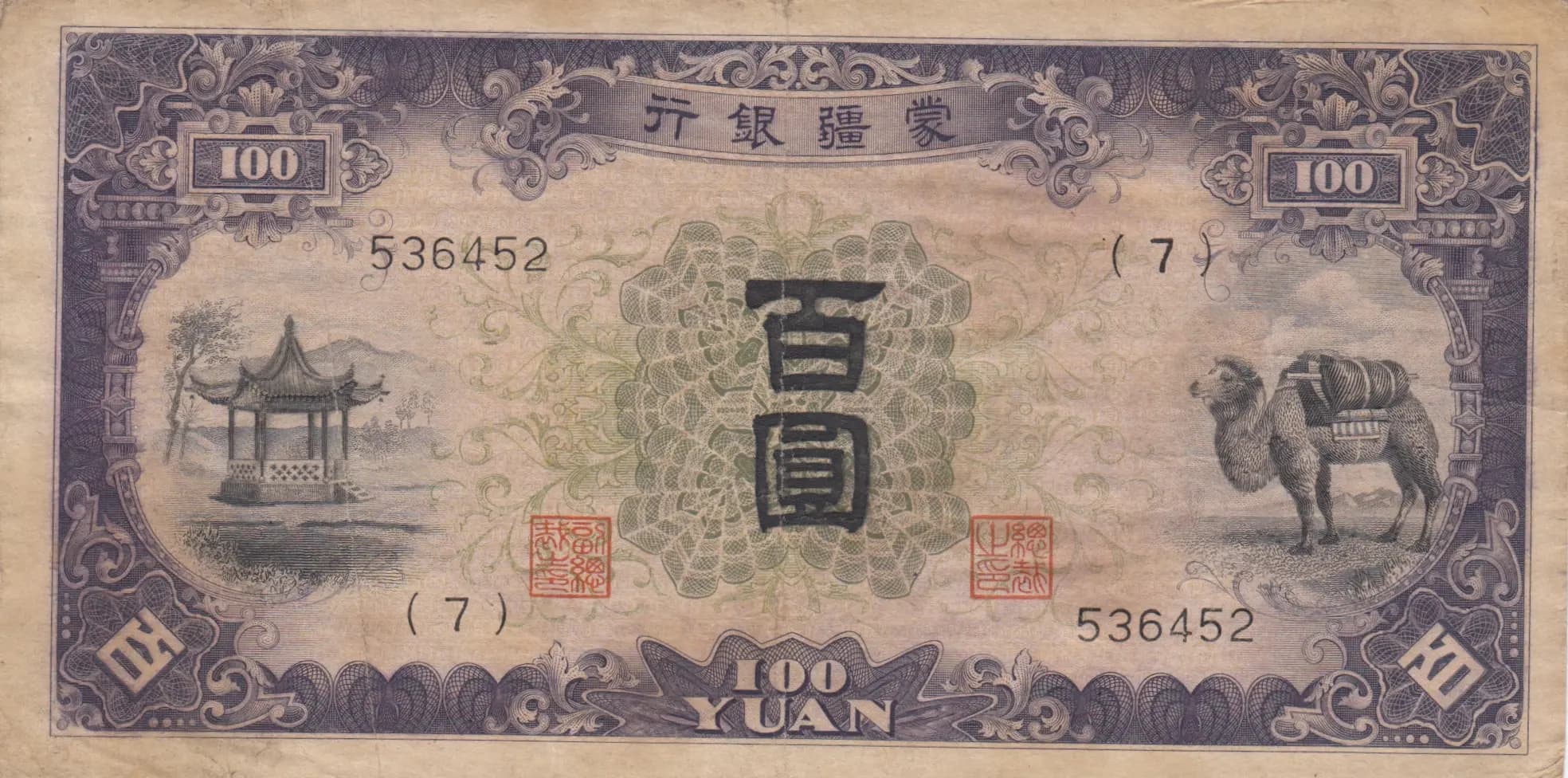
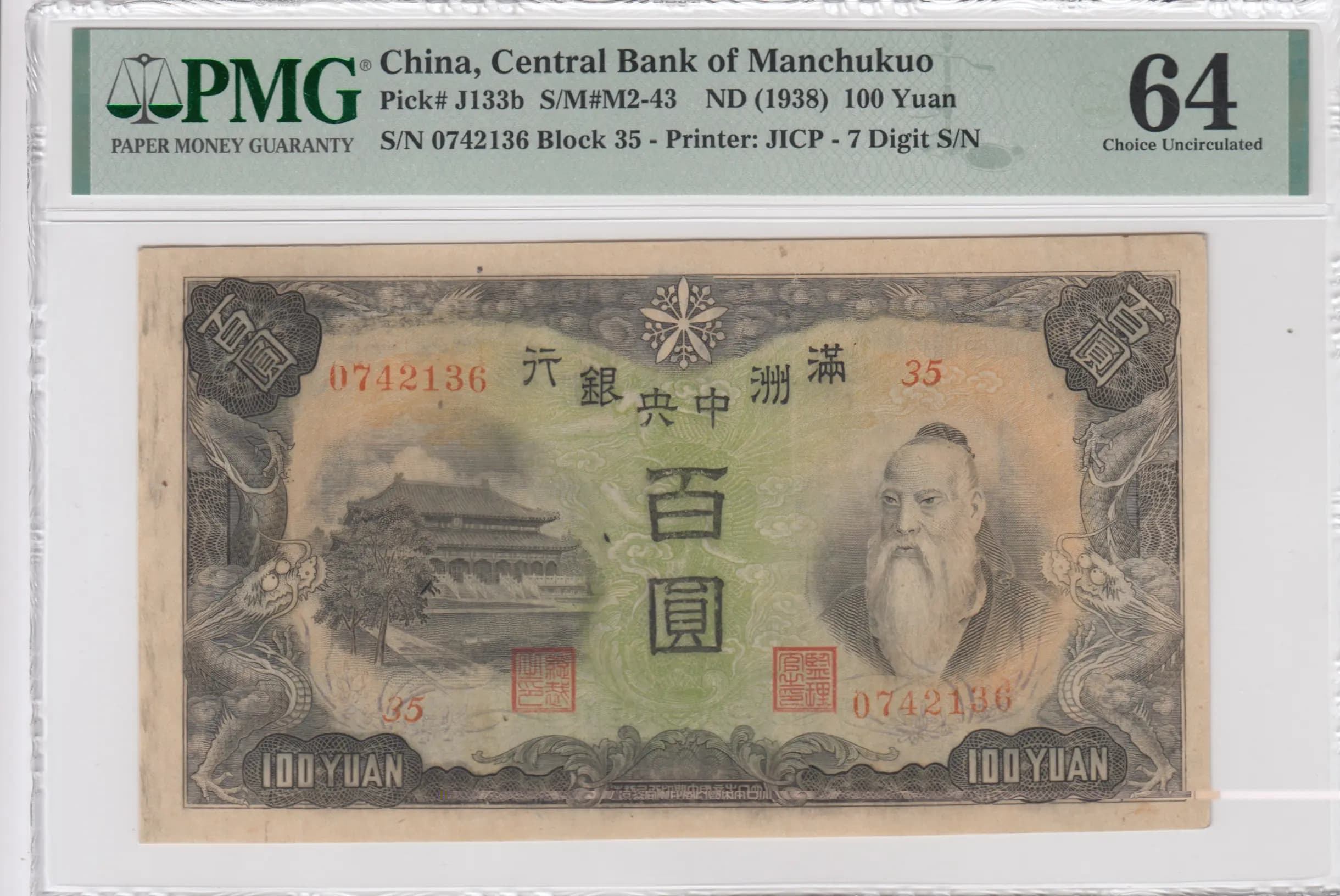
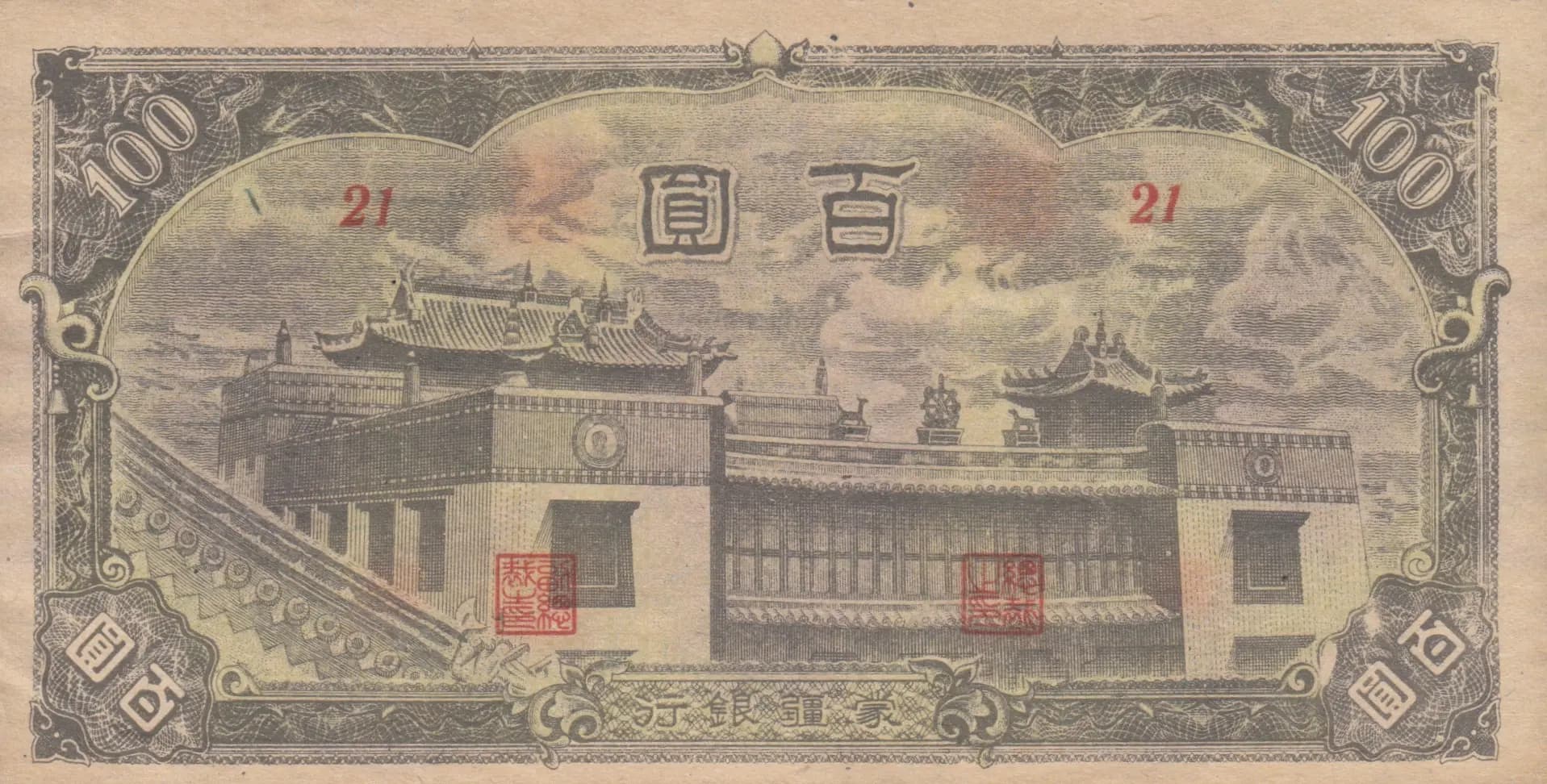
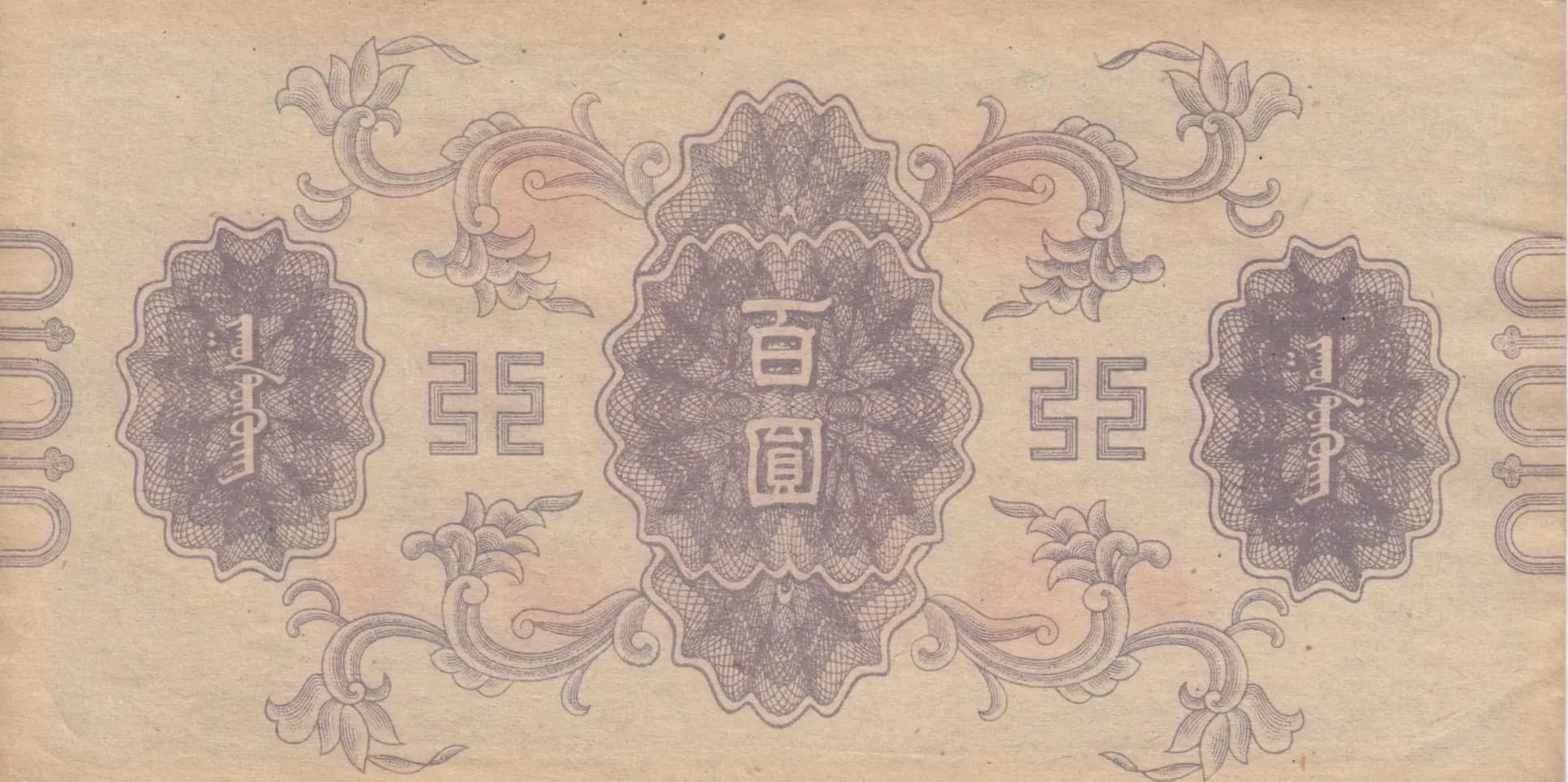
An exceptional AU-grade 100 yuan banknote issued by Mengchiang Bank in 1938, featuring stunning engraved imagery of a traditional Chinese architectural complex on the obverse with characteristic upturned eaves and ornamental roof finials. The reverse showcases an elegant symmetrical design centered on an ornamental medallion flanked by medical caduceus symbols rendered in fine detail. The note displays excellent preservation with crisp printing, minimal wear, and only light age-related patina consistent with an AU grade.
Common. Mengchiang Bank issued multiple denominations across several years during the 1938-1945 occupation period, and 100 yuan notes were among the higher-value denominations produced in substantial quantities for circulating currency. The Pick J111 catalog reference indicates this is a well-documented issue with established collecting interest but no evidence of limited print runs or major recall events. While condition matters significantly for value, the denomination itself is not scarce in the broader context of Chinese occupation currency from this era.
This 1938 Mengchiang Bank note represents a significant period in Chinese monetary history during Japanese occupation of Inner Mongolia. Mengchiang Bank was established as a puppet state financial institution under Japanese control, with notes like this 100 yuan denomination serving as currency in the occupied territories. The traditional Chinese architectural imagery depicted on the obverse—including the multi-building complex with characteristic upturned eaves—reflects an attempt by the occupying authorities to create currency that appealed to the local Chinese population while maintaining Japanese monetary control.
The obverse features an ornate engraved frame with intricate scrollwork borders containing a central vignette of a traditional Chinese palatial or temple complex rendered in meticulous detail. The architectural composition displays multiple connected buildings with characteristic upturned roof eaves, decorative roof finials, and cloud motifs in the background, photographed from an elevated perspective. Red rectangular seals or stamps are visible applied directly to the architectural elements. The reverse employs a symmetrical baroque-influenced design with a prominent central ornamental medallion featuring extensive cross-hatching, flanked by two identical emblems containing caduceus symbols (medical staff intertwined with serpents), surrounded by elaborate floral scrollwork and cartouche ornamentations. The entire design demonstrates sophisticated security printing techniques with fine line work and complex ornamental patterns.
Front side: '100' (Arabic numerals, upper corners), '21' (Arabic numerals, likely a plate number), '百圓' (Chinese: 'one hundred yuan'), '國民政府票' (Chinese: 'National Government banknote'). Back side: '百圓' (Chinese: 'one hundred yuan'), '25' (Arabic numerals, likely a plate or series number).
Steel engraving (intaglio printing), evidenced by the deep, detailed line work, cross-hatching patterns, and fine point details visible throughout both sides. The multiple layers of decorative borders, the precise architectural details, and the complex medallion work are characteristic of high-security banknote engraving. The printer for Mengchiang Bank notes is not definitively indicated on the visible inscriptions, though Japanese-affiliated security printers were likely involved in production during this occupation period.
The plate numbers '21' and '25' visible on the obverse and reverse respectively may indicate different printing plates used in production. The presence of red stamps or seals on the architectural elements on the obverse could indicate a specific sub-variety or printing stage. Further research into Mengchiang Bank documentation would be required to determine if these plate numbers represent documented varieties within Pick J111.