100 yuan 1914
Market Prices
8 salesAbout This Note
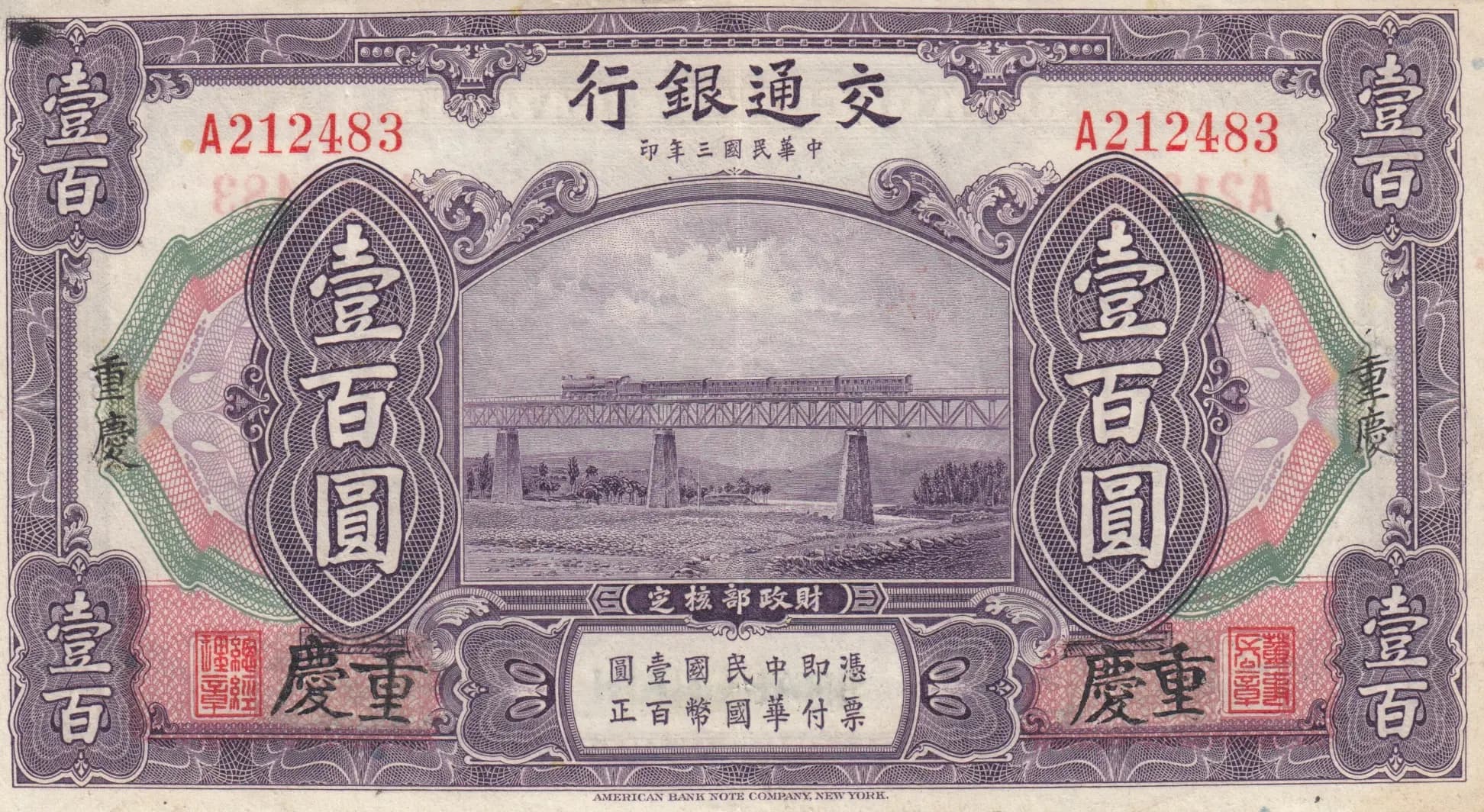
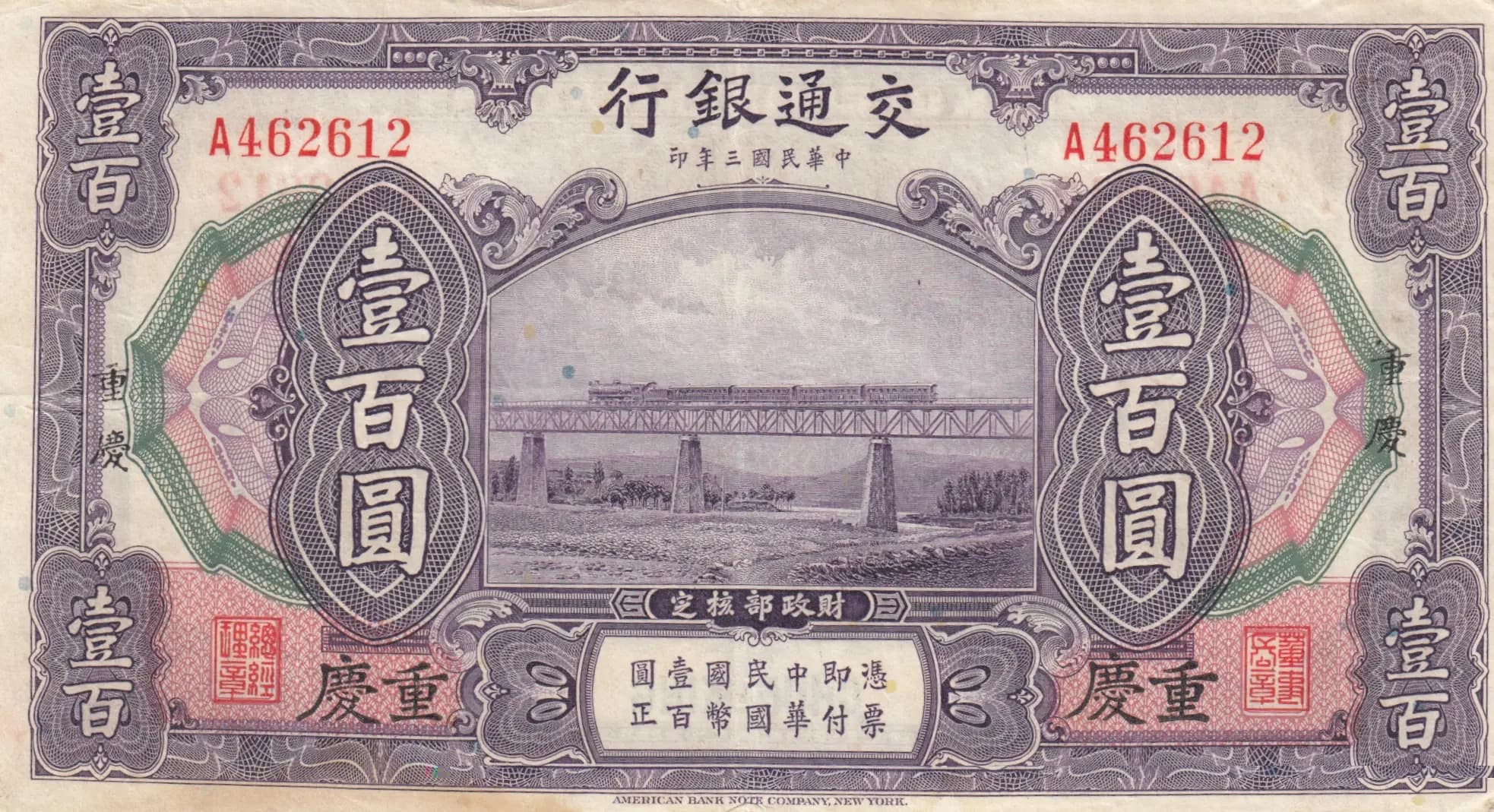
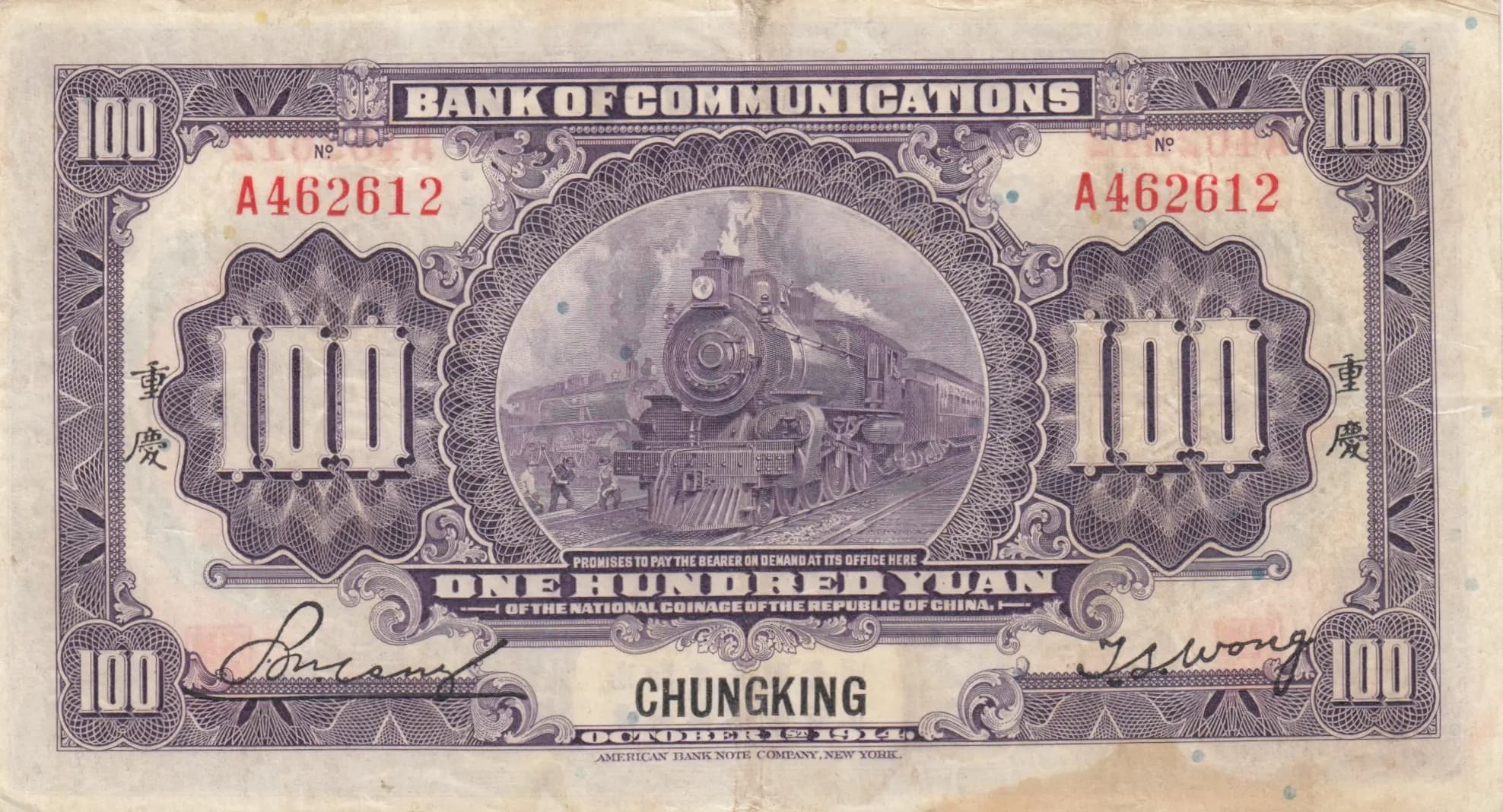
This is a VF-graded 1914 Bank of Communications 100 yuan note, one of the most iconic designs from the early Republican era. The note features a striking steel cantilever bridge on the obverse and a detailed steam locomotive on the reverse, both symbols of China's modernization and industrial progress during the period. The note displays the expected aging characteristics—foxing, yellowing, and creasing—consistent with its century-old provenance, yet maintains good structural integrity without major tears.
Common. The eBay sales history shows steady and consistent market presence with notes regularly selling in the $40-$100 range across multiple condition grades (F to EF) over the past decade. The Pick catalog 2016 value for VF condition is $100, and observed market prices align closely with catalog estimates. The regular appearance of this note in auction markets, combined with multiple sales records at moderate prices, indicates substantial surviving examples and continued collector accessibility. This is a well-known, frequently encountered note from an important issuer.
The Bank of Communications issued this note during the early Republic of China period when the nation was rapidly modernizing its infrastructure. The featured bridge and locomotive imagery reflect the era's optimism about industrial development and technological advancement. The American Bank Note Company's printing of this design—evident from the reverse inscription—demonstrates the reliance of Chinese financial institutions on Western security printing expertise during this transitional period.
This note represents a masterpiece of early 20th-century Chinese currency design. The obverse features a symmetrical composition centered on a multi-span steel cantilever or truss bridge—likely representing a significant engineering achievement from the period—spanning a river landscape with trees and distant shoreline. The bridge serves as both a functional central vignette and symbolic representation of modern infrastructure. Large decorative ovals containing denomination characters flank both sides, with ornate scrollwork and floral patterns filling the corners. The reverse displays an equally impressive head-on view of a detailed steam locomotive with smoke emanating from its stack, representing the railway modernization efforts of the Republic. Large '100' numerals dominate all four corners, with the Chinese characters '重慶' (Chungking/Chongqing) identifying the issuing office. Both sides employ elaborate border designs with fine scrollwork typical of high-security currency engraving. The color scheme combines purple/violet, green, pink/red, black, and cream tones.
FRONT SIDE: '交通銀行' (Bank of Communications); '中華民國' (Republic of China); '壹百圓' (One Hundred Yuan); Serial number 'A462612' (in red, appears twice); Additional Chinese administrative and redemption text regarding currency authentication and payment terms. BACK SIDE: 'BANK OF COMMUNICATIONS' (English); 'CHUNGKING' / '重慶' (Chongqing location); Denomination '100' (in all four corners); 'PROMISES TO PAY THE BEARER ON DEMAND AT ITS OFFICE HERE'; 'OF THE NATIONAL COINAGE OF THE REPUBLIC OF CHINA'; 'AMERICAN BANK NOTE COMPANY, NEW YORK' (printer attribution); Serial number 'A462612' repeated; Date signature information '簽署1924'.
Intaglio engraving (line engraving), evidenced by the intricate fine-line work visible throughout the design, complex border patterns with micro-detail, and the sharp, deeply impressed quality characteristic of intaglio work. The note was produced by American Bank Note Company of New York, one of the world's premier security printers of the era, known for sophisticated anti-counterfeiting techniques. The use of red-colored serial numbers, multiple security pattern layers, and the complexity of the vignettes all indicate professional security printing standards of the period.
This example carries serial number A462612, printed in red on both obverse and reverse. The Pick designation P-120a indicates this is a recognized variety within the Bank of Communications 100 yuan 1914 series. The reference to '簽署1924' (signature dated 1924) on the reverse may indicate a later printing or signature variety, as the denomination is cataloged as 1914 but may have been printed across multiple years. The Chungking office designation distinguishes this from other Bank of Communications branch issues.