100 dollars 1929
Market Prices
1 saleAbout This Note
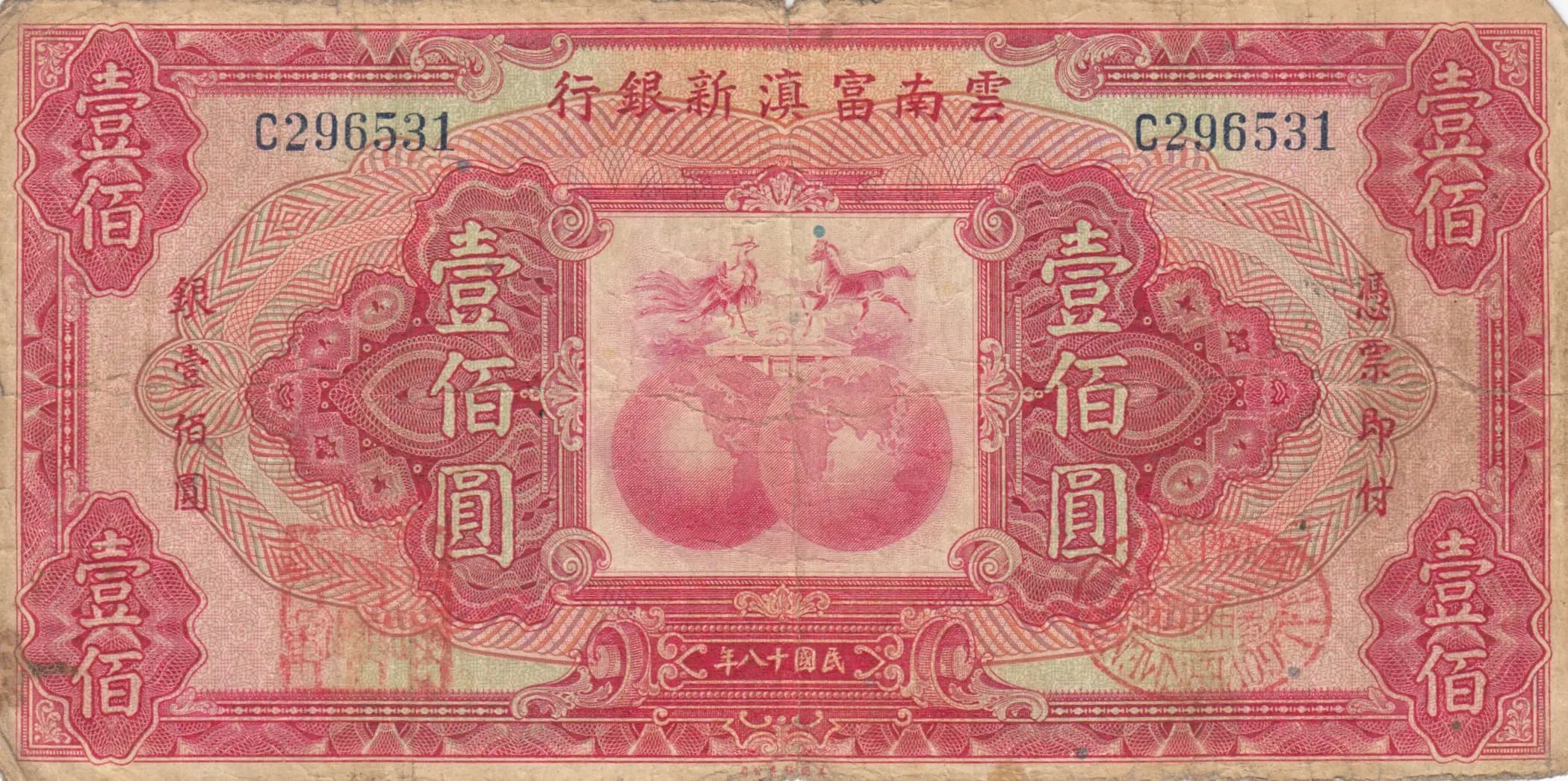
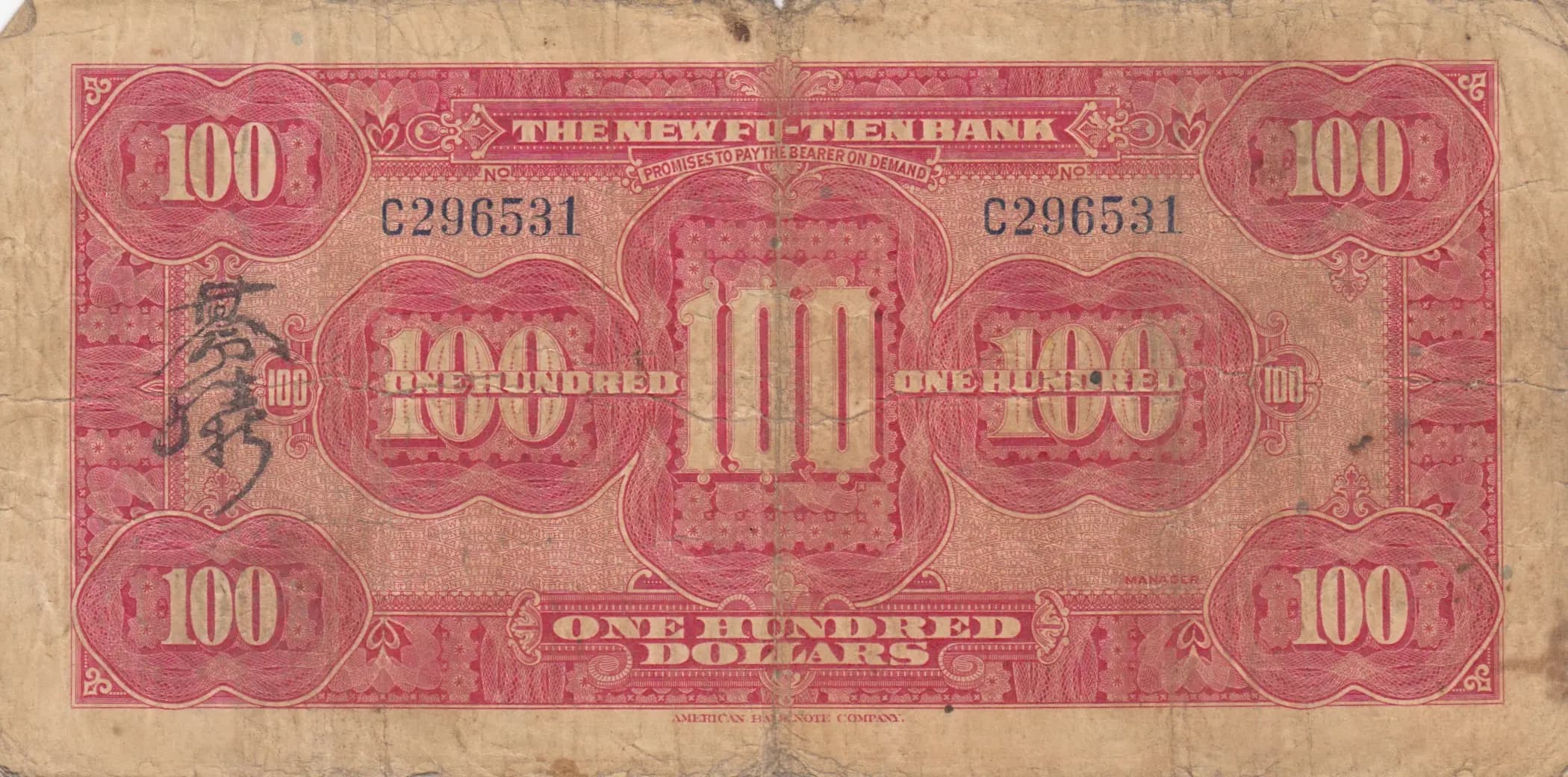
This is a 1929 100-dollar note from the Yunnan Fu-Tien Bank, printed by the American Banknote Company with distinctive pink/rose coloring and elaborate ornamental design. The front features a dynamic central vignette of two horses with a mounted rider, while the back displays large denomination numerals surrounded by classical architectural elements. In VG condition, the note shows expected wear from circulation including creases, foxing, and age-related discoloration, characteristics that authenticate its historical provenance.
common. While regional Chinese banknotes from the 1920s-1930s can vary in availability, this particular note appears in standard circulation grades on the market. The eBay reference price of $35 for a Fine specimen (sold 2025-10-27) establishes modest pricing typical of common circulated examples. The Yunnan Fu-Tien Bank was an established regional issuer with presumably reasonable print runs for such denominations. No evidence suggests this is from a recalled series, short print run, or particularly scarce variety. VG condition examples would typically trade at or below the F-grade price point observed.
The Yunnan Fu-Tien Bank operated during the Chinese Republican period (1912-1949), a time of significant financial decentralization when regional and provincial banks issued their own currency. The bilingual presentation (Chinese characters and English text reading 'THE NEW FU-TI BANK' and 'PROMISES TO PAY THE BEARER ON DEMAND') reflects China's complex relationship with Western financial institutions and the influence of foreign banking practices during this era. The equestrian imagery on the front may reference traditional Chinese symbolism of power and movement, while the architectural elements on the reverse suggest modernity and institutional stability.
The obverse features a dynamic equestrian scene set within a circular vignette as the central design element, depicting two horses in motion with a mounted rider against a sun-like or circular background motif. This is framed by elaborate ornamental borders incorporating dragon-like decorative elements and floral scrollwork, characteristic of Chinese design aesthetics from this period. The reverse displays a more institutional design with large '100' denomination numerals positioned in all four corners within decorative cartouches, and a central ornamental pattern incorporating classical architectural imagery, reflecting the bank's positioning as a modern financial institution. The consistent pink/rose color scheme throughout both sides creates visual unity and would have aided rapid identification during circulation.
FRONT: Serial number 'C296531' appears in blue in upper corners; Chinese characters '壹佰圓' (One Hundred Yuan) appear in ornamental cartouches; Chinese text includes bank designation and date marking. BACK: Serial number 'C296531' repeated in blue; English text includes 'THE NEW FU-TI BANK' at top, 'PROMISES TO PAY THE BEARER ON DEMAND', denomination '100' and 'ONE HUNDRED DOLLARS' in multiple locations within decorative frames; printer attribution 'AMERICAN BANKNOTE COMPANY' is visible.
Intaglio engraving, as evidenced by the fine line work, intricate border patterns, and the crisp detail visible in the ornamental elements and architectural designs. The American Banknote Company credit line confirms this note was produced by one of the world's leading security printers of the era. The precision of the engraved design, particularly visible in the scrollwork and the equestrian vignette, is characteristic of high-security banknote production from this period. Serial numbers appear to have been applied in blue ink subsequent to the primary engraving.
Serial number C296531 is observed on this example. For this Pick number (P-S3000), primary varieties would be distinguished by signature combinations, date variants within the 1929 issue year, and serial number prefix variations. The consistent appearance of the serial number on both obverse and reverse without apparent overprints or special markings suggests this is a standard issue example from the primary printing. No signature variants or unusual overprints are evident from the visual analysis provided.