100 coppers 1922
Market Prices
About This Note
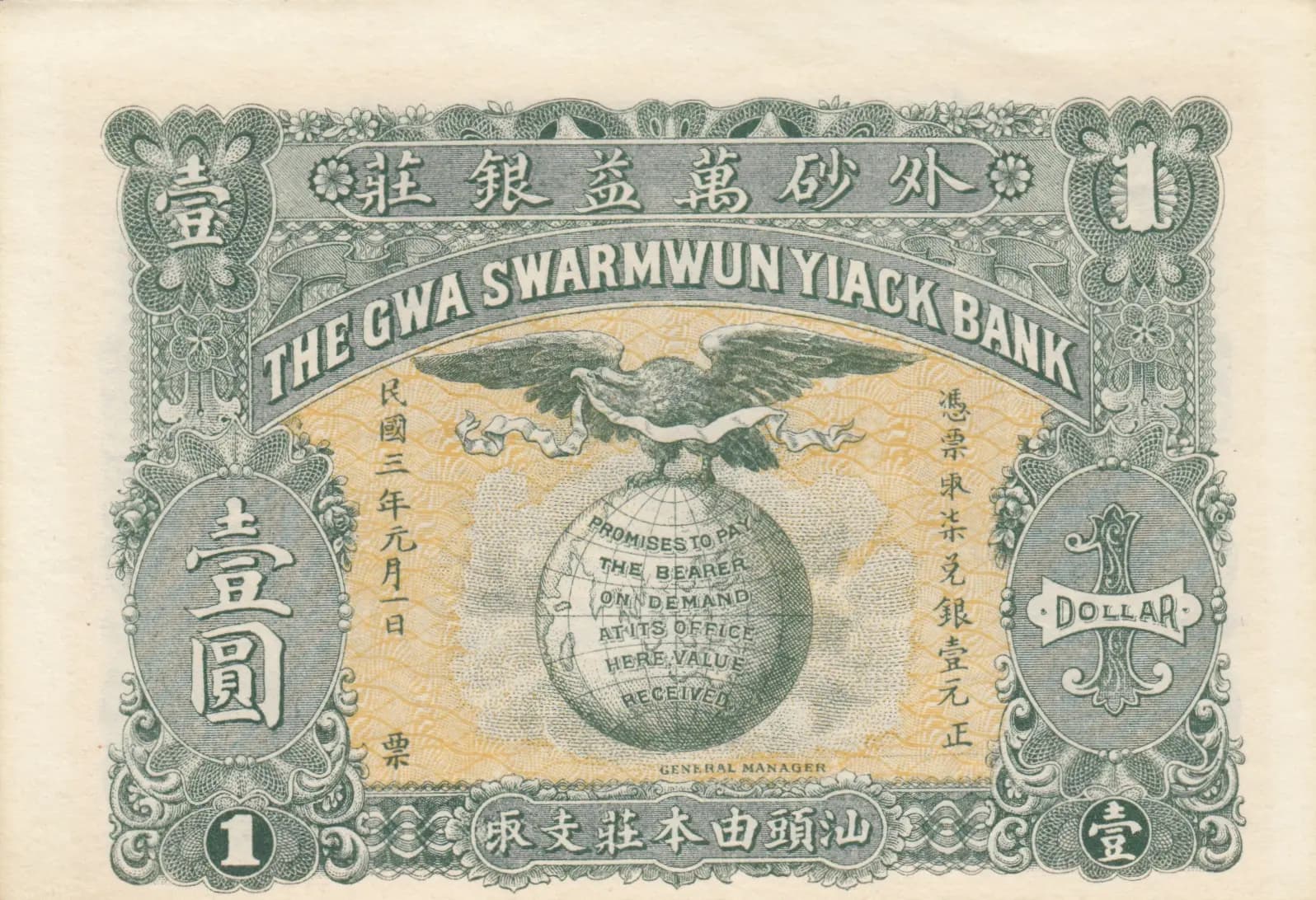
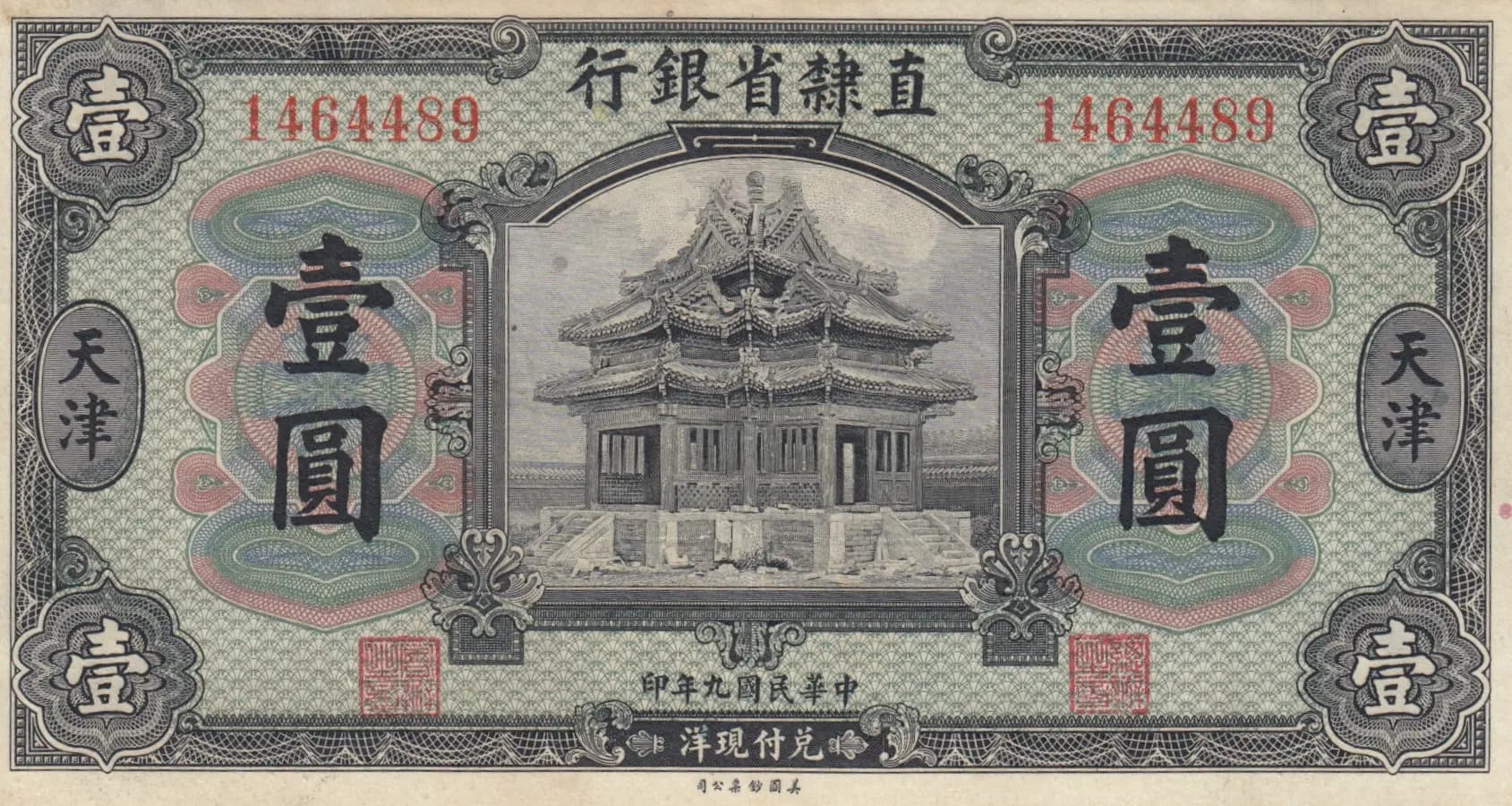
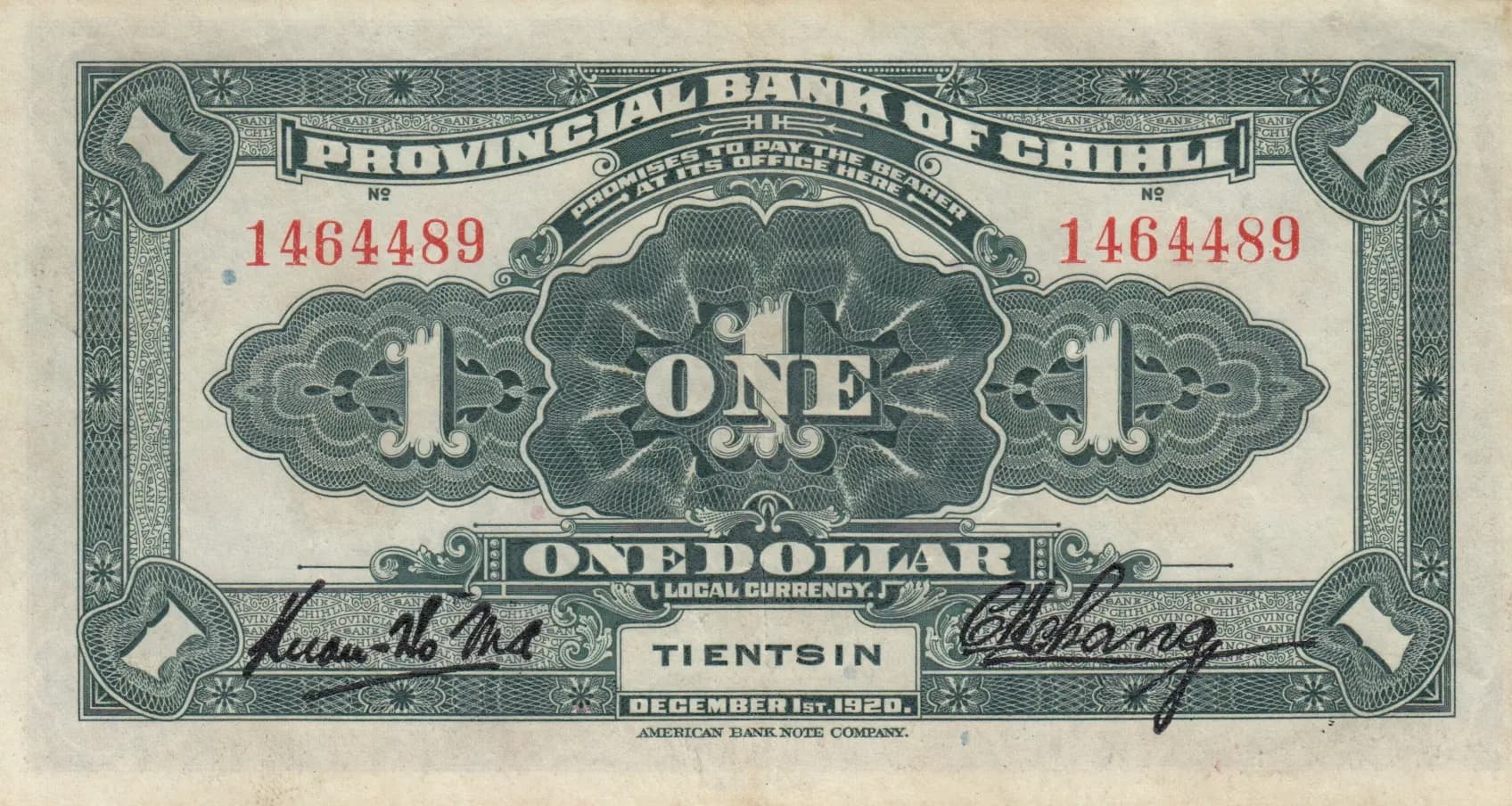
This is an exceptional UNC example of the Provincial Bank of Chihli's 1922 One Dollar note (Pick S1370), issued by the Kung Tsi Bank of Fengtien. The note exhibits pristine condition with sharp, clear printing throughout both sides, no visible creases or tears, and only minimal age-related discoloration. The bilingual design—featuring traditional Chinese pagoda architecture on the obverse and an American heraldic eagle on the reverse—represents a fascinating period of Western influence in Chinese banking during the early Republic era.
Common. While this is a regional Chinese banknote from the early Republic period, the eBay market data shows frequent listings with prices ranging from $15-$44.50 USD for ungraded examples, and a single UNC example at $1,650 USD. The consistent supply of sub-$50 examples indicates this was likely a substantial print run for the Provincial Bank of Chihli. The high UNC price reflects condition rarity rather than scarcity of the issue itself—UNC examples are scarce, but the base note is not rare.
This note was issued during the warlord period of the Chinese Republic, when regional banks held significant monetary authority. The Provincial Bank of Chihli (Zhili Province) operated from Tianjin, a major treaty port, and the December 1920 issuance date reflects the transitional economic environment of post-Imperial China. The inclusion of both Chinese characters (including 'Year 9 of the Republic of China') and English text, along with the American Bank Note Company imprint, demonstrates the heavy reliance on Western security printing expertise and foreign financial systems during this era of Chinese modernization.
The obverse features a central multi-tiered pagoda with ornate decorative roof elements, rendered in the traditional Chinese architectural style, surrounded by intricate geometric patterns, floral motifs, and baroque-style scrollwork. Four decorative circular emblems with Chinese characters occupy the corners. The note is printed in light green, red, black, and gray on a white background. The reverse presents a more Western aesthetic with a central heraldic eagle displayed with spread wings within an ornamental cartouche, flanked by flag symbols in the upper corners. The reverse is rendered in green and black on a light background. Both sides employ fine line engraving and complex guilloche patterns as security features. The bilingual presentation reflects the cosmopolitan nature of early 20th-century treaty port banking in China.
FRONT SIDE: 直隸省銀行 (Provincial Bank of Zhili); 壹圓 (One Yuan); 天津 (Tianjin); 中華民國九年 (Year 9 of the Republic of China [1920]); 克現付洋 (Redeemable in silver); Serial numbers: 1464489 (repeated). BACK SIDE: PROVINCIAL BANK OF CHIHLI; PROMISES TO PAY THE BEARER HEREOF; ONE DOLLAR; LOCAL CURRENCY; TIENTSIN; DECEMBER 1ST, 1920; AMERICAN BANK NOTE COMPANY; Serial numbers: 1464489 (repeated); Signatures: Juan Ho Wei and Globerg.
This note was produced by the American Bank Note Company using intaglio (line engraving) printing techniques, as evidenced by the fine detail work, intricate guilloche patterns, and complex border designs visible on both sides. The note exhibits the characteristic sharp lines and precise security features typical of ABNC's high-security banknote production during the 1920s period.
Serial number observed: 1464489. This note carries dual signatures (Juan Ho Wei and Globerg), which may represent a specific signing variety. The December 1st, 1920 date on the reverse is the authorized issue date; notes from this series may exhibit minor variations in signature combinations. Pick S1370 references specifically the Kung Tsi Bank of Fengtien variant of the Provincial Bank of Chihli series, distinguishing it from other regional bank issues of similar design from the same period.