10 yuan 1922
Market Prices
About This Note
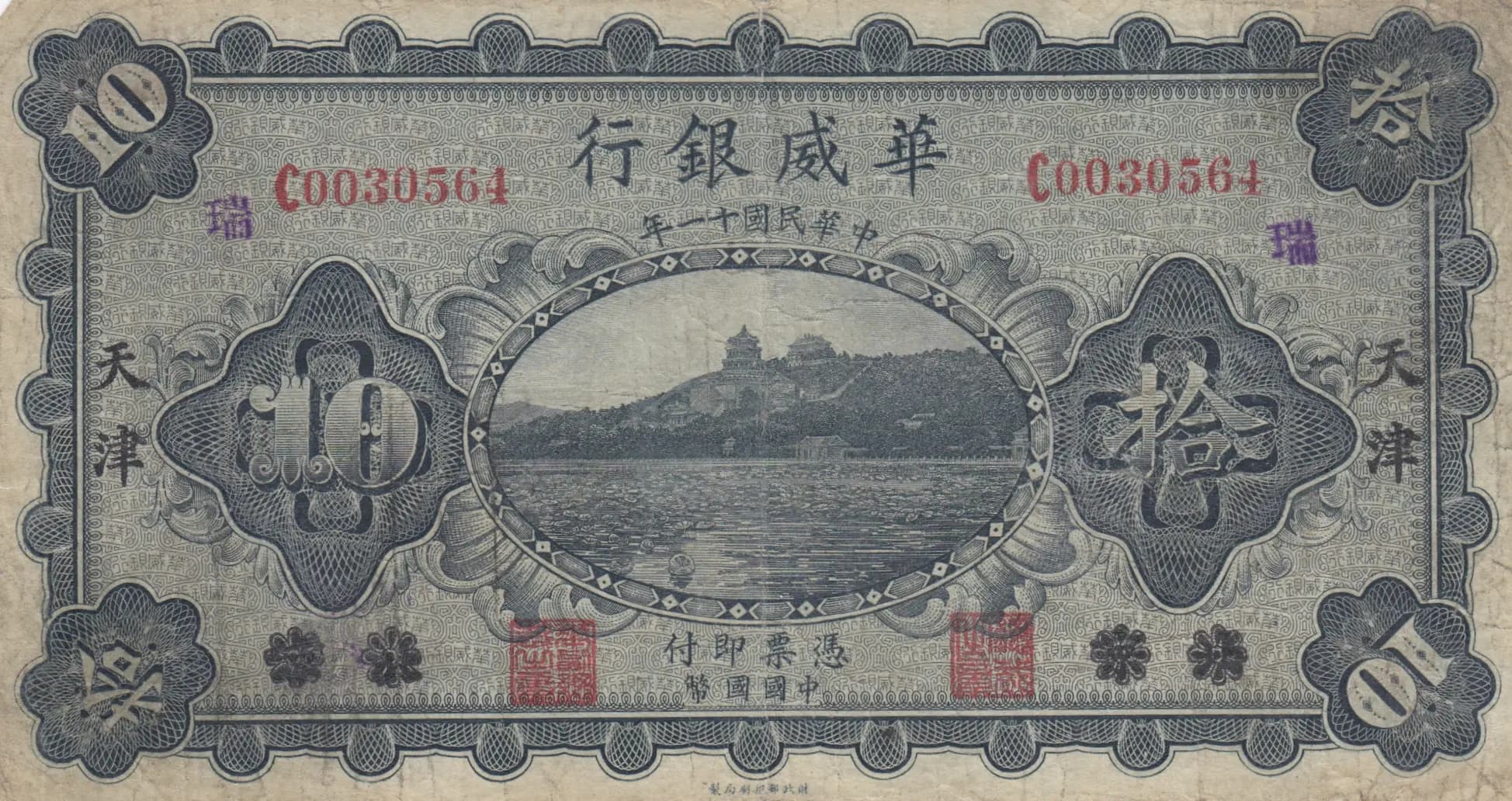
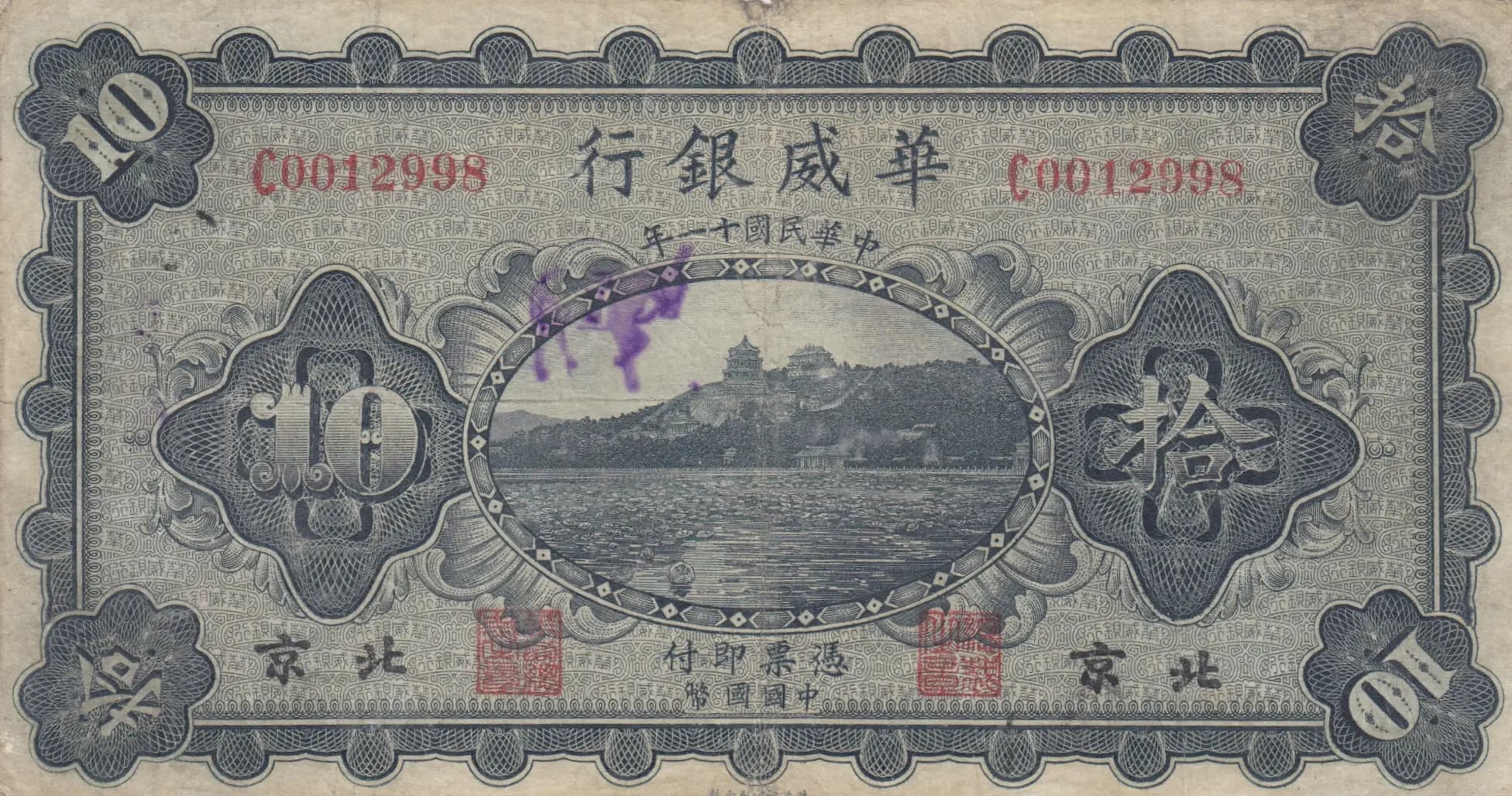
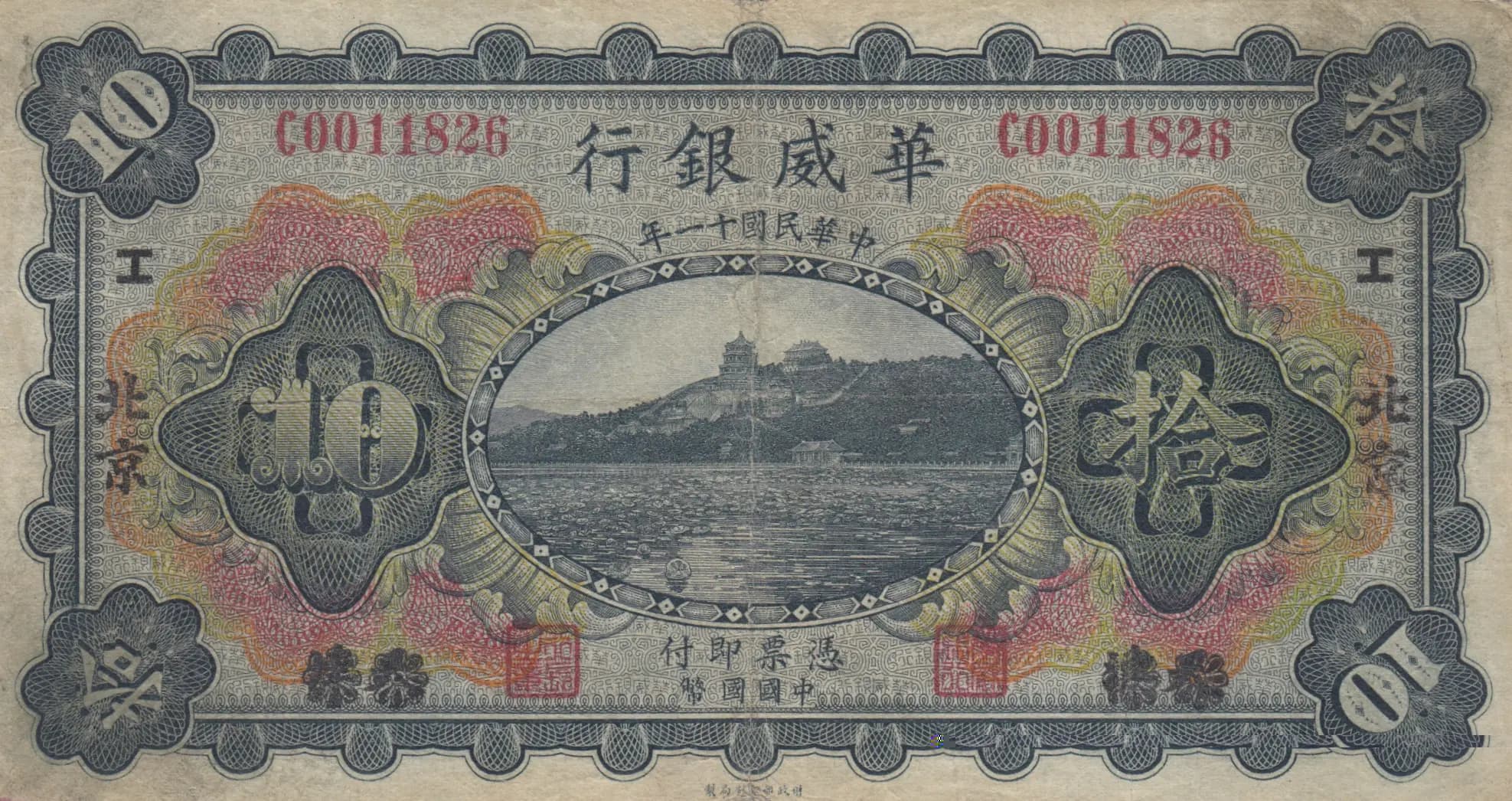
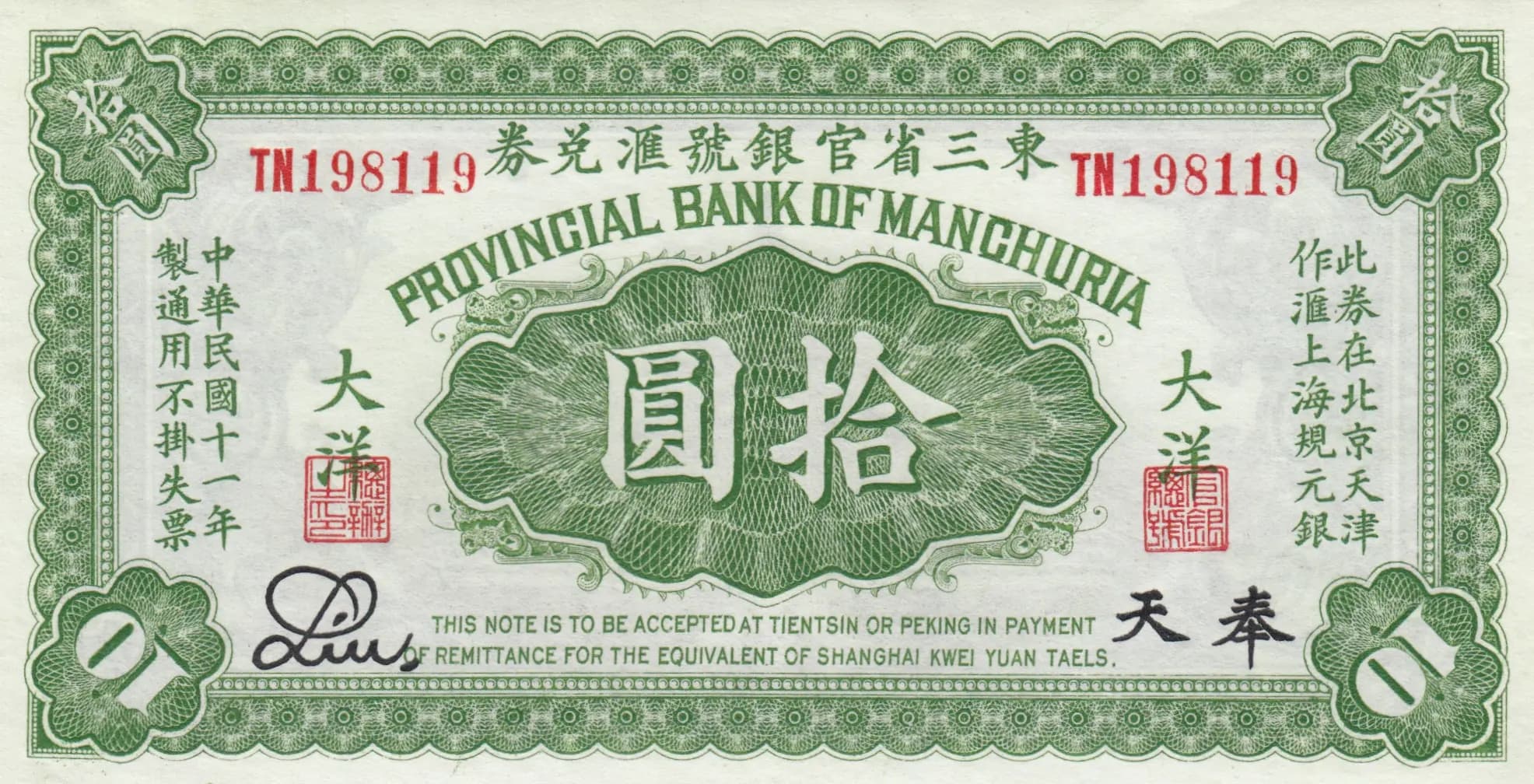
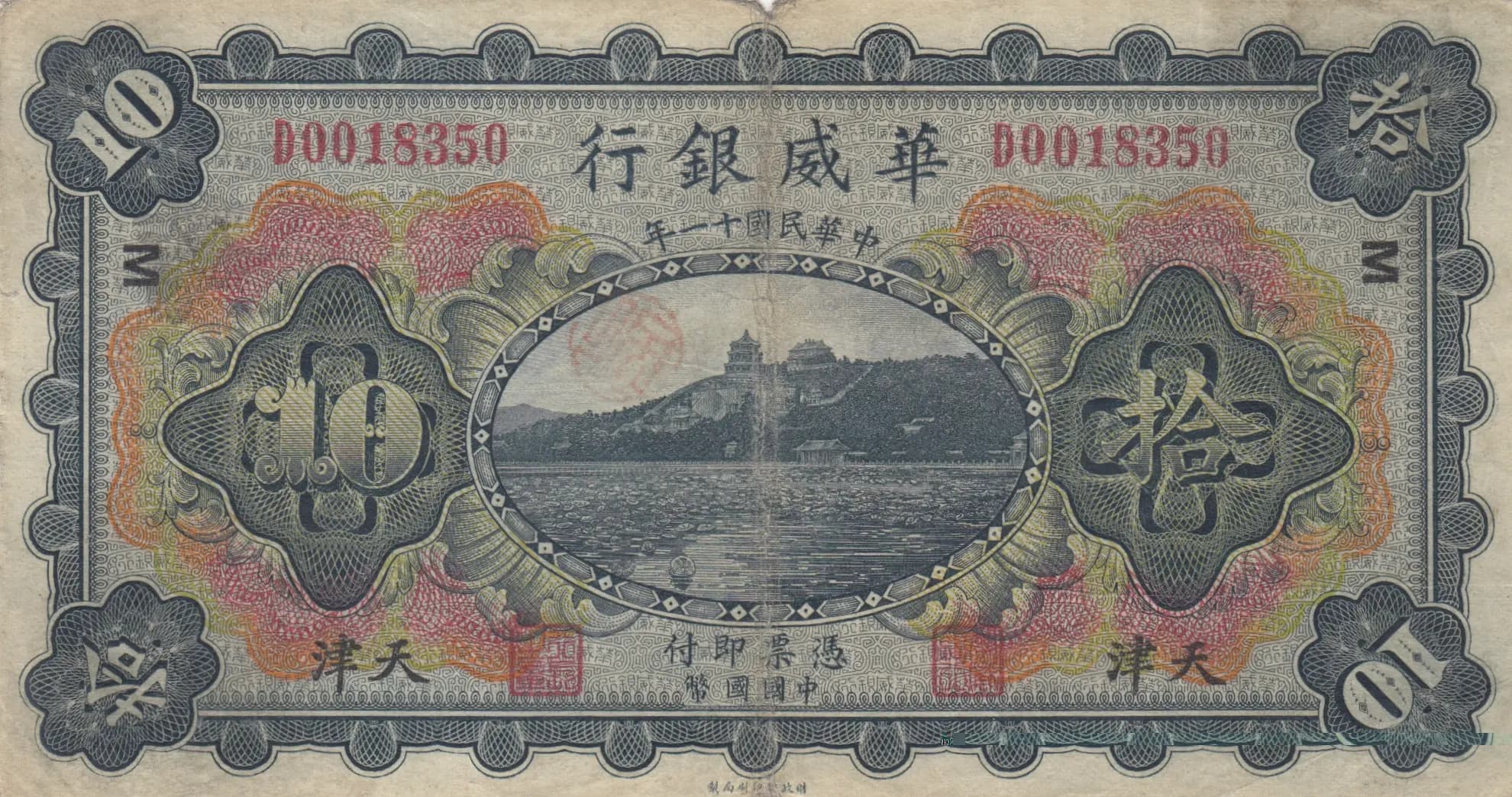
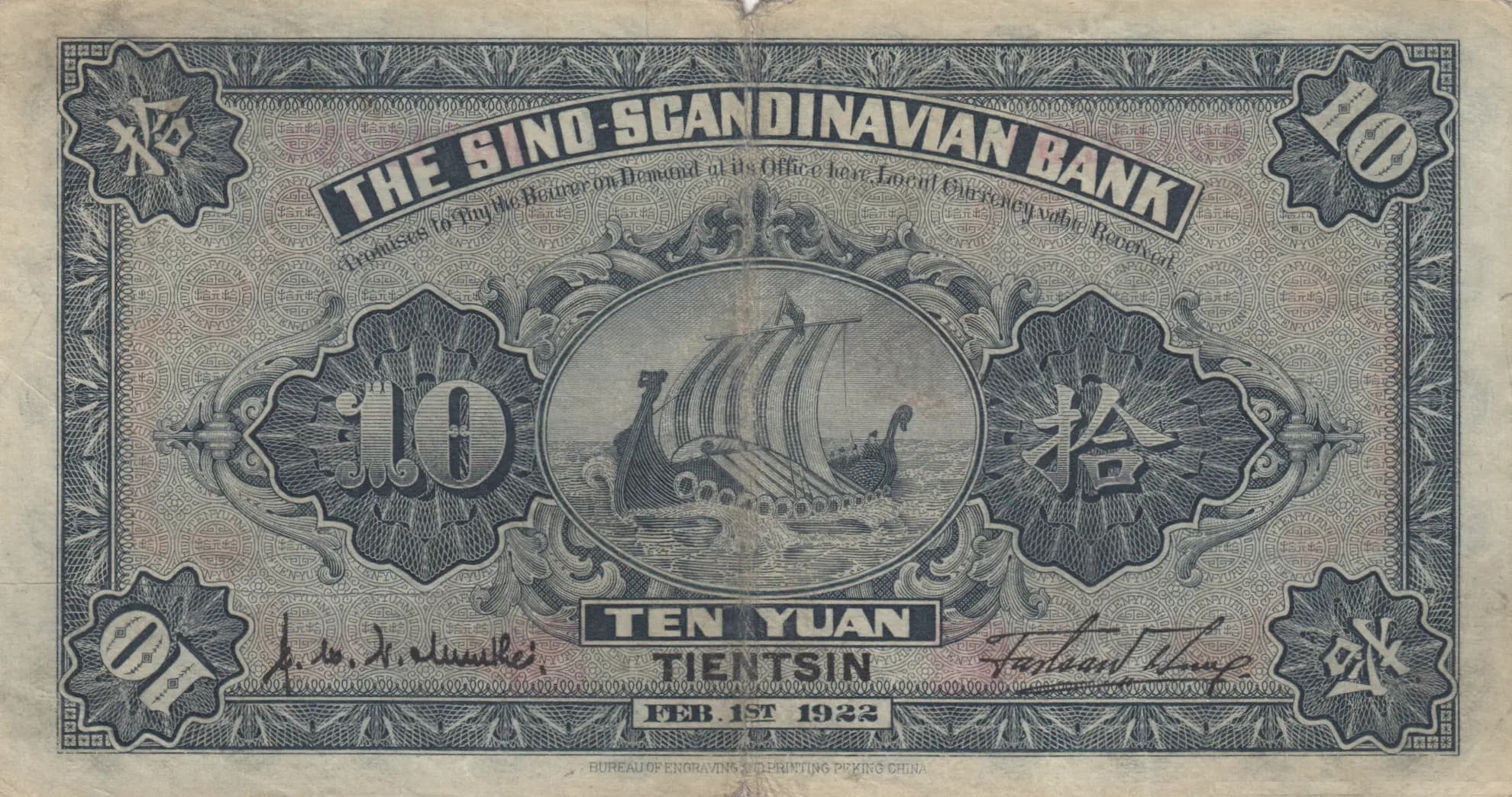
A 10 Yuan note issued by the Sino-Scandinavian Bank on February 1st, 1922, representing a fascinating example of early Republican-era Chinese banking currency with bicultural design elements. The note displays the characteristic features of this issue: a traditional Chinese landscape with pagoda structures on the obverse and a striking Viking ship vignette on the reverse, reflecting the Scandinavian connection of the issuing bank. In Fair condition, the note shows significant age-related wear including foxing, discoloration, creasing, and ink fading, typical of notes from this period that experienced heavy circulation or poor storage conditions.
Common. While the Sino-Scandinavian Bank had a limited operational lifespan (approximately 1922-1924), notes from this issuer appear regularly in the market. eBay price data shows multiple listings across various condition grades, with Fair condition examples typically ranging from $120-$250 USD, well below the threshold indicating scarcity. The relatively modest pricing for this denomination and the availability of multiple examples across different grades suggest adequate print runs for the bank's brief operational period. No historical evidence suggests this note was recalled or that surviving examples are unusually scarce.
The Sino-Scandinavian Bank was a short-lived foreign banking venture operating during China's early Republican period, when numerous foreign and joint-venture banks issued their own currency notes. The bicultural design—combining traditional Chinese architectural imagery (pagoda and waterfront landscape) with Western commercial iconography (the Viking ship representing Scandinavian maritime heritage)—reflects the commercial relationships between China and Northern Europe during the 1920s. Issued from Tientsin (Tianjin), a major treaty port, this note exemplifies the complex financial landscape of post-imperial China before the establishment of unified national currency control.
The obverse features an ornate scalloped border frame containing a central oval vignette depicting a traditional Chinese landscape scene with pagoda or temple structures positioned on a hillside overlooking a water body, rendered in the classical style that would have appealed to Chinese audiences. Decorative dragon or mythical creature motifs flank both sides of the central landscape vignette. The reverse presents a Viking-style sailing vessel with distinctive striped sail upon water, symbolizing the Scandinavian heritage of the issuing bank, flanked by similarly elaborate dragon motifs. Both sides employ elaborate geometric and floral ornamental patterns throughout the border design, with decorative cartouches containing denomination numerals. The color palette utilizes blue, cream/off-white, red/orange, green, and black inks in a multi-color intaglio composition.
FRONT SIDE: '中華民國' (Republic of China) - the official designation of the Chinese state; '華審華銀行' (approximately 'Bank of the Republic of China' or similar banking institution identifier); Serial number 'B001350' appears twice; Production/printing marks in Chinese characters. BACK SIDE: 'THE SINO-SCANDINAVIAN BANK' - English name of the issuing institution; '10' and '拾' (Chinese numeral for ten) - denomination markers; 'TEN YUAN' - English denomination; 'TIENTSIN' - city of issue (Tianjin); 'FEB. 1ST 1922' - issue date; 'BUREAU OF ENGRAVING & PRINTING PEKING CHINA' - printer identification; Two handwritten signatures present at bottom.
High-quality intaglio (engraved) printing executed by the Bureau of Engraving & Printing in Peking (Beijing), as stated on the note. The technique employed multiple color intaglio printing with overlapping colors, creating the complex layered effect visible in the security features. The work displays characteristic intaglio fine line work, intricate geometric and floral engraving patterns, parallel line backgrounds for anti-counterfeiting purposes, and detailed scalloped border engraving. This represents the advanced printing capabilities maintained by the Chinese Imperial/Republican printing bureau for high-security currency applications.
This specific note is identifiable as the February 1st, 1922 issue of the Sino-Scandinavian Bank 10 Yuan (Pick S593). The serial number B001350 is visible on the obverse. Two handwritten signatures appear at the bottom of the reverse, consistent with the signing practices of the period, though individual signature varieties are difficult to distinguish without comparative examples. No major overprints, color variations, or other documented varieties are apparent in this example. The note represents the standard circulation issue of this Pick catalog number from the initial issue date.