10 yuan 1922
Market Prices
About This Note
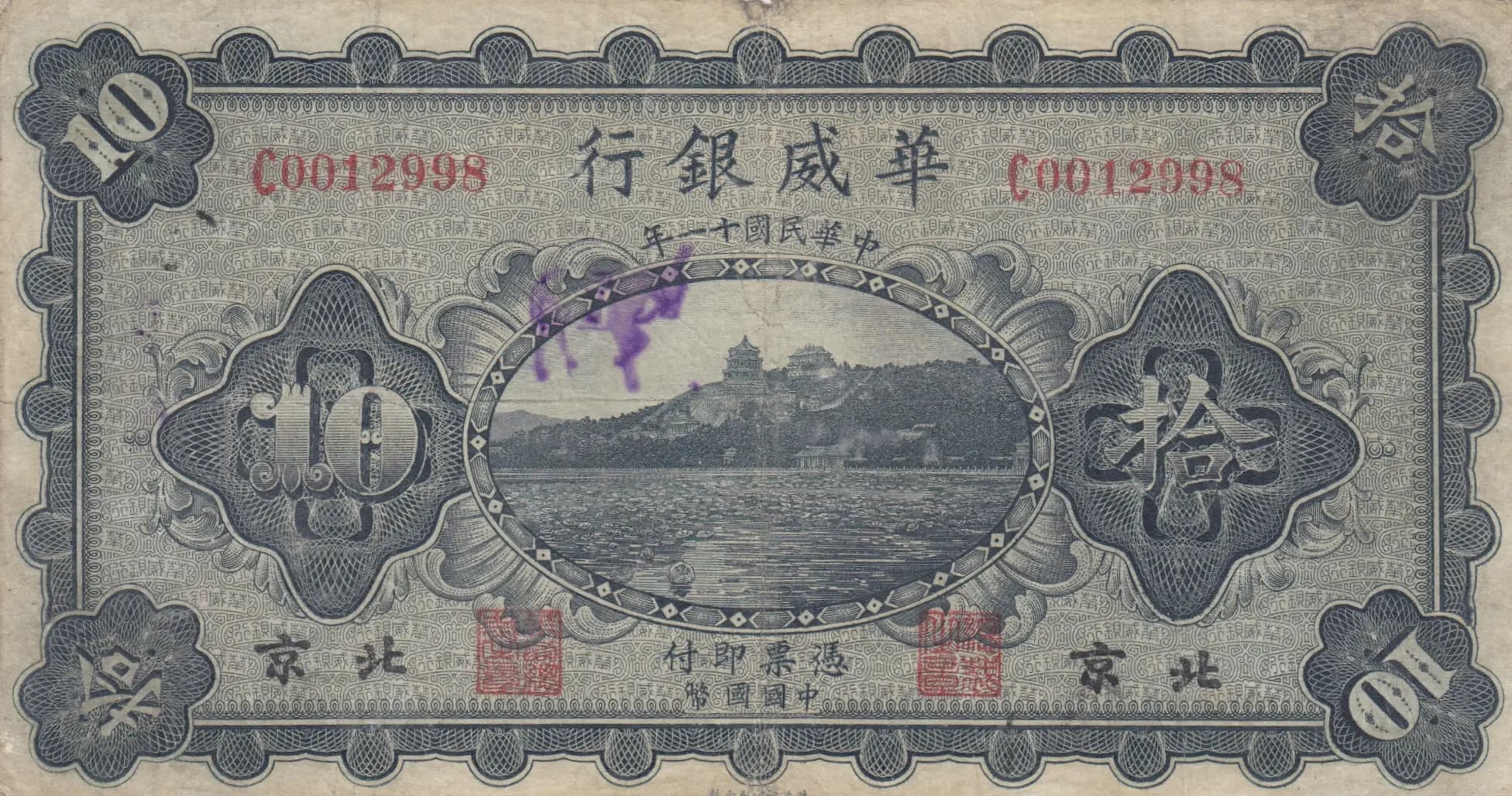
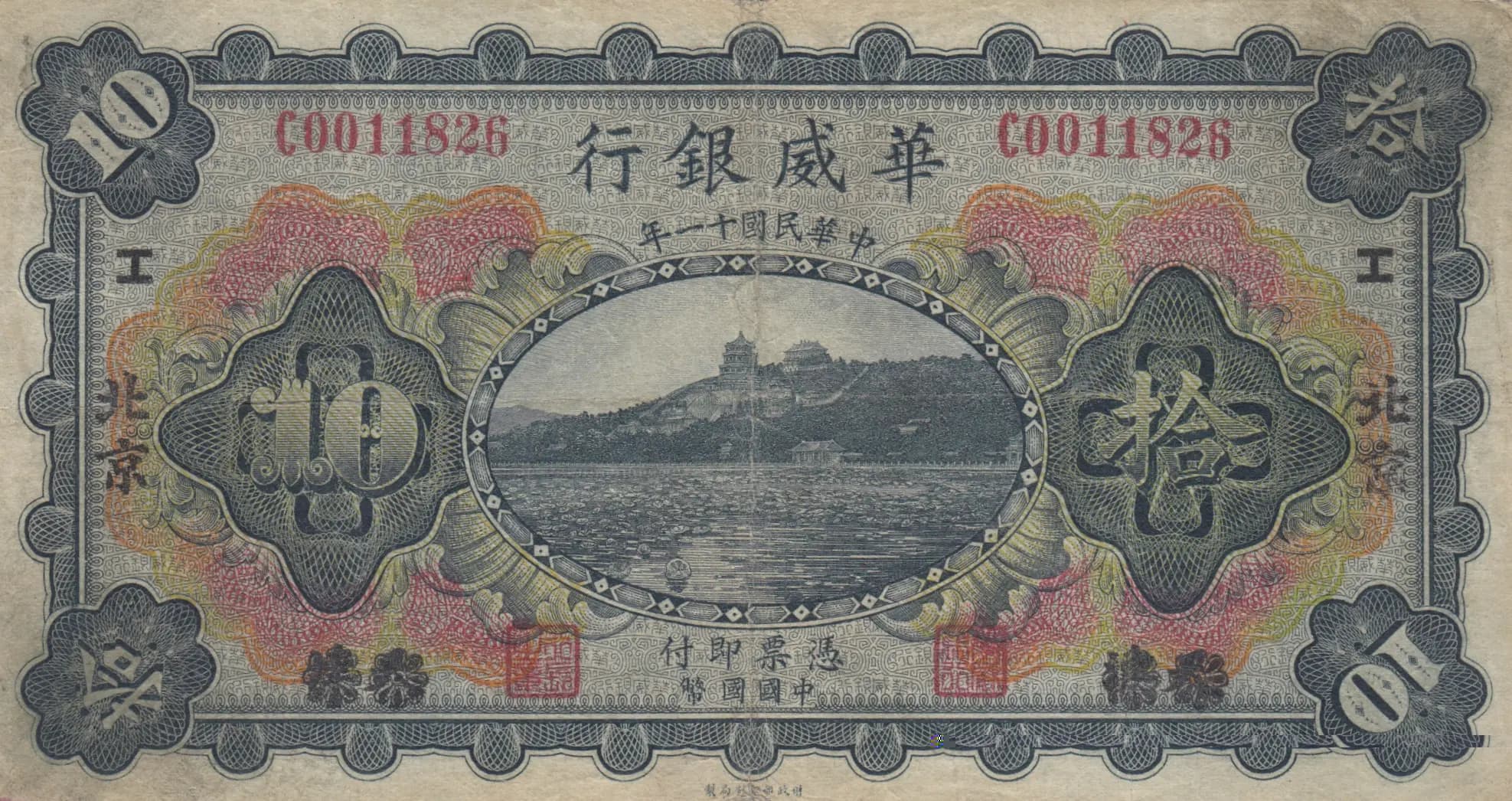
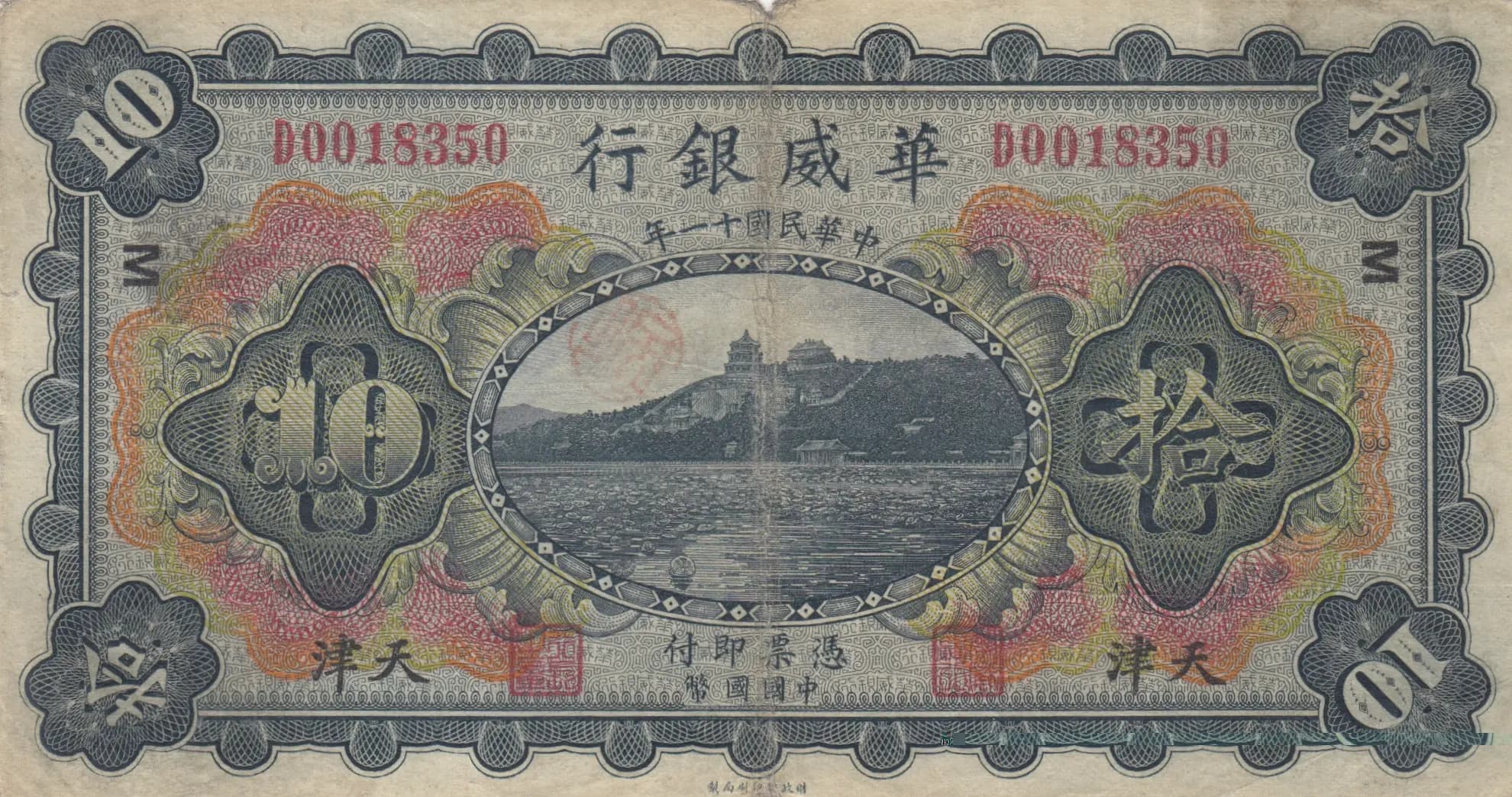
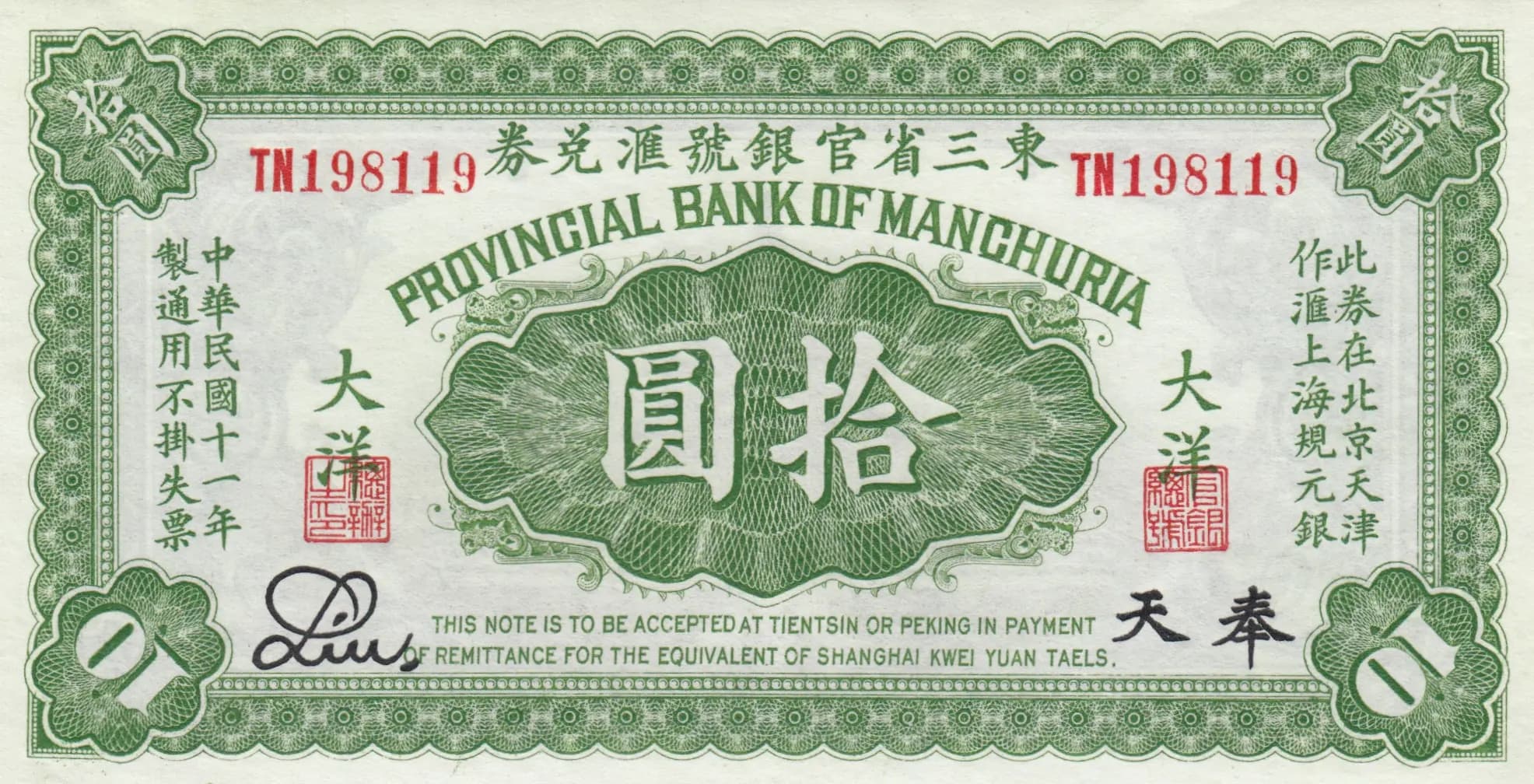
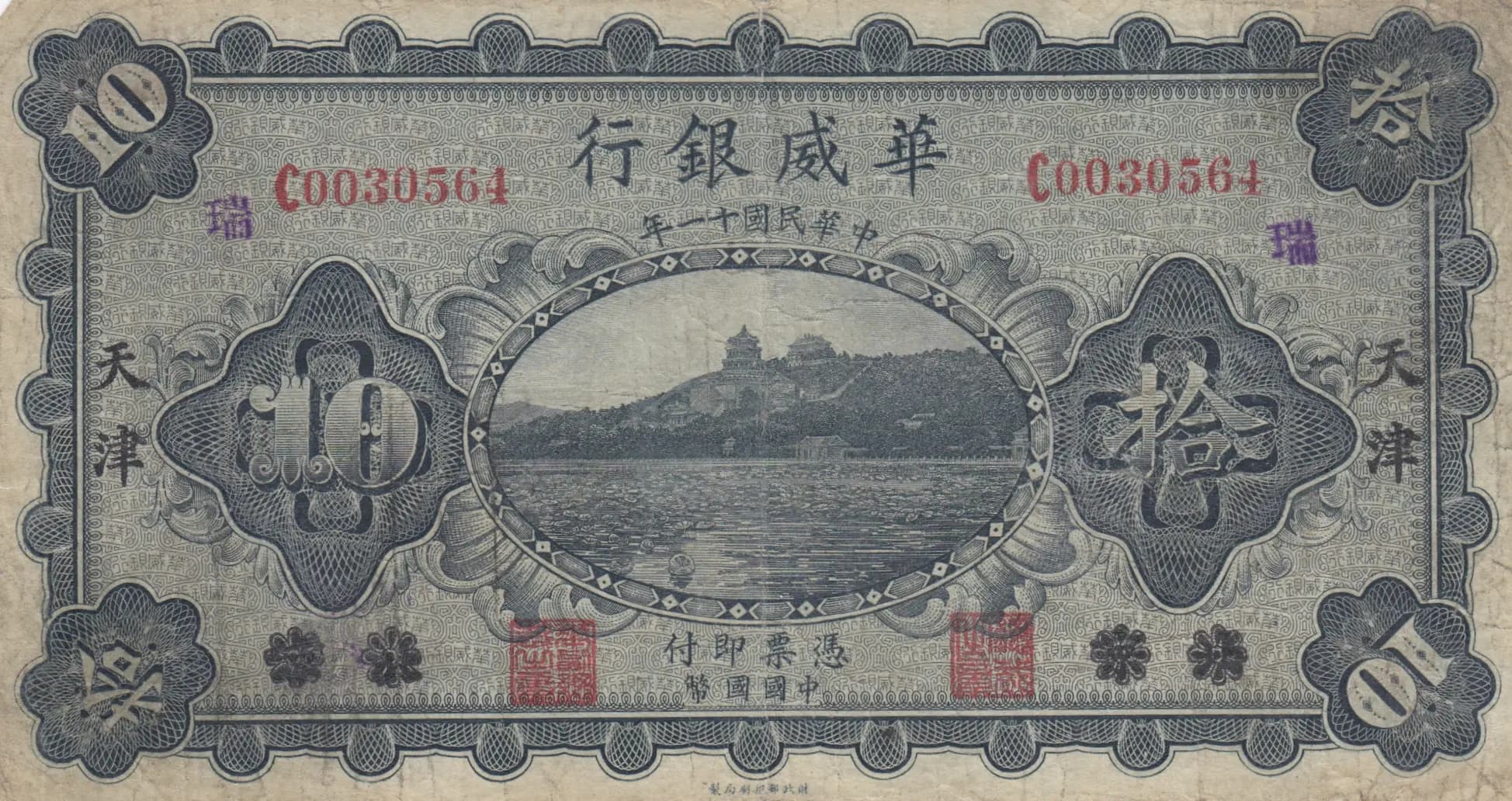
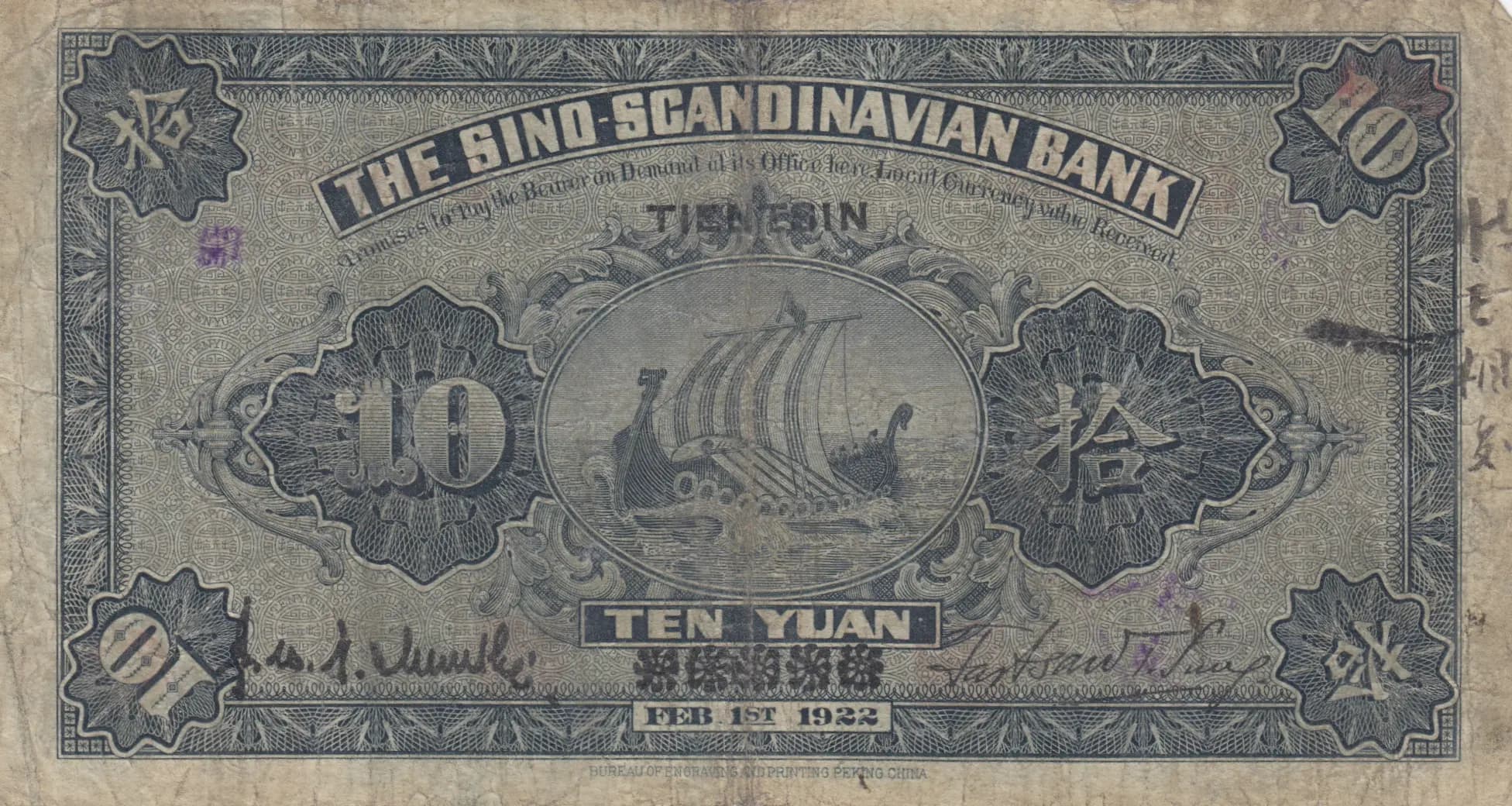
This is a 1922 10 Yuan banknote issued by the Sino-Scandinavian Bank, a short-lived foreign banking institution operating in Republican China. The note features an attractive design with a pagoda/temple landscape vignette on the obverse and a traditional Chinese junk sailing vessel on the reverse, rendered in fine engraved line work with a navy blue and beige color scheme. In Fair (F) condition, the note exhibits moderate age-related wear including creasing, foxing, and surface discoloration consistent with a century-old note, though its structural integrity remains intact.
Common. While the Sino-Scandinavian Bank was a short-lived institution, the eBay market data provided shows multiple examples trading at modest prices, with UNC specimens ranging from $54.99 to $1199.00 USD and lower grades trading in the $120-$250 range. The presence of multiple listings across various condition grades indicates adequate supply in the collector market. Notes regularly appearing at these price points across different conditions are classified as common in numismatic terms, despite being from a defunct foreign bank. The Fair condition example represented here is among the most affordable grades and would be considered common for this Pick number.
The Sino-Scandinavian Bank operated during the early Republic of China period (1912-1949), representing an era of foreign banking influence in China during the warlord period. The note's design reflects the transitional nature of Chinese banknote production at this time, combining Western engraving techniques with traditional Chinese imagery—the pagoda temple symbolizing Chinese cultural heritage and the junk vessel representing maritime commerce and China's naval traditions. The February 1st, 1922 date places this issue during a period of significant political fragmentation in China, when foreign banking institutions were among the few stable financial institutions in the country.
The obverse features a symmetrical design centered on a landscape vignette depicting a traditional Chinese pagoda or temple structure set on a hillside overlooking a body of water with rippled surface details. This vignette is framed by ornate corner medallions containing the denomination numeral '10' and surrounded by intricate floral and geometric border patterns characteristic of early 20th-century security printing. Chinese imperial seals appear in red. The reverse presents an equally ornate design with a central circular vignette of a traditional Chinese junk (sailing vessel) with characteristic multiple sails on water, also framed by decorative corner medallions. The fine line engraving throughout both sides demonstrates high-quality security printing standards. The overall composition is formally symmetrical and classically balanced, typical of European-influenced banknote design of the period.
Front side: '華民國銀行' (China Republic Bank), '中華民國' (Republic of China), 'C0035064' (Serial number). Back side: 'THE SINO-SCANDINAVIAN BANK' (in English), 'TEN YUAN' (denomination in English), 'FEB 1ST 1922' (issue date in English), '大清銀行' (Qing Dynasty Bank - likely a legacy inscription or historical reference). The bilingual nature of the inscriptions reflects the cosmopolitan nature of Shanghai's financial sector during this period.
Intaglio engraving (line engraving), characteristic of high-security banknote production in the early 20th century. The fine line work, intricate border patterns, and sharp detail visible in the vignettes are consistent with professional bank note engraving. The printer details for this specific Pick number are not definitively documented in standard catalogs, but the quality suggests production by an established European security printer, possibly associated with Scandinavian banking interests given the issuer's name. The two-color printing (navy blue and black on beige/tan paper) represents standard security printing practices of the 1920s.
Serial number 'C0035064' with the 'C' prefix is noted on this specimen. Sino-Scandinavian Bank notes may exist with different serial number prefixes (A, B, C, etc.) representing different printing batches. The presence of purple/violet handwriting or stamp marks on both the front and back sides suggests this note may have passed through institutional or commercial use with administrative notation. No overprints are visible on this example. Without access to comprehensive serial number distribution data for this issuer, specific variety classification beyond the serial prefix cannot be definitively established from this single specimen.