10 yuan 1943
About This Note
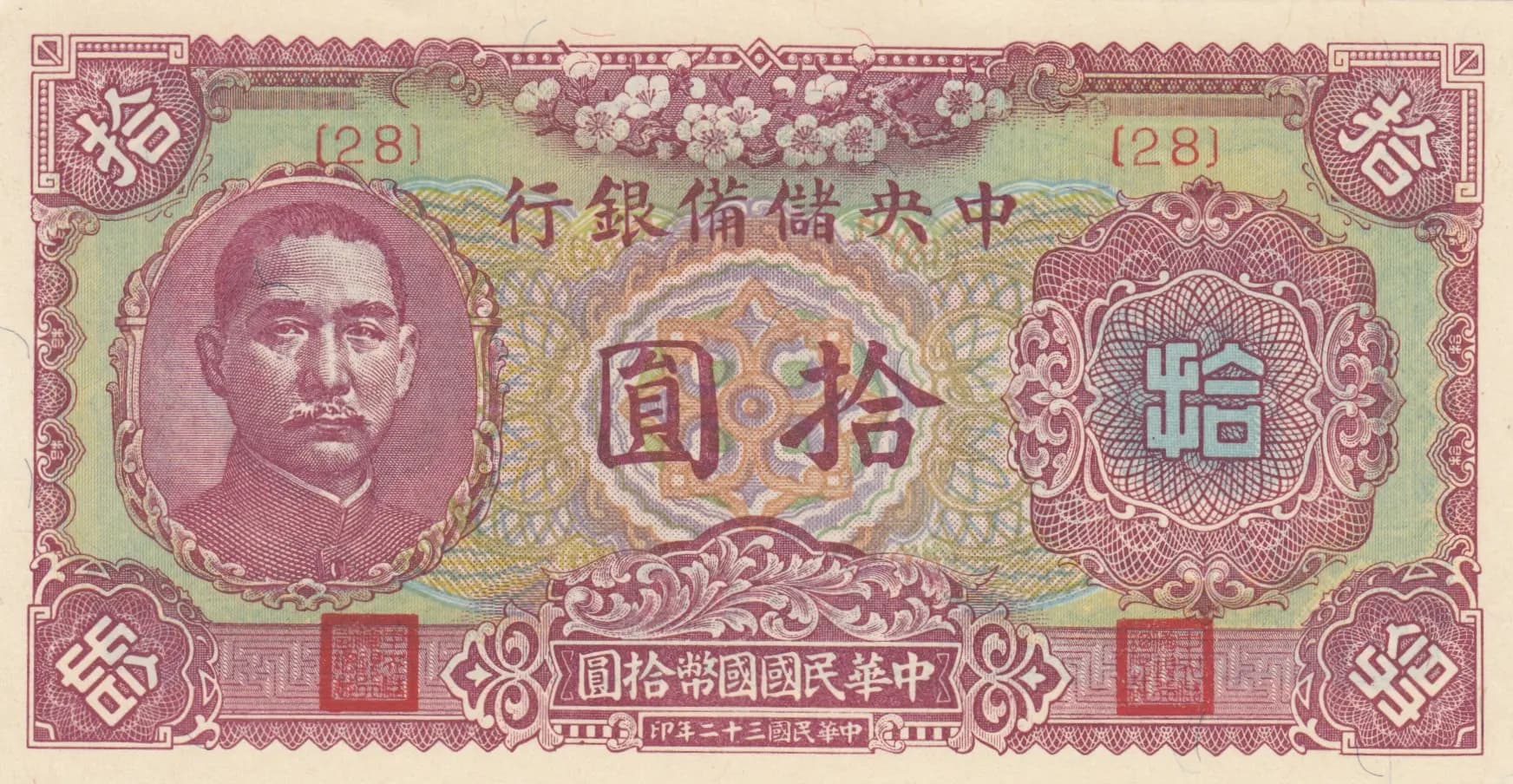
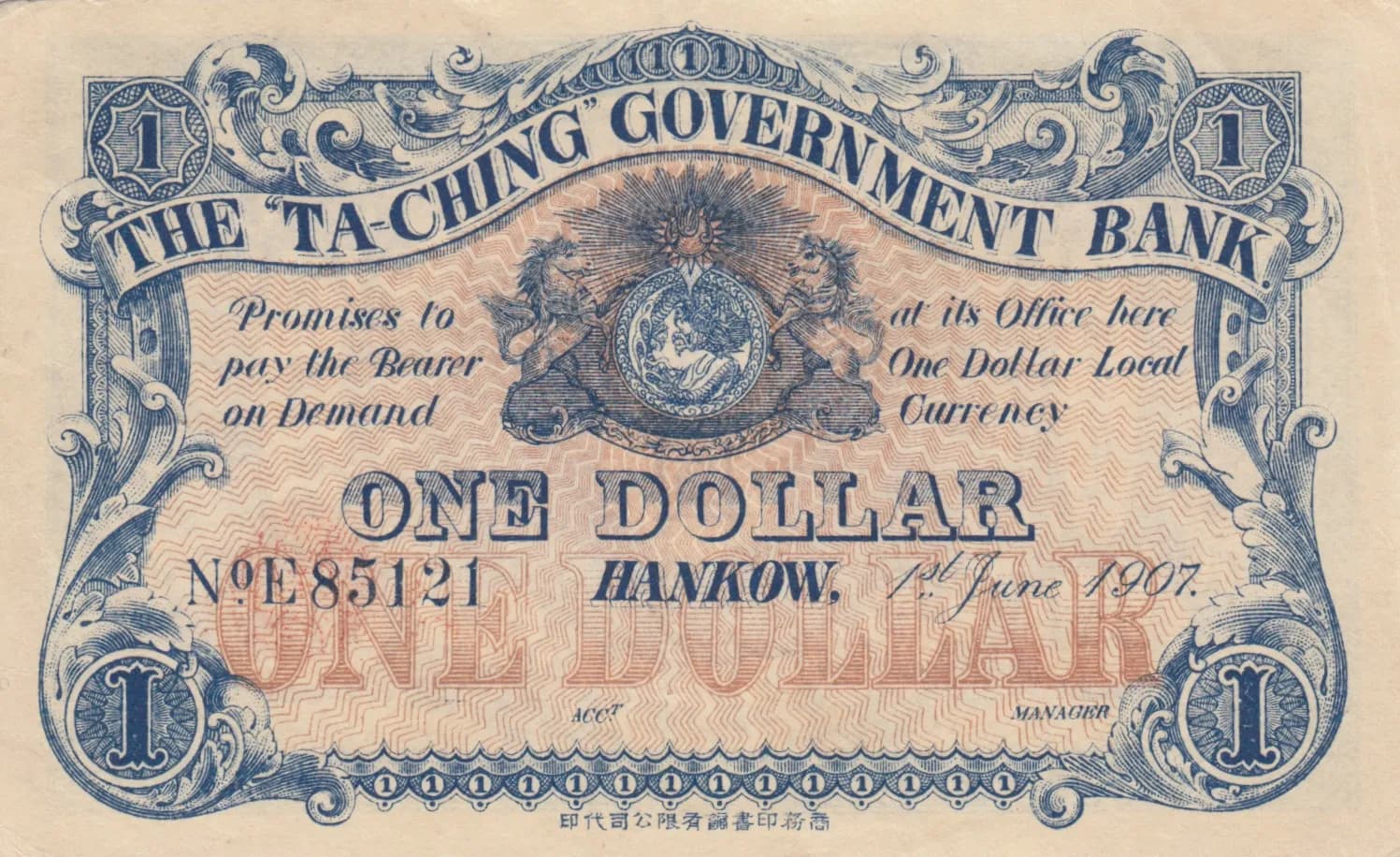
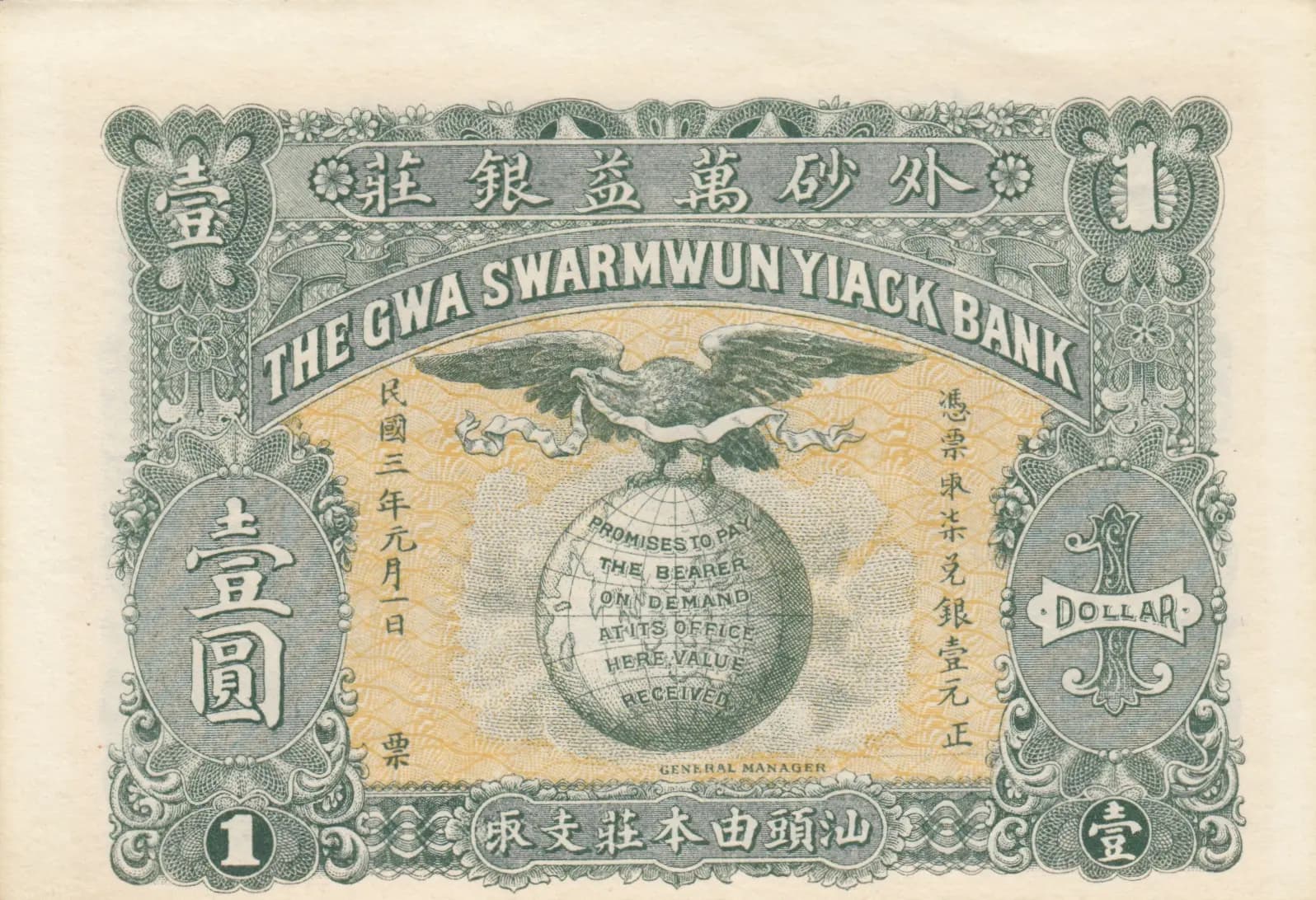
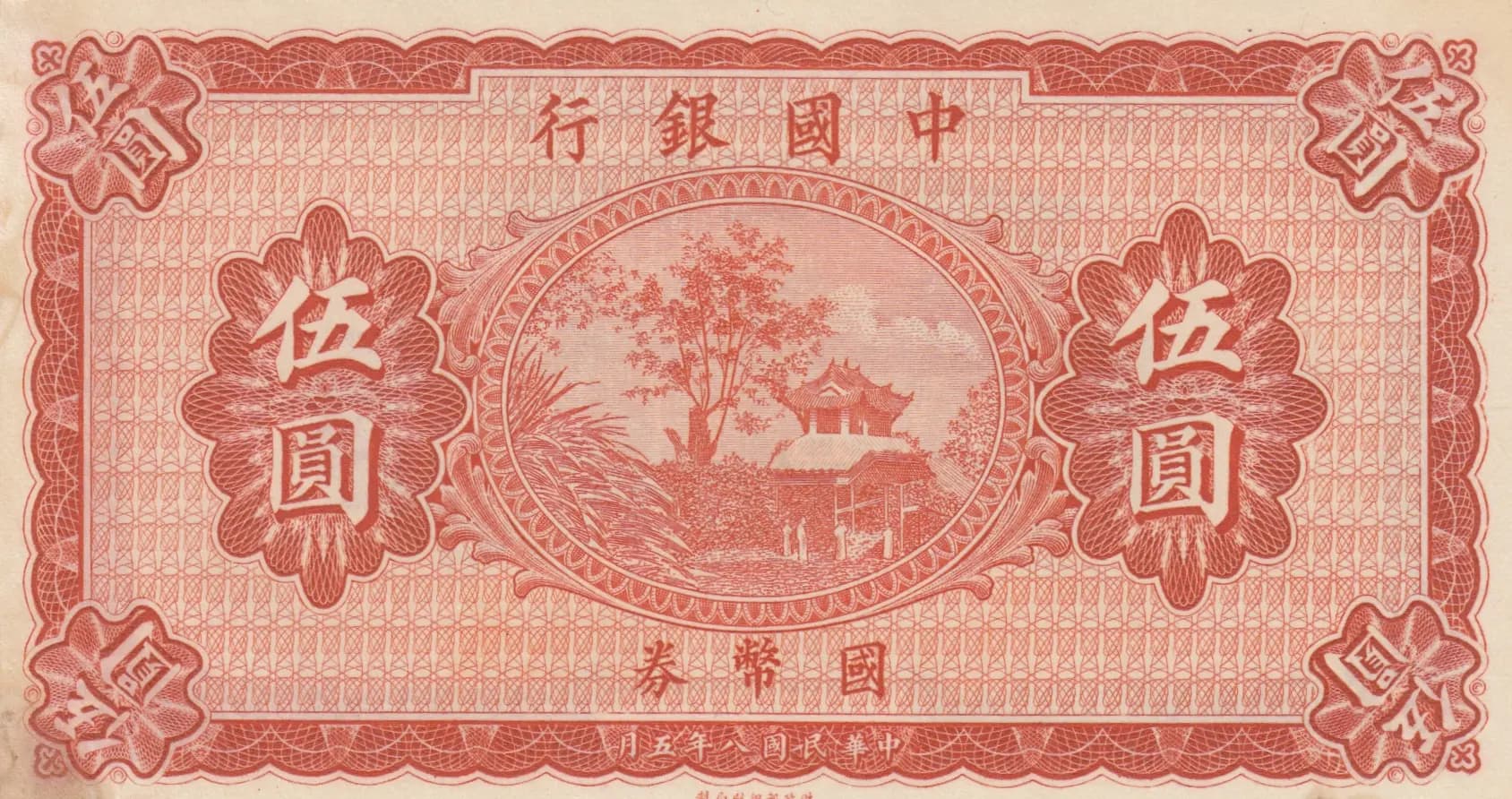
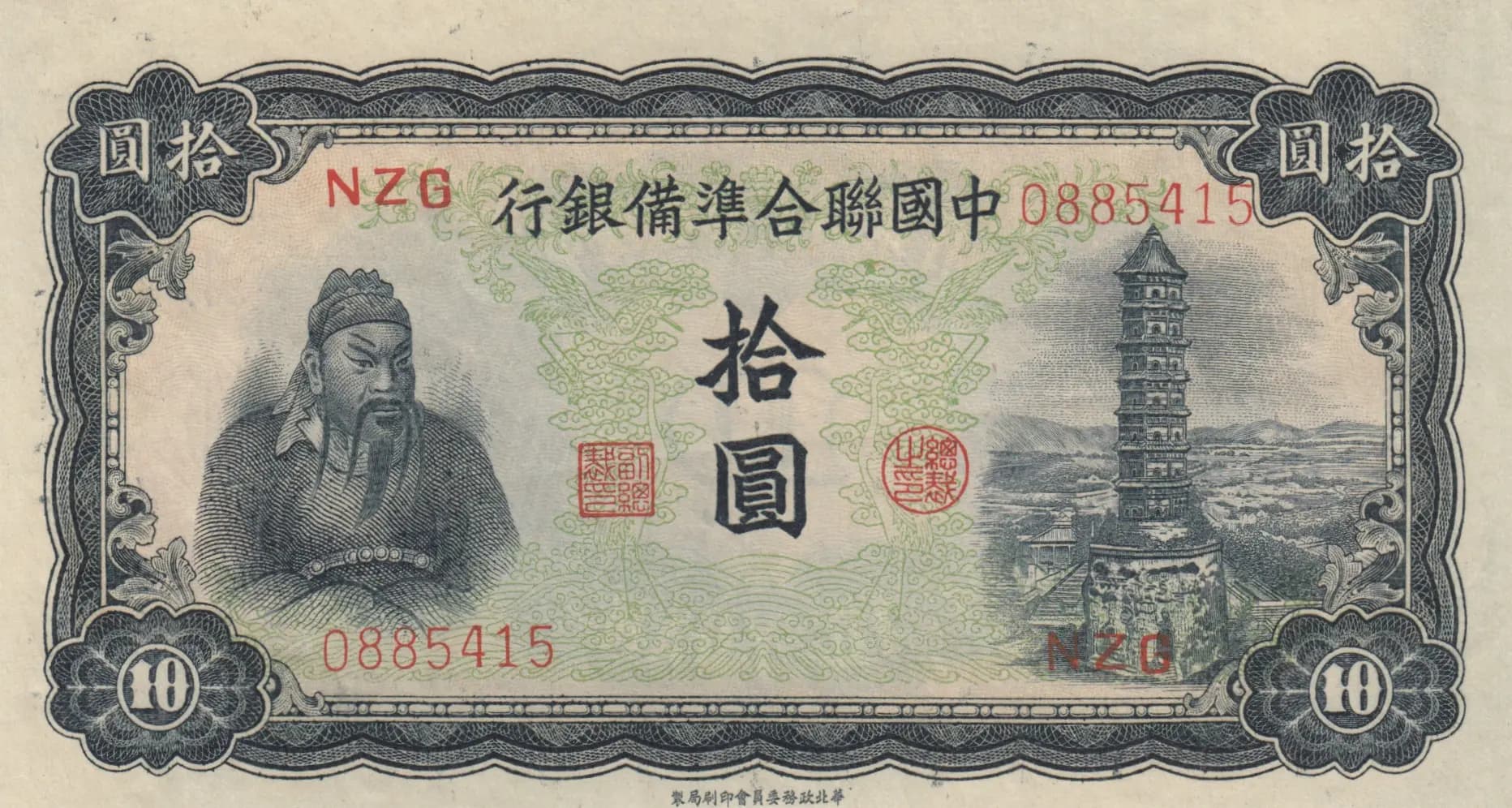
This is a 1943 10 Yuan note issued by the Federal Reserve Bank of China (中國聯合準備銀行), graded UNC according to catalog specifications. The note features classical Chinese artistic design with ornate borders, fine-line engraving work, and a portrait of a bearded dignitary in traditional dress on the obverse, complemented by a multi-story pagoda landmark on the reverse. Despite catalog grading as UNC, the visual analysis reveals genuine age-related patina, foxing, and minor creasing consistent with a well-preserved 1940s vintage banknote rather than pristine condition.
Common. The 1943 10 Yuan Federal Reserve Bank note (Pick J76) does not appear in standard rarity references as scarce or rare, and the visible wear, foxing, and condition inconsistencies suggest this is a circulated example of a note type with substantial historical print runs. 1940s Chinese banknotes remain relatively accessible in the collector market, and this denomination and year do not correspond to known short-lived issues, recalled series, or limited printings that would elevate rarity status.
Issued in 1943 during the Second Sino-Japanese War, this note represents the Federal Reserve Bank of China's currency operations under the Republic of China (中華民國) government. The pagoda landmark and traditional Chinese iconography reflect the nation's cultural heritage during a period of significant political and military upheaval, while the bilingual English-Chinese inscriptions demonstrate the international financial context of wartime China. The ornate, classical design aesthetic was characteristic of Chinese Reserve Bank notes from this era, emphasizing stability and traditional authority.
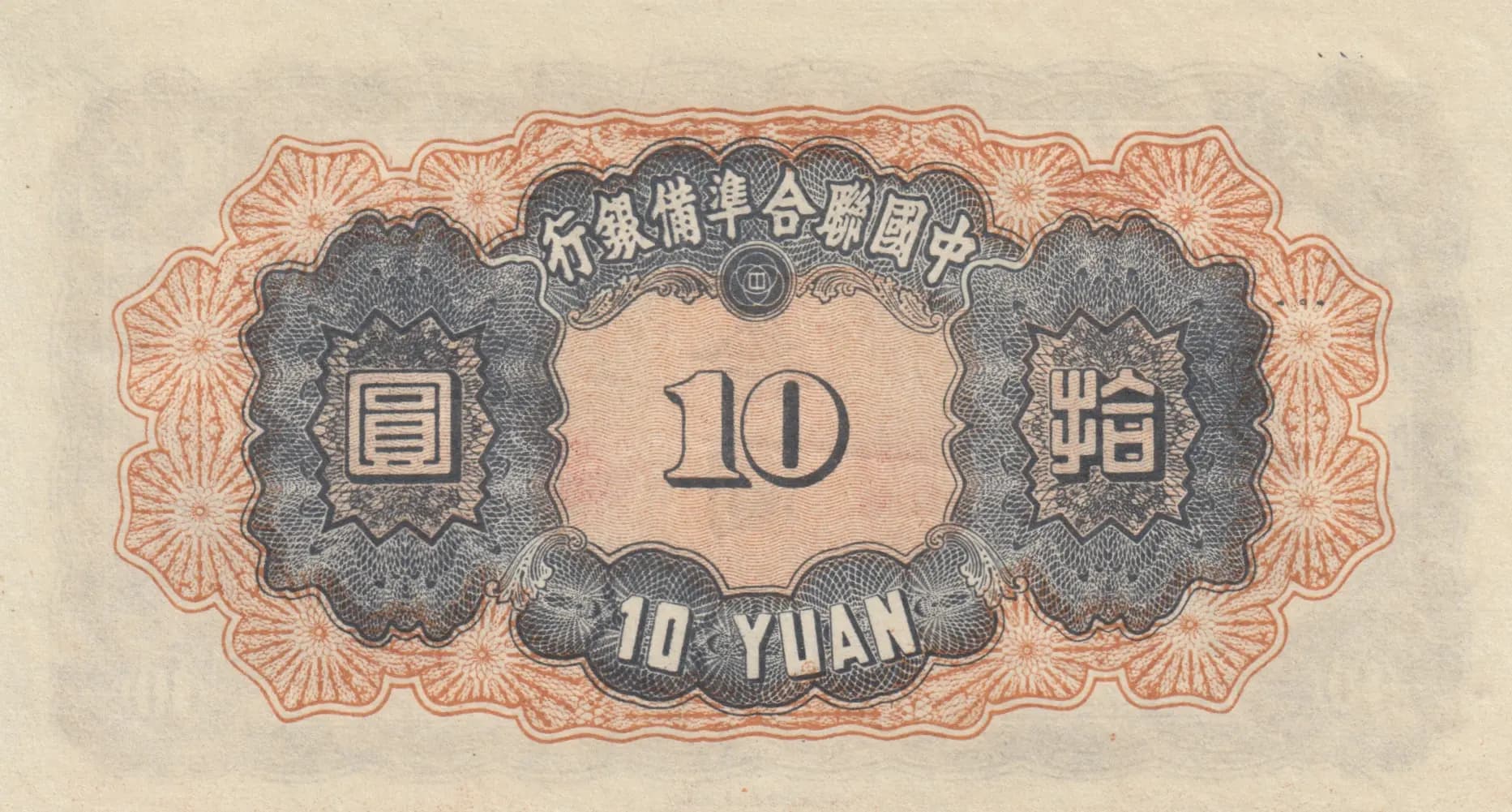
The obverse features an ornamental border of intricate scrollwork and floral patterns in black, gray, cream, green, and red. The central portrait depicts a bearded male dignitary in traditional Chinese official dress and formal headdress, positioned on the left; this likely represents a significant historical or political figure of Republican China. On the right side stands a multi-story pagoda with traditional East Asian architectural characteristics, anchoring a landscape composition. Red square seals flank the denomination area, while circular emblems bearing the numeral 10 occupy the bottom corners. The reverse employs a radial sunburst pattern forming the outer border, with a lighter central area displaying the denomination. Two ornate square emblems flank a circular medallion at the top center, creating a symmetrical, formally balanced composition emphasizing the authority of the issuing bank.
Front side: 中國聯合準備銀行 (Chinese Federal Reserve Bank), 拾圓 (Ten Yuan), NZG (series designation), 0885415 (serial number), 圓 (Yuan - currency unit). Reverse side: 中華民國年金準備銀行 (Republic of China Federal Reserve Bank), 拾圓 (Ten Yuan), 10 YUAN (English denomination), 圓 (Yuan), 給 (Issue/Give - component of banking authority designation).
Intaglio engraving (line engraving) throughout, evidenced by the fine-line borders, intricate crosshatch patterns, parallel line work for security purposes, and the detailed sunburst radiating design characteristic of high-security banknote production. The visual analysis confirms professional anti-counterfeiting techniques including fine detail work in borders and background areas. This printing was likely executed by a major security printer serving the Chinese government; during this period, the Bank of China and Federal Reserve Bank notes were typically produced by recognized security printing establishments, possibly including domestic facilities or international security printers.
The note bears the series designation 'NZG' and serial number '0885415' in red. The visual analysis does not reveal obvious overprints, date variations, or signature varieties that would distinguish major varieties for this Pick number. Detailed variety classification would require comparison with known series prefixes and serial number ranges documented in specialized catalogs of Chinese Federal Reserve Bank issues. No obvious distinguishing variety markers are apparent from the images provided.