10 yuan 1943
About This Note
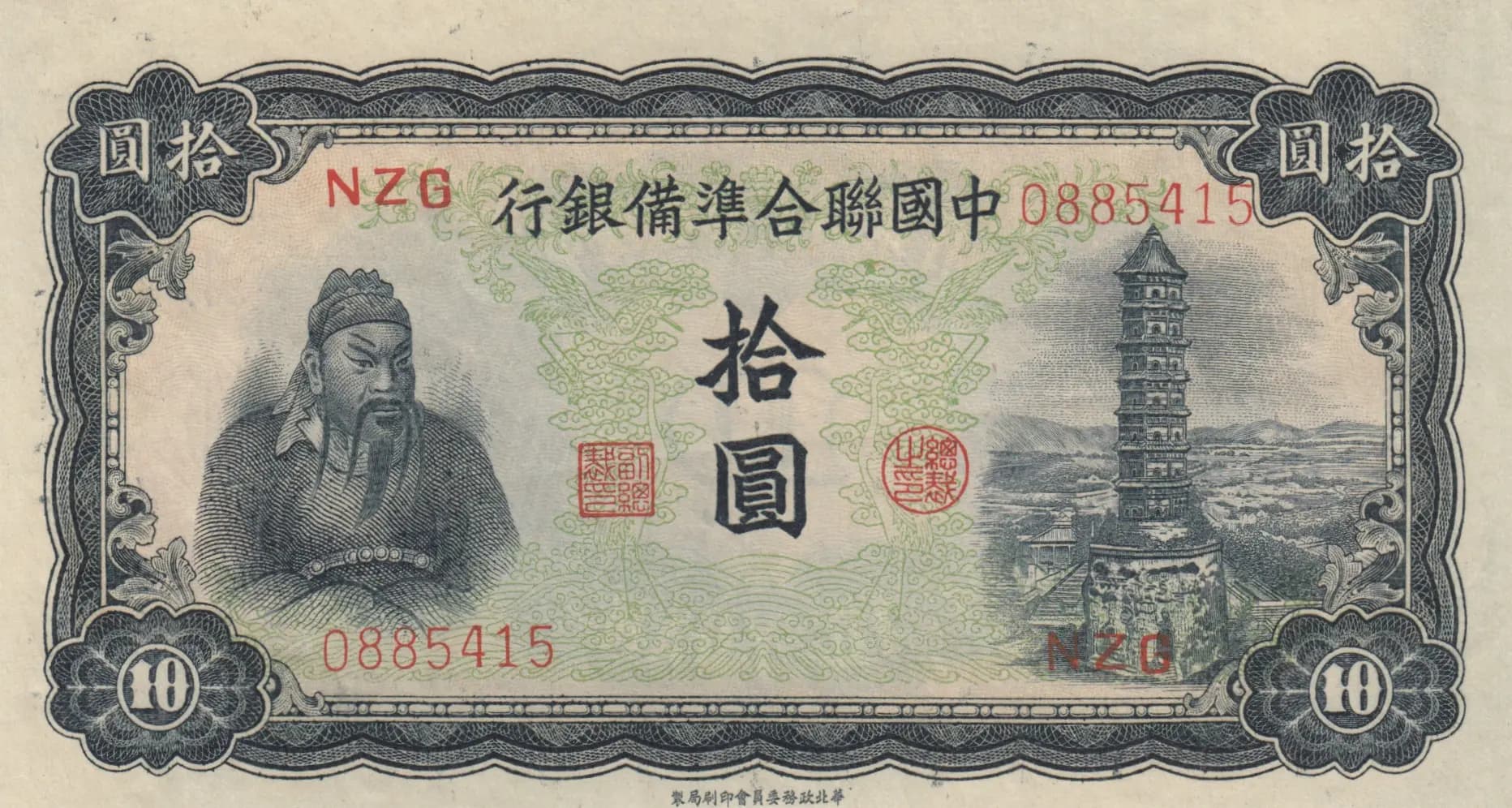
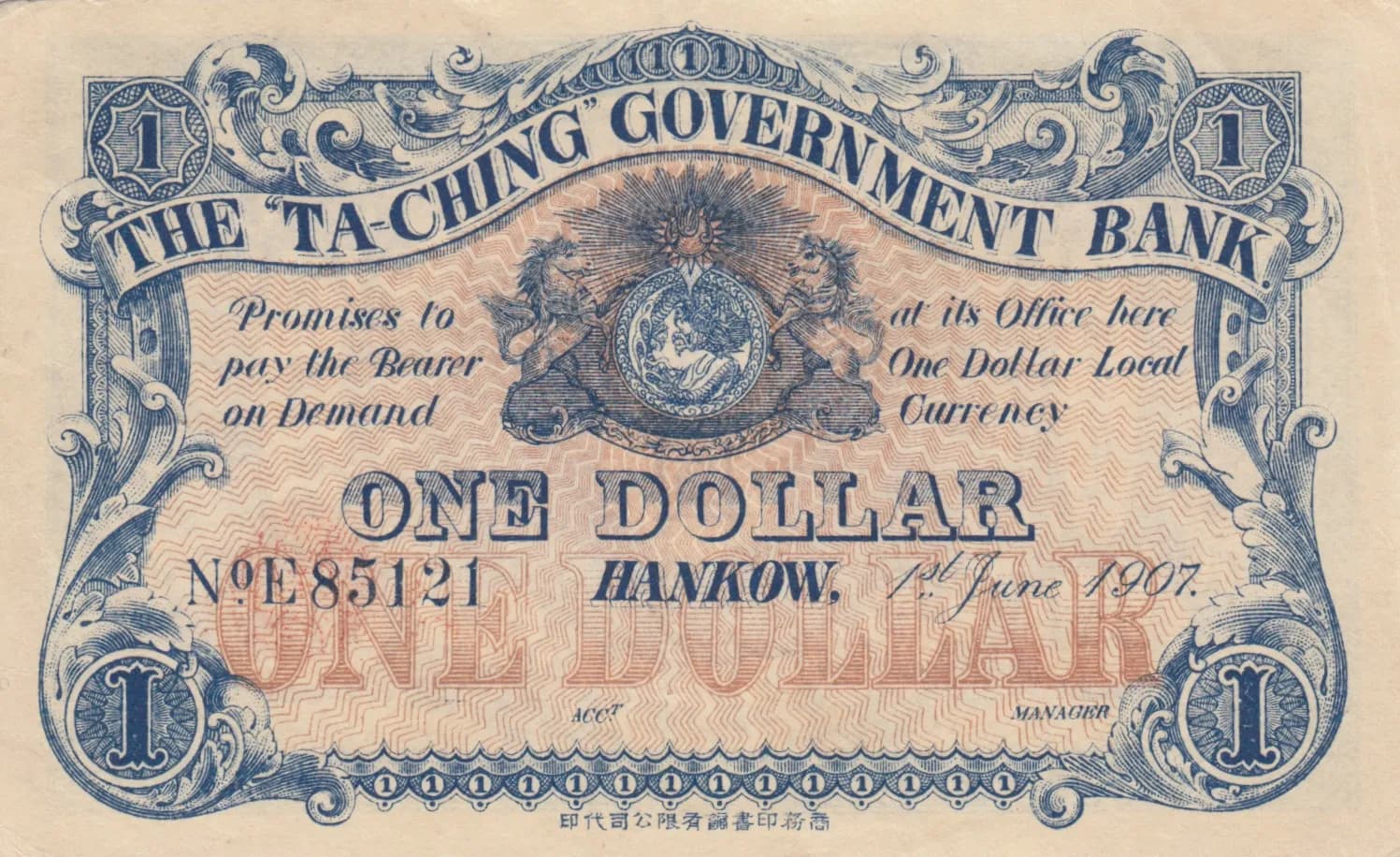
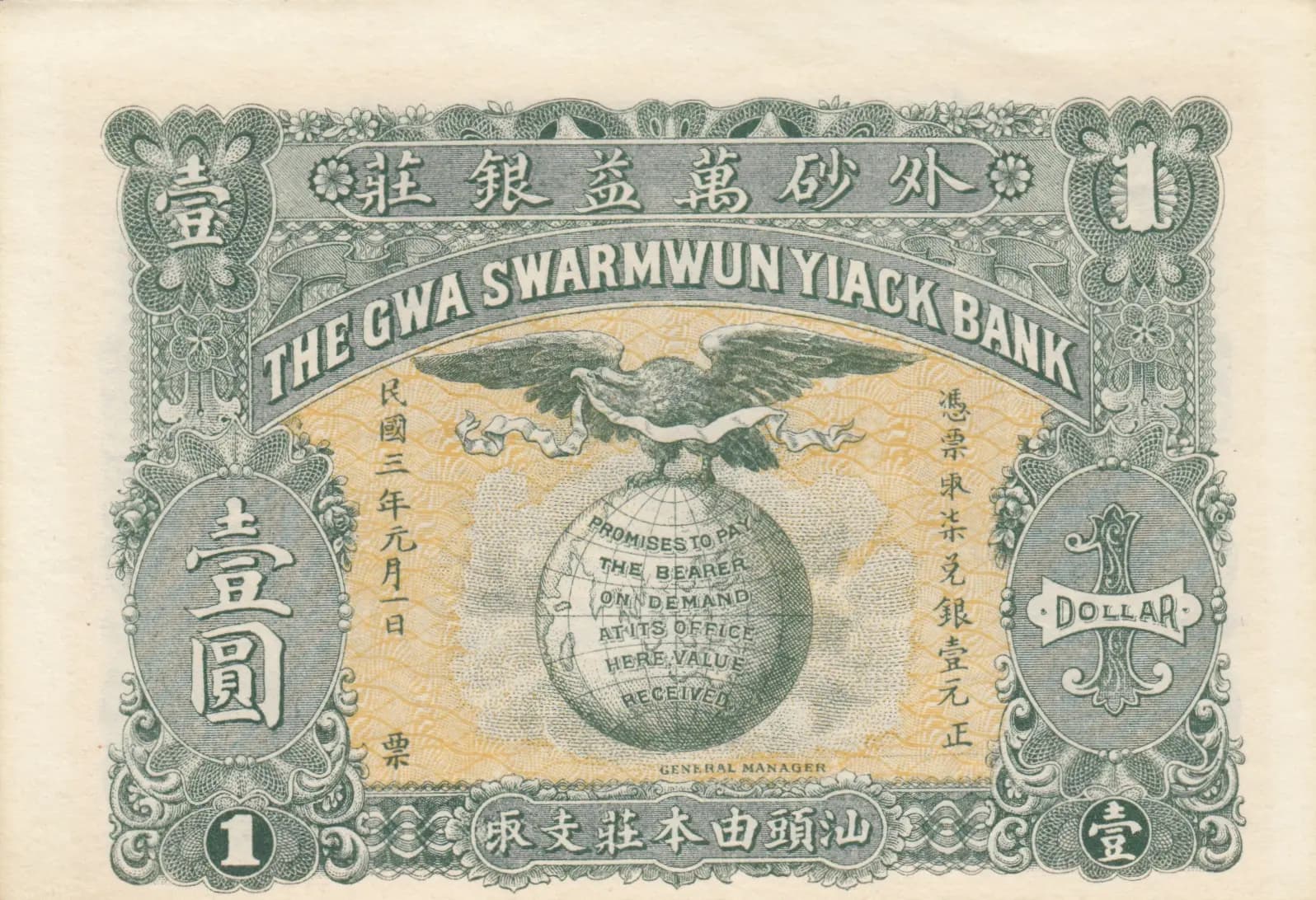
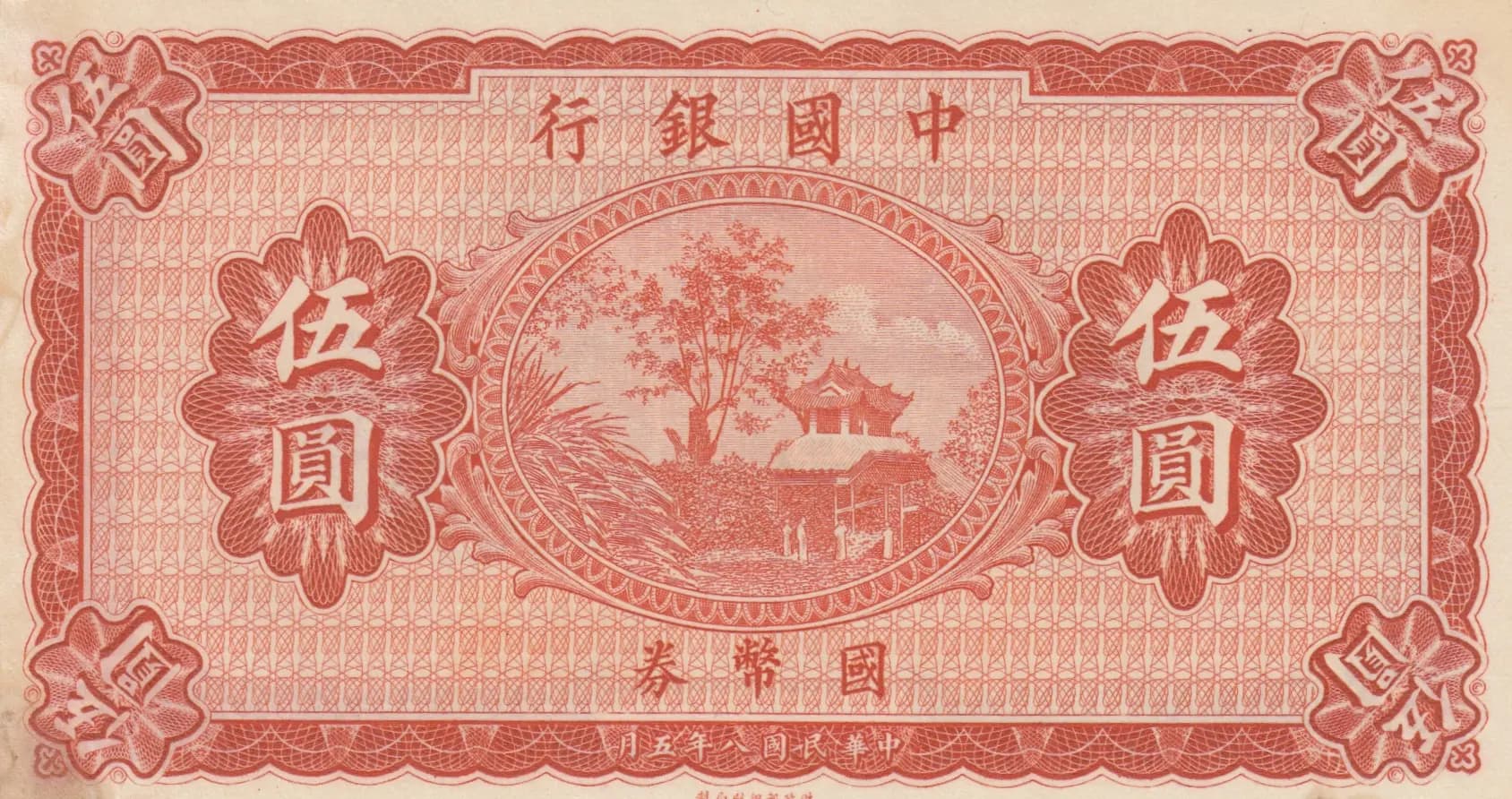
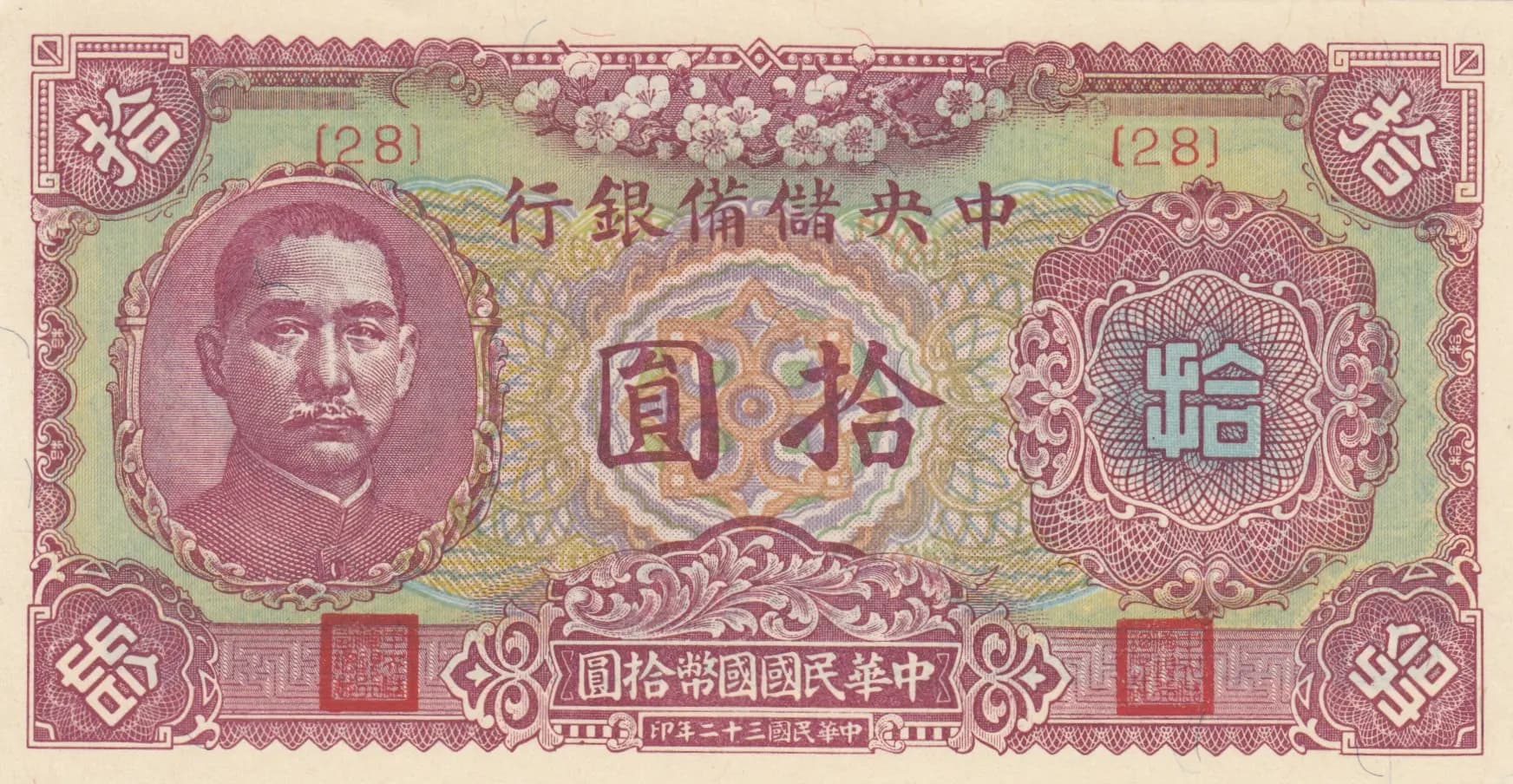
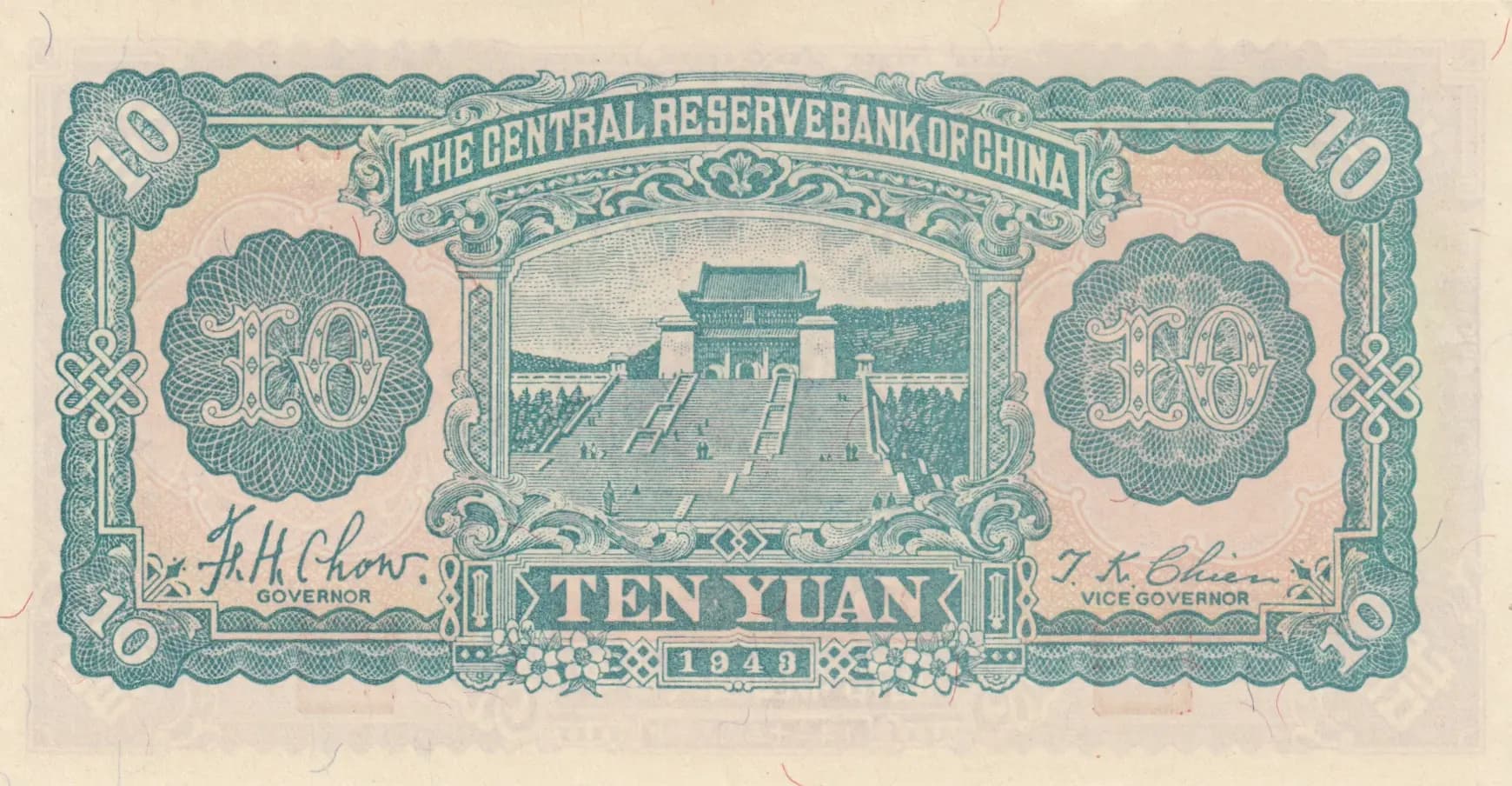
This is a Central Reserve Bank of China 10 yuan note from 1943 (Republic of China year 23), graded AU. The note exhibits the typical aging characteristics of mid-20th century Chinese currency, with visible foxing and discoloration consistent with its nearly 80-year age. The front displays an ornate portrait in a circular frame with elaborate purple and green decorative borders, while the reverse features a detailed engraved landscape of a traditional East Asian fortification gate, making it a visually distinctive example of wartime Chinese currency design.
Common. The Central Reserve Bank of China's 10 yuan notes from the 1940s were produced in substantial quantities as a standard denomination. While notes from this era show age and degradation, surviving examples in AU condition are not exceptionally scarce. The P-J20a variety with two cataloged variants suggests moderate production diversity but not extreme rarity. Unless specific evidence of low print runs or recall exists for this particular variety, it should be considered common in the collector market.
Issued during the Second Sino-Japanese War period by the Central Reserve Bank of China, this 1943 note represents Chinese currency during a critical moment in the nation's history. The back depicts a traditional Chinese architectural structure—likely a historical fortress or gate—reflecting nationalist imagery promoting Chinese cultural heritage during wartime. The bilingual English and Chinese inscriptions, along with signatures of H.H. Chow (Governor) and T.K. Chen (Vice Governor), document the bank's institutional continuity during this turbulent era.
The obverse features a bearded male portrait in three-quarter profile, enclosed within an ornate circular frame adorned with scrollwork and geometric patterns typical of early 20th century Chinese banknote design. The portrait subject likely represents a historical Chinese figure significant to the Republic of China. Elaborate border designs with floral and scrollwork elements frame the composition in purple and green tones. The reverse displays a meticulously engraved landscape illustration of a traditional Chinese fortification or gate structure with curved rooflines characteristic of Ming-era architecture, set against mountain scenery and vegetation. The teal-green color scheme on the reverse contrasts with the warmer purple-green palette of the obverse, creating visual distinction between sides.
FRONT: Central text reads '中央銀行備儲' (Central Reserve Bank), '十國圖' (Ten national map), and '中華民國十拾圓' (Republic of China Ten Yuan). The date inscription '印行民國二十三' translates to 'Printed year 23 of the Republic' (corresponding to 1934 in the Republican calendar, though the catalog lists 1943). BACK: English text includes 'THE CENTRAL RESERVE BANK OF CHINA,' 'TEN YUAN,' and signatures of H.H. Chow as 'GOVERNOR' and T.K. Chen as 'VICE GOVERNOR.' The date '1949' appears on the reverse, and Arabic numerals '10' indicate the denomination.
Intaglio (engraved line printing), evidenced by the fine line work, intricate geometric patterns, ornate decorative borders, and detailed landscape rendering visible throughout both sides. The complex anti-counterfeiting design elements, including fine cross-hatching and detailed scrollwork in the borders and backgrounds, are characteristic of high-security banknote engraving from this period. The Central Reserve Bank of China likely contracted with a capable security printer, possibly the Chinese government's printing facility or an international security printer experienced in Chinese currency production.
This note is cataloged as P-J20a, with a known P-J20s variant existing for the same 10 yuan denomination. The specific variety is distinguished by the signatures of H.H. Chow (Governor) and T.K. Chen (Vice Governor), the date of 1949 on the reverse, and the notation '印行民國二十三' on the front. Collectors should note the date discrepancy between the front (year 23 of the Republic = 1934 in Western calendar) and reverse (1949), which may indicate a reprinting or currency renewal late in the Chinese civil war period. Serial number examination would further distinguish this from the P-J20s variety.