10 yuan 1944
About This Note
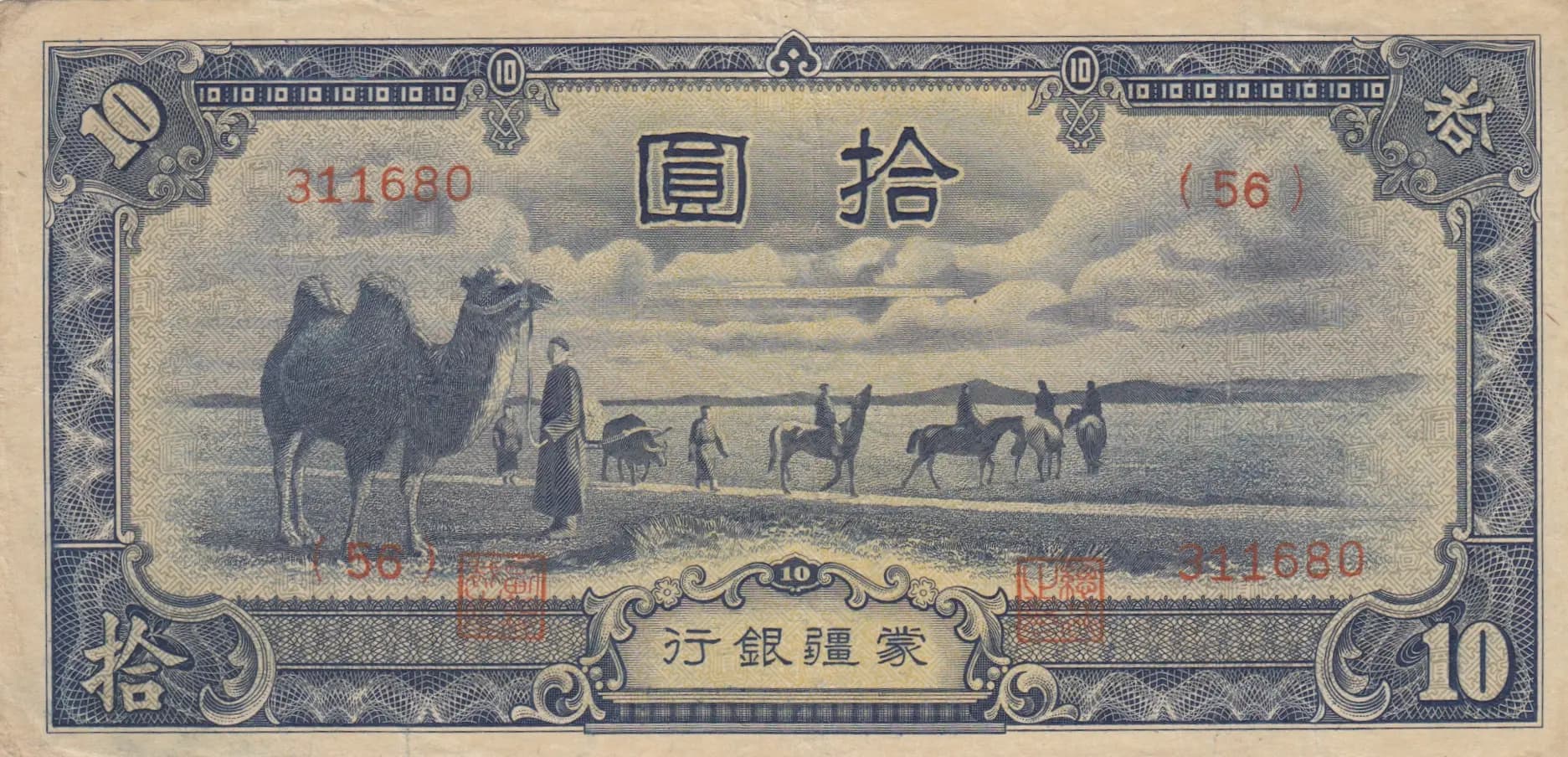
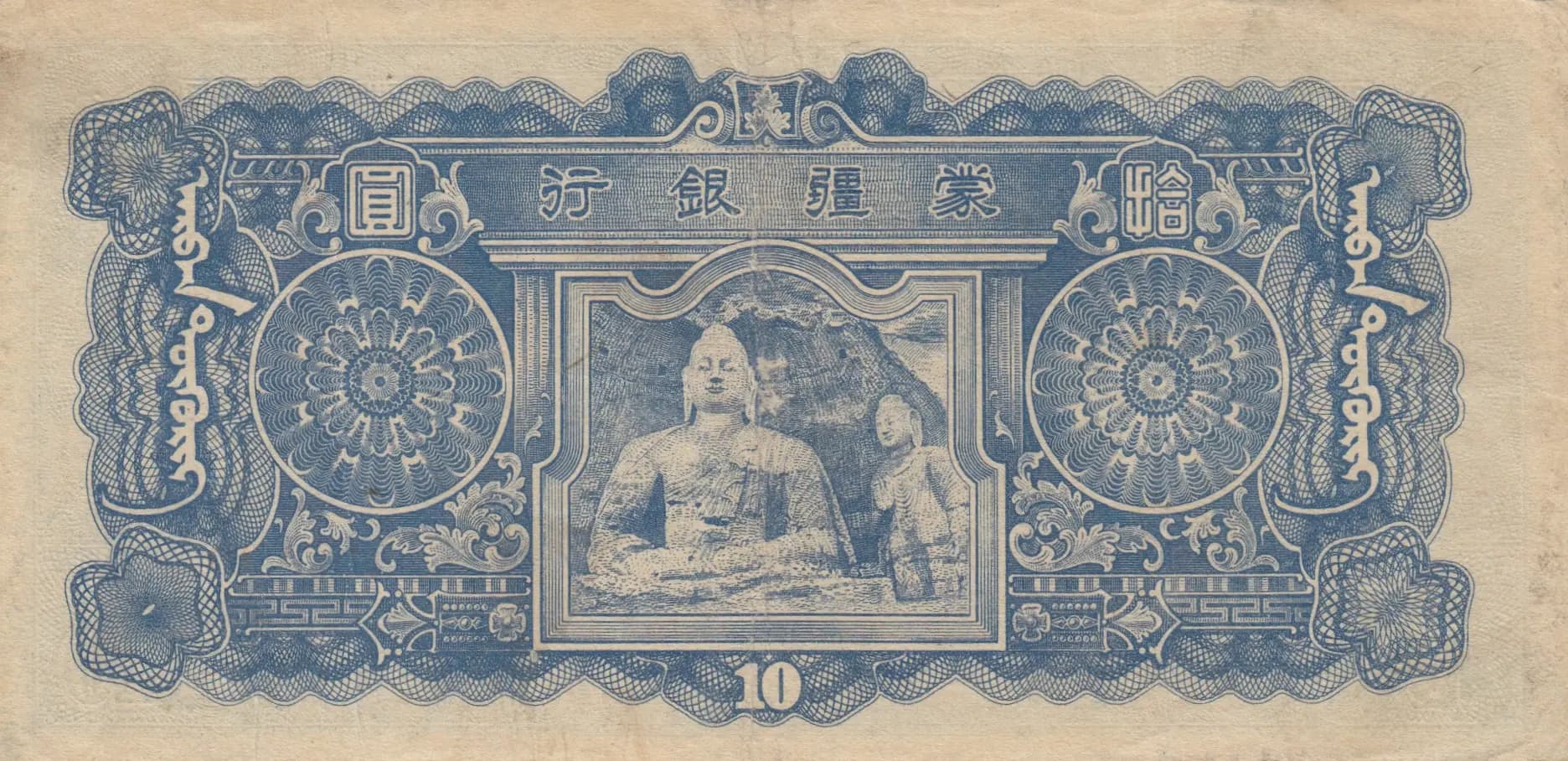
A VF-grade 10 yuan note from the Mengchiang Bank (1944) featuring a striking desert caravan vignette on the obverse with camels, handlers, and horses traversing a flat landscape rendered in blue and cream tones. The reverse displays an ornate composition with two figures in traditional Chinese dress framed by elaborate circular rosette patterns and architectural elements. This note represents an interesting artifact of Japanese-occupied Mengjiang (Inner Mongolia), showcasing period-appropriate security printing with fine line engraving and geometric patterns throughout, with visible but not excessive aging consistent with circulation.
Common. The Mengchiang Bank operated for approximately 8 years (1937-1945) with substantial circulation of this 10 yuan denomination throughout the occupied territories. While Japanese-occupation currency is collected, this particular denomination and issuer were produced in quantities sufficient to ensure regular availability in the modern collector market. Notes of this Pick number appear with reasonable frequency in VF condition on international numismatic markets.
The Mengchiang Bank issued this note during the Japanese occupation of Inner Mongolia (1937-1945), operating as part of the puppet state of Mengjiang. The desert caravan imagery on the obverse references the historic Silk Road trade routes through Mongolia, while the traditional Chinese figures on the reverse reflect the cultural synthesis of the occupied territory. This denomination and issuer represent a relatively brief and geographically limited monetary system, making it a notable piece of WWII-era East Asian numismatic history.
The obverse features a dynamic desert caravan scene, the primary vignette depicting a two-humped Bactrian camel with a handler in dark robes on the left side, accompanied by multiple figures with horses and pack animals traversing a flat, arid landscape on the right—a clear visual reference to historical Silk Road trading routes through Mongolia. The entire design is executed in a blue and cream color scheme with ornamental geometric borders featuring spade symbols, circular medallions, and floral patterns in all four corners. The reverse displays two figures in traditional Chinese garments positioned centrally within an elaborate architectural frame, flanked by large circular mandala-like rosette patterns on both left and right sides, creating a highly ornate and symmetrical composition. Both sides incorporate fine line engraving work and complex geometric background patterns serving dual aesthetic and security purposes.
Front side: '蒙古兆豐銀行' (Mengchiang Bank / Mongolian Bank of Prosperity), '圓拾' (Ten yuan), '10' (Arabic numeral denomination), '圖' (Image/picture), Serial number '311680', and plate/batch notation '(56)'. Back side: '蒙古兆豐銀行' (Mengchiang Bank), '圓拾' (Ten yuan), '10' (Arabic numeral denomination).
Intaglio engraving (copperplate or steel plate printing), characterized by the fine line detail work, intricate geometric security patterns, and precise rosette designs visible throughout both sides. The crisp rendering of the caravan scene, architectural framing, and ornamental borders are consistent with high-quality intaglio production typical of Japanese-affiliated security printers operating in Manchukuo and occupied territories during the 1940s. The security features include fine line patterns, geometric background work, and complex decorative elements typical of the period's anti-counterfeiting measures.
Pick catalog P-J108b designation indicates this is variety 'b' of the 10 yuan Mengchiang Bank note. Serial number '311680' with plate notation '(56)' suggests this example is from a mid-range production batch. No overprints or secondary markings are evident. The specific variety designation should be cross-referenced against the full Pick catalog entry for distinguishing characteristics between varieties 'a' and 'b' of this denomination.