10 yuan 1940
Market Prices
10 salesAbout This Note
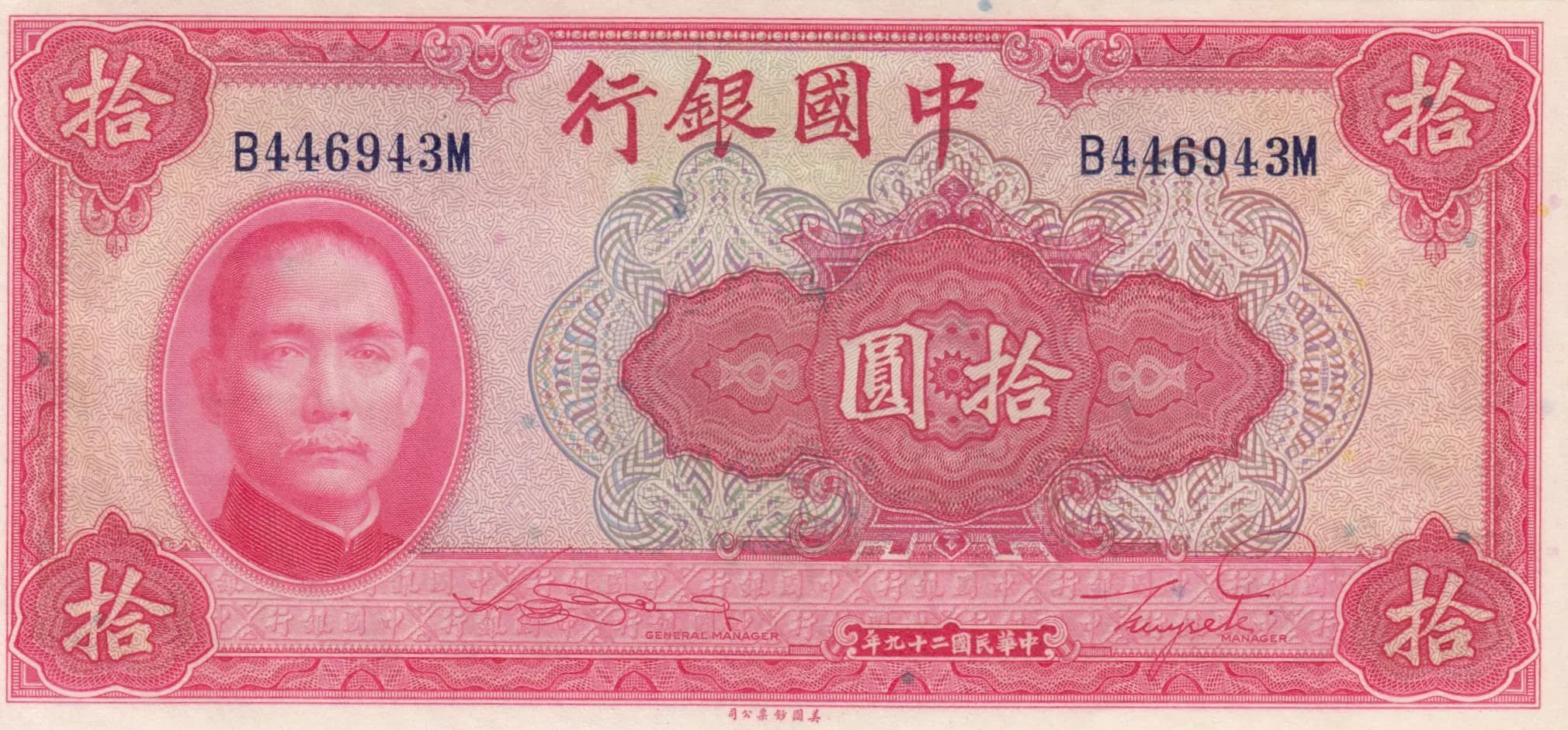
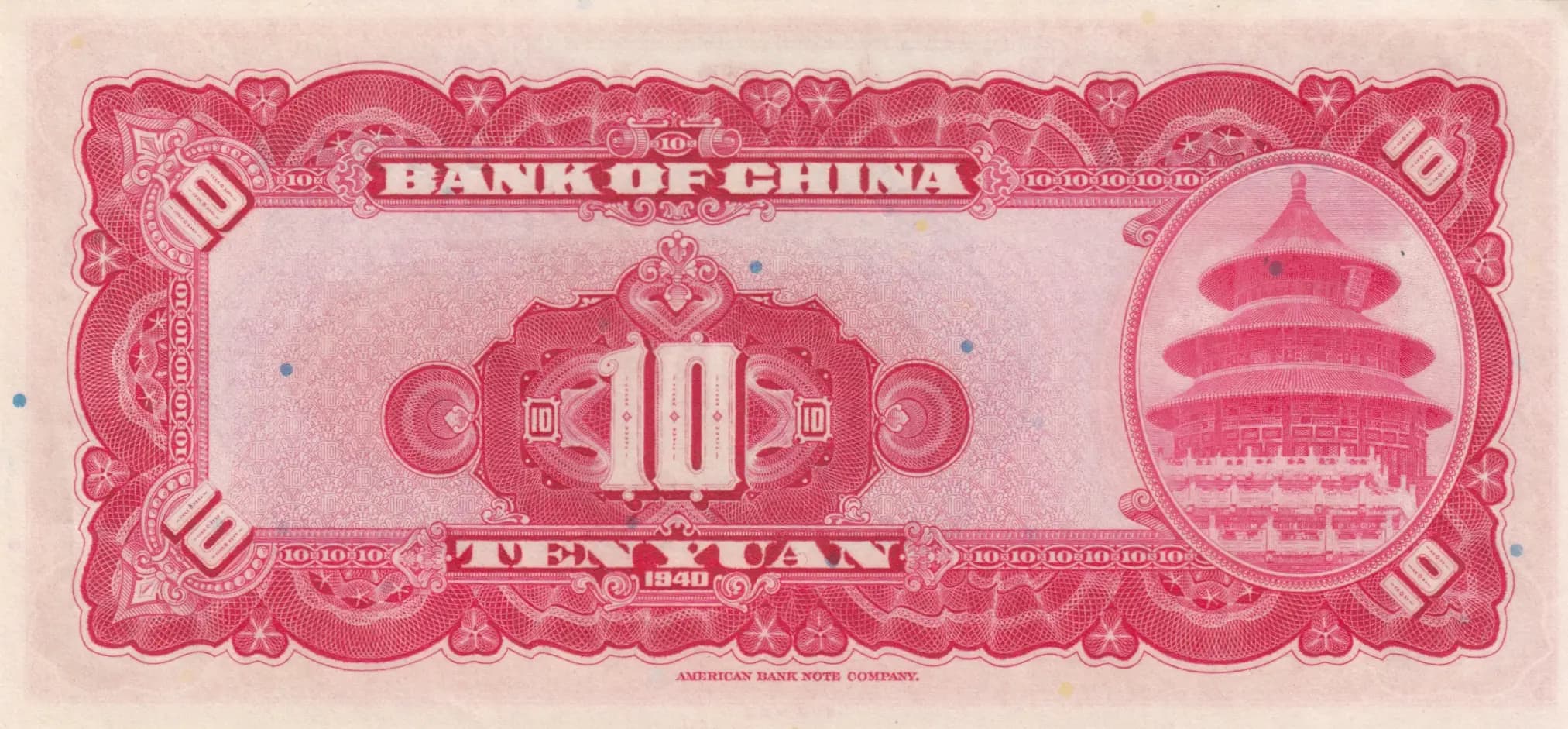
This is a Bank of China 10 yuan note from 1940, presented in uncirculated condition with vibrant pink/magenta coloring and exceptional clarity throughout. The obverse features a formal portrait within an ornate oval frame on the left, while the reverse showcases the iconic Temple of Heaven in a circular vignette. The note exhibits the hallmark characteristics of American Bank Note Company's fine-line engraving work, with intricate geometric patterns and decorative borders remaining crisp and well-defined, making this an attractive example of mid-20th century Chinese currency design.
Common. Despite being cataloged as P-85a, this note is widely available in the collector market. eBay transaction data from 2012-2021 shows consistent sales ranging from $1.29 to $5.50 for Fine to Almost Uncirculated examples, with catalog values for UNC graded at only $14 (2016 pricing). The relatively modest pricing across all condition grades and the consistent availability in auction data indicate a substantial print run and good survival rate. UNC examples, while commanding higher prices than circulated notes, remain affordable and accessible to collectors.
This 10 yuan note was issued by the Bank of China during 1940, a period of significant turmoil in Chinese history when the country was engaged in the Second Sino-Japanese War. The selection of the Temple of Heaven as the reverse vignette reflects traditional Chinese cultural pride and national symbolism, while the formal portrait on the obverse represents institutional authority during this tumultuous era. The use of an American security printer (ABNC) underscores the international commercial relationships China maintained even during wartime.
The obverse presents a formal male portrait, identified as Sun Yat-sen (孫中山), founder of the Republic of China, positioned within an ornate oval decorative frame on the left side. The central design features a large red rectangular seal or cartouche containing the denomination '拾圓' (10 yuan) in traditional Chinese characters, surrounded by elaborate geometric and floral patterns rendered in pink, magenta, and cream tones. The reverse displays the Temple of Heaven (天壇), Beijing's most iconic architectural landmark, rendered as a multi-tiered circular structure in classical Chinese style within a decorative circular frame positioned on the right. Large denomination numerals '10' appear in ornamental corner cartouches on both sides. The overall design employs symmetrical, ornate border work typical of early 20th-century Chinese banknote design.
FRONT: 中國銀行 (Bank of China) | 拾圓 (10 yuan) | 民國三十四年 (Republic of China Year 34, corresponding to 1945 in the Western calendar, though the catalog lists 1940 as the issue year) | GENERAL MANAGER | MANAGER | Serial number: B446943M (appearing in upper left and right corners) | BACK: BANK OF CHINA | YUAN BANK OF CHINA | 10 (denomination numeral) | 1940 (Western calendar year) | AMERICAN BANK NOTE COMPANY (printer attribution)
Intaglio (engraved) printing, executed by the American Bank Note Company (ABNC), which is evident from the fine-line engraving quality, intricate geometric patterns, and the sharp, well-defined impressions characteristic of deep intaglio work. The security features include complex background patterns and fine-line detail work throughout, designed to prevent counterfeiting through the difficulty of reproducing such intricate engraved lines.
This specimen is identified as P-85a according to the Pick catalog, with P-85b representing a known variant of the same 10 yuan 1940 denomination. The specific variety designation suggests potential differences in design elements, security features, or printing characteristics between P-85a and P-85b. The serial number format (B446943M) and the presence of serial numbers on the obverse only (with none on the reverse) are consistent with catalog specifications. No overprints or special markings are evident in the visual analysis. The date inconsistency noted in the obverse inscription (民國三十四年 = 1945) versus the catalog year (1940) and back inscription (1940) warrants numismatic clarification, as this may represent either a printing continuation into 1945 or a calendrical notation variance.