10 dollars 1928
Market Prices
43 salesAbout This Note
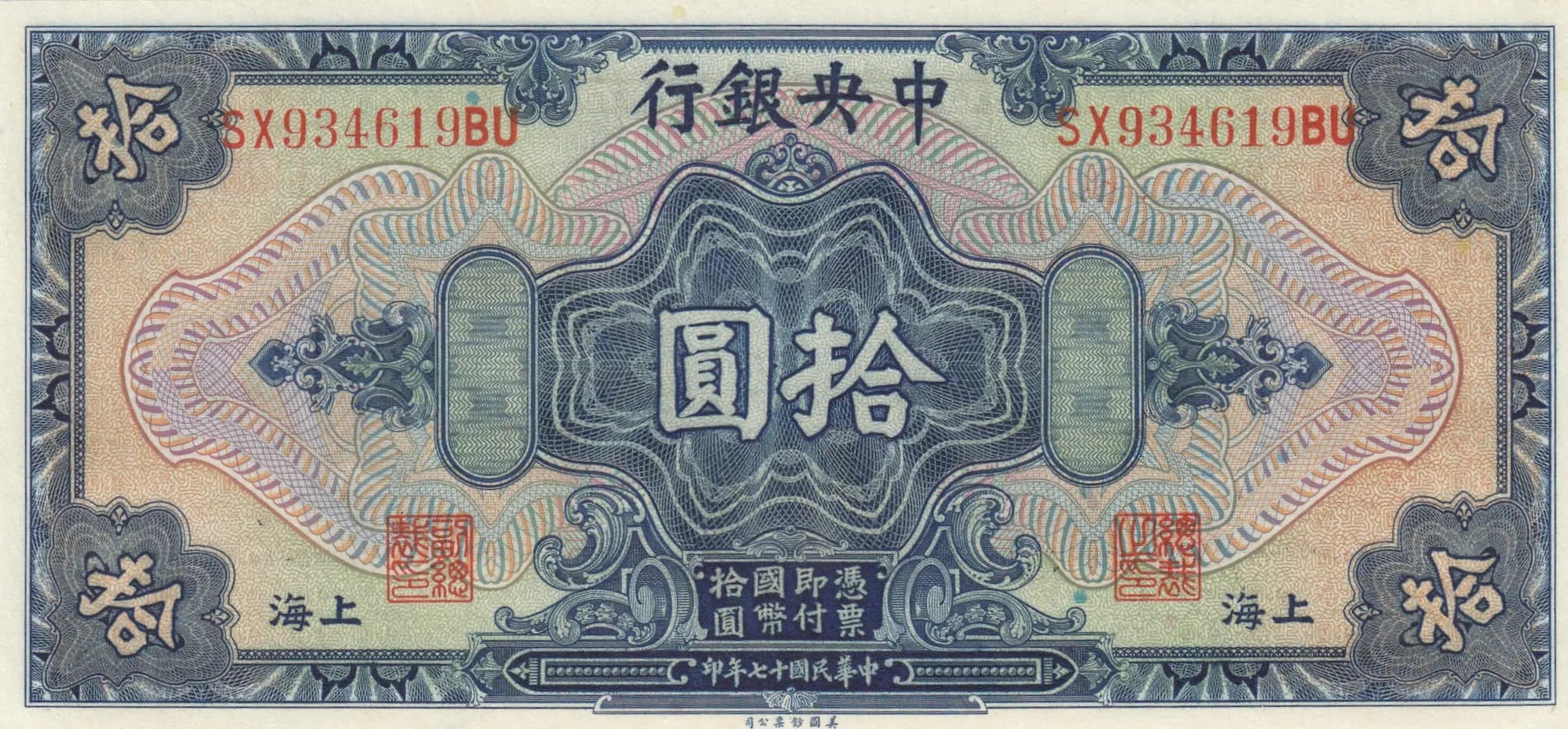
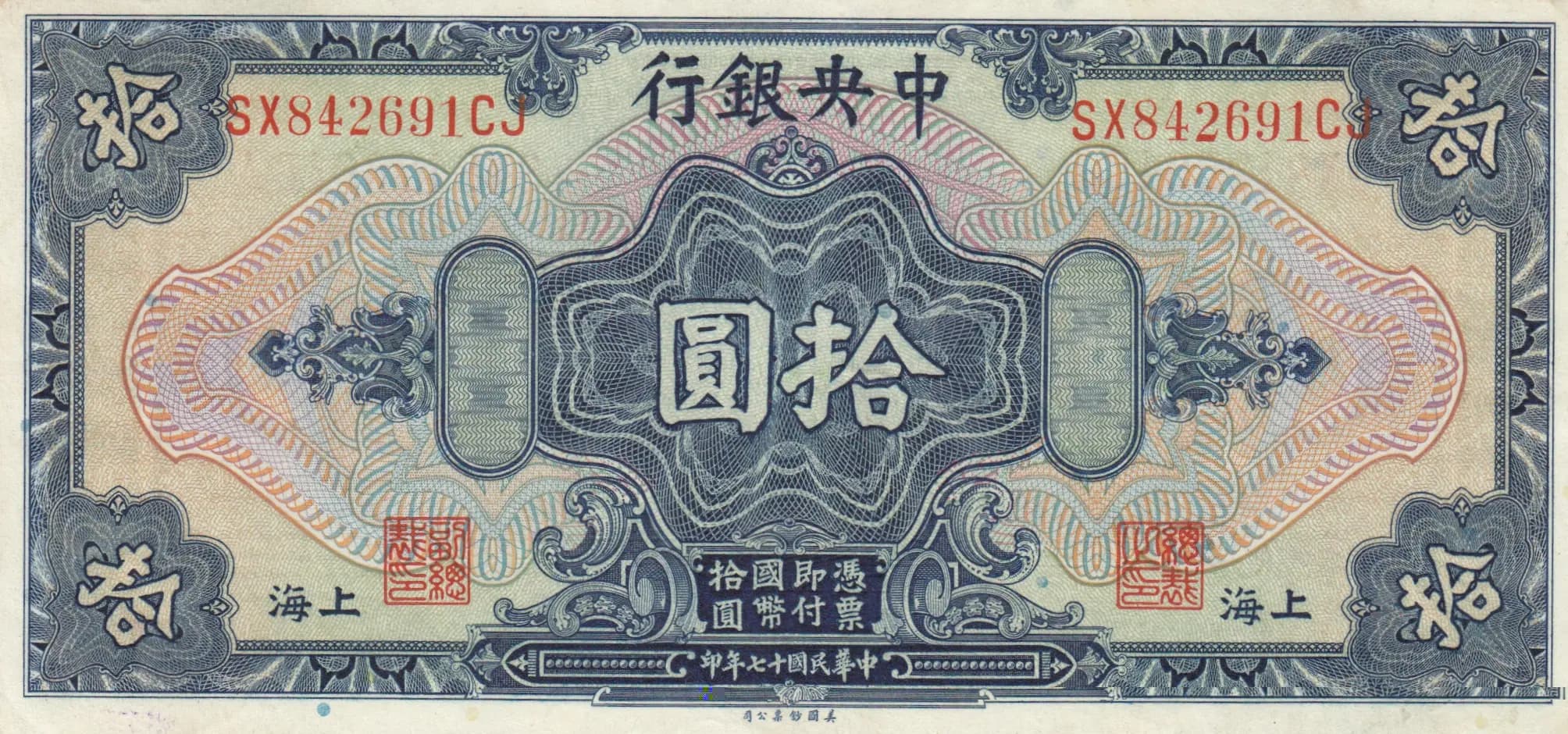
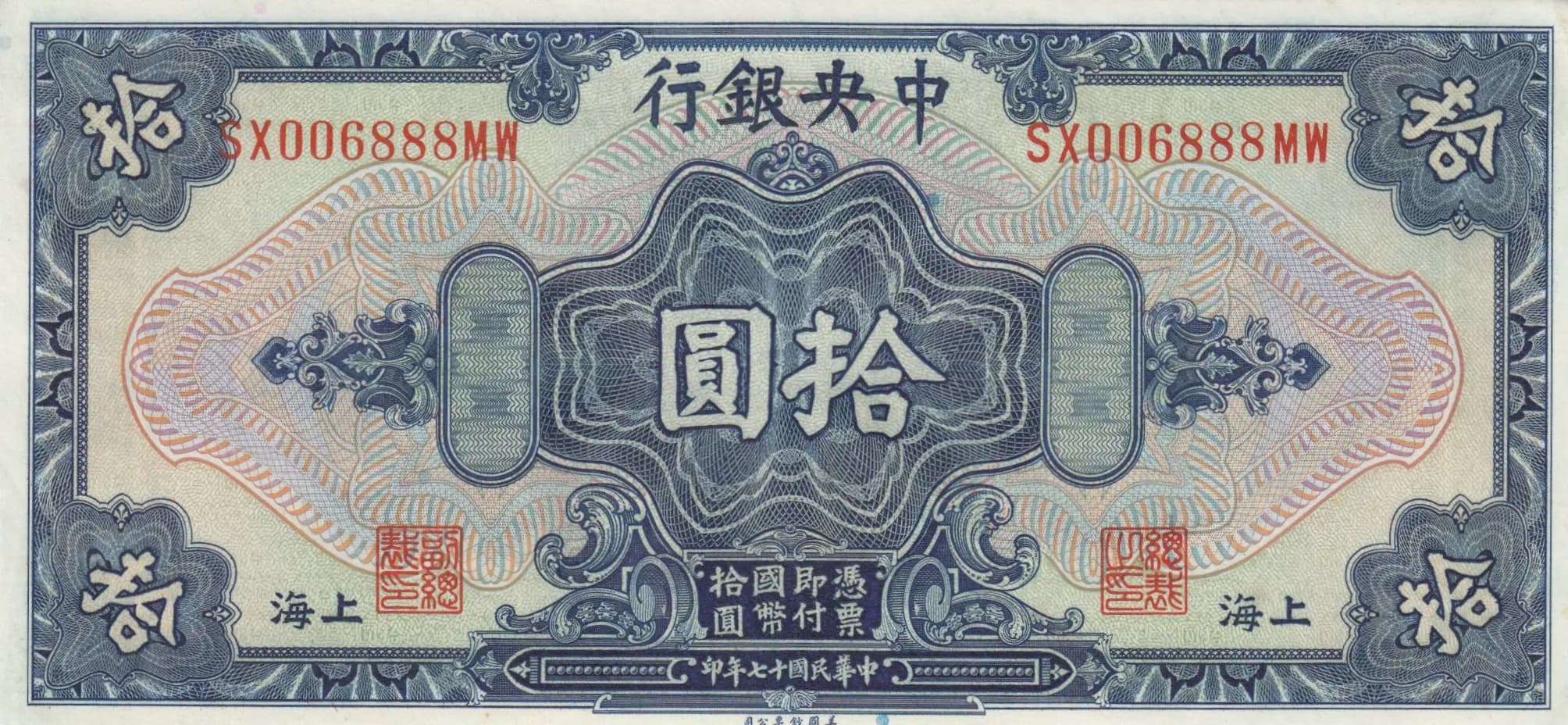
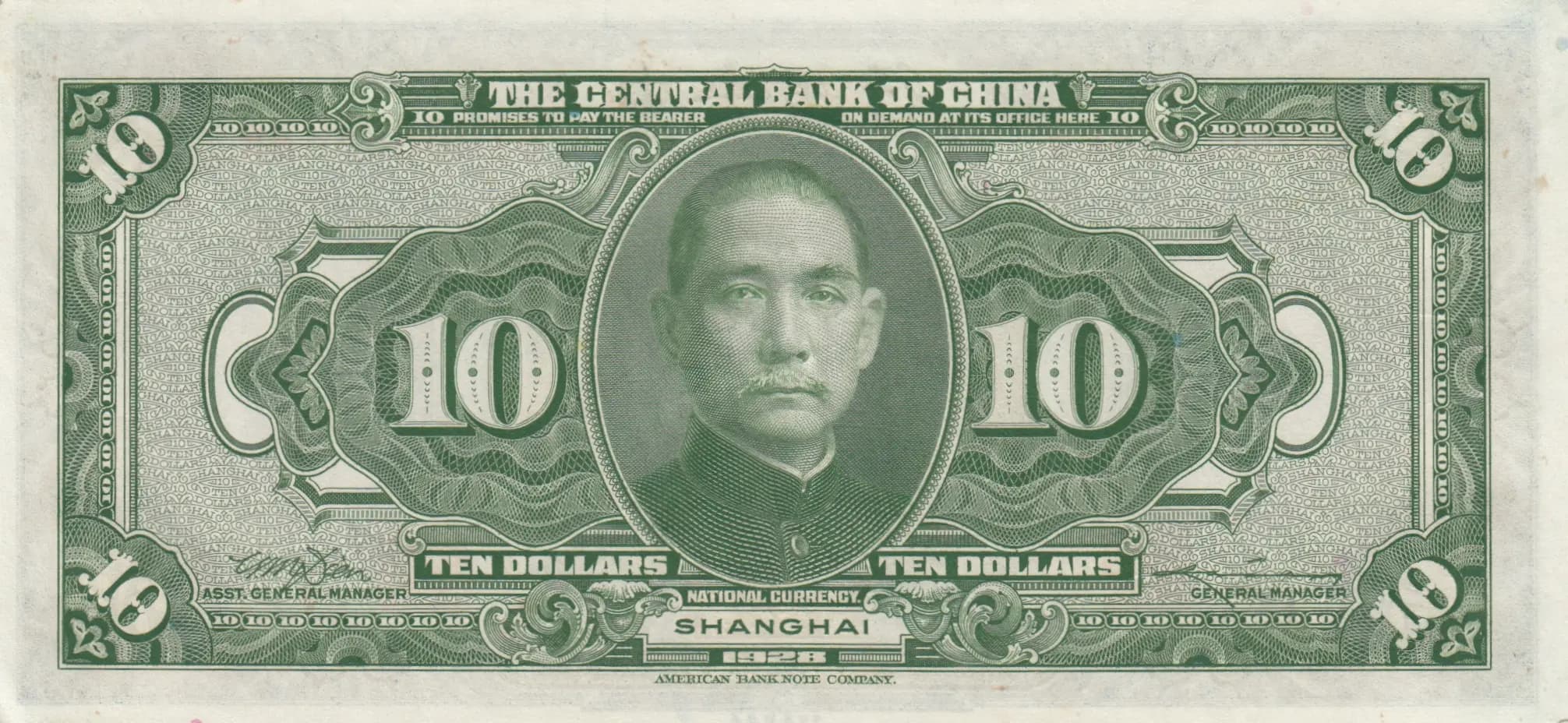
This is a 1928 Central Bank of China 10 Dollar note (Pick P-197h) in AU condition, displaying exceptional preservation with vibrant colors and crisp paper quality. The obverse features an ornate traditional Chinese design with elaborate blue and red decorative elements centered on the denomination cartouche, while the reverse presents a formal portrait in green with bilingual English/Chinese inscriptions typical of this issue. The note represents an excellent example of early Republican-era Chinese currency produced by the American Bank Note Company in Shanghai.
Common. Despite its age and historical interest, this Pick P-197h variety remains commonly encountered in the market. Evidence supporting this assessment includes consistent eBay sales activity spanning from 2011 to 2024 with notes regularly selling for $3-$16 in circulated grades, and $10-$52 in uncirculated grades. The 2016 catalog values (UNC: $10) further reinforce common status. Large print runs by the Central Bank of China and the American Bank Note Company, combined with reasonable survival rates of these notes, result in steady availability and modest pricing despite being nearly a century old.
Issued in 1928 during the Republic of China period (specifically the 17th year of the Republic of China as marked on the obverse), this note reflects the modernization of Chinese currency under the Central Bank of China's oversight. The bilingual English and Chinese inscriptions, combined with production by the American Bank Note Company in Shanghai, illustrate the international cooperation and Western influence characteristic of 1920s China's financial institutions. The formal portrait on the reverse likely depicts a key government or banking official of the era, representing the authority behind this national currency.
The 10 Dollar note employs a bilingual design reflecting China's international banking practices. The obverse showcases traditional Chinese artistic elements with an elaborate symmetrical medallion featuring wave-like patterns and geometric designs in navy blue and red-orange on a cream background. Four corner ornaments display traditional Chinese dragon and floral motifs, with the central cartouche prominently displaying '拾圓' (Ten Yuan). The reverse presents a formal male portrait in an oval medallion frame, surrounded by ornate decorative scrollwork and corner cartouches, printed predominantly in green. This dual design approach—traditional Chinese aesthetics on the front and Western formal portraiture on the back—exemplifies the cultural synthesis of Republican China. The note includes promise-to-pay language standard for the era and identification of Shanghai as the banking center.
FRONT SIDE: 中央銀行 (Central Bank) | 拾圓 (Ten Yuan) | 上海 (Shanghai) | 中華民國十七年印製 (Printed in the 17th year of the Republic of China) | Serial number: $X006888MH | BACK SIDE: THE CENTRAL BANK OF CHINA | 10 PROMISES TO PAY THE BEARER ON DEMAND AT ITS OFFICE HERE 10 | TEN DOLLARS | NATIONAL CURRENCY | SHANGHAI | 1928 | ASST. GENERAL MANAGER | AMERICAN BANK NOTE COMPANY
Intaglio engraving (fine line engraving and steel plate printing), with additional security elements achieved through complex guilloche patterning and intricate decorative border work. The American Bank Note Company, one of the world's premier security printers, executed the production in Shanghai. Multiple color printing was employed, with distinct color schemes for each side (dark blue/multicolor obverse, green reverse) applied through sequential intaglio passes. The level of detail and security features observed indicates professional-grade security printing characteristic of ABNC's output.
This example is identifiable as Pick P-197h based on catalog data provided. The serial number prefix '$X' and the specific design characteristics confirm this designation. Known varieties for this issue may include different signature combinations (noted as 'Signature in green as part of plate' in the reference data) and potential serial number prefix variations. The bilingual design (English/Chinese) and Shanghai printer mark are consistent features. No obvious overprints or exceptional variations are evident from the visual analysis of this particular specimen.