10 cents 1949
Market Prices
2 salesAbout This Note
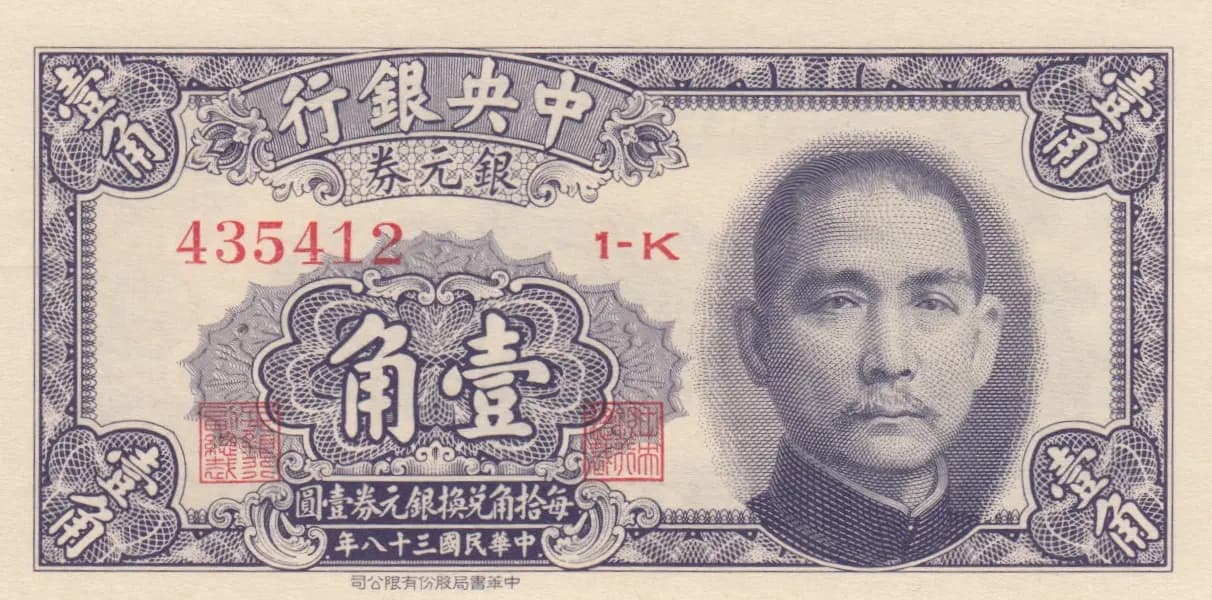
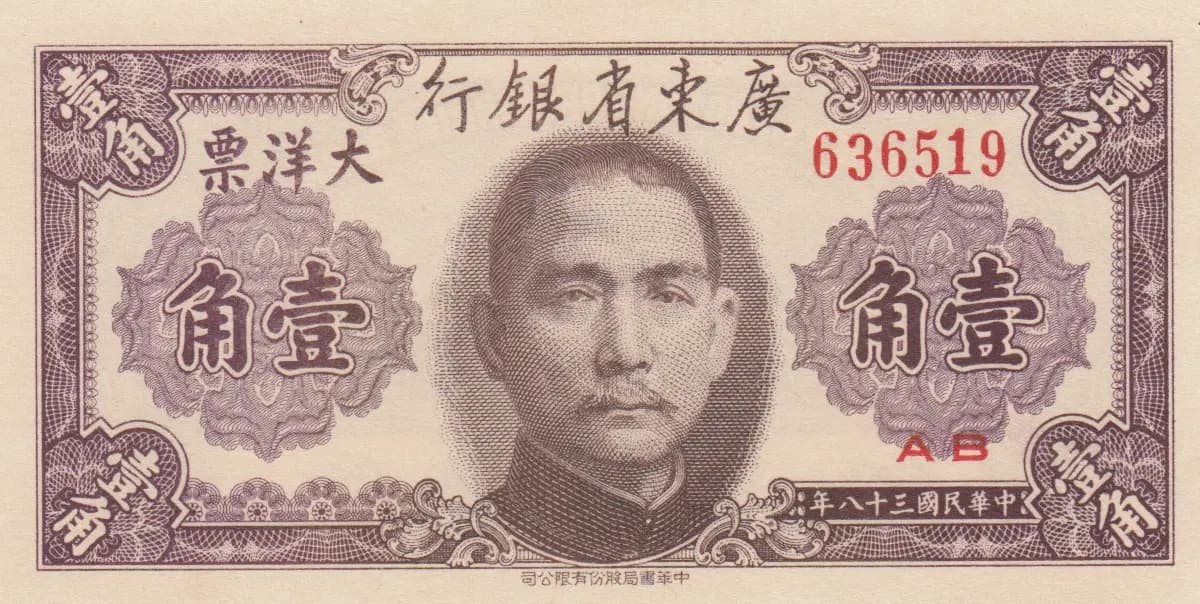
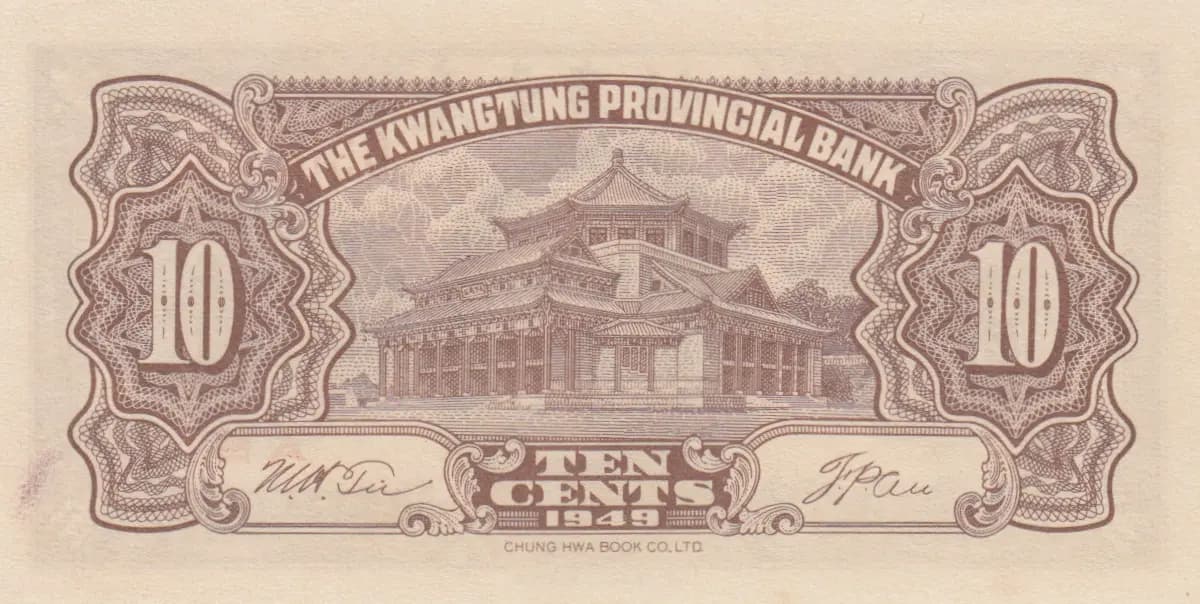
This is a striking example of a 1949 Kwangtung Provincial Bank 10 cents note in uncirculated condition, featuring a dignified male portrait on the obverse and a traditional Chinese pagoda structure on the reverse. The note exhibits exceptional clarity with crisp printing, intricate engraving work, and well-preserved colors in purple/mauve and brown tones. The bilingual design (Chinese and English) and use of classical architectural imagery reflect the transitional period of Chinese banking during the final year before the PRC was established.
Common. This is a regular issue from the final years of provincial bank circulation in China. The eBay market data confirms common status, with PMG 65 and PMG 66 examples selling for modest prices ($18-$22.50) with moderate bidding activity, typical of widely available notes. No evidence suggests limited print runs, recall status, or scarcity within the Kwangtung Provincial Bank series.
Issued in 1949, this Kwangtung Provincial Bank note represents the final year of the Nationalist-era provincial banking system before the communist takeover. The traditional Chinese pagoda depicted on the reverse symbolizes cultural continuity, while the bilingual English-Chinese inscriptions reflect Guangdong's historical position as a treaty port with significant Western commercial influence. The note's existence itself is historically significant as one of the last issues from this regional bank before the entire monetary system was restructured under the People's Republic.
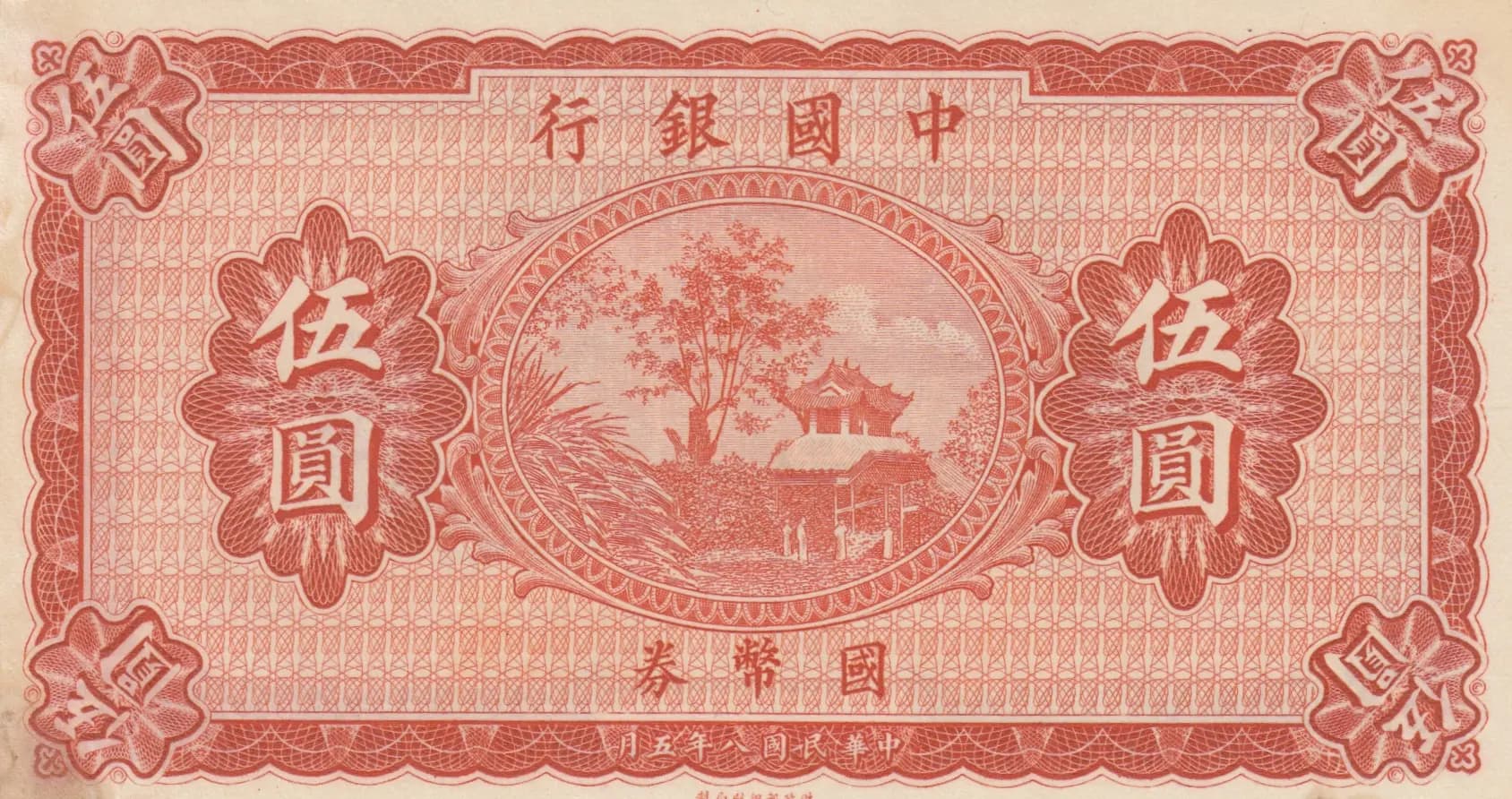
The obverse features a formal portrait of a male figure, rendered in classical engraved style, occupying the central focal point and surrounded by ornate guilloche patterns and rosette ornamental elements in all four corners. The reverse displays a multi-tiered traditional Chinese pagoda or temple building with elaborate roofing characteristic of classical Chinese architecture, centered within decorative rectangular frames. Both sides employ elaborate decorative borders with floral and geometric patterns, and fine crosshatch backgrounds typical of high-security engraving. The denomination is presented both in Arabic numerals and spelled out in English, indicating this note's intended use in international commerce within Guangdong.
FRONT SIDE: '廣東省銀行' (Bank of Guangdong Province), '大洋票' (Large Ocean Ticket/Banknote), '中華民國十八年' (18th Year of the Republic of China — corresponds to 1929 in the traditional Chinese calendar system, though the note is dated 1949), '中央造幣廠印行' (Printed by Central Mint), Serial number '636519' with letter designations 'A B'. BACK SIDE: 'THE KWANGTUNG PROVINCIAL BANK', '10' and 'TEN CENTS' (denomination indicators on left and right), '1949' (year of issue), 'CHUNG HWA BOOK CO. LTD' (printer attribution).
The note was produced using traditional intaglio engraving, as evidenced by the fine line work, intricate crosshatch patterns, guilloche security features, and detailed architectural rendering visible throughout both sides. According to the inscriptions, the back side was printed by Chung Hwa Book Co. Ltd, a notable Shanghai-based printer. The Central Mint (中央造幣廠) is credited on the obverse, indicating government involvement in production quality control.
The observed serial number is 636519 with letter designations A B. This note represents the 1949 issue date variety, distinguishing it from earlier Kwangtung Provincial Bank emissions. The Chung Hwa Book Co. Ltd printer attribution on the reverse is a notable production variety. No overprints or signatures are visible in the analysis. Collectors should note that this specific Pick catalog number (P-S2454) may encompass multiple serial ranges and printer variations across the 1949 production run.