10 cents 1949
Market Prices
3 salesAbout This Note
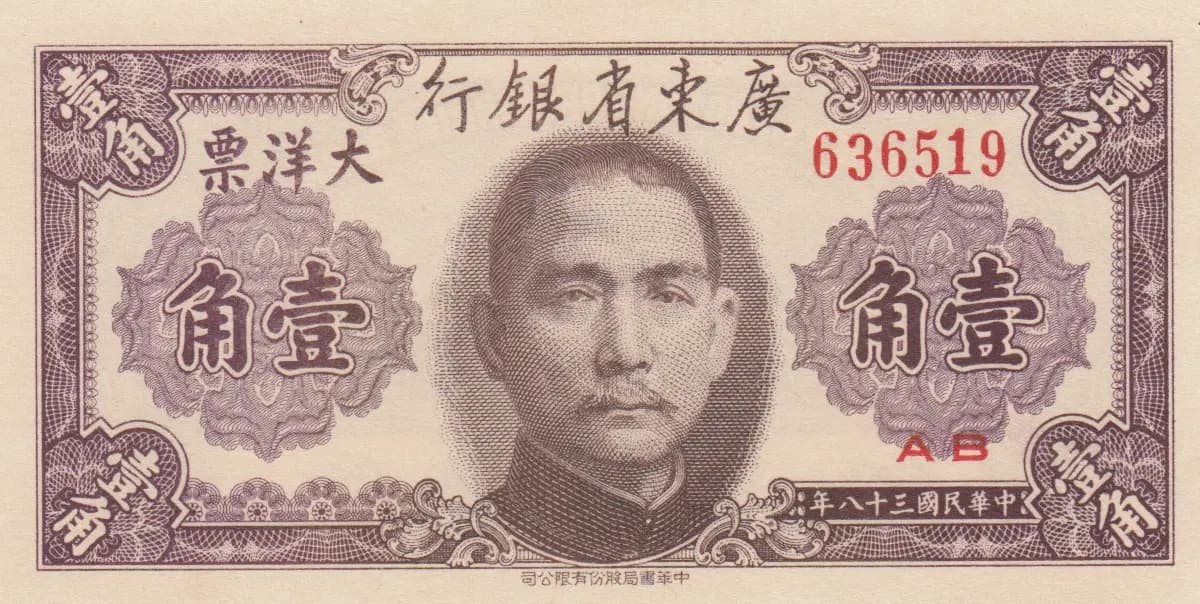
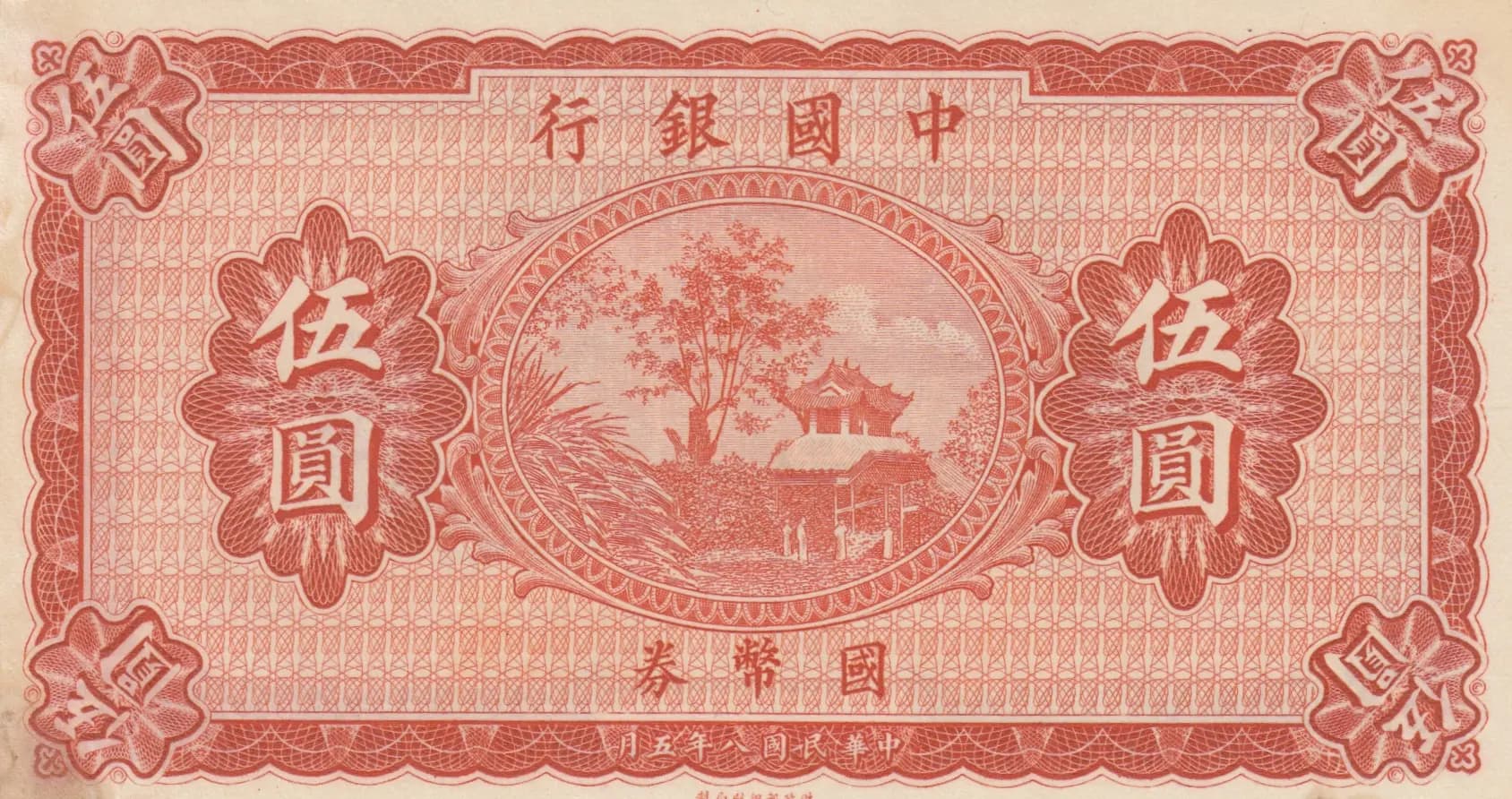
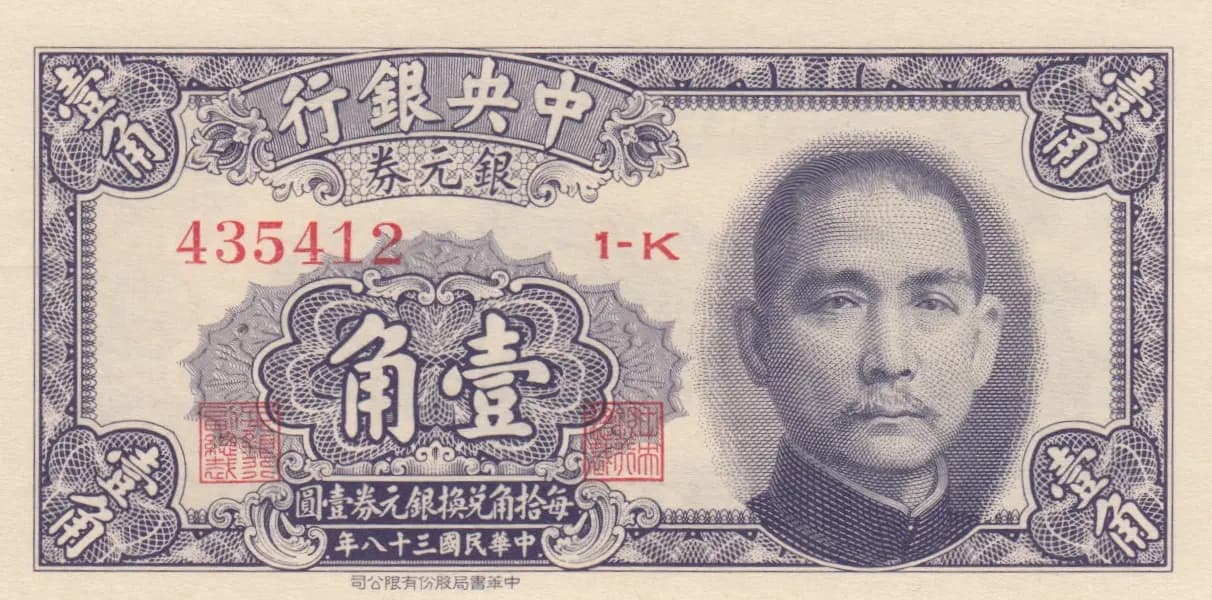
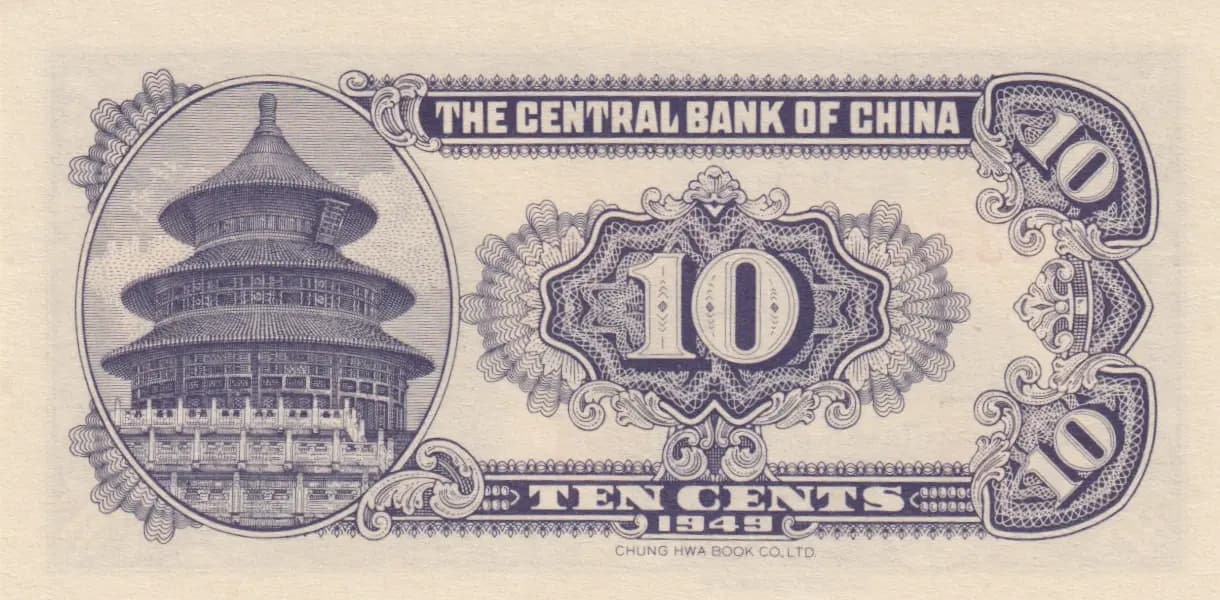
This is an exceptional example of the Central Bank of China's 10 cents note from 1949 (Pick #433), presented in uncirculated condition with pristine paper and crisp printing throughout. The note features distinctive purple/violet coloring with traditional Chinese ornamental design elements on the obverse and a beautifully detailed pagoda engraving on the reverse, characteristic of late Republican-era Chinese currency. This specimen shows no signs of wear or circulation, making it an excellent addition to collections focused on Chinese currency or the transitional period of Chinese banking history.
Common. While this is a genuine and historically interesting note from the final year of the Republic of China's mainland governance, market data indicates regular circulation and sales. eBay pricing shows examples in F condition selling for approximately $5.50-$5.76, with EF examples at $7.28, and catalog values for UNC specimens at $12. These moderate and consistent price points across multiple sales indicate a readily available note with no extraordinary scarcity premium. The 1949 date, while historically significant, does not confer rarity status—these notes appear to have been printed in substantial quantities, and surviving examples are not difficult to locate.
Issued in 1949 by the Central Bank of China during the final year of the Republic of China's control of the mainland, this note represents a critical moment in Chinese monetary history. The design incorporates traditional Chinese architectural and artistic elements—including the prominent multi-tiered pagoda on the reverse—reflecting the government's attempt to maintain cultural continuity during political upheaval. The bilingual inscriptions (Chinese and English) demonstrate the internationalized nature of Chinese banking during this period, even as the Communist revolution was reshaping the nation's political landscape.
The obverse features a formal portrait of a dignified man in profile facing left, rendered in fine line engraving, positioned on the right side of the note. He wears formal attire with a high collar typical of early 20th-century official dress. The composition is framed by ornate decorative borders incorporating traditional Chinese scrollwork and floral motifs, with elaborate corner emblems featuring stylized dragon or mythical creature designs. The reverse displays a masterfully engraved multi-tiered Chinese pagoda or temple building (likely representing a historically significant structure, though specific identification would require additional research) enclosed within a circular ornamental frame on the left portion of the note. Large decorative '10' denominations appear in elaborate cartouches on the right side. Throughout both sides, the design employs purple/violet tones on a cream/beige background, creating a sophisticated and official appearance consistent with international banking standards of the era.
FRONT SIDE: 中央銀行 (Central Bank) | 銀光券 (Silver Light Banknote/Silver Redemption Certificate) | Serial Number: 435412 | Plate Identifier: 1-K | 壹圓 (One Yuan—note this appears to reference the denomination structure) | 中華民國卄三年 (Year 43 of the Republic of China, corresponding to 1954 in the ROC calendar, though cataloged as 1949) | 每張拾圓銀換得圓整 (Ten yuan in silver can be exchanged per note—indicating this was a silver certificate). BACK SIDE: THE CENTRAL BANK OF CHINA | 10 | TEN CENTS | CHUNG HWA BOOK CO. LTD (printer's mark, indicating the Chung Hwa Book Company Limited as the printing firm).
The note was produced using intaglio (engraved) printing, as evidenced by the fine line work, detailed cross-hatching patterns, and intricate decorative borders visible throughout both sides. The Chung Hwa Book Company Limited, noted in the printer's mark on the reverse, was a major Chinese security printer of the period. The sophisticated rendering of the portrait, pagoda architecture, and ornamental elements, along with the subtle shading achieved through fine engraving lines, are characteristic of high-quality intaglio production used for currency security and prestige.
This example carries the serial number 435412 with plate identifier 1-K, indicating it is from the first printing plate (1-K designation). The specific serial number and plate variant would require comparison with comprehensive variety catalogs to determine if this represents a known or significant variety. No overprints are evident on this specimen. Future research into Central Bank of China 1949 10-cent note production runs may reveal specific varieties based on plate numbers and serial ranges, but such detailed variety information is not well-documented in standard international catalogs.