1 yuan 1923
Market Prices
About This Note
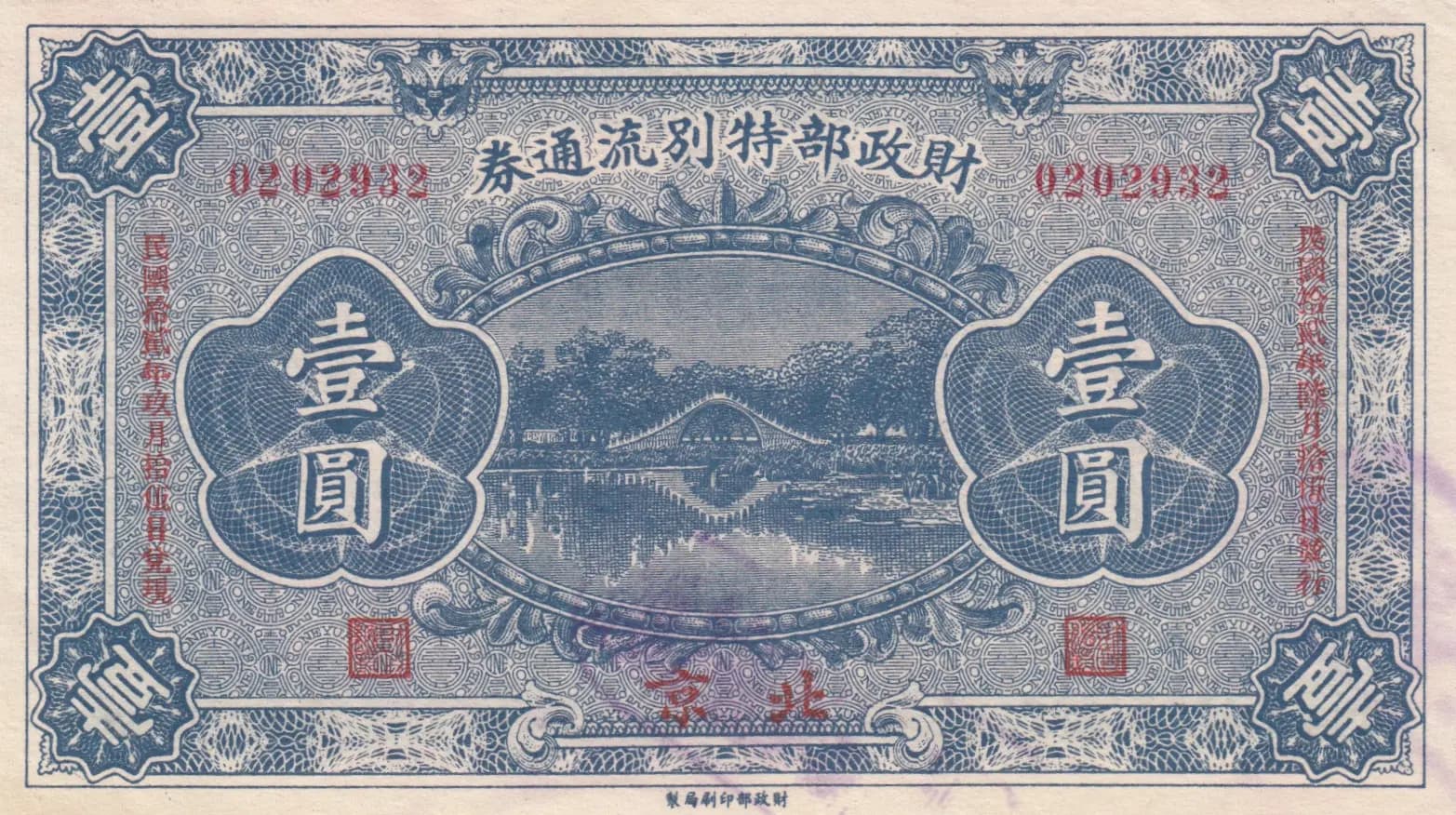
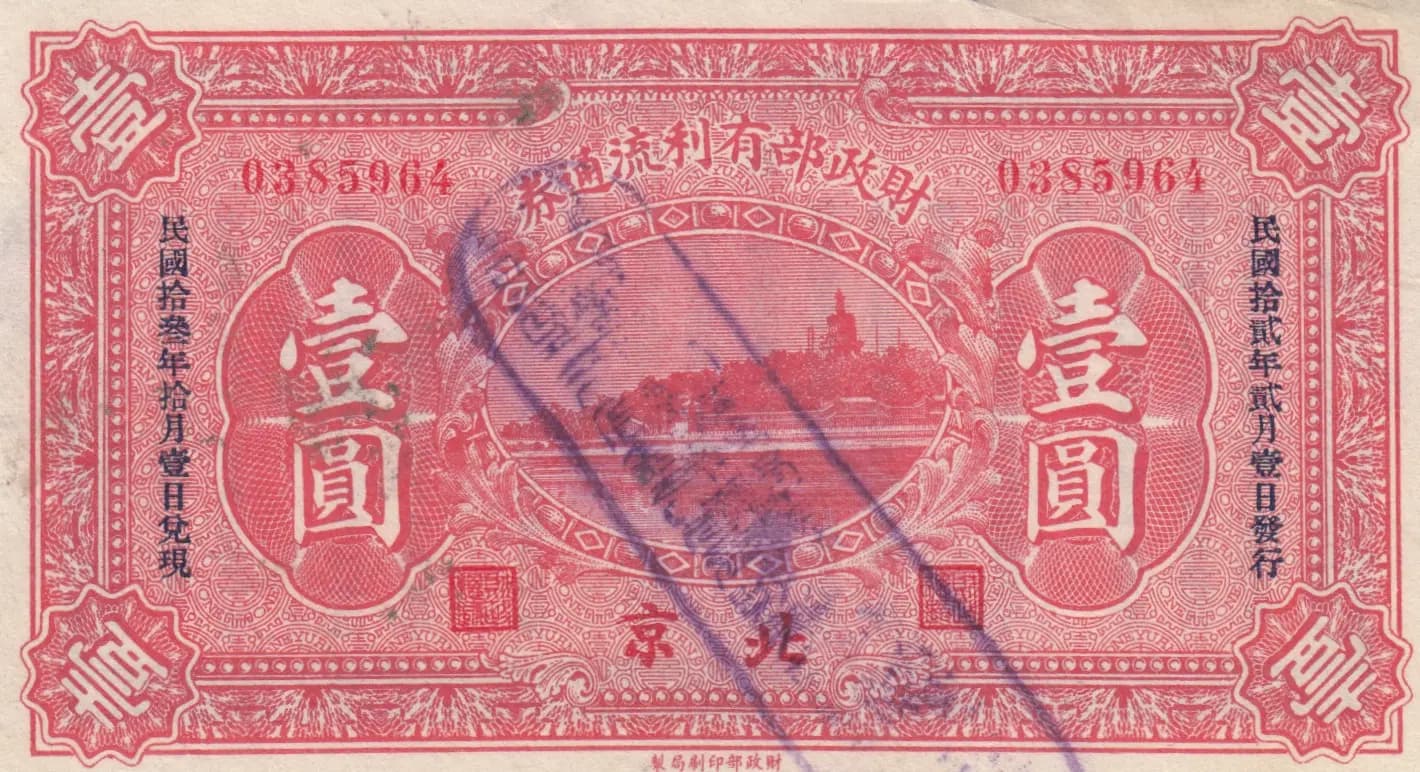
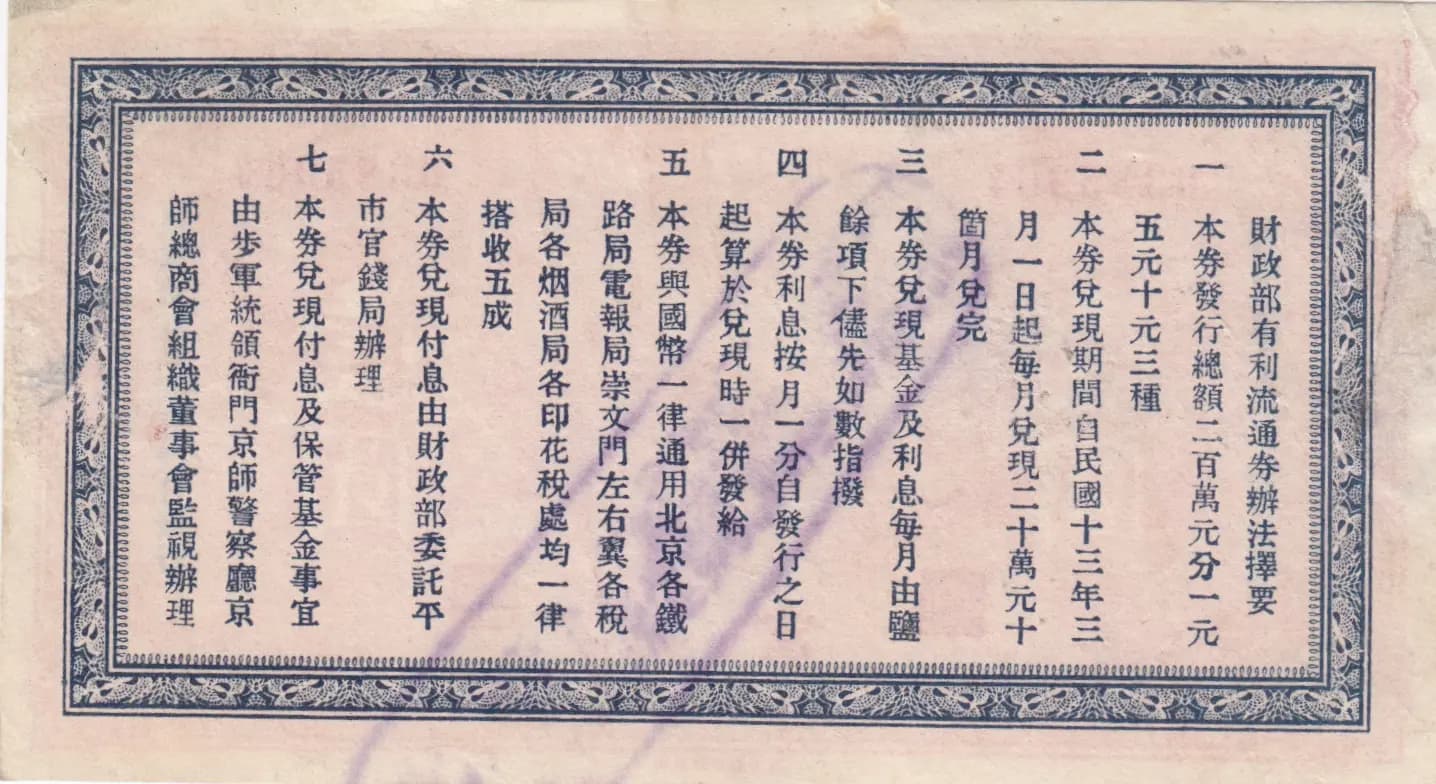
This 1923 Chinese 1 Yuan Interest Bearing Circulating Note (Pick 641a) features an attractive pink/red design with an ornate central vignette depicting a pagoda or temple on a hillside overlooking water, framed by elaborate geometric and floral borders with radiating sunburst corner designs. The note displays an AU condition grade with visible age-related wear and a purple/blue cancellation stamp across the center, which is typical for notes from this Republican era period. The reverse contains detailed administrative text regarding interest payment procedures and circulation regulations, reflecting the unique function of these government-backed financial instruments.
Common. eBay price data shows AU examples ranging from $35.00 to $312.50 USD with a median around $150 USD, and the 2016 catalog value for UNC is only $30. The wide range of AU sales prices ($35–$312.50) reflects normal market variance and condition nuances within the AU grade rather than rarity. Notes with circulating cancellation marks like this specimen are particularly common, as they represent high-volume government-issued financial instruments that saw extensive circulation. The issuer (Interest Bearing Circulating Notes) had significant print runs across multiple denominations and dates.
These Interest Bearing Circulating Notes were issued by China's Finance Ministry during the Republic of China period (民國) as a mechanism to generate government revenue while providing monthly interest payments to holders. The reverse specifically references March 10, 1924 (民國十三年三月十日), indicating this 1923-dated note was part of an ongoing circulation system managed across multiple government departments including the Finance Ministry, Salt Tax Administration, and Beijing Police Department. The ornate temple/pagoda landscape imagery symbolizes traditional Chinese cultural heritage during a period of modernization and financial restructuring in the early Republican era.
The obverse (front) features a horizontally-oriented rectangular composition dominated by a pink/rose colored background with white and red accents. The central focal point is an oval medallion containing a classical Chinese landscape scene depicting a multi-tiered pagoda temple situated on a hillside with a water feature (river or lake) in the foreground, rendered in fine engraved detail. This landscape vignette is flanked on either side by large Chinese denomination characters (壹圓) contained within ornamental cartouches. The entire design is framed by an elaborate decorative border of interlocking geometric patterns, floral motifs, and radiating sunburst designs in the four corners—all typical anti-counterfeiting elements of early 20th-century Chinese currency. The reverse side displays a cream/beige background with dark blue printed text arranged in formal columns within a decorative rectangular frame, containing government-mandated regulatory information regarding the note's use as an interest-bearing instrument.
FRONT: '民國紀年十月壹日發行' (Republic era, October 1st issue) and '壹圓' (One Yuan). BACK: '民國十三年三月十日' (Republic year 13, 3rd month, 10th day / March 10, 1924); '財政部發行流通券辦法撮要' (Summary of Finance Ministry Circulating Note Issue and Management Methods). The reverse contains extensive regulatory text regarding monthly interest payments ('本券每月付息') beginning March 10, 1924, distribution procedures, and administrative oversight by the Finance Ministry, tax authorities, postal and railway departments, and Beijing municipal offices, with specific mention of compensation funds and interest management protocols.
Intaglio engraving (line engraving/copperplate printing), evidenced by the intricate fine-line work visible throughout the geometric patterns, radiating designs, and detailed landscape vignette. The complex linear geometry, sharp corner designs, and elaborate border patterns are characteristic of high-security intaglio production. The precision of the engraved lines and the consistent depth of the decorative elements suggest professional security printing, likely produced by a Chinese government printing facility or contracted security printer during the early Republican period.
This specific example bears a purple/blue cancellation stamp across the center, which is a common post-circulation marking for these Interest Bearing Notes and does not constitute a distinct variety. The note is dated to the Republic year 13 (1924) on the reverse regulatory text while bearing an October 1st issuance date reference on the obverse. Pick 641a designation indicates this is the primary variety of the 1923 1 Yuan Interest Bearing Circulating Note; no major signed or alternate varieties are noted for this denomination and date combination. The visible wear and cancellation are consistent with regular circulation rather than indicating a rare printing variant.