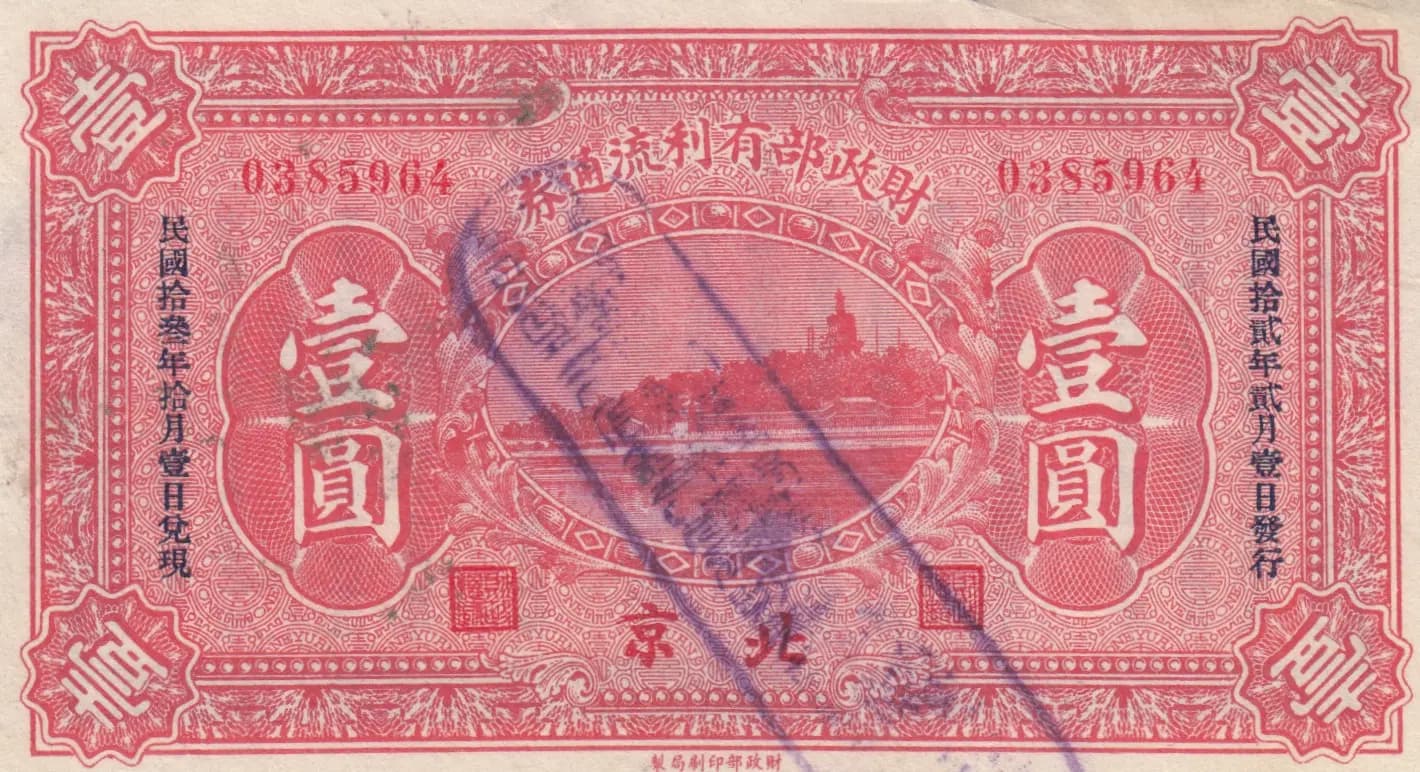
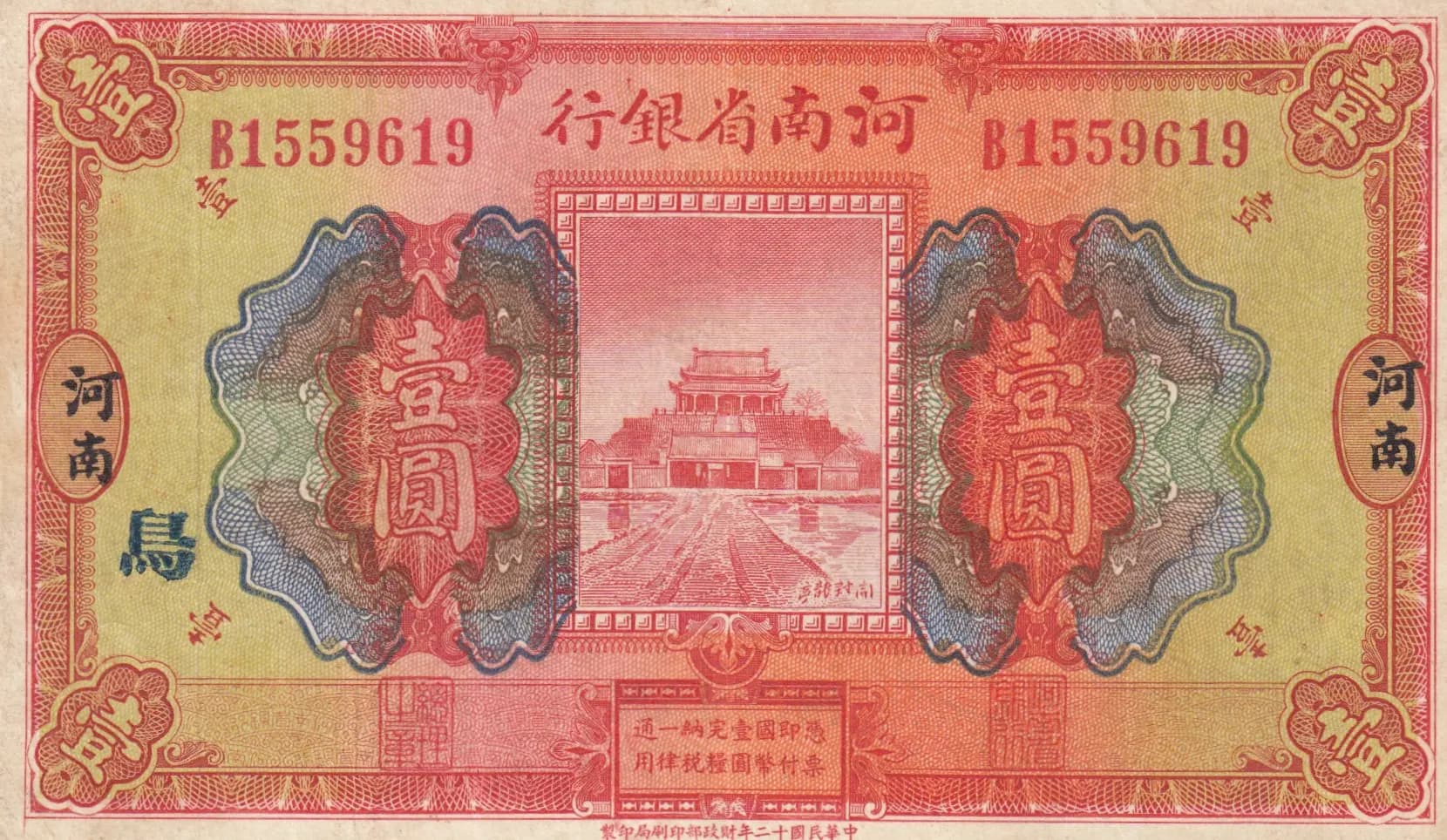
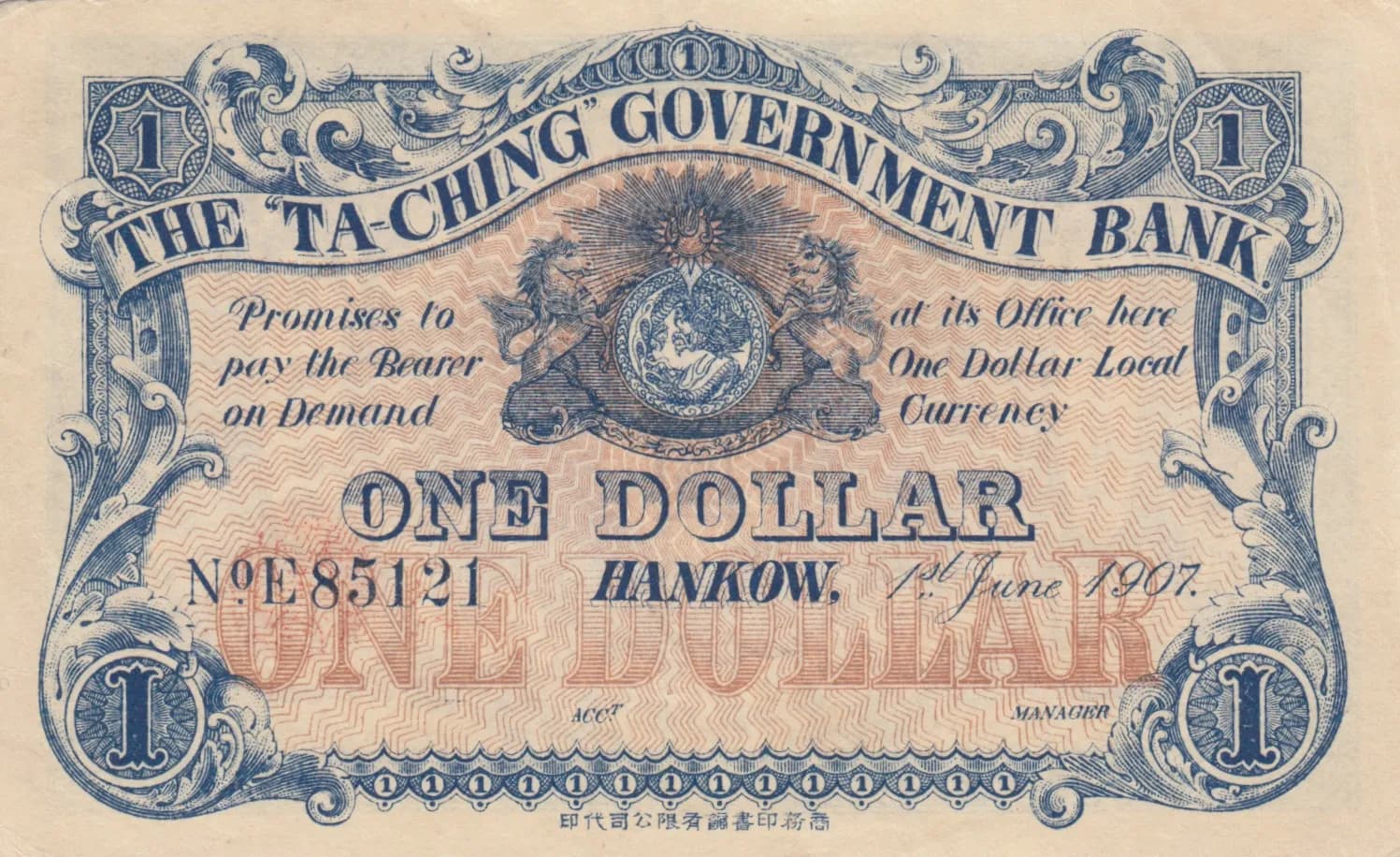
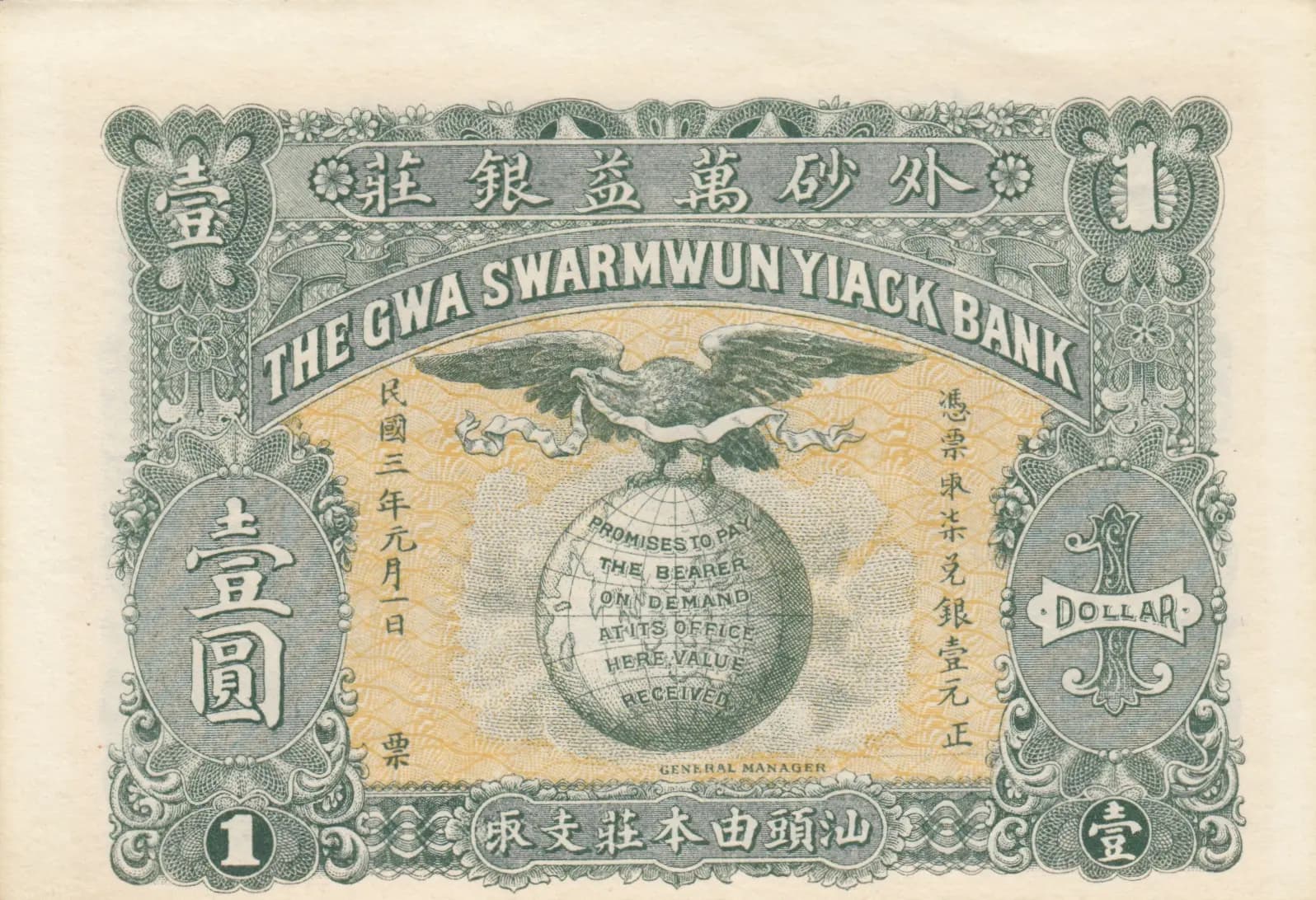
1 yuan 1923
Market Prices
3 salesAbout This Note
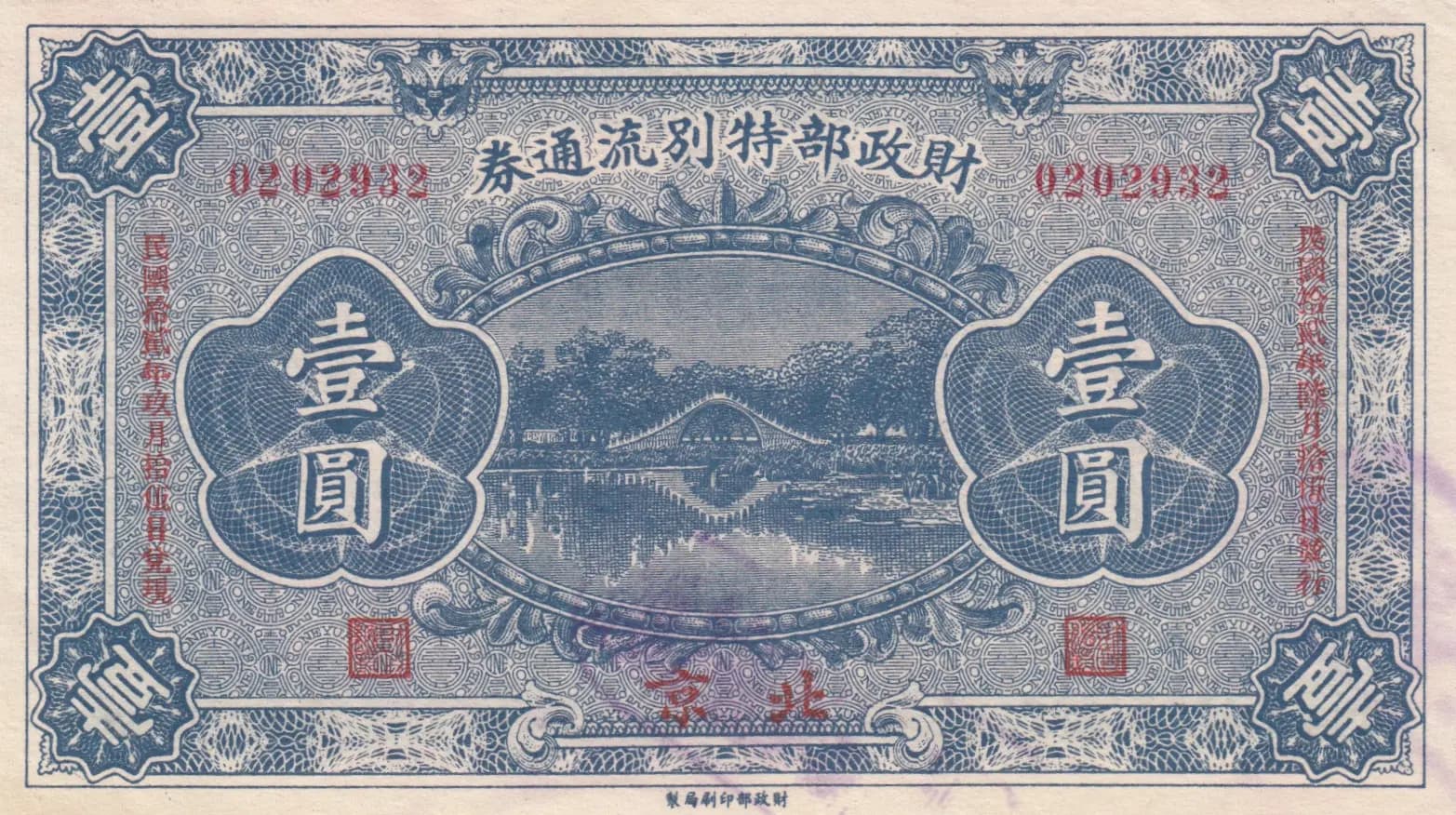
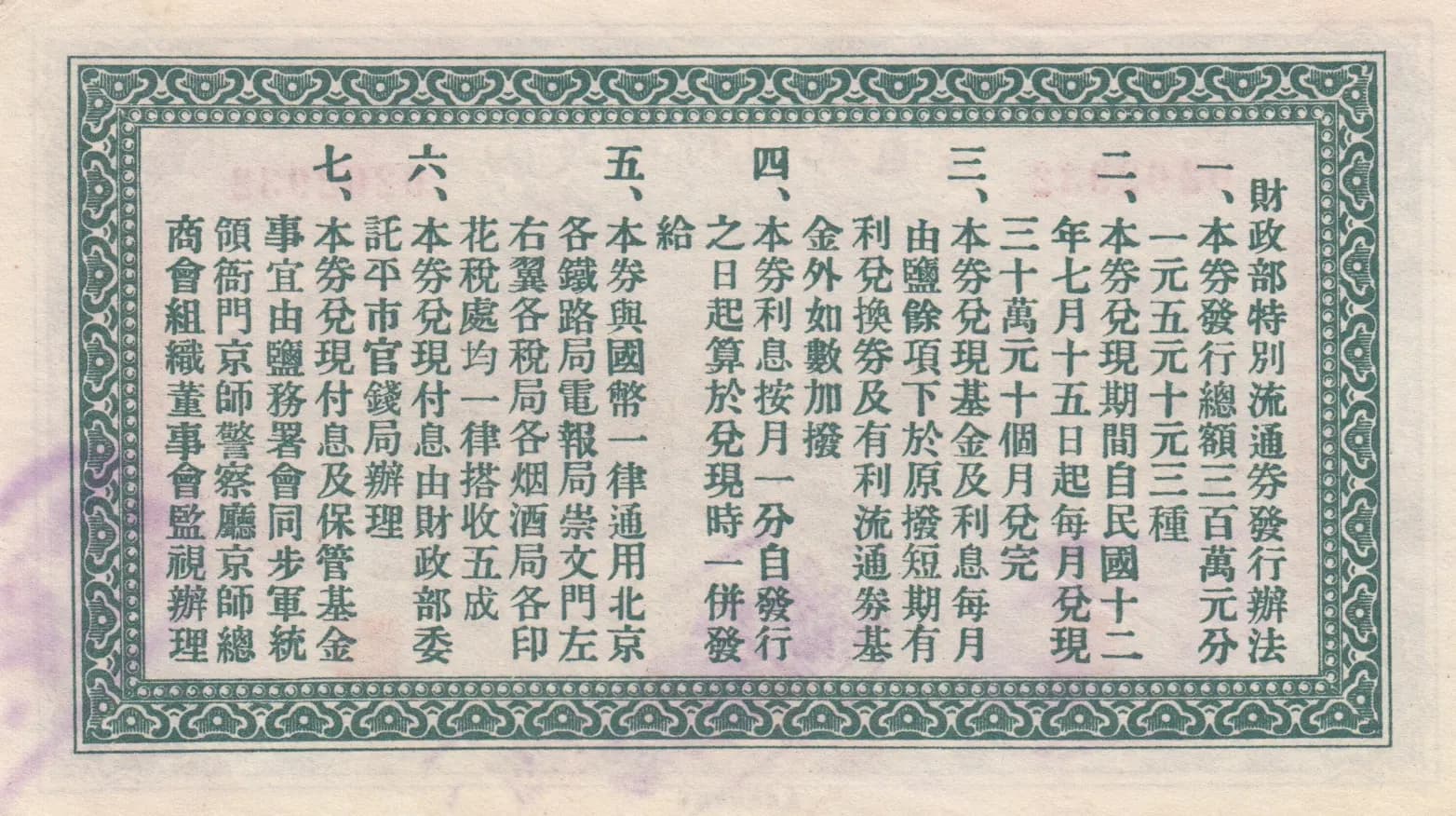
This 1923 Chinese 1 Yuan Special Circulation Note (Pick P-623) presents an exceptional example of early Republican-era financial instruments with distinctive landscape imagery and ornate decorative design. The note exhibits AU-grade characteristics with fine line engraving throughout, predominantly blue coloring with red accents, and minimal wear aside from light foxing and minor edge discoloration. The front features an arched bridge spanning water with mountains and structures in a landscape composition, framed by cloud-shaped cartouches containing the denomination, while the reverse contains dense regulatory text in traditional vertical format—a fascinating historical artifact documenting the Ministry of Finance's special bond issuance methods.
Common. The eBay price data provided shows consistent trading in the $26-$50 range across multiple sales over a decade-long period (2015-2018), with multiple bids indicating steady collector interest and supply. The 2016 catalogue valuations showing UNC at $35 align with observed market prices, and the fact that VF examples regularly sold for $14-$34 demonstrates this as a regularly available note in the secondary market. The AU-grade specimen observed here falls within expected pricing ranges for this issue. While Special Circulation Notes from the Republican period have historical significance, their production appears to have been sufficient to maintain circulation in the collector market without scarcity premiums.
Issued during the fragmented early Republican period of China (1912-1928), this Special Circulation Note represents the Ministry of Finance's attempt to stabilize currency and finance governmental operations through bond instruments. The landscape composition with its bridge and mountainous terrain reflects traditional Chinese artistic motifs while the bureaucratic text on the reverse—detailing three-year and thirty-year bond terms with monthly interest payments—illustrates the modernizing financial mechanisms being implemented despite political instability. The 1923 date places this note during the height of regional fragmentation, making it a significant record of centralized financial ambitions during a period when multiple authorities competed for monetary control.
This note showcases a sophisticated landscape composition centered on an arched bridge spanning a river or water body, with mountains rendered in the background and architectural structures visible along the shoreline—likely representing an idealized vision of modernized Chinese infrastructure. The front is framed by an ornate geometric border featuring cloud motifs and four-pointed star ornaments in the corners, with the denomination displayed prominently in two cloud-shaped cartouches flanking the central scene. The design employs fine line engraving creating intricate background patterns that serve dual purposes—aesthetic appeal and security. The reverse presents a dense, formal appearance with teal-green text on cream background, bordered by repeating heart or shell-shaped geometric ornaments, establishing a stark contrast between the decorative landscape obverse and the regulatory authority of the reverse. The color scheme (predominant blue with white elements and red-brown accents on the front; cream and dark teal on the back) reflects period printing capabilities and the note's status as a financial instrument requiring both visual authority and aesthetic refinement.
FRONT SIDE: 財政部特別流通券 (Ministry of Finance Special Circulation Bond); 壹圓 (One Yuan) - appears twice in cloud-shaped cartouches on either side. BACK SIDE: 財政部特別流通券發行辦法 (Ministry of Finance Special Circulation Bond Issuance Methods). The regulations detail: (1) Bonds denominated from fifty cents to one yuan issued from the 17th-15th of the first month with three-year terms; (2) Five yuan denominations with thirty-year terms bearing monthly interest payments; (3) Principal and interest payments with exemptions from current redemption requirements. Additional regulatory columns specify conditions governing the bond's circulation, redemption procedures, and legal framework for the financial instrument.
This note was produced using fine line engraving combined with multicolor printing techniques characteristic of early 20th-century Chinese financial documents. The intricate geometric patterns, decorative flourishes, and consistent line weights throughout indicate professional security printing using intaglio or engraving methods. The precision of the ornamental border design and the legibility of the dense regulatory text on the reverse suggest production by a specialized security printer, likely a foreign or foreign-trained facility given the technical sophistication. The multicolor overprinting (blue, red, and other tones on the obverse) demonstrates advanced chromatic printing capabilities. While the specific printer identification requires specialized archival research, the technical execution suggests work by one of the treaty-port security printers or foreign concession printing houses that dominated Chinese financial printing during this period.
No specific variety characteristics are discernible from the visual analysis provided. Standard varieties for this Pick number would include potential differences in serial number prefixes, signature combinations of Ministry officials, or minor printing variations across production batches. The specimen observed shows consistent design execution typical of the primary issue. Detailed variety documentation would require examination of serial numbers, official signatures, and comparison against known state printing variations—information not fully visible in the provided imagery. Further research in specialized Republican-era Chinese numismatic catalogs or archives would be necessary to identify any recognized varieties for P-623.