1 yen 1938
About This Note
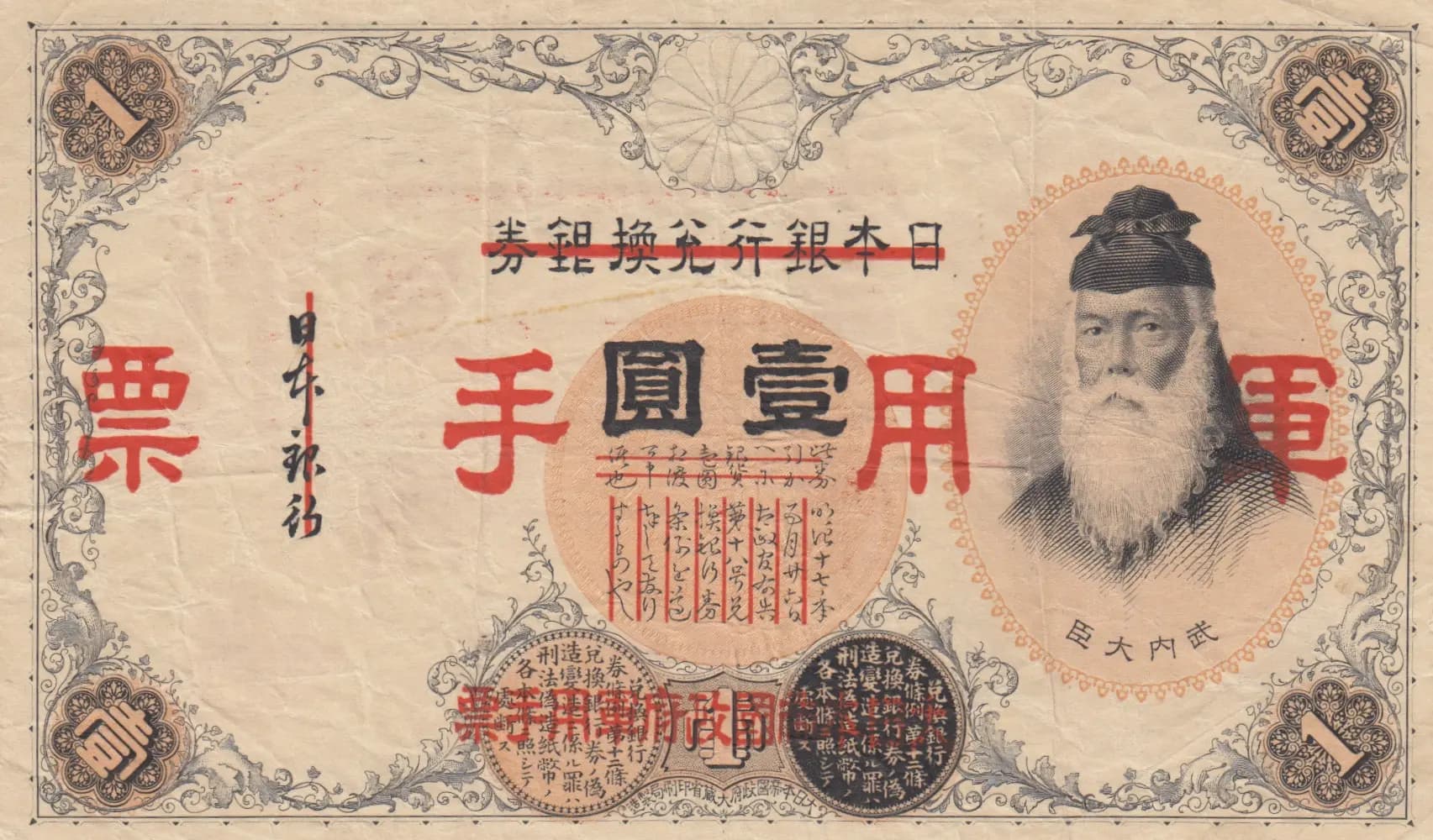
This is a 1 yen banknote issued by the Japanese Military in 1938 (Pick M22), featuring an elegant design with ornate corner flourishes and a portrait of a bearded man in traditional Chinese dress on the obverse. The note displays typical aging characteristics including foxing and discoloration consistent with its age, yet remains in VF condition with clear inscriptions and well-preserved ornamental details. The combination of Japanese issuer identification with Chinese language text and imagery reflects the complex occupation period dynamics, making this a historically significant piece of Japanese militarism in China.
Common. Japanese military occupation currency issued in 1938 during widespread operations in China was produced in substantial quantities to facilitate economic control across occupied territories. The Pick M22 denomination (1 yen) represents the smallest denomination and would have been issued in the highest quantities. While these notes are now nearly a century old and show age-related wear, they were not subject to recall or severe restriction that would create scarcity. VF specimens represent typical survivors of circulation; the denomination and period suggest this is a commonly encountered example in the collector market.
This banknote represents Japanese military occupation currency issued during the Second Sino-Japanese War (1937-1945), specifically during Japan's military expansion in China. The bilingual presentation (Japanese 'Nippon Ginko' with Chinese characters) and the portrait of a traditionally-dressed Chinese figure reflect Japan's attempt to legitimize occupation through cultural assimilation and the establishment of puppet governments. The 1938 date marks the intensification of Japanese military operations in mainland China, and this currency served as an instrument of economic control in occupied territories.
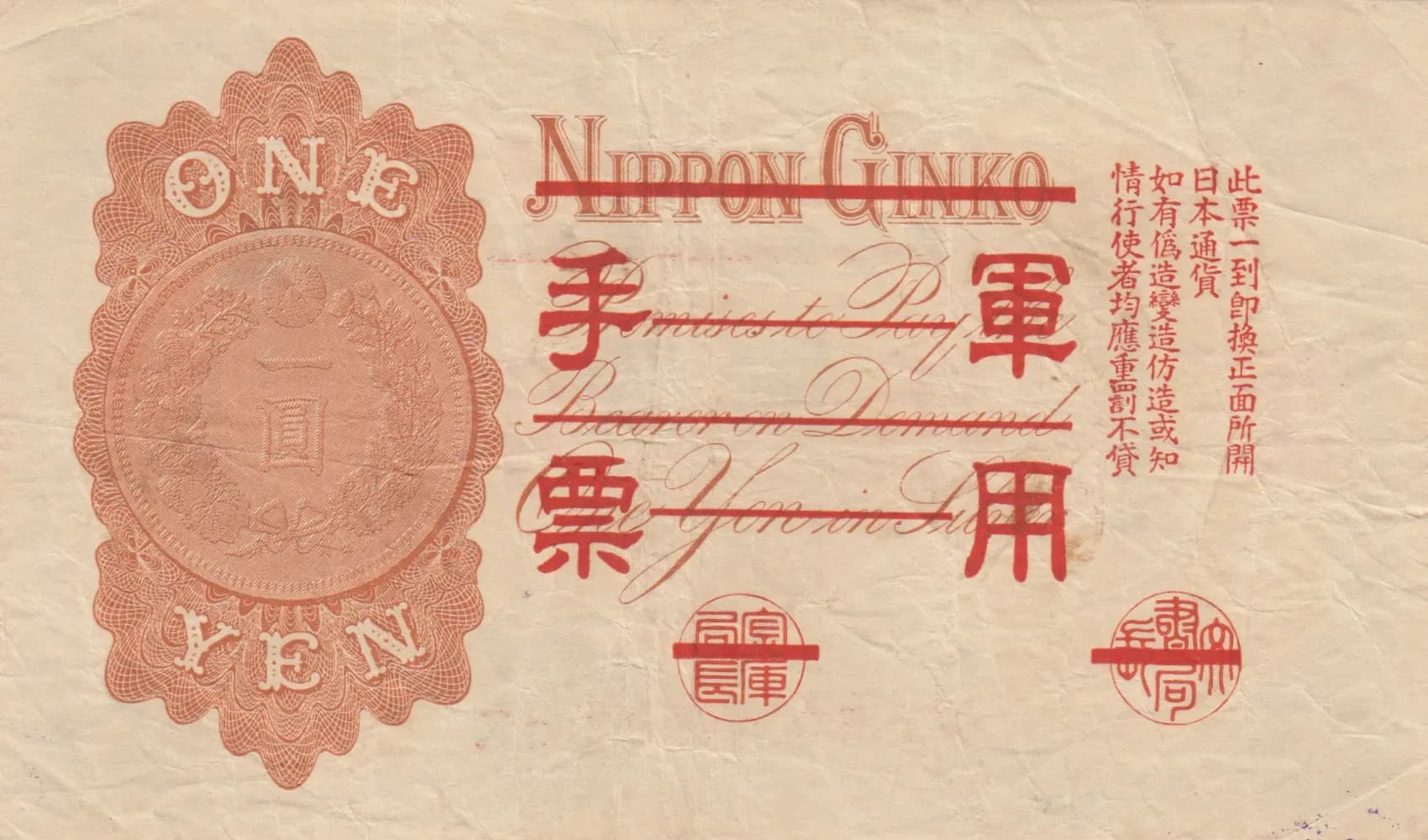
The obverse features a bearded man depicted in profile within a circular frame adorned with a dotted decorative border, positioned on the right side of the note. The figure wears traditional Chinese clothing and hairstyle, likely representing either a historical Chinese figure or a contemporary official from a Japanese-sponsored puppet government. The design is surrounded by elaborate ornamental corner scrollwork rendered in gold and black, with a large peach-colored circular medallion forming the central compositional element. The reverse displays a prominent ornamental circular frame on the left containing what appears to be an imperial dragon or state emblem in pink and red tones, emphasizing sovereignty and official authority. Both sides feature two official circular seals with Chinese characters at the bottom, serving as authentication marks. The color palette of cream, black, red, and gold reflects traditional East Asian design aesthetics while maintaining the austere formality expected of military-issued currency.
FRONT SIDE: The main denomination text reads 'Nippon Ginko En Yohin' (日本銀行圓用票) - 'Bank of Japan One Yen Note' in right-to-left traditional formatting. Additional circular medallion contains repeated 'En' (圓) characters. A name or official identifier appears as 'Takeuchi' (武內) or similar. BACK SIDE: 'NIPPON GINKO' appears in Roman letters identifying the Bank of Japan. Chinese text includes '一圓票' (One Yen Note) and substantial terms and conditions text stating roughly 'The holder of this ticket may use it as specified; it cannot be divided or exchanged separately' along with additional redemption and validity conditions in classical Chinese.
Intaglio engraving (recess printing), evidenced by the fine line work, intricate scrollwork details, ornamental borders, and precise circular frame designs visible throughout. The depth and clarity of the ornamental patterns, portrait rendering, and decorative elements are characteristic of high-security banknote production. The two-color printing (black and red on cream stock) and fine linework indicate professional security printing, likely executed by a Japanese government printing facility such as the Bureau of Engraving and Printing or contracted security printer during the occupation period.
The specific variety would be determined by examination of signature blocks, serial number prefixes, and printing dates if visible. No major variety indicators are distinctly noted in the visual analysis provided. Japanese military currency from this period may exist with minor printing variations or signature differences among authorized officials. Collector research using the Pick M22 catalog reference should consult specialized references on Japanese occupation currency for documented varieties, overprints, or signature variations that may distinguish between specific printing runs.