10 centesimos 1960
Market Prices
38 salesAbout This Note
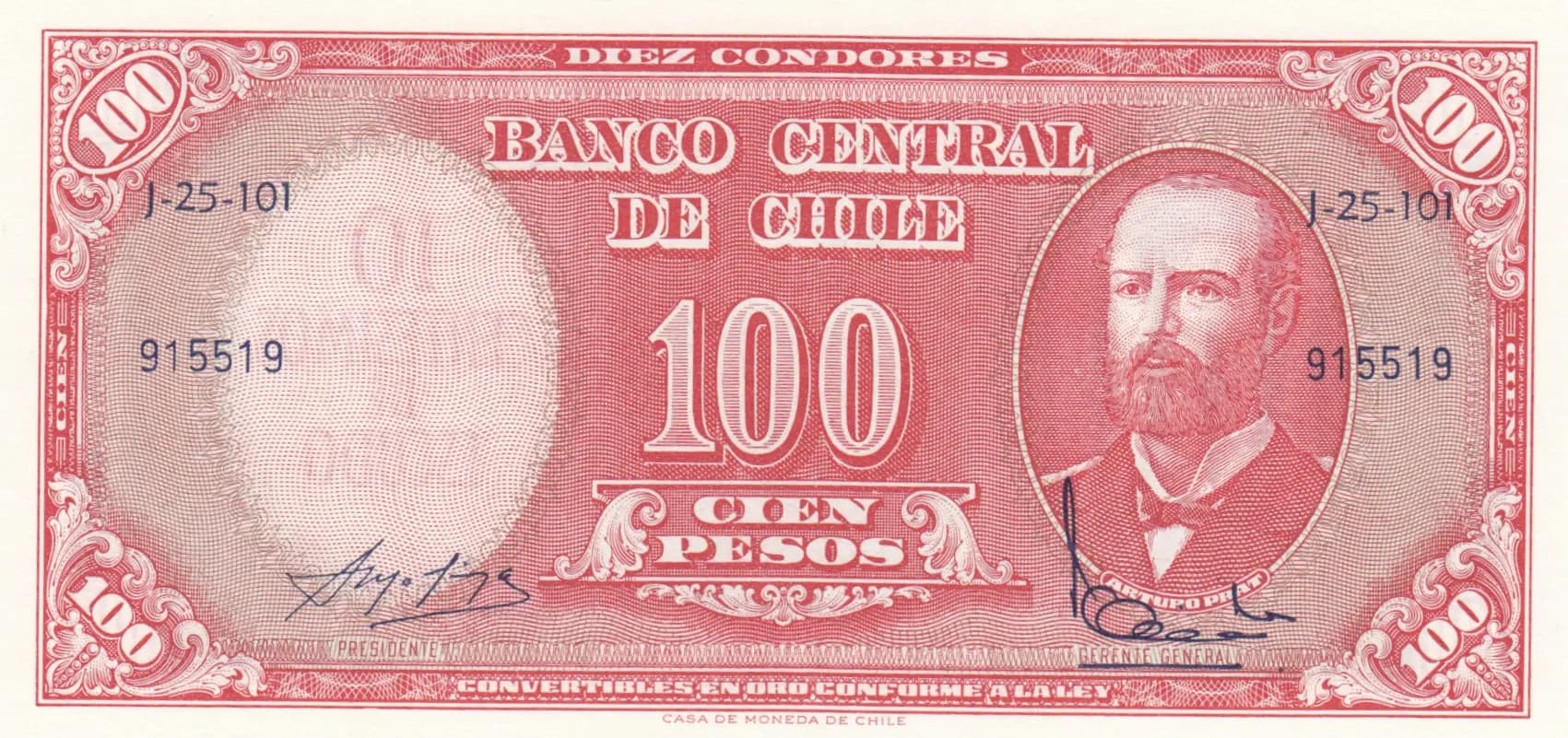
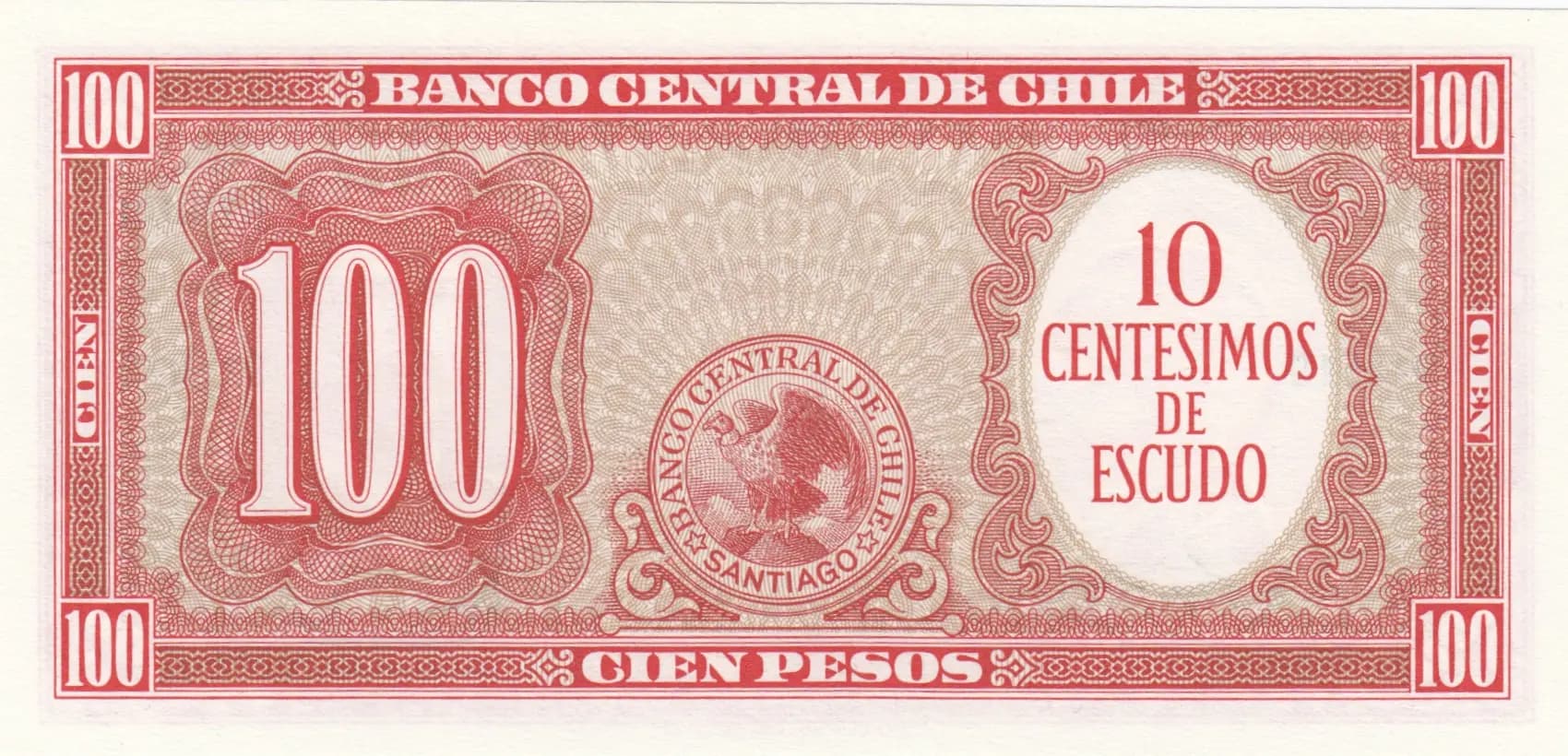
This is a Chilean 10 Centésimos de Escudo note from 1960, issued by the Banco Central de Chile and printed by Casa de Moneda de Chile. The note is presented in uncirculated condition with sharp, crisp printing throughout and no visible wear, creases, or damage. The obverse features a portrait of Arturo Prat in a circular medallion on the right side, rendered in red with ornate baroque-style decorative borders, while the reverse displays an eagle seal with dual denomination markings reflecting the currency conversion period (100 Pesos = 10 Centésimos de Escudo).
Common. This note appears regularly in the market with consistent eBay sales data spanning from 2012 to 2025, with UNC examples typically selling between $1.25 and $7.95. The catalog value for UNC condition is listed at $3 (2019 reference), and recent market activity (January 2025) shows UNC examples selling at $2.50. Print runs for this regular issue appear to have been substantial, and the note poses no scarcity issues. The abundance of sales data and low price points across multiple years confirm this is a readily available common note.
This note was issued during Chile's transition from the Peso to the Escudo currency system in 1960, a significant monetary reform in the country's economic history. The inclusion of both peso and escudo denominations on the same note reflects the dual-currency period during this transition. Arturo Prat, depicted on the obverse, was a celebrated Chilean naval officer and national hero from the War of the Pacific (1879-1884), making his portrait a symbol of national pride and military valor.
The obverse features a formal portrait of Arturo Prat, the celebrated Chilean naval hero, positioned within a circular medallion on the right side of the note. The portrait shows a bearded man in formal military dress with a high collar, characteristic of 19th-century naval officers. The reverse displays the national eagle seal of Chile centered within a circular medallion, serving as the primary heraldic symbol. Both sides are framed by ornate baroque-style decorative borders with complex geometric patterns, flourishes, and scrollwork in all four corners. The denomination is prominently displayed in large numerals and Spanish text, with the dual denomination reflecting the currency conversion period (100 Pesos corresponding to 10 Centésimos de Escudo). The color scheme is predominantly red/rose on a white/cream background with brown/tan accent tones.
Front side: 'DIEZ CONDORES' (Ten Condores) / 'BANCO CENTRAL DE CHILE' (Central Bank of Chile) / '100' and 'CON PESOS' (With Pesos) / 'L-25-101' (Serial designation) / '915519' (Serial number) / 'CONVERTIBLES EN ORO CONFORME AL LEY' (Convertible in gold according to law) / 'CASA DE MONEDA DE CHILE' (House of Coinage of Chile). Back side: '100' / 'BANCO CENTRAL DE CHILE' (Central Bank of Chile) / '10 CENTESIMOS DE ESCUDO' (10 Centésimos of Escudo) / '100' and 'CIEN PESOS' (One Hundred Pesos) / 'BANCO CENTRAL DE CHILE SANTIAGO DE CHILE' (Central Bank of Chile, Santiago of Chile).
This note was produced using intaglio engraving (line engraving) by Casa de Moneda de Chile, as evidenced by the fine line work, intricate geometric patterns, and complex baroque-style decorative elements visible throughout both sides. The sharp clarity of the printing, fine engraving details, and ornamental borders with repeating patterns are characteristic of high-quality intaglio production. The security features include fine line engraving throughout and complex geometric background designs that are typical of mid-20th century Chilean banknote security printing.
The observed specimen exhibits series designation 'L-25-101' with serial number '915519', indicating this is from the early printing period (Series L-K as referenced in community catalogs). The note shows overprinted escudo denominations on what appears to have been previously issued peso plates, reflecting the currency conversion period of 1960-1961. The series letters (L through K range) may help identify printing batches, though all variations appear to be of the same regular issue type with no known major varieties significantly affecting collector value.