10 escudos 1945
Market Prices
1 saleAbout This Note
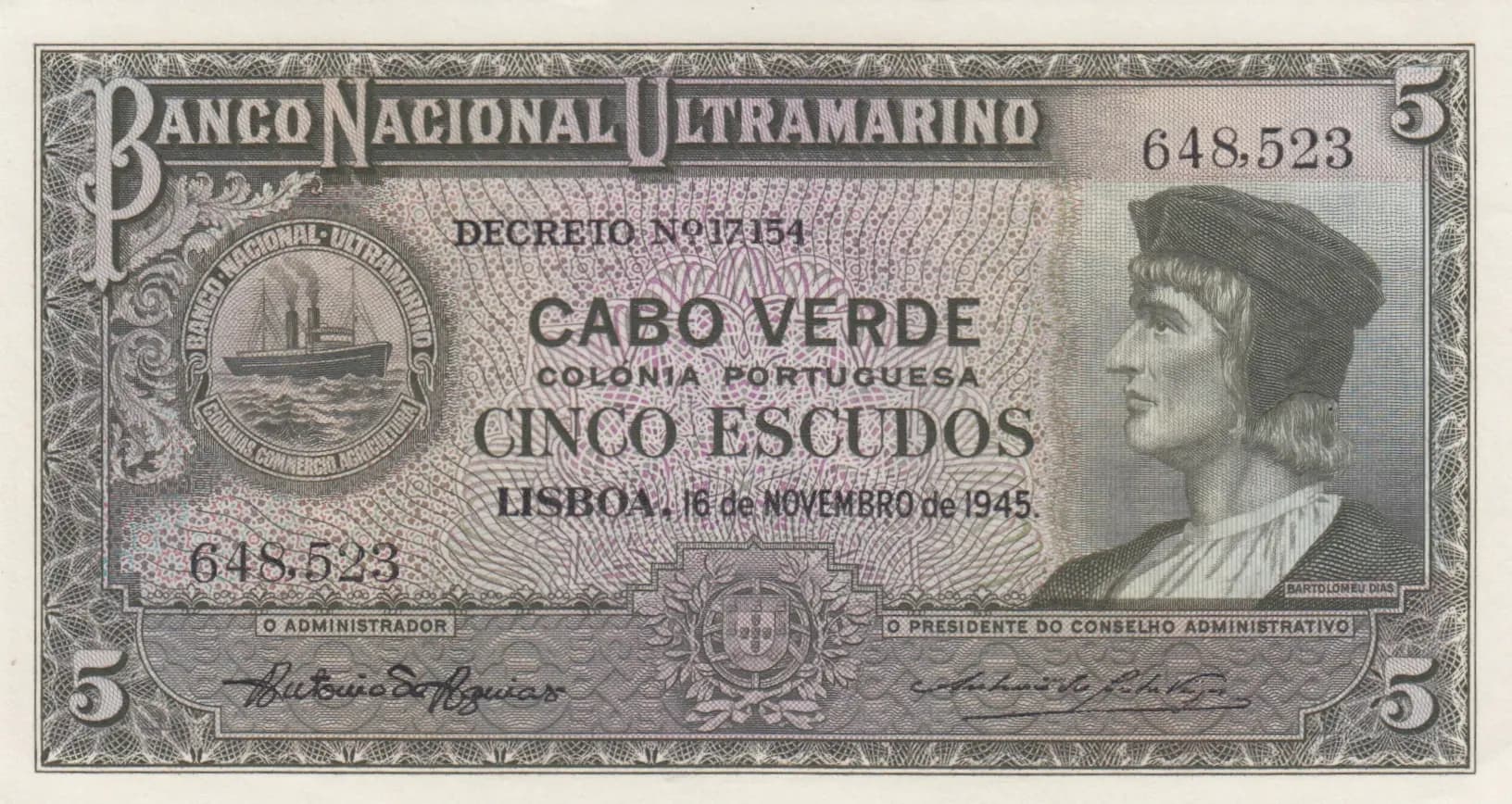
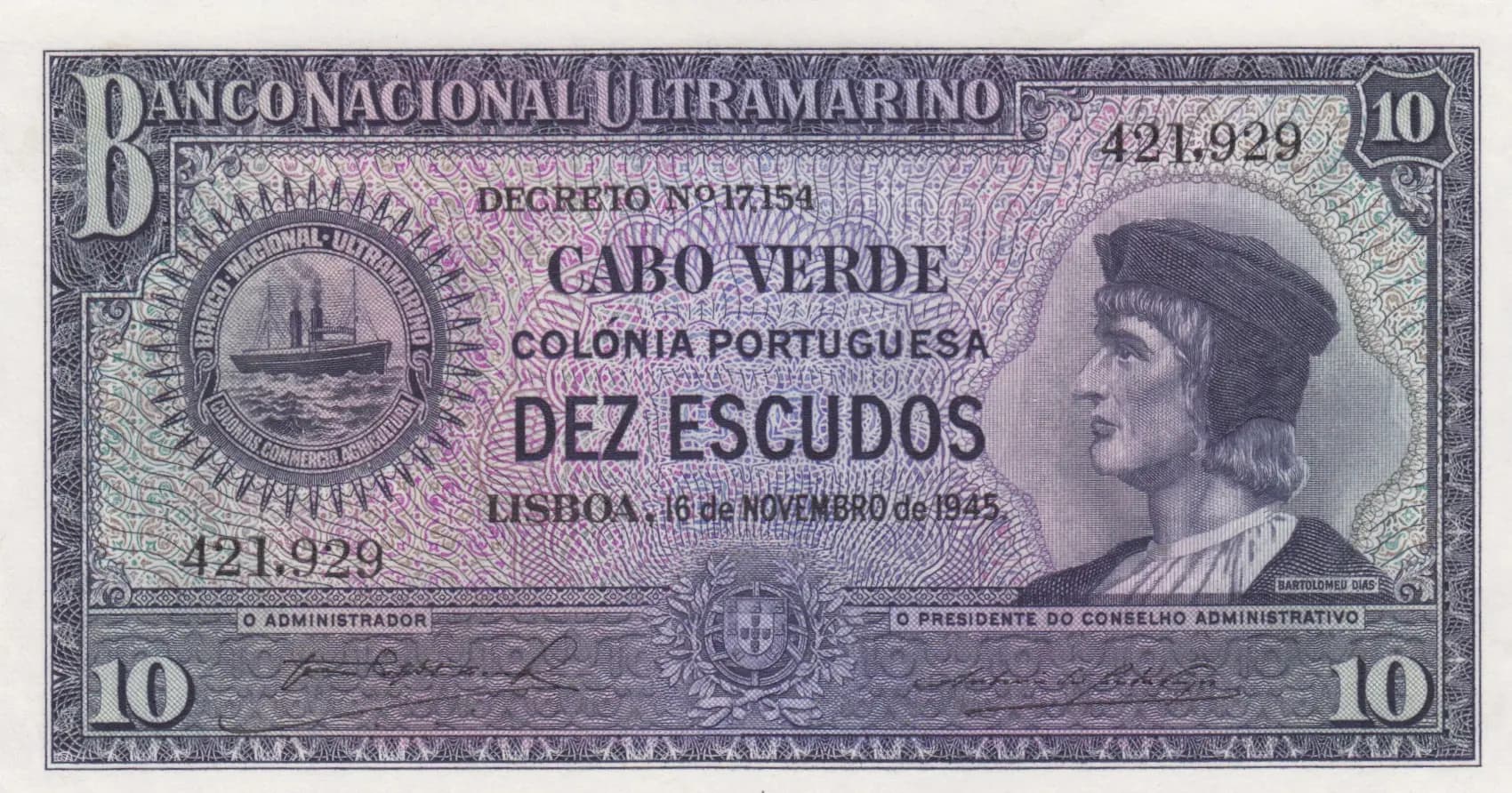
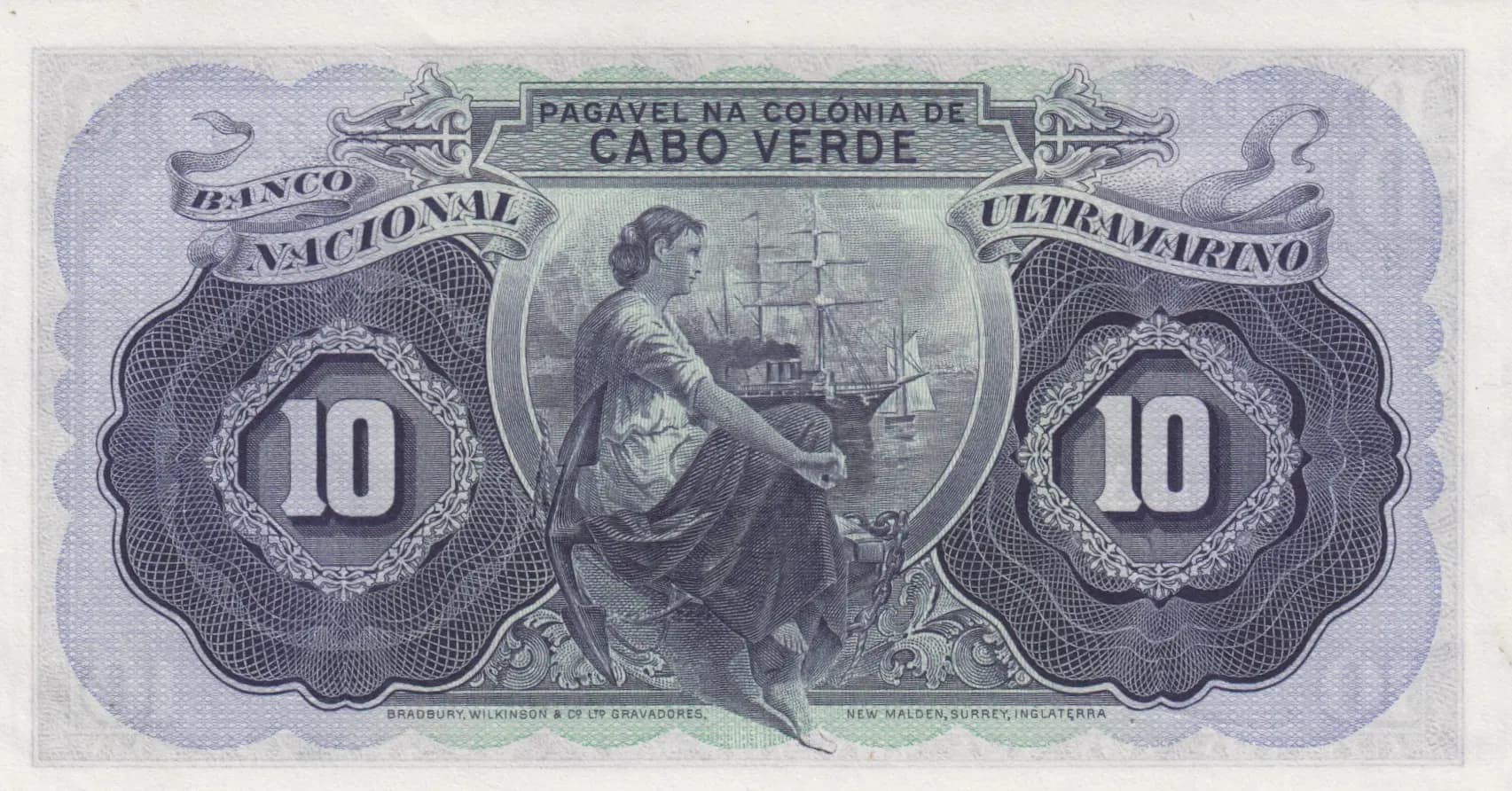
This is an exceptionally well-preserved example of the Cape Verde 10 Escudos note from 1945, graded UNC (uncirculated). The note features striking purple coloring with intricate engraving work throughout, displaying a portrait of the Portuguese explorer Bartolomeu Diaz on the obverse and an allegorical female figure before sailing ships on the reverse. The crisp printing, sharp detail work, and complete absence of wear exemplify the high-quality security printing produced by Bradbury Wilkinson, making this an attractive specimen for collectors of Portuguese colonial currency.
Common. While catalogue values from 2016 list UNC examples at $300, eBay transaction data shows a VF specimen sold for $338.33 in 2020, indicating modest collector demand but no scarcity premium. The 1945 Cape Verde 10 Escudos was issued as a regular circulation note by a major colonial central bank with presumably substantial print runs. The absence of any PMG population data suggesting extreme rarity, combined with affordable catalog values for UNC examples, confirms this as a common note in the collector market. It is desirable and attractive in high grades, but not scarce.
Issued by the Banco Nacional Ultramarino in November 1945, this note represents Portuguese colonial monetary authority in Cape Verde during the final years of the Estado Novo regime. The prominent depiction of Bartolomeu Diaz—the 15th-century Portuguese navigator who rounded the Cape of Good Hope—reflects Portugal's emphasis on its Age of Discovery heritage and maritime dominance. The reverse's allegorical woman and merchant ships reinforce the themes of Portuguese colonial trade and maritime commerce that underpinned the colonial economy.
The obverse features a right-facing profile portrait of Bartolomeu Diaz, the celebrated Portuguese navigator, positioned on the right side of the note in 16th-century period dress. The left side displays a circular maritime emblem featuring a steamship, framed within a decorative circular border, representing the Banco Nacional Ultramarino's commercial and colonial trading operations. The Portuguese coat of arms or shield appears at the bottom center. The reverse showcases a central allegorical female figure in classical robes, likely representing Commerce or Navigation, positioned before a multi-masted sailing ship in a harbor scene. Large decorative frames containing the numeral '10' appear on both left and right sides of the reverse. The entire design is unified by ornate scrollwork, flourishes, and fine line work typical of high-security banknote engraving.
FRONT SIDE: 'BANCO NACIONAL ULTRAMARINO' (National Overseas Bank); 'DECRETO Nº1154' (Decree No. 1154); 'CABO VERDE' (Cape Verde); 'COLONIA PORTUGUESA' (Portuguese Colony); 'DEZ ESCUDOS' (Ten Escudos); 'LISBOA, 10 de NOVEMBRO de 1945' (Lisbon, November 10, 1945); 'O ADMINISTRADOR' (The Administrator); 'O PRESIDENTE DO CONSELHO ADMINISTRATIVO' (The President of the Administrative Board); serial number '421.929' (appears twice). BACK SIDE: 'BANCO NACIONAL ULTRAMARINO' (National Overseas Bank); 'PAGAVEL NA COLONIA DE CABO VERDE' (Payable in the Colony of Cape Verde); 'BRADBURY, WILKINSON & CO LTD GRAVADORES' (Bradbury, Wilkinson & Co Ltd Engravers); 'NEW MALDEN, SURREY, INGLATERRA' (New Malden, Surrey, England); denomination '10' appears on both left and right sides.
This note was produced using steel plate intaglio engraving (recess printing), the standard security printing method for banknotes of this era. Bradbury Wilkinson & Co Ltd of New Malden, Surrey, England—one of the world's premier banknote security printers—executed the engraving. The visual analysis confirms the characteristic fine line work, complex cross-hatching patterns, and multiple layers of intricate detail that distinguish intaglio printing from other techniques. The precision of the line work and the depth of the security patterns visible throughout are consistent with the finest banknote engraving practices of the 1940s.
The specific variety appears to be the standard 1945 issue dated 16 November 1945 (Lisboa, 10 de Novembro de 1945), as confirmed by the inscription on the obverse. The serial number visible on this specimen is 421.929. PMG cataloging indicates one recorded variant for Pick number P-42, though details of variants (if any) between 1945 printings are not specified in the available data. No overprints, color variations, or signature varieties are evident from the visual analysis.