20 escudos 1958
Market Prices
7 salesAbout This Note
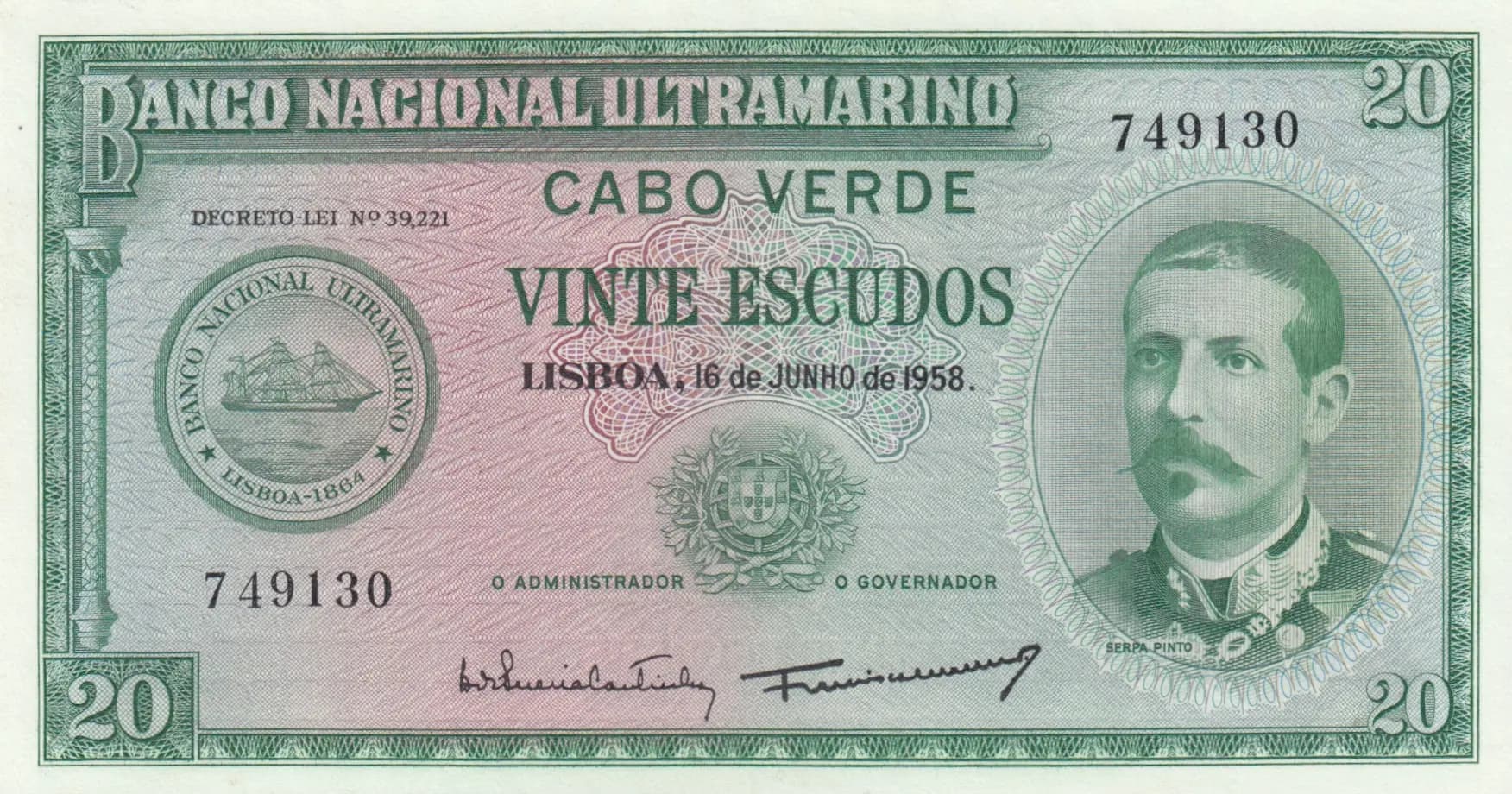
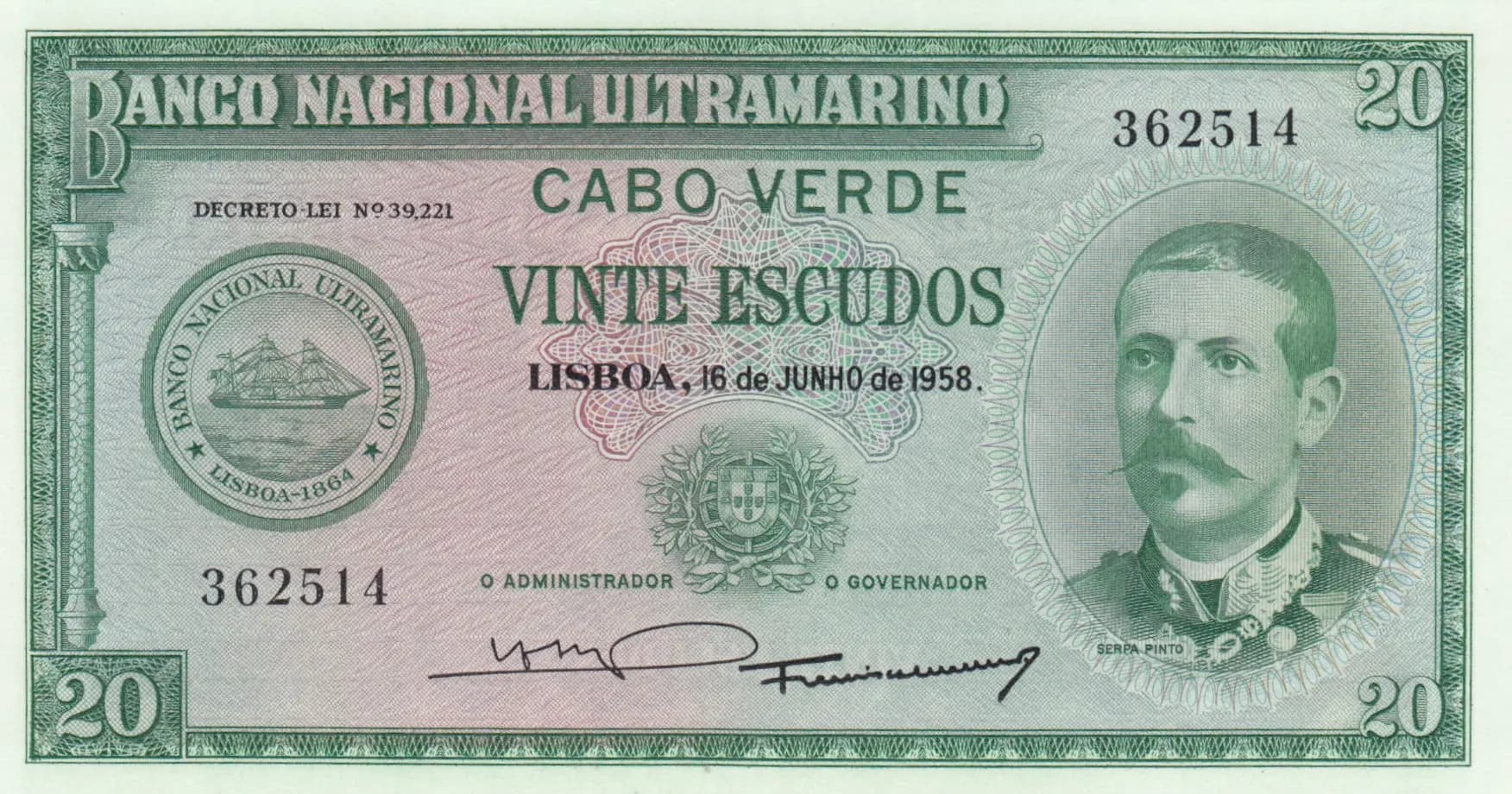
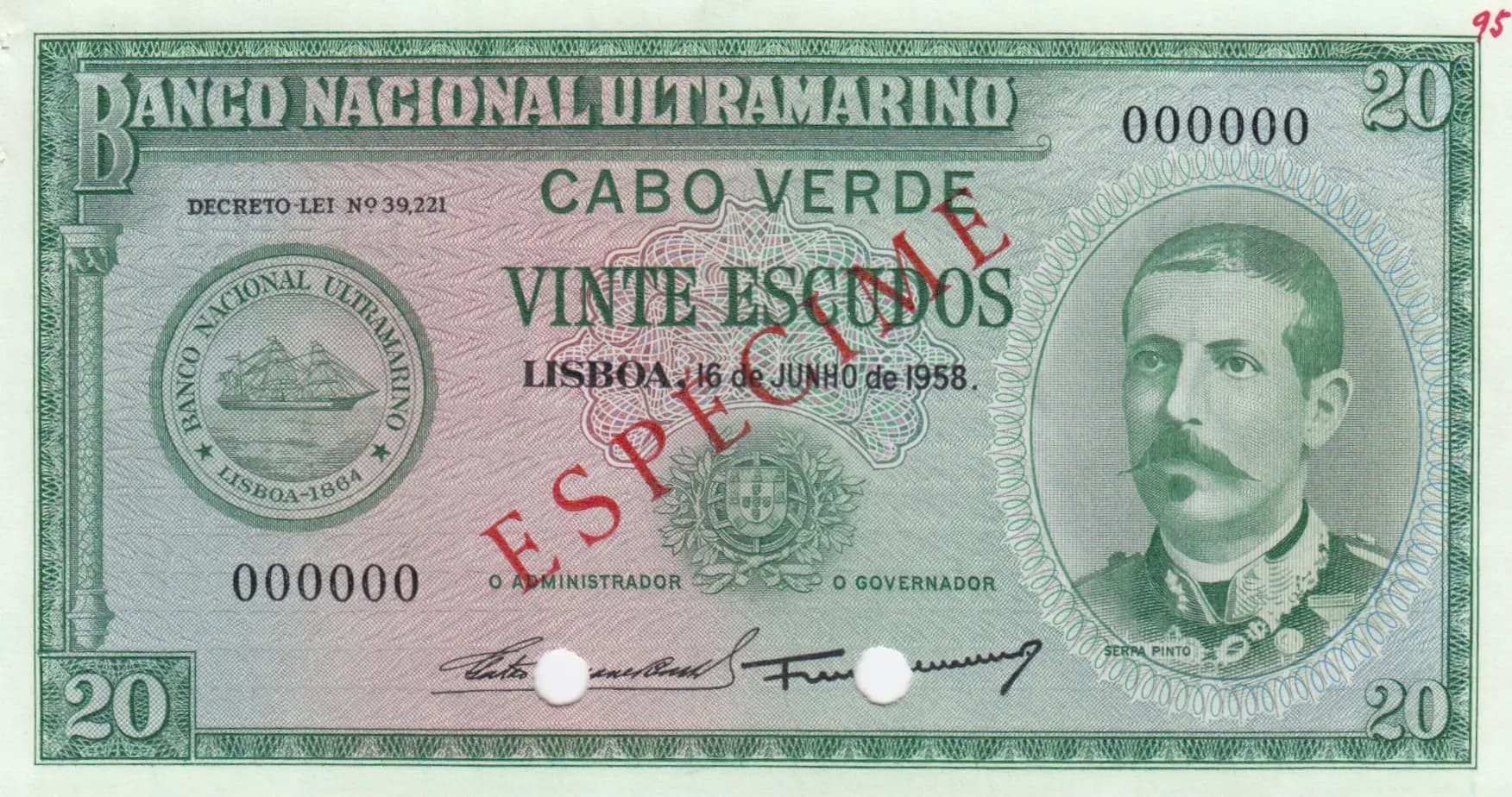
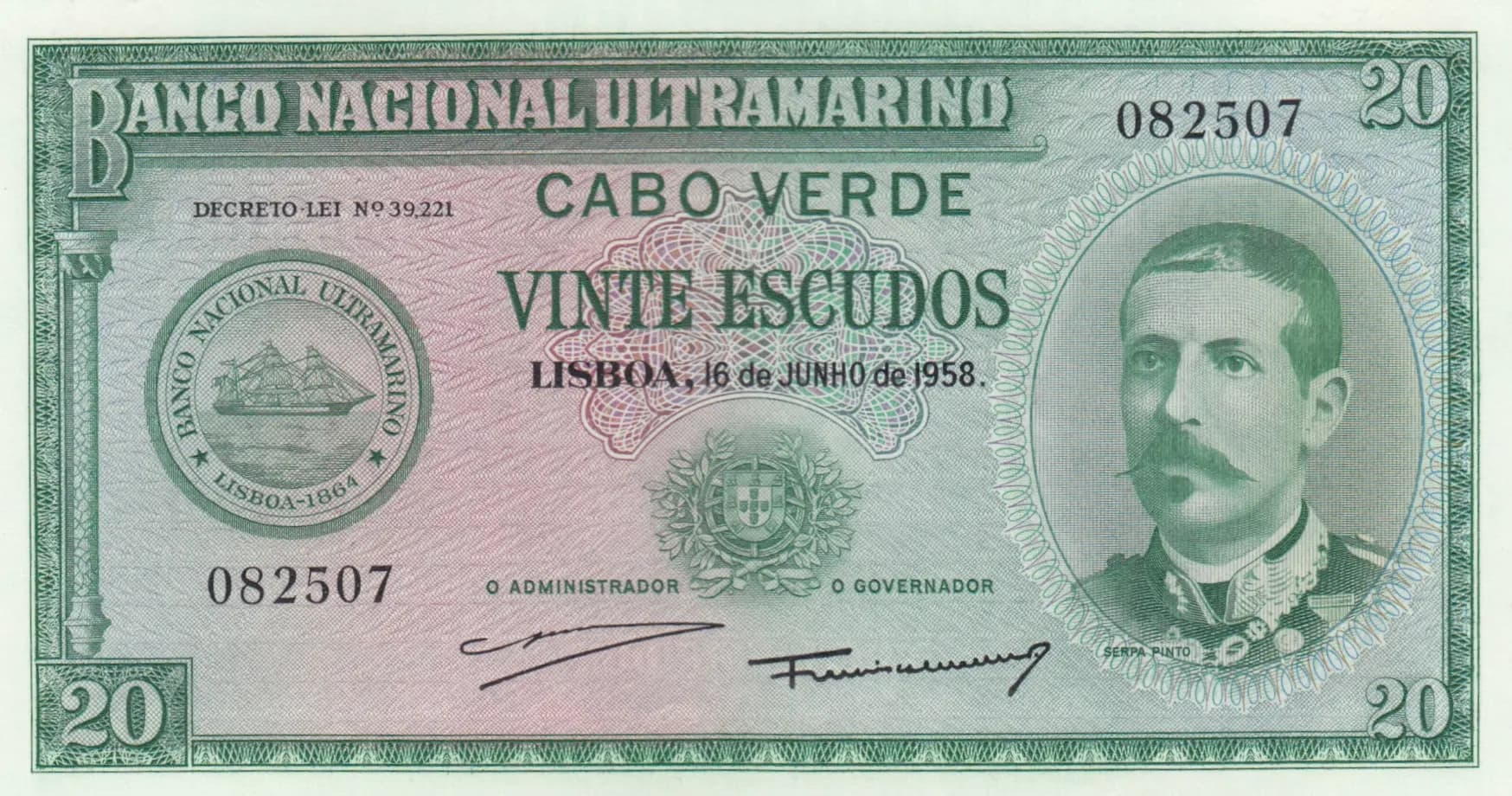
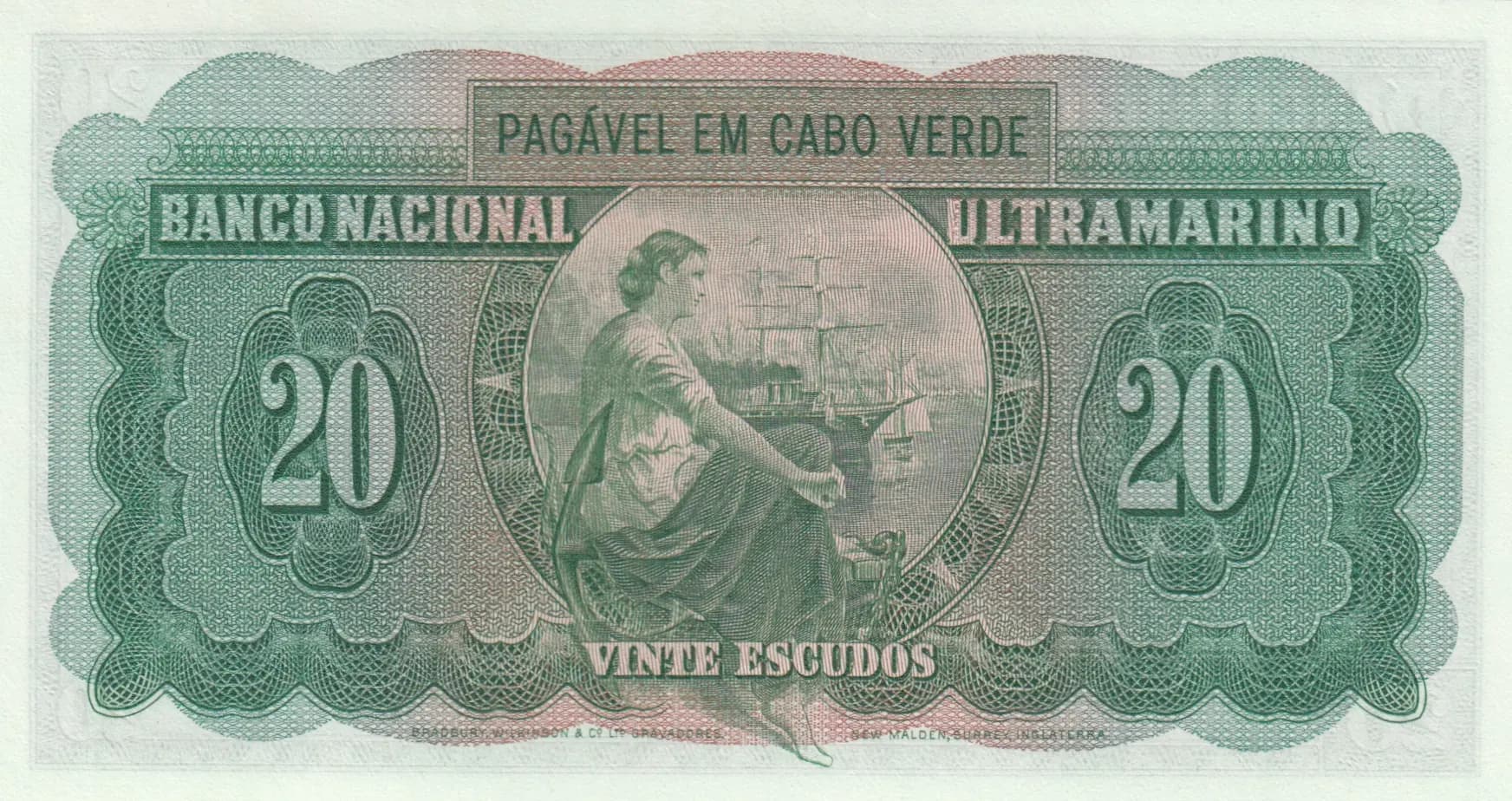
This is an uncirculated specimen of the Cape Verde 20 Escudos issued in 1958 by the Banco Nacional Ultramarino, displaying exceptional preservation with no visible wear, creases, or damage. The note features a striking green and mauve color scheme with the portrait of Portuguese explorer Serpa Pinto on the obverse and an allegorical design with maritime imagery on the reverse, exemplifying the high-quality security printing of Bradbury Wilkinson during this period of Portuguese colonial currency.
Common. While this note is from the colonial period and represents historical currency no longer in circulation, eBay sales data demonstrates consistent availability at modest prices: UNC specimens sold for $135 (2016) and $86 (2025 in PMG 67), with catalog valuations listing UNC at $40 (2016). The note was part of a standard currency issue with no evidence of limited print runs or scarcity. Thousands of examples remain in collector hands, making this Pick number readily obtainable in the numismatic market.
Issued on June 16, 1958, this banknote represents the colonial-era currency of Cape Verde under Portuguese administration, before the territory's independence in 1975. The portrait of Serpa Pinto, the 19th-century Portuguese explorer, reflects Portugal's emphasis on national and imperial heritage, while the sailing ships depicted in the design underscores the maritime importance and historical exploration narratives central to Portuguese colonial identity.
The obverse features a right-facing profile portrait of Serpa Pinto, the Portuguese explorer and military officer, rendered in fine detail within the upper right portion of the note. The left side displays the circular seal of Banco Nacional Ultramarino with a sailing ship emblem (dated Lisboa 1864), symbolizing the bank's heritage and maritime tradition. The reverse showcases an allegorical female figure in a central circular medallion facing right, with a background maritime scene including sailing ships, representing commerce, exploration, and Cape Verde's seafaring identity. Both sides employ elaborate guilloche patterns, ornamental rosettes, geometric borders, and scalloped frames in green and pink/mauve tones, with large decorative numeral '20' frames on the reverse.
FRONT: 'BANCO NACIONAL ULTRAMARINO' (Ultramarino National Bank) | 'DECRETO LEI Nº 39.221' (Decree Law No. 39,221) | 'CABO VERDE' (Cape Verde) | 'VINTE ESCUDOS' (Twenty Escudos) | 'LISBOA, 16 de JUNHO de 1958' (Lisbon, 16 June 1958) | 'O ADMINISTRADOR' (The Administrator) | 'O GOVERNADOR' (The Governor) | Serial number: 362514. BACK: 'BANCO NACIONAL ULTRAMARINO' (Ultramarino National Bank) | 'PAGAVEL EM CABO VERDE' (Payable in Cape Verde) | 'VINTE ESCUDOS' (Twenty Escudos) | 'BRADBURY WILKINSON & CO LTD GRADEMAKERS SURREY ENGLAND' (Printer: Bradbury Wilkinson & Co Ltd, Surrey, England).
Engraved intaglio printing, executed by Bradbury Wilkinson & Co Ltd of New Malden, Surrey, England—a world-renowned security printer specializing in banknote production. The complexity of the guilloche work, fine line patterns, ornamental details, and sharp portrait rendering are characteristic of high-quality intaglio engraving. The multiple color registration (green and mauve underprints) indicates multi-pass printing typical of premium banknote security production of the mid-20th century.
Cataloged as Pick P-47, with PMG recognizing variant P-47a and P-47cts. The visual analysis specimen shows signature titles 'O-ADMINISTRADOR' and 'O-GOVERNADOR' (matching P-47a characteristics per realbanknotes.com reference), with the issue date of 16 JUNHO 1958 and printer mark 'BRADBURY WILKINSON & CO LTD' clearly visible on the reverse. Serial number 362514 indicates standard production. No overprints or unusual markings observed that would indicate specialized varieties or commemorative issues.